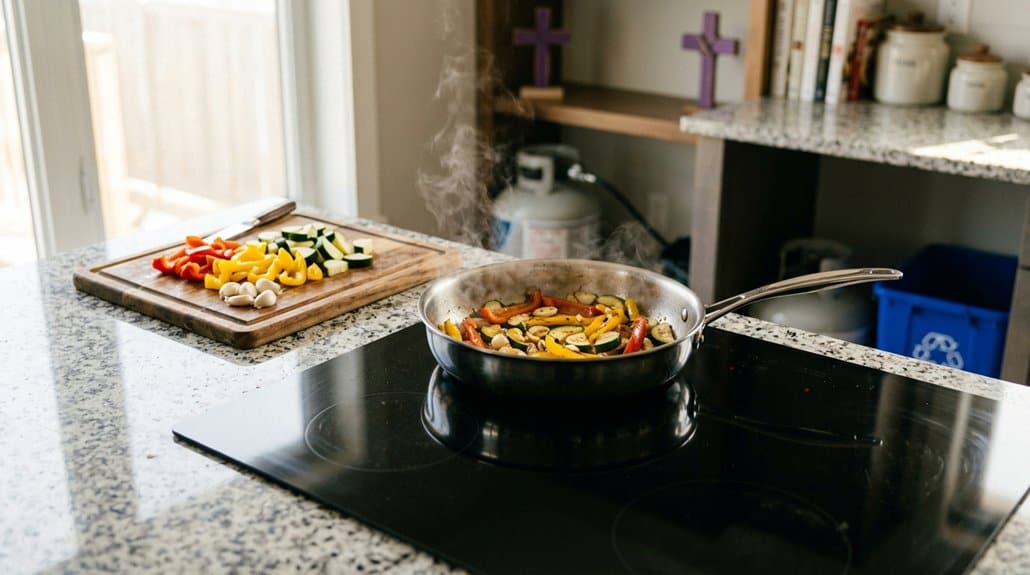
I Banished Propane For Good This Lent: A Fierce Recipe For Flawless Induction Cooking

Induction cooking transfers 90% of its energy directly to the pan — gas manages a pathetic 40%. Water boils three times faster, SpeedBoost cranks power up another 50%, and the cooktop stays cool enough to touch. No open flames, no baked-on spills, no indoor pollutants. Cleanup takes roughly 30 seconds. Rapid cooking even preserves more vitamins and enzymes. Honestly, propane never stood a chance. The real upgrades, though, are in the details below.

While most home cooks are still wrestling with their gas burners like it’s 1985, induction cooking has quietly become the smartest upgrade in the kitchen. One Lenten season was all it took for a growing number of households to ditch propane entirely. No drama. No looking back. The reasons stack up fast, and they’re hard to argue with.
Start with speed. Induction boils water three times faster than gas or electric. Three times. A SpeedBoost function cranks power up by 50%, shaving 10 minutes off large pots and 5 off small ones. The cookware heats directly, so there’s zero preheat time. That old burner clicking to life and warming up a grate? Ancient history.
Induction doesn’t warm up. It shows up. Three times faster than gas, with zero preheat and zero patience required.
Temperature control is where things get serious. Induction hits a wider range of temperatures with precision that gas wishes it had. Searing a steak or nursing a delicate custard, the heat adjusts instantly. No lag. No guessing. It matches gas responsiveness and flat-out outperforms electric stoves.
Then there’s efficiency, which is frankly embarrassing for the competition. Induction transfers 90% of energy directly to food. Gas? A measly 40%. That means three times more efficient than gas and 10% better than electric smoothtops. The surface stays cool, so HVAC systems don’t have to work overtime compensating for a kitchen that feels like a sauna. That efficiency also makes induction an environmentally friendly cooking method that reduces your household’s overall carbon footprint.
Safety is the part that matters most for families. The cooktop stays cool to the touch. No open flames. No fire hazards. The burner won’t even activate without cookware on it. Child safety locks come standard on many models. For households with kids or seniors, this isn’t a luxury. It’s common sense.
Cleanup takes about 30 seconds. Smooth, flat surface. Spills don’t bake on because the cooktop isn’t hot. One wipe. Done.
The health angle is real too. Even, rapid cooking preserves vitamins, flavors, and enzymes. No open flame means fewer indoor pollutants floating around the kitchen.
Kitchens stay cooler. Meals cook faster. Energy bills drop. The cooktop practically cleans itself. Banishing propane during Lent turned out to be less sacrifice, more revelation. The sleek black glass surface also complements any kitchen style, from farmhouse to ultra-modern, making the switch as much an aesthetic upgrade as a functional one.