
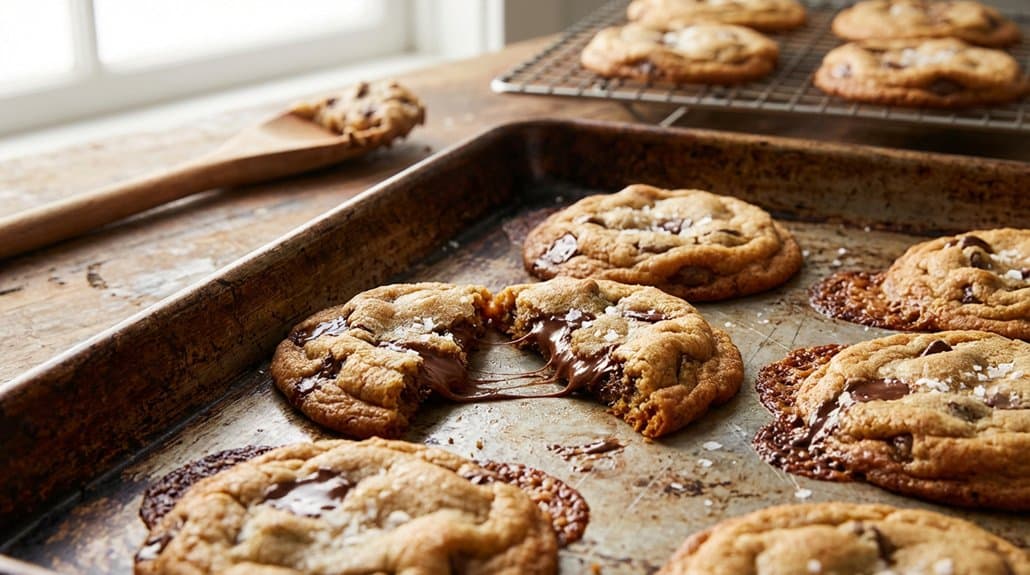
Why Science Says You’ve Been Baking Chocolate Chip Cookies All Wrong

Most home bakers skip browning their butter. That’s the mistake. The Maillard reaction transforms ordinary butter into something nutty and caramelized, adding depth that flat, melted butter simply can’t deliver. Then there’s the flour problem—bread flour’s higher protein creates chewier cookies, not that sad, crumbly mess. And chilling dough? Non-negotiable. Cold dough spreads slower, yielding taller cookies with better texture. The science behind perfect cookies gets even more interesting.
Butter sizzles in a pan, turning golden brown, and suddenly those flat discs of dough transform into something worth fighting over. That’s the Maillard reaction at work, creating nutty, caramelized flavors that regular melted butter simply cannot deliver. Most home bakers skip this step. Big mistake.
The science behind chocolate chip cookies is surprisingly brutal. Every ingredient plays a specific role, and messing with one throws everything off balance. Melted butter creates spread and density. Room temperature butter makes softer dough. Brown butter? That’s where the magic happens. The proteins in butter react with sugar to produce those deep caramel colors and toasty flavors that make people ask for the recipe.
Sugar choices matter more than most realize. Brown sugar brings moisture and chewiness through molasses content. White sugar delivers crispy edges and more spread. The smart move involves using both. A combination creates that perfect balance of chewy centers with slightly crisp edges. Excluding white sugar entirely results in softer, darker cookies with less structure.
Flour selection separates amateur bakers from serious ones. Bread flour‘s higher protein content develops more gluten, which means chewier texture. Less flour increases the ratio of water and fat, leading to more spread. The proteins and starches absorb liquid, converting to steam during baking. That steam expands the gluten network for rise and moistness. The key proteins responsible for this structure are glutenins and gliadins, which form gluten when hydrated and worked.
Here’s where most people go wrong: they skip chilling. Cold dough spreads more slowly in the oven. Slower spread means taller, thicker cookies. At least 30 minutes in the refrigerator hydrates flour evenly and develops flavors. Some bakers freeze dough balls and bake at 300°F for 23-28 minutes. The results speak for themselves.
Baking soda reacts with acidic brown sugar and heat to release carbon dioxide. That’s basic chemistry creating lighter, taller cookies. Salt does double duty, stabilizing protein networks while enhancing chocolate flavor. Higher oven temperatures around 375°F promote caramelization for complex flavors. This beloved treat has been perfected since Ruth Wakefield invented it at the Toll House Inn in 1938.
The bottom line is simple. Cookie science isn’t complicated, but it is specific. Those golden brown edges and chewy centers aren’t accidents. They’re chemistry.