
Easy 30-Minute Weeknight Dinners Kids Will Actually Eat

The hardest part of dinner isn’t the cooking. It’s the moment around 4:30 when you realize, again, that people are going to expect to be fed, you have no plan, and the one thing you were sure everyone liked last week is now mysteriously “yuck.” The recipes below all come in around half an hour, but the real goal here is bigger than speed: it’s getting a single meal on the table that the whole family will actually eat, without short-order cooking three different plates. That’s a solvable problem, and most of the solution is choosing the right kind of dinner in the first place.
What actually makes a dinner “30 minutes”
A recipe can say “ready in 30 minutes” and still eat an hour of your evening if it quietly assumes you’ve already chopped an onion, preheated the oven, and have rice standing by. The dinners that genuinely land in half an hour share a few traits, and once you recognize them you can improvise your own.
The first is leaning on legitimate shortcuts without guilt. Pre-cut and frozen vegetables, a rotisserie chicken, microwave rice pouches, canned beans, jarred pasta sauce, and pre-cooked smoked sausage are the actual engine of fast cooking, and frozen vegetables are nutritionally on par with fresh. The second is one-pan formats, because the sink full of pots is what makes people give up on cooking, not the cooking itself. The third is doing your prep before the heat goes on: measure, open, and chop everything first, so the active cooking is just assembly. Get those three habits down and “what’s for dinner” stops being a nightly crisis.
The fast dinner formats kids actually go for

Rather than memorize fifty recipes, it helps to keep a handful of formats in your back pocket. Each one is fast by design and flexible enough to flex around what your kids will tolerate this month.
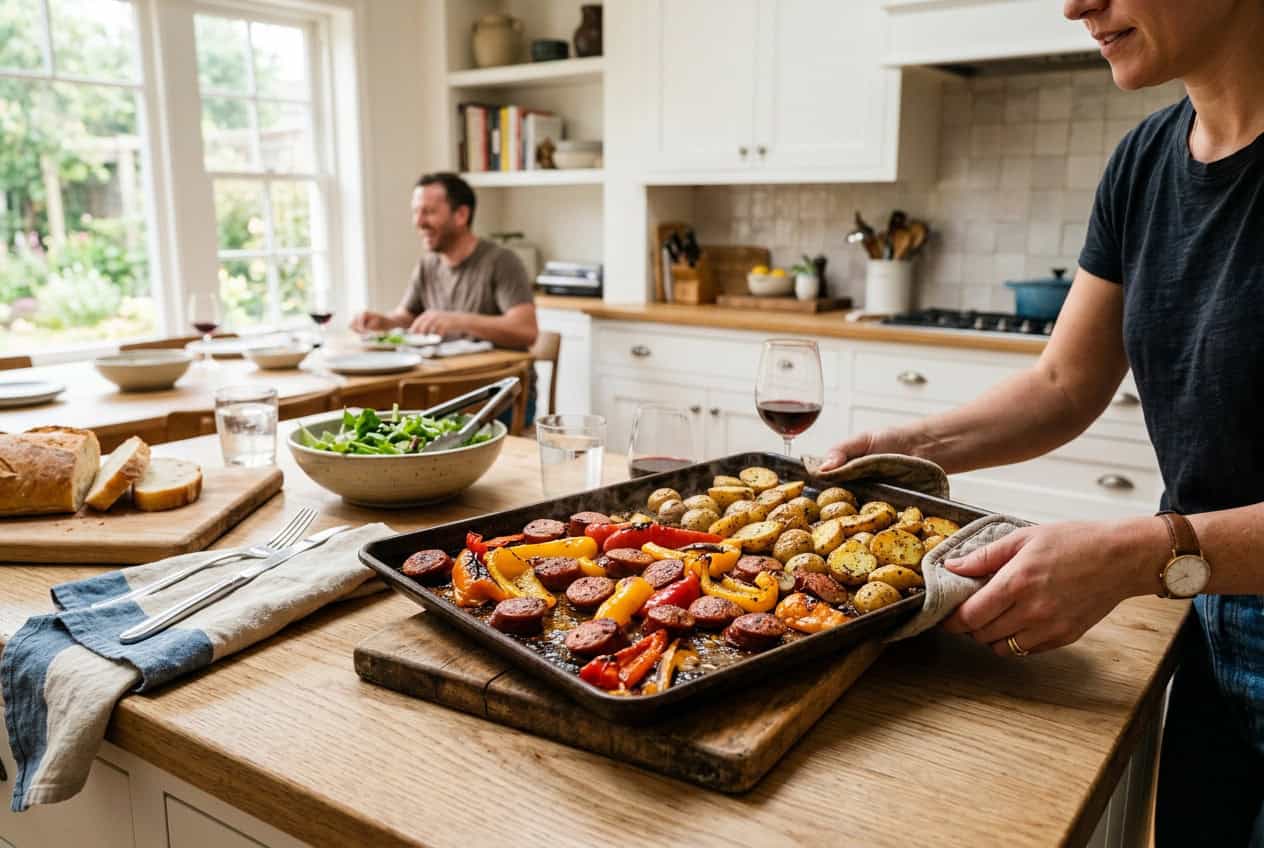
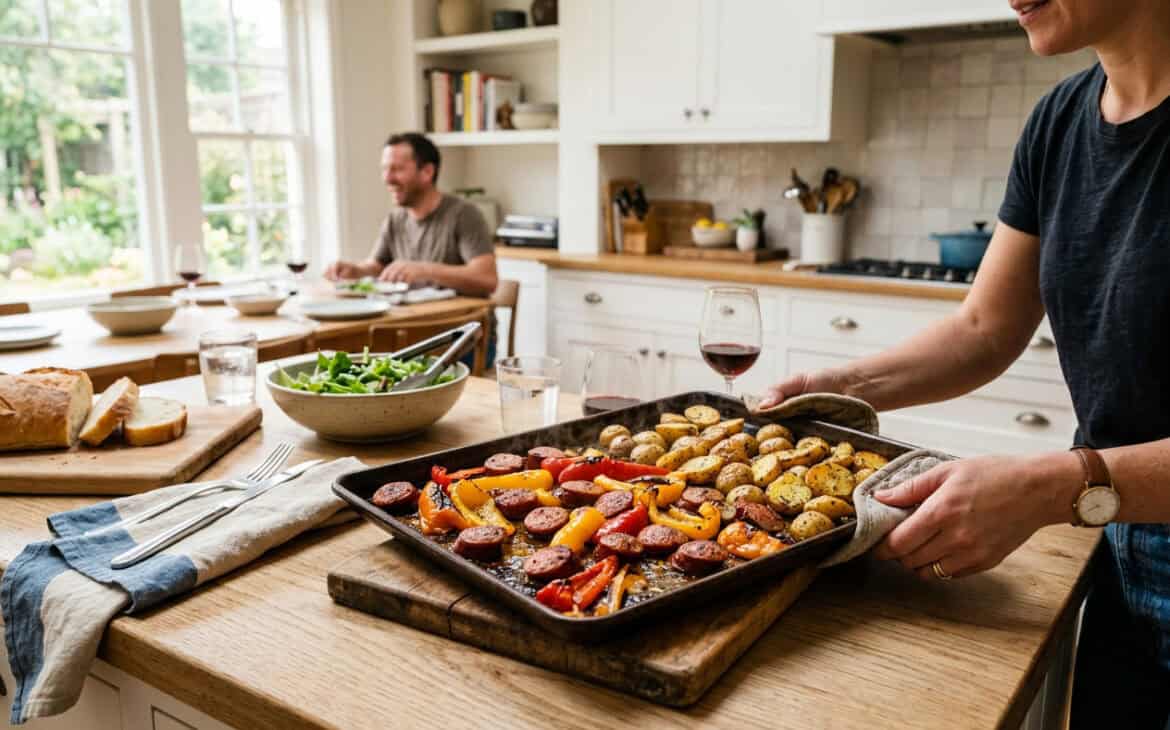
Sheet-pan dinners. Everything roasts on one tray while you do something else, and the browned edges are exactly the texture kids tend to like. Smoked sausage with peppers and baby potatoes works because the sausage is already cooked and just needs to crisp. Sheet-pan chicken fajitas (thin-sliced chicken, peppers, onions) roast in about twenty minutes and have the bonus of being easy to deconstruct, so a wary kid can eat the chicken and a tortilla and skip the peppers. Mini pizzas on naan or English muffins bake in roughly ten minutes and let each kid top their own, which quietly raises the odds they’ll eat it.
One-pot and skillet meals. A pound of ground beef becomes a taco skillet in the time it takes to set the table, and tacos are nearly undefeated with children. Teriyaki chicken bowls — diced chicken with bottled teriyaki over microwave rice — hit the sweet-and-savory note kids gravitate toward, and the components stay separate on the plate. A creamy chicken-and-rice skillet, where everything simmers in one pan, reads as comfort food and cleans up in one wash. Frozen vegetables turn a stir-fry into a five-minute affair; serve the sauce on the side and the suspicious eaters can dip rather than commit.
Pasta, the reliable peacemaker. Pasta is ready in the time the water boils, which is the whole appeal. Toss it with jarred pesto and a handful of rotisserie chicken or peas, or go with spaghetti and a good marinara you’ve quietly simmered some blended vegetables into. And there is no shame in buttered noodles with a protein and a vegetable alongside — that’s not a cop-out, it’s a deconstructed plate built around a food you know works.
Quesadillas and a build-your-own bar. Chicken quesadillas come together in about ten minutes in a dry skillet, and the cheese-and-tortilla format is one of the highest-acceptance dinners going. On nights when nobody agrees on anything, set out warm tortillas, a protein, cheese, beans, and toppings and let everyone build their own taco. The autonomy does a lot of the work, and one assembly line feeds a toddler and a teenager from the same ingredients.
Breakfast for dinner. Eggs scramble in minutes, so breakfast burritos or egg-and-cheese tacos are genuinely fast, and the novelty of pancakes at night buys a surprising amount of goodwill. Keep it occasional and it stays a treat rather than a habit.
And for the nights you have nothing left in the tank, there’s the no-cook “snack plate” dinner: turkey-and-cheese roll-ups, crackers, cut fruit, veggie sticks with hummus, maybe a hard-boiled egg. It feels like a cop-out and it is the opposite — the variety-of-small-things format is famously easy for kids to eat, because they get to choose, and you cooked nothing.
Cook once, plate smart: the picky-eater fix
The instinct when a child rejects dinner is to jump up and make them something else. The trouble is that this trains everyone, fast, that holding out gets you a better menu. The more sustainable move is to cook one meal and plate it deconstructed — components kept separate rather than mixed into a casserole — so each person takes what they want and how much. The same taco skillet becomes a loaded bowl for you and a small pile of plain meat, cheese, and a tortilla for the four-year-old.
The key is to always include at least one “safe” food you know the child will eat somewhere on that plate, alongside whatever’s newer. They get to fill up on something familiar while still sitting in front of the new thing, and exposure — just seeing it, smelling it, pushing it around — is how acceptance eventually happens. It often takes a lot of those low-pressure encounters before a kid willingly tries a food, so the job is to keep calmly offering, not to win tonight.
This lines up with the feeding framework most pediatric dietitians point to, Ellyn Satter’s division of responsibility: the parent decides what is served and when and where, and the child decides whether and how much they eat of it. No bribing, no “three more bites,” no separate dinner. It sounds almost too hands-off, but it’s what takes the nightly power struggle off the table — figuratively and literally — and it’s meant to hold from toddlerhood right through the teen years.
Getting a vegetable in without the fight
Vegetables go over best when they aren’t a battleground. Offer them as a no-pressure side rather than a hurdle to clear before dessert, and know that raw is often an easier sell than cooked — a pile of cucumber coins, pepper strips, or carrots with a dip frequently disappears faster than the same vegetable steamed. Blending vegetables into a pasta sauce or soup is a fair move, too. The thing that doesn’t work is making the vegetable the price of admission; keep putting it on the plate without comment, and let the long game play out.
A few make-ahead moves that buy you weeknights

You don’t need to meal-prep your entire Sunday to make weeknights easier — a couple of small batches go a long way. Taco meat, marinara, and shredded chicken all freeze well, so a double batch now is a dinner later. Breakfast burritos freeze and reheat beautifully for those breakfast-for-dinner nights. Cooked rice and roasted vegetables keep three or four days in the fridge and drop straight into bowls and skillets. Quesadillas and the snack-plate dinners are the exception — those are best fresh, but they’re already fast enough that it doesn’t matter.
Why the dinner scramble is worth it
On the nights it all feels like a lot, it helps to remember why the shared meal matters at all. A large 2011 analysis in Pediatrics found that families who eat together around three or more times a week tend to have kids who eat more healthfully and are less likely to be overweight or to develop disordered eating — an association, not a guarantee, but a consistent one. None of that requires a Pinterest-worthy spread. A sheet pan of sausage and potatoes, everyone at the table, counts. The point was never the cooking. It was getting everyone fed and in the same room, and the thirty-minute dinner is simply the most realistic way to keep doing that on a Tuesday.
Frequently Asked Questions
How do I get my picky eater to actually eat these dinners?
Serve everyone the same meal, but keep the components separate and always include one food you know your child will eat. Don’t pressure, bribe, or make a backup plate — under the division-of-responsibility approach, you decide what’s offered and they decide whether and how much to eat. Keep offering new foods calmly; acceptance usually takes many low-key exposures, not one heroic dinner.
Can I make any of these ahead or freeze them?
Yes. Taco meat, marinara, shredded chicken, and breakfast burritos all freeze well, and cooked rice and roasted vegetables keep three to four days in the fridge. Quesadillas and assembly-style snack plates are best made fresh. Refrigerate leftovers within about two hours of cooking.
Are 30-minute dinners actually healthy?
They can be. If you build the plate around a protein, a fruit or vegetable, and a whole grain, a fast dinner is a balanced one — and leaning on frozen or pre-cut produce doesn’t cost you nutrition, since frozen vegetables are comparable to fresh.
How do I stop cooking two or three separate dinners?
Cook one meal and plate it deconstructed, anchoring each plate with a “safe” food your child reliably eats. Over time this normalizes the family menu for them while protecting your evening. The separate-dinner habit is usually what keeps it going, so the fix is to gently stop.
What pantry staples make weeknight cooking faster?
Pasta, microwave rice pouches, canned beans, jarred pasta sauce, pesto and teriyaki, tortillas, eggs, cheese, frozen vegetables, and a quick protein or two — rotisserie chicken, ground beef, or pre-cooked smoked sausage. With those on hand you can improvise most of the formats above without a special grocery run.
My kid only wants buttered noodles or plain rice. Is that a problem?
Not on its own. Treat that plain favorite as the “safe” anchor food and simply serve it alongside the rest of the meal rather than as a replacement for it. Keeping the other foods present on the plate, with no pressure to eat them, is how the menu slowly widens.