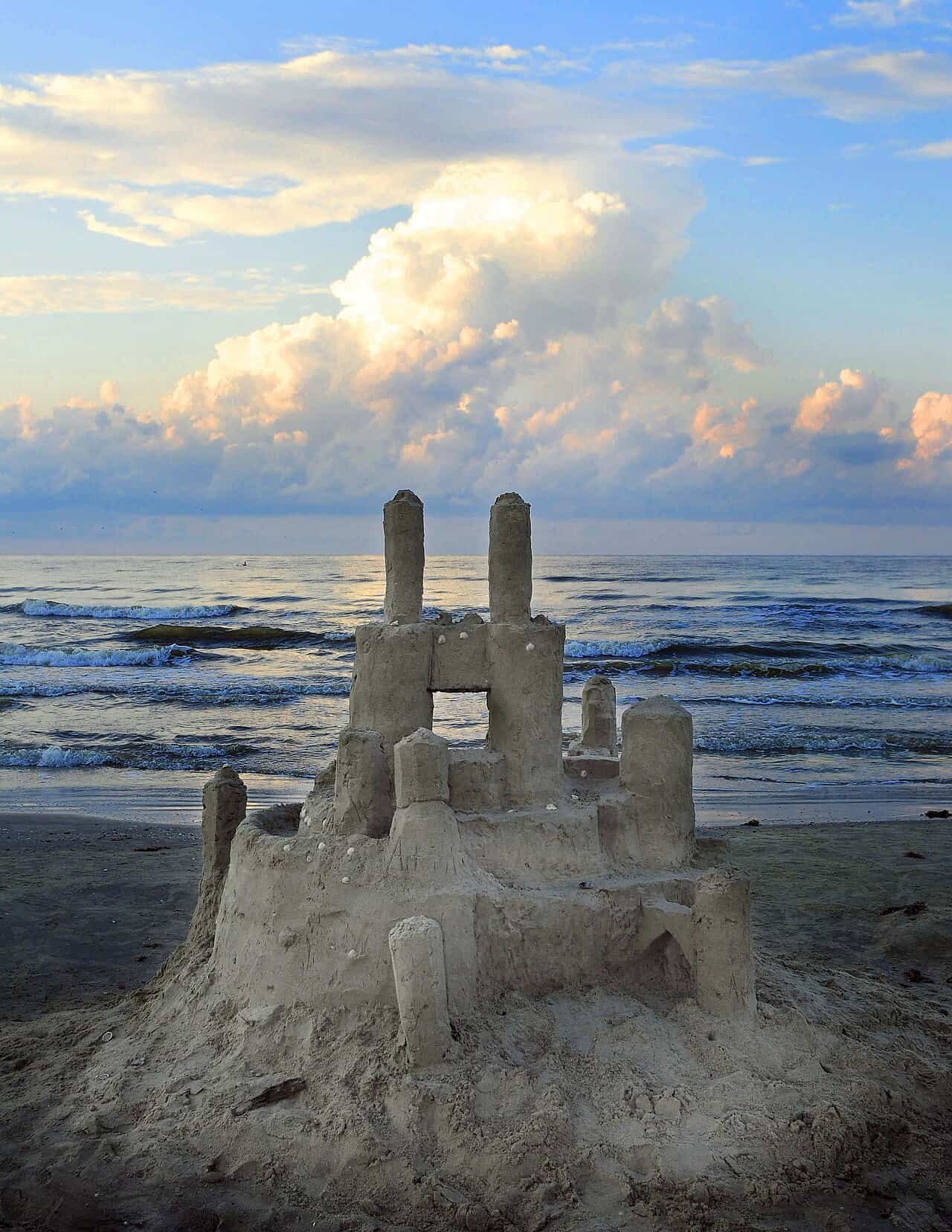
Best Family-Friendly Beaches in Texas

Texas has more than 350 miles of Gulf coastline, and “best beach for families” depends almost entirely on one question: how old are your kids? The single most useful thing to understand before you pick a spot is the difference between bay water and open Gulf. Bays and protected coves — places like Rockport and the calm side of South Padre — are shallow, gentle, and nearly waveless, which is exactly what you want with a toddler. The open Gulf beaches have real surf and rip currents: more fun for older kids who want to boogie-board, but they demand closer supervision. Sort the coast that way and the choices below fall into place.
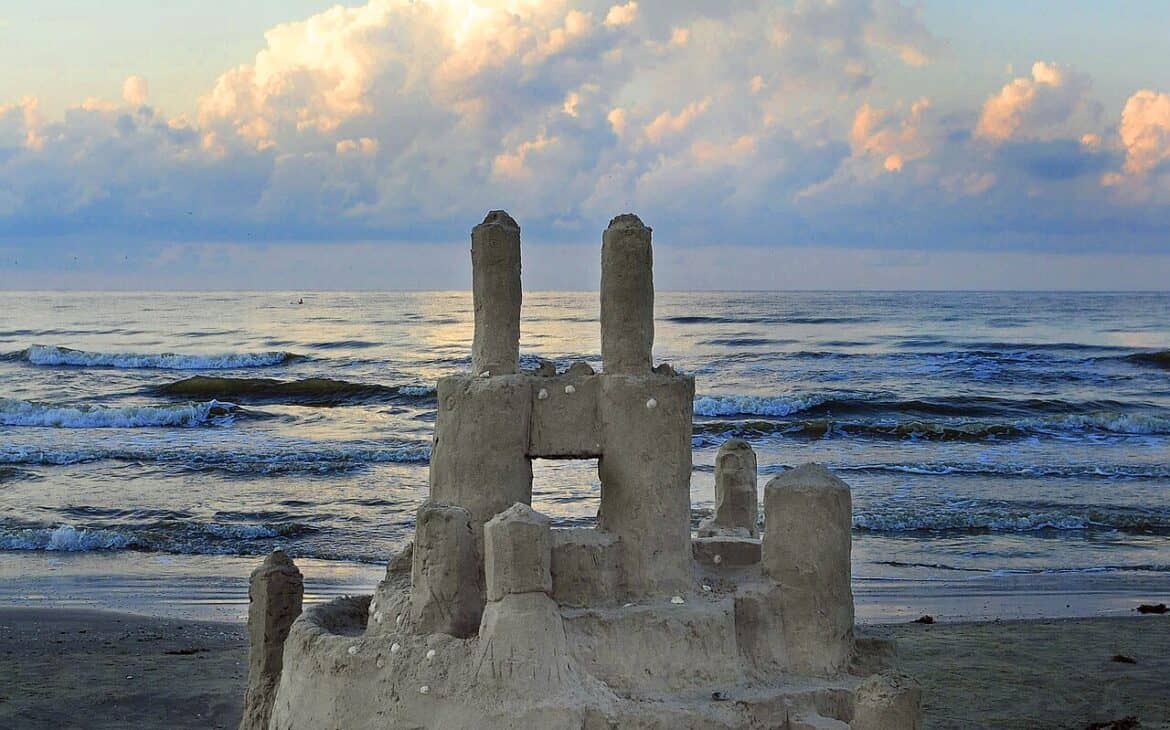
Galveston: the family default near Houston
For families in or passing through Houston, Galveston is the easy answer, and Stewart Beach is its most family-geared stretch. It’s one of the few Texas beaches with lifeguards on duty, the surf is calmer than the open stretches, and it has the full kit: a pavilion, concessions, restrooms and showers, chair and umbrella rentals, and a children’s playground. Alcohol isn’t permitted, which keeps the vibe firmly family. Just down the island, East Beach is the livelier, event-driven sibling — also lifeguarded, with a stage for live music and alcohol allowed — so it suits families with older kids who don’t mind a bigger crowd. As of May 2026, both beaches use an automated pay-to-park system through the ParkMobile app, running about $15 per vehicle for a single visit or $50 for an annual pass that covers both.
For something quieter, Galveston Island State Park, about ten miles down the island, has both a Gulf side and a calmer bay side, and it’s better for shelling, birding, kayaking, and camping than for a classic swim day. Entry runs around $5 per person 13 and older, with kids 12 and under free. There are no lifeguards here, so it’s swim-at-your-own-risk. One honest caveat about Galveston generally: this is the upper coast, where the water is brown and sediment-heavy rather than clear — perfectly fine to swim in, just don’t expect Caribbean blue.
Rockport Beach: the calmest water for little kids
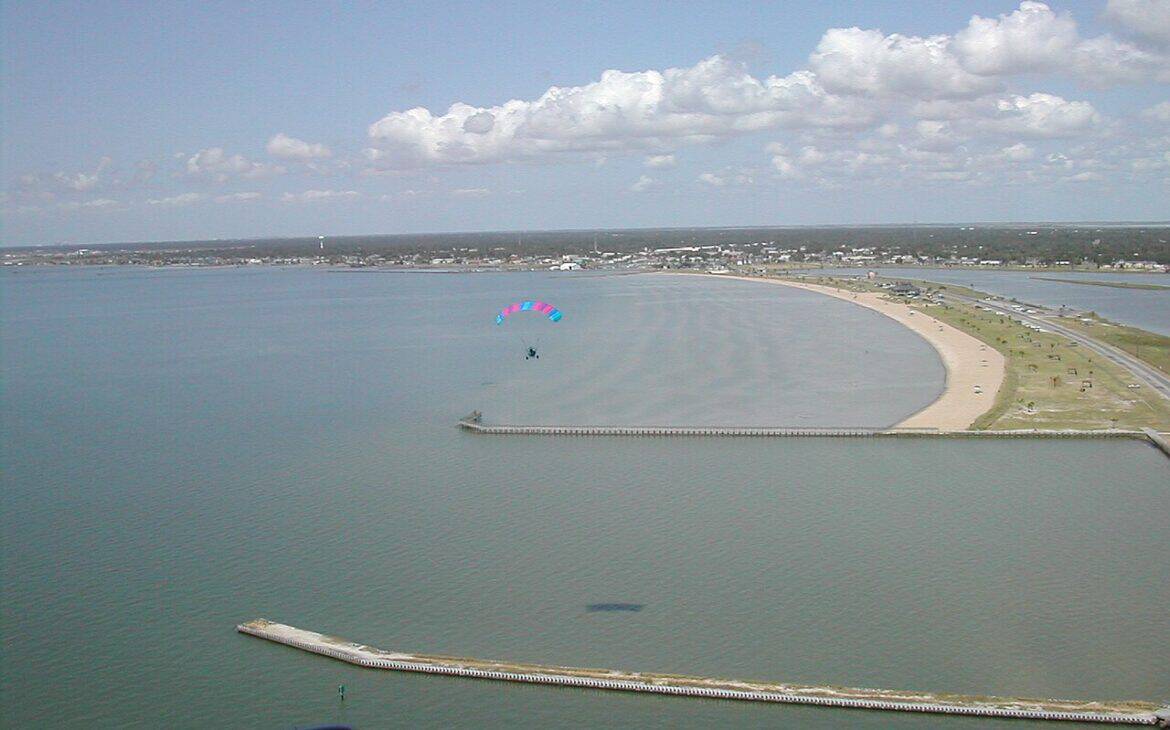
If you have toddlers, this is the one. Rockport Beach sits inside Aransas Bay, a man-made crescent of protected water with essentially no surf and no rip currents — shallow, calm, and about as low-stress as a beach day with small children gets. It was the first beach in Texas to earn Blue Wave certification for cleanliness, it’s raked daily, and it has restrooms, picnic facilities, and a saltwater play area. The birding here is excellent, too. There’s a modest per-vehicle entry fee (worth confirming the current rate on the park’s site before you go), and the trade-off for all that calm is bay water that’s gentler but a little murkier than the open Gulf. For the under-five set, it’s hard to beat.
Port Aransas: the fun beach town
“Port A” is the quintessential Texas beach-town getaway, with about 18 miles of wide, flat, drivable sand and Gulf waves mild enough for swimming and boogie-boarding through the warm months. It’s also one of the rare Texas beaches with a daily lifeguard patrol, running roughly March through October, with the standard green-yellow-red-purple flag system. You can drive right onto the sand (15 mph, and you’ll need a $12 annual beach parking permit for most stretches, though there are free no-permit zones near the jetties and at certain markers). Off the sand, the town keeps kids busy: a birding center, a sea-turtle and bird rehab facility, and a fishing pier. Two cautions worth heeding — the water near the jetty and pier has dangerous rip currents the city warns against, and on a Gulf-facing beach, cars and swimmers share the sand, so keep little ones close. (The Texas State Aquarium, by the way, is across the water in Corpus Christi, not in Port A.)
Mustang Island State Park: natural and uncrowded
Just south of Port Aransas, Mustang Island State Park trades amenities for breathing room — more than five miles of Gulf shoreline for swimming and sandcastles, plus a roughly 20-mile bayside paddling trail for families who’d rather kayak the flats than fight a crowd. Entry is about $7 per person 13 and up, kids 12 and under free, and there’s camping with hot showers near the campground. There’s no advertised lifeguard service, so treat it as unguarded open Gulf, and bring what you need, because services are thin compared to the town.
Padre Island National Seashore: the wild one

This is the longest stretch of undeveloped barrier island in the world — about 70 miles of protected coastline — and it’s a genuinely different experience from a developed beach. Crucially, it is not the resort town of South Padre Island; it’s a national park south of Corpus Christi. The family-friendly home base is the developed Malaquite area, with a visitor center, restrooms, rinse showers, and a beach that’s closed to vehicles, so you park and walk in — safer for kids than the drive-on beaches. Entry is $25 per vehicle for seven days, or covered by an America the Beautiful pass. The standout experience here is the sea turtles: this is the main U.S. nesting site for the endangered Kemp’s ridley, and from roughly mid-June through August the park holds free public hatchling releases at sunrise, which you can’t book more than a day ahead (there’s a hatchling hotline that announces them). It’s a remote, wild beach with real surf and no lifeguards, so it rewards prepared families and isn’t the spot for a casual toddler paddle.
South Padre Island: the most to do
Down at the southern tip of Texas, South Padre packs more kid attractions into one place than anywhere else on the coast. The island sits between the open Gulf on the east and the calm, shallow Laguna Madre bay on the west — so the bay side is your toddler-friendly water, and the surf softens near the jetties at the south end around Isla Blanca Park. Isla Blanca has restrooms, showers, pavilions, concessions, and camping, and right there you’ll find a beachfront waterpark with slides and a lazy river, plus the beloved Sea Turtle Inc. rescue center (admission runs roughly $5 to $15 depending on age, closed Mondays). Two things to plan around: South Padre draws the heaviest spring-break and summer crowds in the state, and it uses a roving mobile beach patrol rather than fixed lifeguard stands, so don’t assume a guarded swim zone. Sargassum seaweed can also pile up in heavy years — check a beach webcam before you commit to a long drive.
Corpus Christi: calm bay beaches by the attractions
The beaches right in Corpus Christi are bayfront, not open Gulf, and that calm water is exactly why they work for families. North Beach, just over the Harbor Bridge from downtown, has gentle bay water, restrooms, free outdoor showers, and playgrounds — and it sits right next to the Texas State Aquarium and the USS Lexington museum, which is the real reason to base yourself here. McGee Beach, downtown along the seawall, offers calm, shallow water marketed as manicured and seaweed-free, with rentals, sand volleyball, free seawall parking, and restaurants within walking distance. Neither has confirmed lifeguards, and bay water is murkier than clear Gulf water, but for combining a low-key swim with a big indoor attraction, Corpus is a smart, easy base.
Crystal Beach and Bolivar Peninsula: drive-on and easygoing
Reached by the free, around-the-clock Galveston–Bolivar ferry (an adventure in itself, with dolphins often alongside), Crystal Beach is the kind of place where you drive right onto the sand and set up next to the car — a real convenience when you’re hauling a cooler, a shade tent, and a wagon of gear. There are permanent restrooms and rinse stations, free parking zones, and a paid-area permit that’s just $10 a year. The catch is the usual upper-coast package: no lifeguards, open Gulf surf and currents, brown water, and cars on the sand. For a relaxed, gear-heavy family beach day without fighting for a parking spot, it’s a solid pick.
Surfside Beach: free, low-key, south of Galveston
The little village of Surfside Beach, near Freeport, is a relaxed open-Gulf town beach that’s free to walk on — you only pay if you drive a vehicle onto the sand (about $15 for a day permit or $30 for the year). There are drive-on stretches and a pedestrian-only zone, good fishing and surfing, and an easygoing small-town feel. As an open Gulf beach with no confirmed staffed lifeguards, it asks you to mind the warning flags and keep an eye on swimmers, and the water carries the same upper-coast murk. It’s less toddler-calm than the Corpus bay beaches, but for an uncrowded, inexpensive Gulf day it delivers.
When to go, and how to stay safe
Peak season runs Memorial Day through Labor Day — warmest water, often in the low-to-mid 80s, but also the biggest crowds and the highest chance of seaweed. The sweet spots are late spring, around May, and September into October, when the water’s still warm and the beaches thin out. Spring break in March is the single most crowded stretch, especially at South Padre.
The seaweed question comes up a lot: sargassum lands on Gulf-facing beaches and is heaviest from spring into mid-summer, and it varies year to year. Resort and city beaches rake it; undeveloped beaches like Padre Island National Seashore don’t. The bay beaches — Rockport, McGee, North Beach — are largely spared, another point in their favor for families.
On safety, rip currents are the real hazard on open-Gulf beaches; they form near jetties and piers, so keep kids away from those structures and learn the flag colors (green is calm, yellow moderate, red high hazard, purple dangerous marine life, double-red means the water’s closed). Portuguese man-o-war and jellyfish turn up from late spring through summer — the purple-float man-o-war is the one to respect, and a beached one can still sting, so look but don’t touch. And the Texas sun is no joke: pack reef-safe sunscreen, hats, rash guards, and a pop-up shade tent. One last practical note — most Texas beaches have no lifeguards at all; in this lineup, only Galveston’s Stewart and East beaches and Port Aransas have staffed lifeguard programs, so plan to supervise your own kids closely everywhere else.
Frequently Asked Questions
Which Texas beach has the calmest water for toddlers?
Rockport Beach. It’s tucked inside Aransas Bay with essentially no surf or rip currents — the calmest, shallowest swimming on this list, and Texas’s first Blue Wave–certified beach. The bay side of South Padre Island and McGee Beach in Corpus Christi are strong runners-up.
Can you drive on the beach in Texas?
On many beaches, yes, though rules and permits vary. You can drive (with a vehicle permit) at Port Aransas, Surfside, and Crystal Beach on Bolivar, and on parts of Padre Island National Seashore (four-wheel drive is required past about mile five). You cannot drive on Galveston’s Stewart or East beaches, or on Corpus Christi’s North and McGee beaches. Speed limits are 15 mph, and cars share the sand with swimmers, so watch kids closely.
Are there free beaches in Texas?
Yes. Crystal Beach and Surfside are free to enjoy on foot — you only pay if you drive onto the sand — and McGee Beach in Corpus Christi has free seawall parking, with North Beach also free to access. Galveston’s Stewart and East beaches, the state parks, Padre Island National Seashore, and Isla Blanca all charge an entry or parking fee.
Which Texas beaches have lifeguards?
Lifeguards are the exception here, not the rule. In this guide, Galveston’s Stewart and East beaches have lifeguards on duty, and Port Aransas runs a daily surf-rescue patrol from roughly March through October. South Padre uses a roving mobile patrol rather than fixed stands. The state parks, Padre Island National Seashore, the Corpus bay beaches, Crystal Beach, and Surfside have no lifeguards, so supervise children directly.
What’s the best Texas beach for families overall?
It depends on your kids’ ages. For calm water with little ones, Rockport Beach. For a lifeguarded, full-amenity day near a city, Galveston’s Stewart Beach. For the most to do in one place, South Padre Island. For a fun beach town with surf and a ferry adventure, Port Aransas. And for a wild, memorable nature trip — including summer sea-turtle hatchling releases — Padre Island National Seashore.
When is the worst time for seaweed on Texas beaches?
Spring through mid-summer, roughly April through July, is peak sargassum season on Gulf-facing beaches, and it varies from year to year. City and resort beaches rake it, while bay beaches like Rockport, McGee, and North Beach stay largely seaweed-free. Check a beach webcam before a long drive.