Kid-Friendly Lunchbox Ideas That Aren’t Boring

By the third week of school, the packed lunch tends to settle into a sad little rut: the same flattened peanut butter sandwich, the same bag of crackers, and — most discouraging — half of it coming home uneaten. The fix isn’t more effort at 7 a.m. It’s a wider set of ideas that actually travel well, hold up without a microwave, and don’t bore a kid into a hunger strike by Wednesday. Here’s a deep bench of lunchbox ideas beyond the sandwich, plus the food-safety and packing details that keep it all working.
Beyond the sandwich
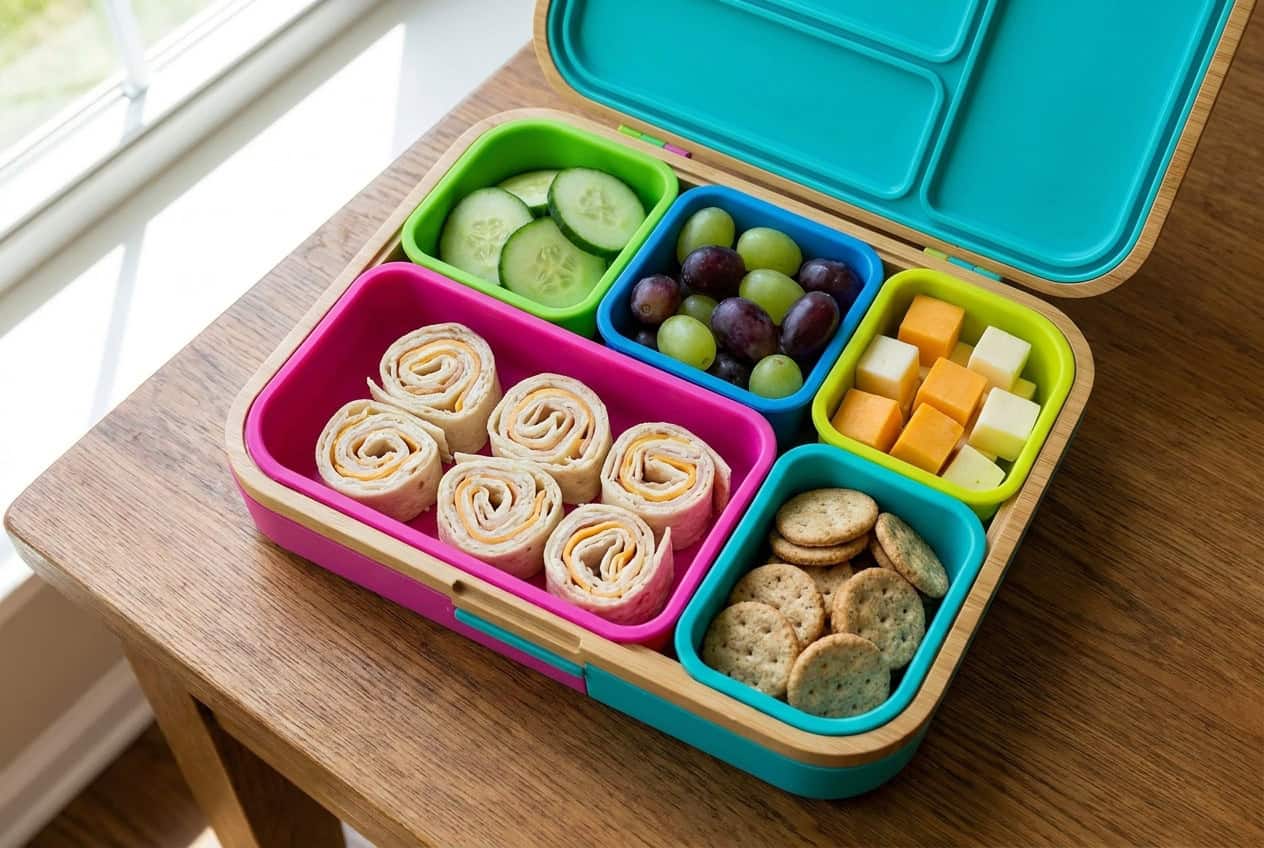
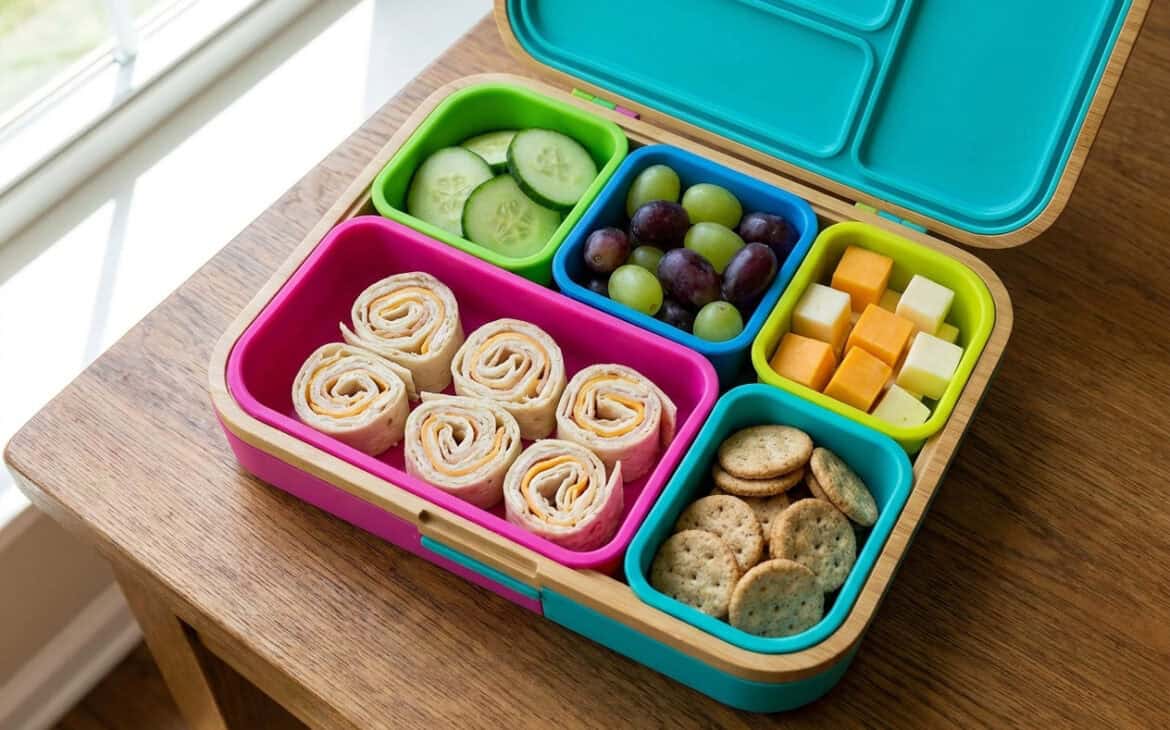
The single best move is to stop thinking “sandwich” and start thinking “a few good things in compartments.” The snacky bento lunch — a homemade version of the store-bought stackers, with whole-grain crackers, cheese, and some turkey or turkey pepperoni — is wildly popular with kids precisely because it’s a graze, not a meal they have to commit to. When you do want something more substantial, tortilla pinwheels (cream cheese and turkey rolled and sliced into spirals) and wraps cut into triangles travel far better than sliced bread, which goes soggy by lunchtime.
From there the options open up: cold pasta salad with diced veggies and a little pesto is genuinely better cold than hot, quesadilla wedges and cold “English muffin pizzas” get eaten happily at room temperature, and a bagel with cream cheese is a reliable crowd-pleaser. On the days you have last night’s dinner to spare, a thermos of leftovers is the easiest win of all — many of the quick family dinners reheat beautifully into a hot lunch the next day.
Protein that travels
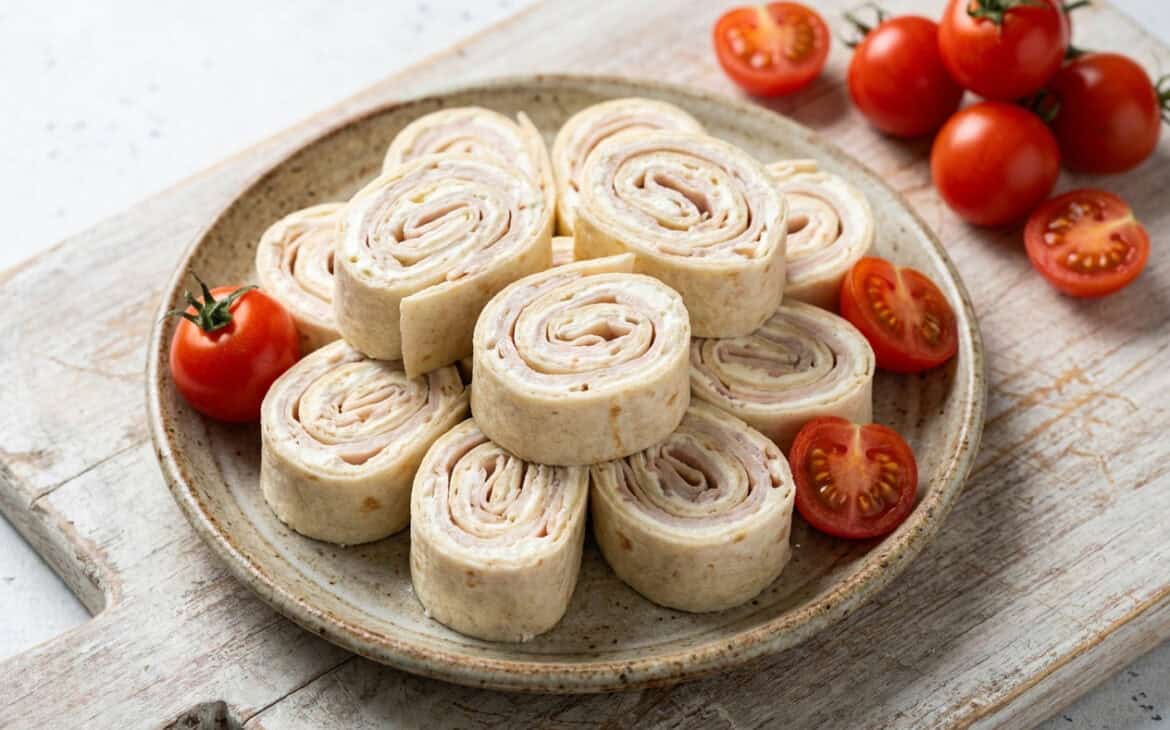
Protein is what keeps a kid from crashing by two o’clock, and most of it needs no cooking. Cheese cubes or slices, a hard-boiled egg, a yogurt (freeze the tube and it doubles as an ice pack), hummus with dippers, turkey or ham roll-ups around a cheese stick, shelled edamame eaten cold, or a little cup of beans all do the job. A cottage cheese cup paired with fruit is quietly one of the highest-protein options going. Mix and match one of these into the box and lunch suddenly holds a child until the final bell.
Fruits and vegetables that survive the backpack
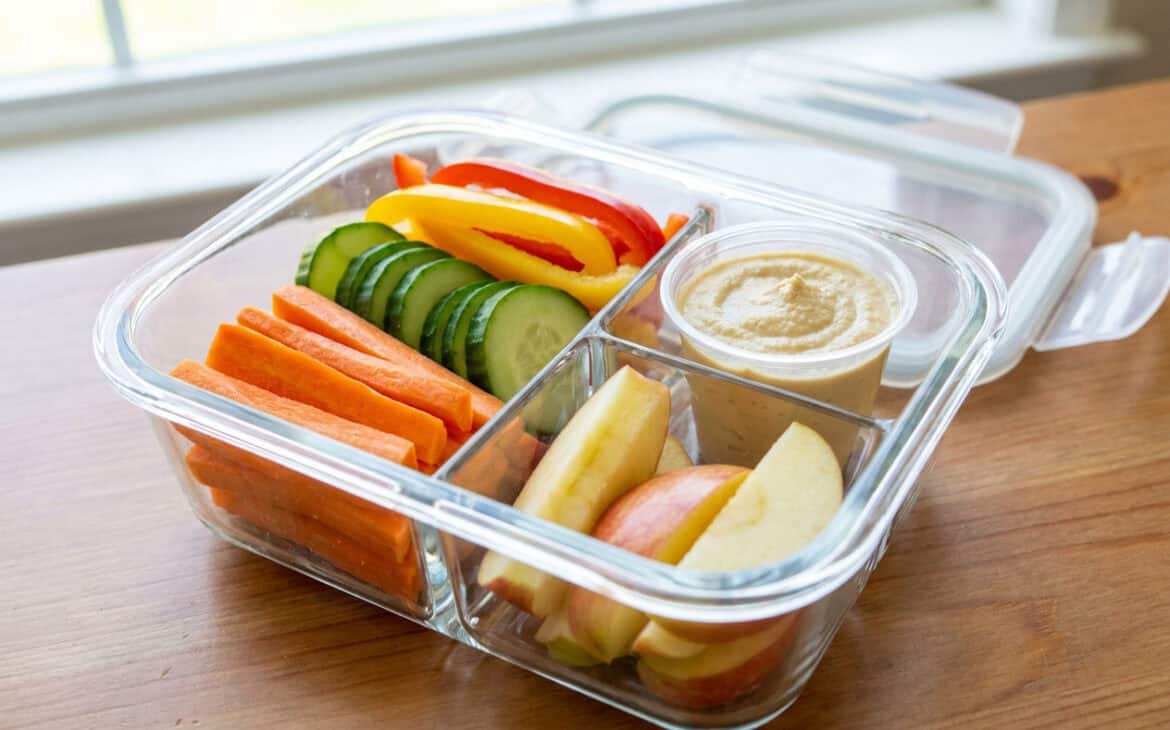
Some produce takes a beating in a lunchbox and some shrugs it off. The sturdy travelers are grapes (halved or quartered for little ones — see the safety note below), apple slices tossed with a little lemon water to slow browning, and the reliable crew of carrot sticks, cucumber, snap peas, and bell-pepper strips. Berries, clementine segments, and melon chunks hold up well too. The real trick with vegetables is a dip — ranch or hummus is often the difference between a vegetable eaten and a vegetable returned home untouched.
Keeping the lunchbox safe
This is the part most lunch lists skip, and it matters. Bacteria multiply fast in the range between 40 and 140 degrees, and the USDA’s rule is that perishable food shouldn’t sit in that zone more than two hours (one hour if it’s above 90). A school lunch routinely sits three to five hours between packing and eating, so a cold lunch isn’t relying on that two-hour window — it’s relying on staying genuinely cold. Pack perishables in an insulated bag with at least two cold sources: the USDA suggests two frozen gel packs (each no smaller than five by three inches), or one gel pack plus a frozen juice box or water bottle that doubles as a cold drink by lunchtime.
For hot food, the thermos is your friend, but preheat it: fill the insulated jar with boiling water, cap it for five to ten minutes, then dump the water and add piping-hot food (reheated to 165 degrees first). That preheat is what keeps soup or pasta above the safe 140-degree mark for hours. One more safety layer worth knowing for younger kids: round, firm foods are choking hazards, so cut grapes and cherry tomatoes into quarters and hot dogs lengthwise into small pieces for children under about four, and skip whole nuts and popcorn for that age. And before you pack anything with nut butter, check your school’s allergy policy — some buildings are fully nut-free and others just have nut-free tables, and SunButter or a soy-based spread is an easy swap when needed.
A packing strategy that sticks
A few habits make the whole thing sustainable. A bento box with compartments does a lot of quiet work, since five or six small things suit a short attention span better than one big item. Pack the night before, with produce washed and cut on the weekend, so mornings are assembly, not prep. Let kids choose from a short menu — the protein, the fruit, the one fun extra — because a lunch they helped build is a lunch they actually eat. Always include at least one “safe” food you know they like alongside anything new, and keep a loose two-week rotation in mind so the box doesn’t slide back into the rut you just climbed out of.
Frequently Asked Questions
How do I keep a packed lunch cold with no fridge at school?
Use an insulated bag plus at least two cold sources — the USDA suggests two frozen gel packs (each no smaller than five by three inches), or one gel pack with a frozen juice box or water bottle. The goal is to keep the food at or below 40 degrees until lunch, since it can’t rely on the usual two-hour window.
Is it safe to pack lunch the night before?
Yes — assemble it and refrigerate it overnight so everything starts fully cold, then add the ice packs as it goes into the bag in the morning. Keeping perishables refrigerated right up until packing is exactly what the food-safety guidance calls for.
How long can a packed lunch safely sit out?
Perishable food shouldn’t be in the 40-to-140-degree danger zone for more than two hours total, or one hour if it’s above 90 degrees. Since school lunch often sits three to five hours, that’s precisely why the insulated bag and ice packs matter — they keep it cold rather than counting on that short window.
How do I keep food hot in a thermos until lunch?
Preheat the thermos by filling it with boiling water for five to ten minutes, then dump it and add piping-hot food reheated to 165 degrees. Sealed and full, it will hold above the safe 140-degree mark for hours. The preheat step is the part that makes it last.
What foods are choking hazards for young kids?
For children under about four, the main ones are whole grapes and cherry tomatoes, hot dogs, whole nuts and seeds, popcorn, hard candy, and large chunks of cheese or raw hard vegetables. Quarter the round foods, cut hot dogs lengthwise into small pieces, spread nut butter thin rather than in globs, and keep kids seated while they eat.
What can I use instead of peanut butter for a nut-free school?
SunButter, made from sunflower seeds, and WowButter, made from soy, are the usual swaps, and several seed-based spreads are free of the most common allergens. First check whether your school is fully nut-free or just has nut-free tables, since the rules differ.