DASH Diet Recipes: Heart-Healthy Meals That Lower Blood Pressure

The DASH diet keeps getting voted the best eating plan for your heart, and the appeal is that there’s nothing exotic about it: no special foods to buy, no whole food groups to banish, just a flexible framework of real meals built to lower blood pressure. Here’s how it actually works, the daily targets, and a week’s worth of easy, heart-healthy recipe ideas to put it on your plate.

What the DASH diet actually is
DASH stands for Dietary Approaches to Stop Hypertension, and it was developed through research funded by the National Heart, Lung, and Blood Institute (NHLBI), part of the NIH. It’s not a fad, it’s the plan major medical bodies keep ranking as the best diet for high blood pressure and one of the best for heart health overall. The mechanism is straightforward: it loads up on the nutrients that help regulate blood pressure (potassium, magnesium, calcium, and fiber) while cutting back on sodium, saturated and trans fats, added sugars, and red meat. Studies have repeatedly shown it lowers both blood pressure and LDL (“bad”) cholesterol, the two big risk factors for heart disease, often within a couple of weeks.
The daily targets (on a 2,000-calorie day)
DASH works by hitting daily and weekly serving goals rather than counting calories. On a typical 2,000-calorie day, that looks like:
- 6–8 servings of grains (make most of them whole grains)
- 4–5 servings of vegetables
- 4–5 servings of fruit
- 2–3 servings of low-fat or fat-free dairy
- 2 or fewer 3-ounce servings of lean meat, poultry, or fish
- 2–3 servings of healthy fats and oils
- Nuts, seeds, and legumes about 4–5 times a week, sweets 5 or fewer times a week
The other lever is sodium. Standard DASH caps it at 2,300 mg a day, while the lower-sodium version targets 1,500 mg, which the NHLBI notes lowers blood pressure even further. Most of us are well above both, and the gap is mostly hidden in processed and restaurant food, not the salt shaker.
Breakfast ideas
Mornings are the easiest DASH win. Overnight oats made with rolled oats, low-fat milk or plain yogurt, and a handful of berries hit grains, dairy, and fruit in one bowl. A veggie scramble with whole-grain toast and a side of fruit works for savory mornings, and plain Greek yogurt topped with banana, walnuts, and a drizzle of honey is a high-potassium, high-calcium start. The trick is skipping the high-sodium usual suspects, bacon, sausage, and most boxed cereals, in favor of these whole-food swaps.

Lunch and dinner ideas
This is where DASH shines, because it’s really just balanced, vegetable-forward cooking. A few reliable templates: grilled or baked salmon (a heart-healthy omega-3 standout) with quinoa and roasted broccoli; a chicken-and-vegetable stir-fry built on a low-sodium sauce over brown rice; a big bean or lentil chili that leans on legumes instead of beef; or a hearty grain bowl with chickpeas, lots of vegetables, and a lemon-tahini dressing. For lighter meals, a generous salad topped with grilled chicken and unsalted nuts, or a vegetable-packed minestrone made with low-sodium broth and rinsed canned beans, checks every box. Notice the pattern: vegetables and whole grains take center plate, and meat becomes a modest side rather than the main event.
Snacks and sides
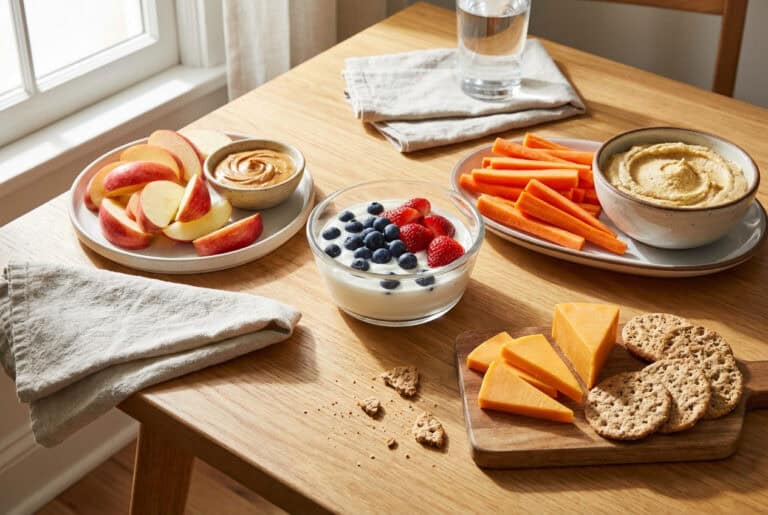
Snacking is where a lot of sodium sneaks in, so DASH leans on simple, whole options: a piece of fruit, a small handful of unsalted almonds or walnuts, carrot and cucumber sticks with hummus, plain low-fat yogurt, or air-popped popcorn seasoned with herbs instead of salt and butter. Keep these visible and within reach, the easiest way to eat DASH is to make the DASH choice the convenient one.
How to cut sodium without losing flavor
The most common DASH worry is bland food, and it’s an easy fix once you stop relying on salt for flavor. Build taste with herbs, spices, garlic, onion, citrus, and vinegar instead, a squeeze of lemon and fresh herbs will wake up a dish more than salt does. A few high-impact habits: buy low-sodium or no-salt-added canned goods and broths, rinse regular canned beans to wash off up to 40% of their sodium, cook more meals from scratch (where you control the salt), and read nutrition labels, since breads, deli meats, sauces, and soups are the biggest hidden sources. Your palate genuinely recalibrates within a few weeks, and over-salted food starts to taste like too much.
DASH-ify the meals you already make
You don’t have to start from scratch. Swap white rice and pasta for brown rice and whole-grain versions, trade half the ground beef in a recipe for lentils or beans, use plain Greek yogurt in place of sour cream, double the vegetables in any dish, and reach for olive oil instead of butter. A handful of these swaps turns familiar family dinners into DASH-friendly ones without anyone noticing they’re “eating healthy.”
Frequently Asked Questions
What can you eat on the DASH diet?
Plenty: fruits, vegetables, whole grains, low-fat dairy, fish, poultry, beans, nuts, and healthy oils. It limits sodium, red meat, added sugars, and saturated and trans fats rather than banning specific foods.
How much sodium is allowed on DASH?
The standard plan allows up to 2,300 mg of sodium a day; the lower-sodium version targets 1,500 mg, which the NHLBI says lowers blood pressure even more.
Does the DASH diet really lower blood pressure?
Yes. It was specifically designed to, and multiple studies show it reduces both blood pressure and LDL cholesterol, often noticeably within a couple of weeks. It’s consistently ranked the top diet for high blood pressure.
What foods should you avoid on DASH?
Cut back on high-sodium processed foods, red and cured meats, sugary drinks and sweets, and foods high in saturated and trans fats. You don’t have to eliminate them entirely, just keep them occasional.
Is the DASH diet hard to follow?
It’s one of the more sustainable plans because it uses ordinary foods and serving goals rather than strict rules. Most people start by adding vegetables and whole grains and cutting hidden sodium, then build from there.
Related Reading
- The Shocking Truth About Voortman Bakery Cookies: Why Food Scientists Are Obsessed
- Blue Ocean Cocktail Recipe (Easy Blue Tropical Drink)
- Pumpkin Spice Cookie Bars (Soft, Chewy & Easy)
- Orange Float: How to Make the Classic Creamsicle Soda Float