Simple Sensory Bin Ideas for Toddlers

A sensory bin is one of the highest-return-on-effort activities in the toddler-parenting playbook: a plastic tub, a cheap filler from the pantry, a few scoops, and you’ve bought yourself a stretch of focused, independent play. The setup takes five minutes and the payoff is a toddler happily scooping and pouring while their hands, language, and attention all quietly get a workout. The one thing that matters more than any clever theme is safety, so that comes first here — then the ideas, the fillers, and the practical bits like how to dye your own rice and keep the mess from taking over the kitchen.
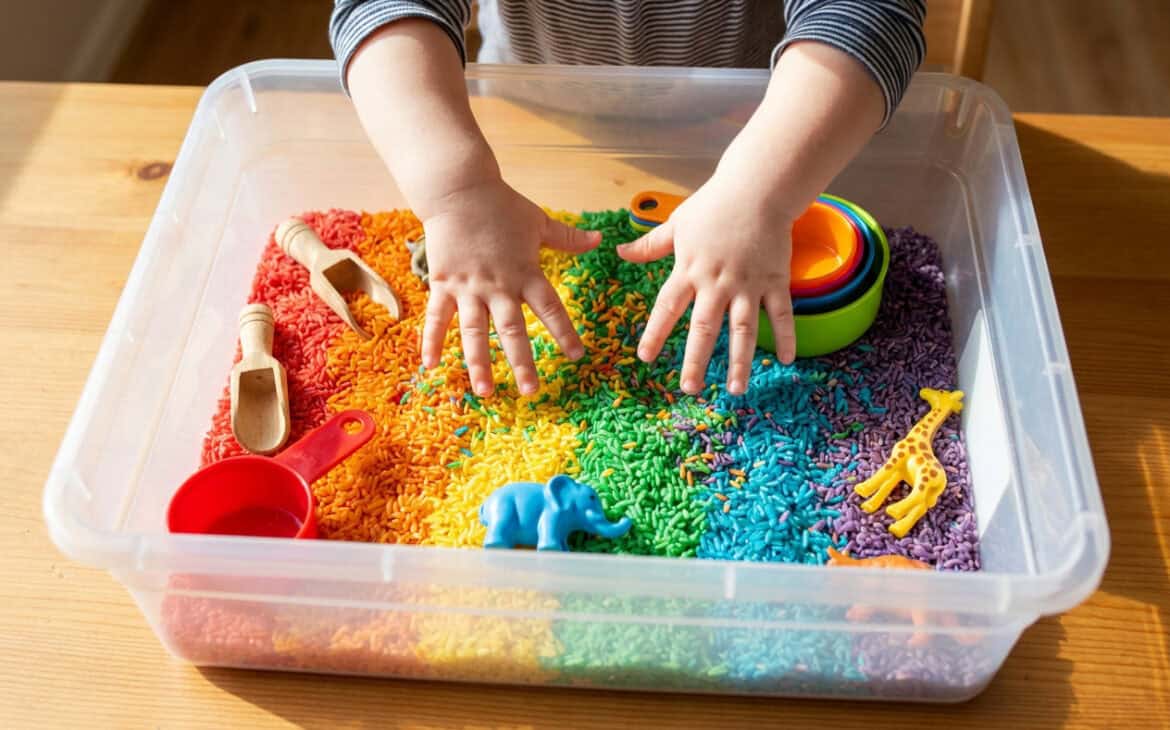
Read this part first: keeping it safe
Sensory bins are a sit-with-them activity, not a leave-the-room one, and the reason is choking. For children under three — and any older child who still puts things in their mouth — small loose fillers are a real hazard. A good home test: if something fits inside a toilet-paper tube, it’s too small, which rules out dry beans, dry rice, pom-poms, cotton balls, and beads for that age group. For little ones who still mouth everything, use taste-safe fillers instead (more on those below) and stay within arm’s reach the whole time.
One filler deserves a flat “not for toddlers”: water beads. The small absorbent gel beads can swell inside the body if swallowed and cause serious internal blockages, and safety regulators have linked them to thousands of emergency-room visits and at least one infant death. A new federal safety standard took effect in 2026 to limit their size and chemicals, but the guidance from child-safety experts hasn’t changed — keep water beads away from homes with babies and toddlers, and don’t assume an age label makes them safe. For this age, skip them entirely.
Why sensory bins are worth the mess
Beyond simply buying you a few minutes, sensory play does real developmental work — just don’t let anyone oversell it. Scooping, pinching, pouring, and using tongs build the hand strength and coordination toddlers will later need for utensils and crayons. Naming what they feel and do (“scoop,” “pour,” “bumpy,” “cold”) feeds vocabulary, which is why speech therapists use bins on purpose. The open-ended exploration supports sorting, cause-and-effect, and early pretend play, and the repetitive tactile motion can be genuinely calming for a wound-up child. What a rice bin is not is a medical intervention — it won’t “boost IQ” or treat anything — but as a cheap, screen-free activity that supports developing skills, it earns its place. If you’re building out a rotation of this kind of play, it pairs naturally with the open-ended options in our guide to educational toys for toddlers, and it’s a lifesaver on the kind of stuck-inside day covered in our rainy-day activities roundup.
Bin ideas by filler
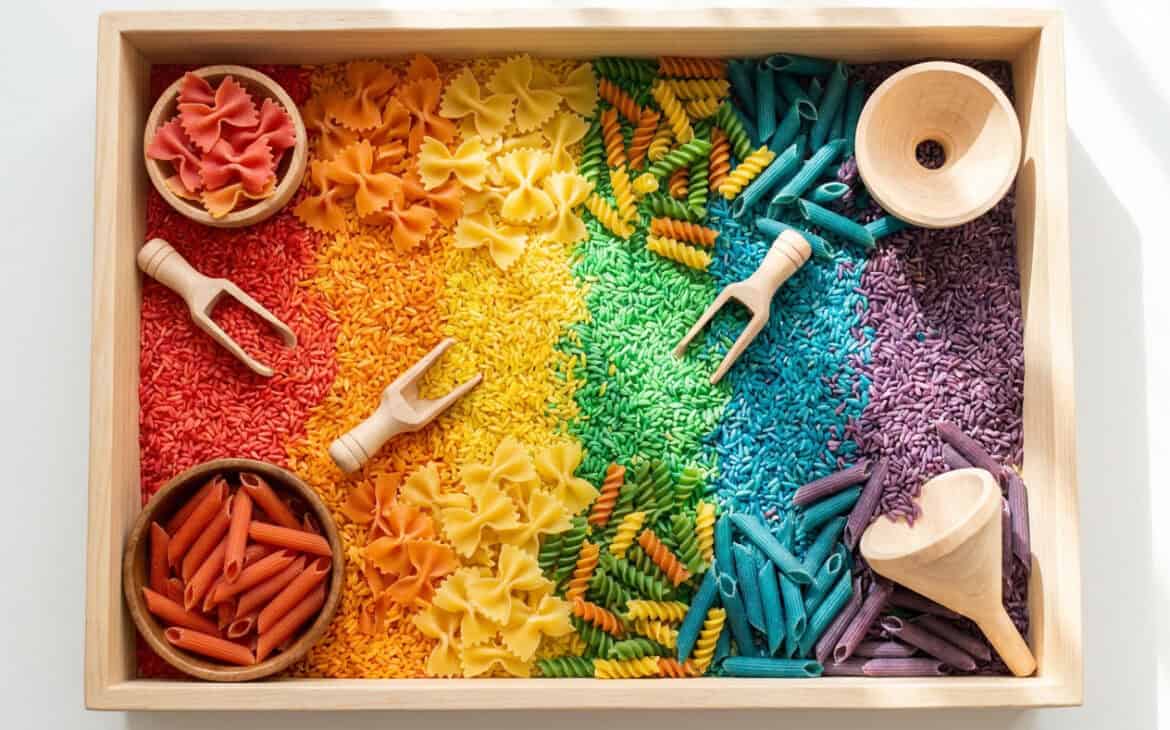
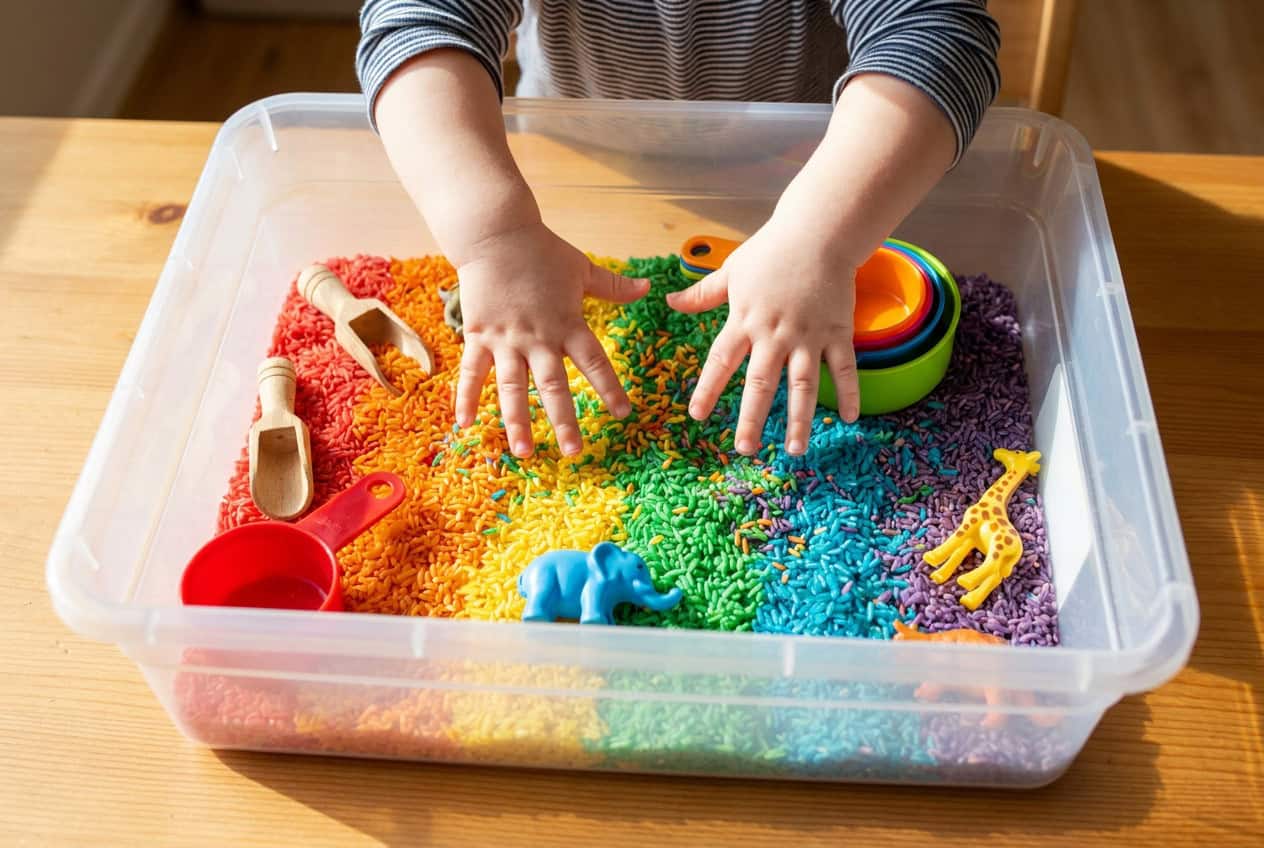
The simplest formula is a base filler, a few add-ins, and a loose theme, with tools like scoops, funnels, measuring cups, tongs, and a toy dump truck to drive the play.
Dry fillers (for confident non-mouthers, around three and up or closely supervised): dyed rainbow rice is the classic, and blue-dyed rice plus toy fish and seashells makes an instant ocean. Dried beans with little farm animals and a toy tractor become a farm; play sand with diggers and small rocks is a construction site, or add toy dinosaurs and a brush for a “fossil dig.” Dry pasta, oats, and pom-poms (sorted by color into a muffin tin with tongs) all work, and seasonal spins are easy — dyed orange and brown rice with silk leaves and mini pumpkins for fall, cotton-ball “snow” with little figures for winter.
Water and ice (supervise closely — even a little water is a drowning risk for the very young): a bin of water with cups, funnels, sponges, and floating toys is endlessly absorbing, and freezing small toys into a block of ice for a warm-water “rescue” mission is cause-and-effect plus a thrill.
Taste-safe fillers (the right choice for under-twos and any child who still mouths things): cooked and dyed pasta — “rainbow spaghetti” — is slippery, colorful fun; plain dry or cooked oats become a pretend kitchen; O-shaped cereal scoops and threads and is safe to nibble; and crushed plain cereal as “dirt” with cooked-spaghetti “worms” makes a garden bin. A useful trick is to feed your child a snack first, so the taste-safe base is less tempting to eat.
How to set it up (and dye your own rice)
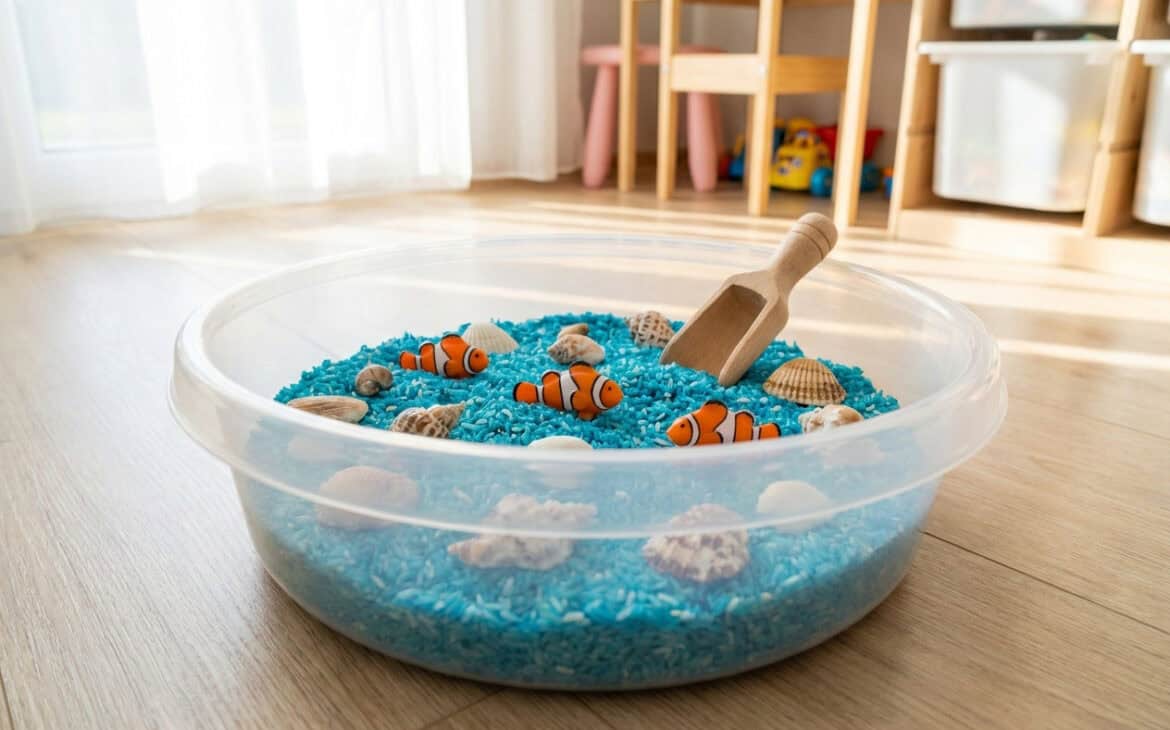
For a container, shallow and wide beats deep and narrow — an under-bed storage tub, a dishpan, or even a rimmed baking sheet for a small portion all work, and a lid means you can reuse it. Dyeing your own rice or pasta is easy and cheap: put a cup or two in a zip-top bag with about a teaspoon of white vinegar and several drops of food coloring, shake for a minute or two until the color is even, then spread it on parchment or a baking sheet to dry for an hour or two. Vinegar is the gentler, toddler-friendly choice (rubbing alcohol dries a little faster but is harsher), and a splash of plain water with the coloring works too if you’d rather skip both, it just takes longer to dry.
To contain the mess, put the bin inside a bigger bin, or set it on a splat mat, an old sheet, or in the bathtub — outdoors is best of all in summer. Keep portions small at first, set a simple “keep it in the bin” rule, and have a dustpan or handheld vacuum ready, because some rice is going on the floor no matter what. Dry bins (rice, beans, pasta, sand, pom-poms) snap shut and last weeks to months — toss them if they ever smell or feel damp — while taste-safe edible bins are food: use them once, refrigerate only briefly, and throw them out the same day. Store each bin’s add-in toys in a labeled bag and rotate the theme now and then to keep it feeling new.
Frequently Asked Questions
What age are sensory bins good for?
Most toddlers love them from around eighteen months to two years, and younger babies can do simple supervised water or taste-safe play. The real question isn’t age so much as whether your child still mouths objects — that’s what determines which fillers are safe to use.
My toddler still puts everything in their mouth. Can we still do sensory bins?
Yes, but only with taste-safe fillers — cooked or dyed pasta, plain oats or oatmeal, cereal, cooked rice or beans — and no small choking-hazard add-ins. Save dry rice, dry beans, pom-poms, and beads until they reliably stop mouthing, and always supervise.
Aren’t small fillers a choking hazard?
They can be. For children under three or any child who still mouths things, skip loose small items. A quick check: if it fits inside a toilet-paper tube, it’s too small. Stick to taste-safe bases and large add-in toys for that age.
Are water beads safe for toddlers?
No — avoid them for toddlers. Swallowed water beads can swell inside the body and cause serious internal injury, and safety regulators tie them to thousands of ER visits and at least one infant death. A 2026 federal standard limits their size and chemicals, but experts still advise keeping them away from babies and toddlers, and an age label doesn’t make them safe.
How do I keep the mess under control?
Play inside a bigger bin, on a splat mat or old sheet, in the bathtub, or outdoors; keep the portion small; have a dustpan or handheld vacuum nearby; and set a simple “keep it in the bin” rule. Some mess is part of the deal, but containment keeps it from spreading.
How do I store and reuse a sensory bin?
Dry bins — rice, beans, pasta, sand, pom-poms — seal in an airtight container and last weeks to months; toss them if they’re ever damp or smelly. Edible, taste-safe bins are food: use them once, refrigerate only briefly, and discard the same day. Keep each bin’s toys in a labeled bag and rotate themes to keep things fresh.