
Easy Kids’ Crafts Using Things You Already Have at Home

The crafts that actually get made on a random Tuesday are the ones that don’t require a trip to the store. Not the elaborate Pinterest projects with a shopping list of pipe cleaners and googly eyes — just the things you can pull together from the recycling bin, the pantry, and the backyard while the kids are already restless. Everything below uses what’s almost certainly already in your house, and it’s grouped by material so you can scan to whatever you’ve got on hand. Each idea is tagged by age, and the two recipes parents ask about most — playdough and salt dough — are spelled out properly, because a vague “just mix flour and salt” has ruined many an afternoon.
Crafts from paper and cardboard
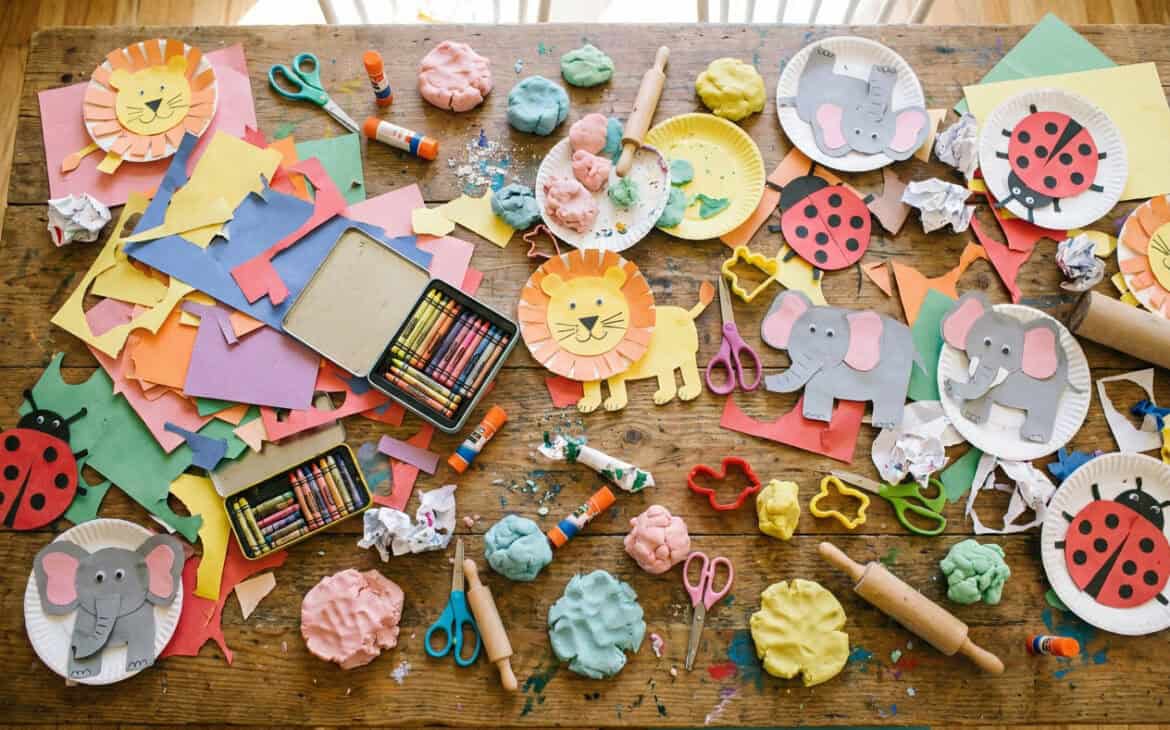
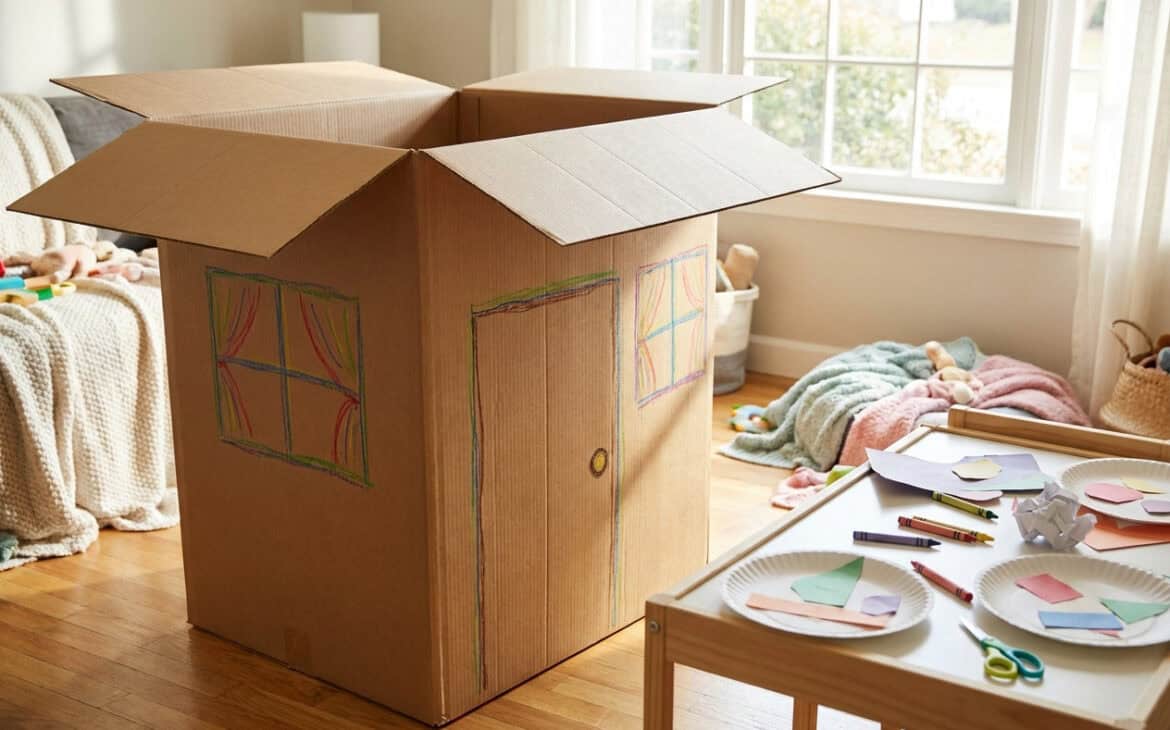
Paper and a cardboard box might be the most versatile craft supplies in the house. A single paper plate becomes a lion with a fringed mane, a fish, or a smiling sun with nothing but crayons and a pair of scissors — and for toddlers, you cut the pieces and let them decorate. A big cardboard box is an afternoon all by itself: cut a door and a couple of windows and it’s a playhouse, or add paper-plate wheels and it’s a car a toddler will happily “drive” across the living room. Cardboard tubes from paper towels and toilet paper turn into binoculars, rockets, and little people, or you can dip the rim in paint and stamp circles.
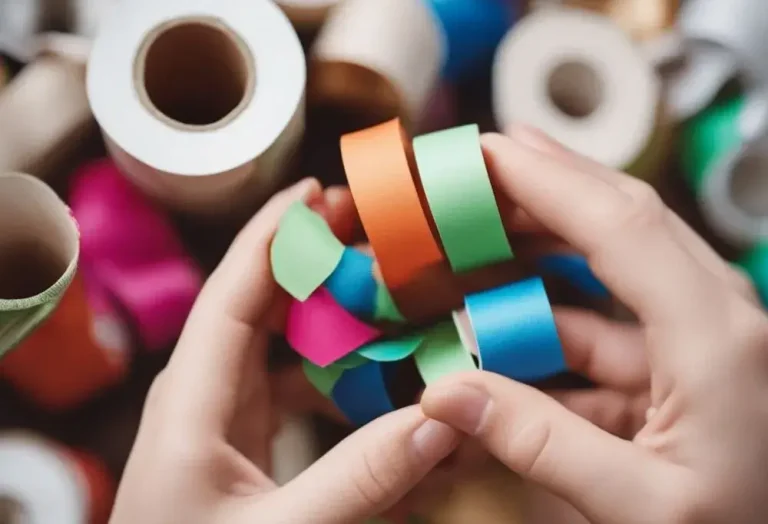
For preschoolers and up, a flat-bottomed paper lunch bag makes a classic puppet — the fold becomes a mouth that talks. Cutting strips and looping them into a paper chain is sneaky-good fine-motor practice that doubles as decoration, and basic folding (a fan, a paper boat, a simple hat) needs nothing but paper and a little patience. None of it photographs like a craft kit, and that’s fine — the point is the doing.
Crafts from the recycling bin
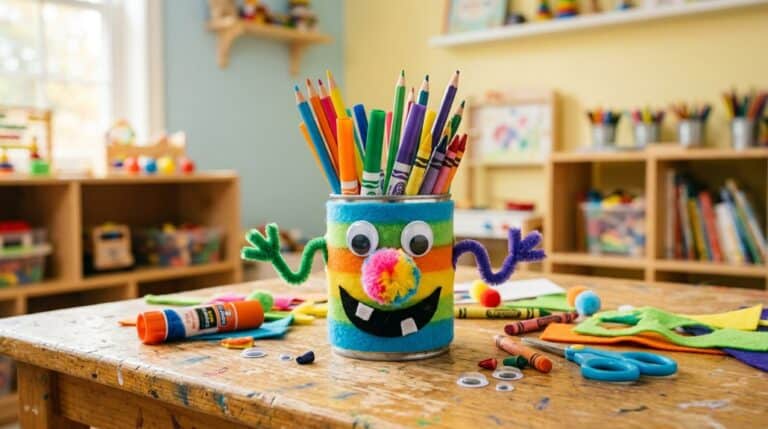
Before you flatten the recycling, mine it. An egg carton cut apart becomes caterpillars, spiders, or a bouquet of painted flowers. A washed tin can turns into a pencil holder or a little planter, though an adult should check the cut rim for sharp spots first. Saved bottle caps glue into flowers and mosaics or work as paint stamps, and a clean plastic bottle filled with a handful of rice or dried beans and sealed tightly by an adult makes a shaker — just keep it firmly closed, since the contents are a choking hazard if it opens. A flat cereal-box panel, drawn on and cut into pieces, becomes a homemade puzzle.
A quick safety word on this category: bottle caps, dried beans, and small loose parts are genuinely dangerous for children under three, who explore with their mouths. The federal rule of thumb is that anything small enough to fit inside a toilet-paper tube is a choking hazard for that age, so save the small-parts crafts for older kids and keep little ones to large pieces and adult-led projects.
Crafts from kitchen staples

The pantry is a craft cupboard in disguise. Coffee filters colored with washable markers and then spritzed with water bleed into beautiful tie-dye flowers and butterflies. Salt painting feels like magic to a five-year-old: draw lines with glue, sprinkle table salt along them, then touch a brush of watered-down food coloring to the salt and watch the color travel. And the two workhorses, playdough and salt dough, are worth making from scratch — just know they’re different things. Playdough stays soft for endless squishing; salt dough is meant to harden into a keepsake, so don’t confuse the two.
For no-cook playdough that lasts, mix:
- 1 cup all-purpose flour
- ¼ cup table salt
- 1 tablespoon cream of tartar
- 1 tablespoon oil
- ½ cup boiling water, with food coloring stirred in
Combine the dry ingredients and oil, pour in the colored hot water (an adult’s job), stir until it forms a ball, then knead for a couple of minutes until smooth, adding a little flour if it’s sticky. The cream of tartar is what keeps it soft and stretches its life to several weeks or more in an airtight container; a splash of lemon juice can stand in if you don’t stock it, though the texture is a touch firmer.
Salt dough, for ornaments and handprint keepsakes, is even simpler: two parts flour to one part salt to about one part water (say, two cups flour, one cup salt, and roughly a cup of water added gradually) kneaded into a firm, smooth dough. Roll it about a quarter-inch thick, cut your shapes, and bake low and slow — around 200 to 250 degrees for a couple of hours, figuring roughly thirty minutes per quarter-inch of thickness — until it’s completely hard. You can bake it faster at 325 for about an hour, but the higher heat is more likely to puff and crack, so low is the safer bet. Cool it fully, then paint. It’s non-toxic but very salty, which is a feature — it discourages tasting — though it’s worth keeping away from dogs, who shouldn’t eat it.
Crafts from a walk outside
A five-minute hunt in the yard stocks a whole craft session. Leaf rubbings are the gateway — a leaf under a sheet of paper, the side of a peeled crayon dragged over it, and the veins appear like a photograph developing. Smooth rocks become painted ladybugs, faces, or “story stones” you can use to make up tales later. Pinecones turn into little trees or, rolled in peanut butter and birdseed and hung from string, a bird feeder (check for nut allergies first). And a handful of leaves, petals, and twigs glued onto cardboard makes a nature collage that captures the season better than anything from a store.
The mindset and the cleanup
The single most freeing thing to remember with young kids is that it’s about the process, not the product. A toddler’s painting will be a brown blob, and that’s exactly right — the value is in the mixing, smearing, and deciding, not the result, so resist the urge to “fix” their work. It also lowers your own blood pressure considerably.
Mess is manageable if you set up before you start: a cheap vinyl tablecloth or an old sheet down, the craft done on a rimmed baking sheet to corral spills and small parts, an old t-shirt as a smock, and a damp cloth within reach. Stick to anything labeled washable, and actually check the label before you hand it over. As for the mountain of finished art, photograph the flat pieces to keep the memory without the clutter, rotate a few favorites on a wall or a clipped string, keep one keepsake box per kid, and recycle the rest without guilt. The easiest habit of all is a craft bin: a lidded tub stocked with paper, crayons, kid scissors, tape, glue, and a rotating stash of clean cardboard tubes and egg cartons, refilled from the recycling as you go. With that on a shelf, a craft is always five minutes away, no store run required.
Frequently Asked Questions
What can I make if I have no craft supplies at all?
Paper and crayons cover a surprising amount — leaf rubbings, paper fans, folded boats and hats, and free drawing need nothing else. Add tape and you’ve got paper chains and cardboard-tube crafts; add flour and salt and you can make playdough or salt dough.
What’s the difference between playdough and salt dough?
Playdough stays soft for repeated squishing and molding and shouldn’t be baked. Salt dough is meant to be baked or air-dried until hard, then painted, so it becomes a permanent ornament or handprint keepsake. They’re made from similar ingredients but used completely differently.
How long does homemade playdough last?
Stored in an airtight container or zip bag, a batch made with salt and cream of tartar usually lasts a few weeks and often a couple of months. Without those, it can dry out or grow mold within days. Toss it if it smells off or turns slimy.
Are these crafts safe for toddlers under three?
Many are, with supervision — but skip anything with small parts that fit in a toddler’s mouth, like pasta beads, bottle caps, dried beans, or loose buttons. For little ones, stick to large-piece, adult-led crafts, and never leave them alone with small items, string, or paint.
Is homemade dough safe if my child tastes it?
It’s non-toxic but not meant to be eaten — it’s extremely salty, which both discourages tasting and can upset a stomach, and it’s genuinely risky for dogs. Supervise, don’t treat it as a snack, and for babies who still mouth everything, use a truly edible recipe instead.
How do I keep craft time from becoming a huge mess?
Contain it before you begin: tablecloth or baking sheet down, washable supplies only, an old-shirt smock, and a damp cloth ready. Match the craft to the moment — coloring and stickers when you want low mess, paint and glue when you have time to clean up.