Best Crockpot Dinners for Busy Weeknights (Dump-and-Go)

There’s a reason “dump-and-go” slow cooker dinners have a cult following among parents: on the days when you genuinely cannot cook, the promise of opening a few packages into a pot at 8 a.m. and walking into a finished dinner at 6 p.m. is close to magic. The catch is that a lot of recipes labeled dump-and-go quietly aren’t — they slip in a “just brown the meat first” step that means standing at the stove when you have no time to stand anywhere. So this is a list of dinners that truly are hands-off, an honest flag on the few that cook better with a two-minute sear, and the handful of techniques that separate a great slow-cooker dinner from a dry or watery one.
What “dump-and-go” actually means
A real dump-and-go recipe is exactly what it sounds like: everything goes in raw or straight from the package, you set the temperature, and you don’t touch it again until it’s done. No searing, no sauteing, no pre-cooking. That rules out a surprising number of “easy” recipes, and it’s worth being clear-eyed about, because the whole point is to save you the one thing you don’t have — time at the stove on a weeknight.
The good news is that plenty of genuinely excellent dinners need nothing more than dumping. The trick is matching the dish to your day: a tough cut like a chuck roast or pork shoulder is happy cooking on low for eight to ten hours while you’re at work, while lean chicken breast can dry out if it sits too long, so it suits a shorter window or a day you’re home to pull it on time. Keep that distinction in mind and you can pick the right recipe for the hours you actually have.
The truly dump-and-go dinners

These need zero stovetop work. Cook times are typical ranges — your cut size and cooker will vary, so lean on doneness, not the clock alone.
Chicken. Salsa chicken is the gateway: chicken breasts, a jar of salsa, and a sprinkle of taco seasoning cook down in about four hours on high or six on low, then shred into tacos, bowls, or quesadillas, with mild salsa keeping it kid-friendly. Chicken taco soup is nearly as easy and stretches further — chicken plus canned beans, corn, diced tomatoes, and taco seasoning, ready in six to eight hours on low, with a toppings bar that lets everyone build their own bowl. Creamy ranch chicken (chicken, a can of cream-of-chicken soup, a packet of dry ranch, and a splash of milk, often with potatoes and carrots tossed in) is the comfort-food crowd-pleaser, though it’s worth stirring the soup smooth and adding the milk toward the end so the dairy doesn’t break. And honey-garlic chicken thighs — thighs in a honey, garlic, and soy sauce — come out sweet and glossy over rice, which is exactly the flavor most kids gravitate to.
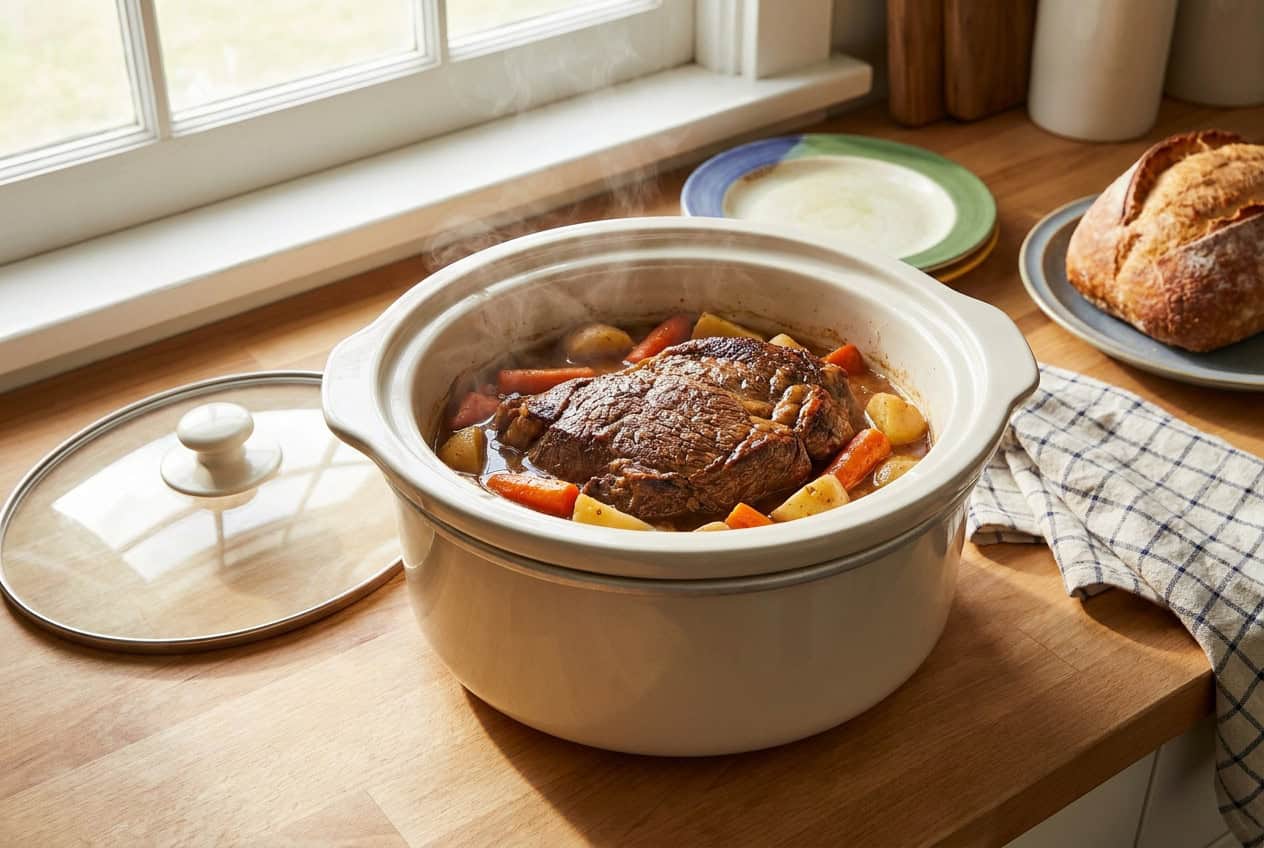
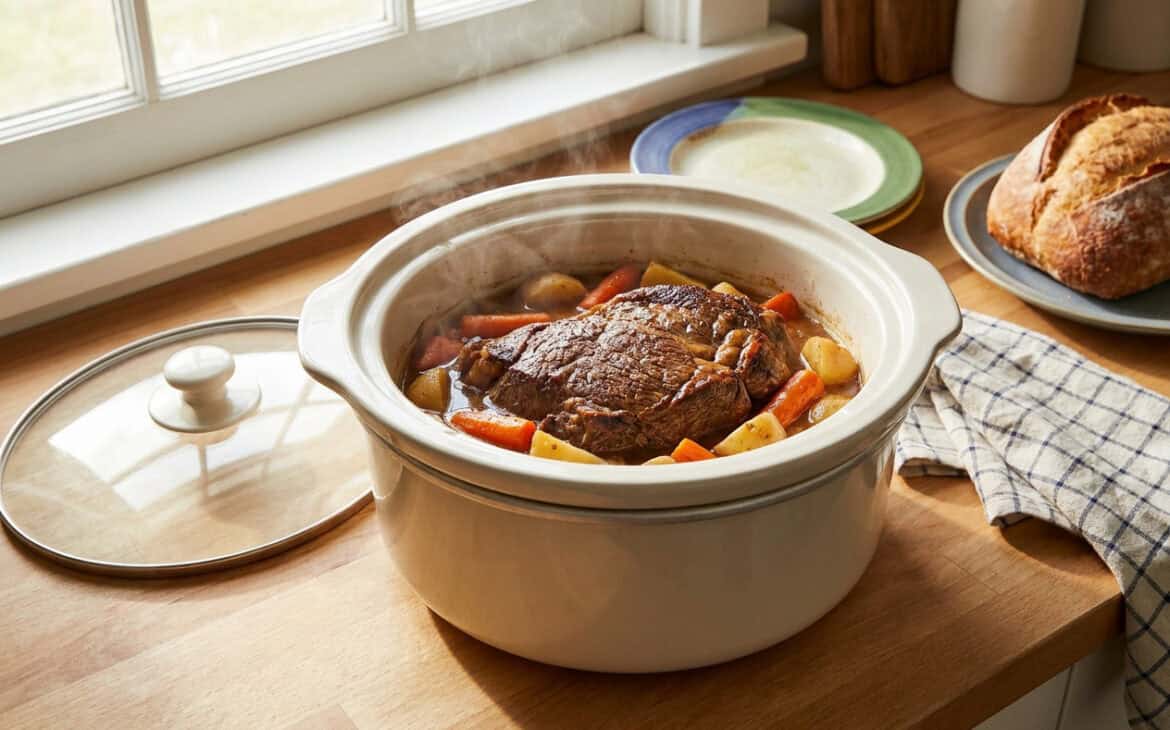
Beef. A classic pot roast is the definition of set-it-and-forget-it: a chuck roast with carrots, potatoes, onion, and a little broth or onion soup mix runs eight to ten hours on low and survives a full workday beautifully. Chili is the other easy win — you can crumble the raw ground beef straight in with beans, diced tomatoes, tomato sauce, and chili seasoning and let it go about six hours on low (browning the beef first is optional, mostly for texture and to pour off grease, so skip it on a busy day).
Pork. Pulled pork is forgiving and feeds a crowd: a pork shoulder with a rub or barbecue sauce and a little liquid needs roughly six to eight hours on low (figure about an hour to ninety minutes per pound), then shreds for sandwiches, sliders, and bowls. A genuinely lazy carnitas works too — pork shoulder with citrus, cumin, and garlic, or even just pork and salsa verde — though if you want the signature crispy edges, that’s a quick five minutes under the broiler at the end rather than a stovetop step.
Soups and meatless nights. White bean soup and lentil soup are the unsung heroes of the dump-and-go world: beans or lentils with mirepoix, broth, tomatoes, and seasoning, six to eight hours on low, cheap, filling, and mild enough for kids. Neither needs soaking, and both reheat all week.
The ones worth a quick sear (being honest)
A few popular slow-cooker dinners get labeled dump-and-go but are genuinely better with a two-minute head start, and you deserve to know which. Beef and broccoli benefits from a quick sear on the sliced beef so the strips hold their texture, though plenty of people make it pure dump-and-go and live happily. French dip can skip the sear entirely — chuck roast, beef broth, and onion soup mix will shred into great sandwiches — but browning the roast first deepens the flavor noticeably. Beef stew is the same story: searing the beef is traditional and adds richness, but it’s skippable when time is short. The honest rule is that searing trades two minutes of effort for a meaningful flavor upgrade; on the nights you have those two minutes, take them, and on the nights you don’t, the dish will still be good.
One more honesty note: slow-cooker pasta dishes aren’t truly all-day recipes. The sauce and protein can cook unattended, but the noodles only go in for the last thirty to sixty minutes (use sturdy shapes like penne or rigatoni), which means you need to be home for that step or you’ll come back to mush.
The techniques that prevent dry, mushy, or watery dinners

A slow cooker is forgiving, but a few habits make the difference between a dinner you’re proud of and one that’s a little sad. Layer for even cooking by putting the hearty root vegetables — potatoes and carrots — on the bottom and sides, where the heat is most direct, and the meat on top; root vegetables cook slowest and need that position. Resist lifting the lid, because every peek releases heat and can add twenty minutes to the cook time. Add anything dairy — milk, cream, cheese, sour cream — only in the last half hour, since it curdles over long cooking, and stir in delicate items like frozen peas, fresh herbs, or cooked pasta near the end too.
Use less liquid than you think. Slow cookers trap moisture and barely evaporate, so a dish that would need a couple of cups on the stove often needs half that; if you end up with a watery result, pull the lid and cook on high for the last stretch, or stir in a spoonful of cornstarch slurry to thicken. Fill the pot somewhere between half and two-thirds full for the safest, most even cooking — overfilling makes food steam instead of simmer, and underfilling can scorch. And if you want to brake on a lean protein, use chicken thighs instead of breasts for the long cooks, or pull the breasts the moment they hit 165 degrees.
Freezer dump bags: dinner you prep once
The natural extension of dump-and-go is to assemble the dump ahead of time. Add your thawed raw protein and the sauce and vegetables to a labeled freezer bag, press out the air, lay it flat, and freeze — most combinations keep about three months. The one rule that matters: thaw the bag in the fridge overnight before it goes in the cooker, because the slow cooker shouldn’t be starting with frozen meat (more on why below). Label each bag with its contents and cook time, and a single afternoon of assembly can stock a half-dozen weeknight dinners.
A quick word on food safety
Slow cookers are designed to be safe for long, unattended cooking, but a few USDA guidelines are worth following. Always thaw meat and poultry before adding them — starting from frozen can leave food too long in the 40-to-140-degree range where bacteria multiply. For the same reason, don’t use a slow cooker to reheat leftovers; reheat those on the stove or in the microwave to 165 degrees, and then the cooker can keep them warm. Cook poultry to an internal 165 degrees, ground meats to 160, and whole cuts of beef or pork to 145, using a thermometer rather than color to judge. If you like, you can run the cooker on high for the first hour to clear the danger zone faster, then drop to low for the day. Follow those and you can confidently leave dinner cooking while you’re out.
Frequently Asked Questions
Can I put frozen meat straight into the slow cooker?
No — the USDA advises thawing meat and poultry first. Starting from frozen keeps the food in the bacterial danger zone (40 to 140 degrees) too long. Thaw in the fridge, in cold water, or in the microwave before it goes in.
Is it safe to leave the slow cooker on while I’m at work?
Yes. Slow cookers are built for safe, unattended cooking, and most low-setting dinners run six to ten hours. Use a properly thawed protein, fill the pot between half and two-thirds full, and pick a recipe matched to your hours — a chuck roast or pork shoulder happily cooks all day, while lean chicken breast is better on a day you’re home to pull it on time.
Can I assemble freezer dump bags ahead of time?
Absolutely — it’s one of the best weeknight shortcuts. Add the protein and sauce or vegetables to a labeled freezer bag, press out the air, lay it flat, and freeze for up to about three months. Thaw it in the fridge overnight, then dump it into the cooker.
How do I convert an oven or stovetop recipe for the slow cooker?
As a rough rule, an hour of stovetop simmering equals about six to eight hours on low or three to four on high. The big adjustment is liquid: slow cookers barely evaporate, so use roughly half what the original recipe calls for, and if there’s no liquid at all, add about half a cup of water for steam.
Why did my chicken or pasta come out dry or mushy?
Lean chicken breast overcooks easily on a long cook — switch to thighs, or pull the breasts as soon as they reach 165 degrees. Pasta turns to mush when it cooks too long, so add sturdy shapes only in the last thirty to sixty minutes rather than at the start.
How much liquid does a slow cooker really need?
Less than you’d expect, because so little evaporates. Use about half the liquid of a conventional recipe, and never fill past two-thirds. If it’s watery at the end, finish it uncovered on high or thicken with a cornstarch slurry.