
Make-Ahead Breakfasts for Hectic School Mornings

School mornings have no spare minutes, which is why “a good breakfast” so often loses out to a granola bar handed over in the driveway. The way around it is to do the cooking when you actually have time — a single weekend prep session — and spend the weekday morning just reheating. Done right, a batch of egg muffins or a tray of baked oatmeal turns breakfast into a thirty-second job. Here are the make-ahead breakfasts genuinely worth the effort, sorted by whether they freeze or keep in the fridge, with honest storage times and reheating that won’t leave you with a rubbery puck.
The make-ahead breakfasts worth a prep day
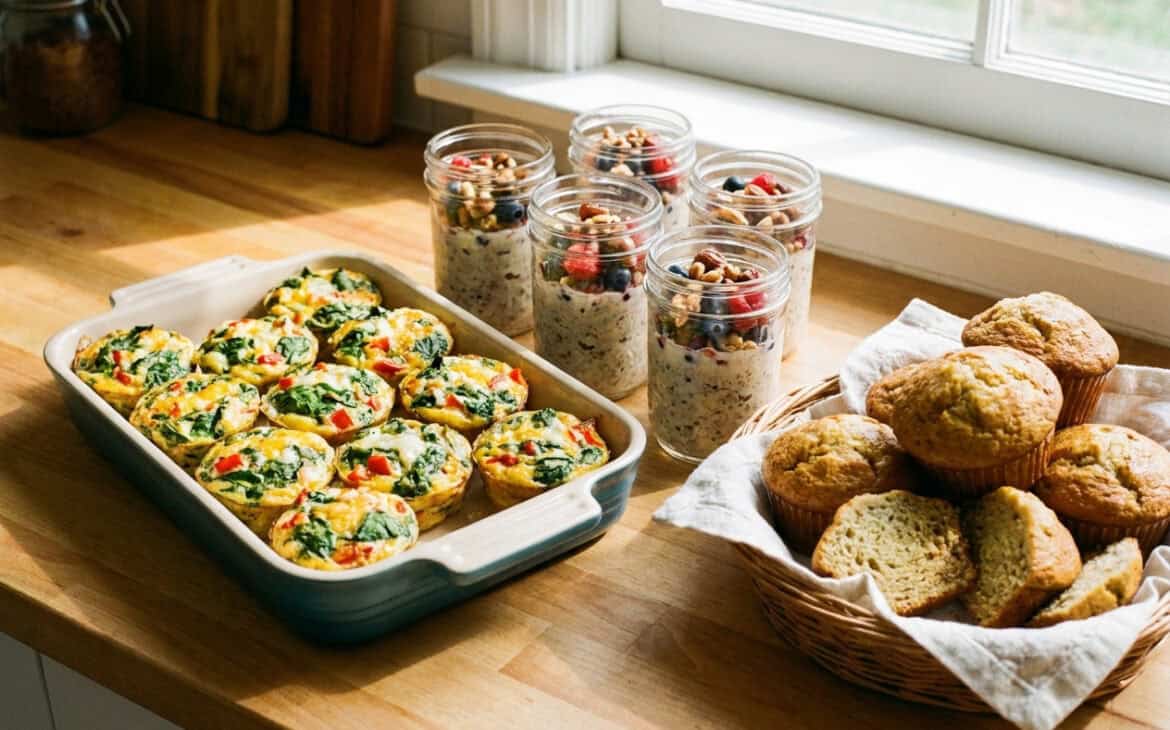
The freezer all-stars are the ones built for batching. Egg muffins or frittata cups — eggs baked in a muffin tin with cheese and a little veg or ham — are handheld, mild, and quietly sneak vegetables past picky eaters. Breakfast burritos and egg-and-cheese sandwiches on English muffins are the homemade drive-thru, fully portable and protein-rich. Homemade waffles and pancakes freeze in a big batch and pop straight into the toaster like the store-bought kind, only better. Muffins (banana, blueberry, oat), breakfast cookies, and no-bake energy bites all freeze well and feel like a treat, which is most of the battle. And a French toast bake or baked oatmeal slices into warm, comforting portions you can reheat all week.
The fridge-only crowd is just as useful, it simply doesn’t freeze well. Overnight oats and chia pudding assemble in jars the night before and need no cooking at all. Yogurt parfaits layer up in minutes (keep the granola separate so it stays crunchy). And a half-dozen hard-boiled eggs are the simplest grab-and-go protein there is. Between one freezer item and one fridge item, you can cover a week without cooking a thing on a weekday.
What freezes and what doesn’t
It’s worth being clear about this, because freezing the wrong thing is how you end up with a watery mess. The freezer-friendly list: egg muffins, baked oatmeal, breakfast burritos and sandwiches, waffles and pancakes, muffins, breakfast cookies, smoothie packs, French toast bake, energy bites, and granola. The fridge-only list: overnight oats, yogurt parfaits, chia pudding, and hard-boiled eggs — all of which turn grainy or weepy after a freeze and thaw. As a rule, egg-based dishes keep three to four days in the fridge, hard-boiled eggs about a week in the shell, overnight oats three to five days, and chia pudding four to five; most baked and egg dishes freeze for two to three months (waffles closer to one or two).

Reheating without the sad results
Matching the method to the food is what separates “as good as fresh” from “why is this chewy.” Waffles and pancakes go straight from frozen into the toaster or toaster oven, never the microwave, which steams them limp. Burritos and breakfast sandwiches reheat best wrapped in a damp paper towel and microwaved a minute and a half to two and a half, flipped halfway so the center isn’t cold — a quick crisp in a toaster oven afterward is a nice touch. Egg muffins and a French toast bake need only thirty to sixty seconds from the fridge, a bit more from frozen. Whatever it is, reheat it until it’s steaming hot throughout, and if you’ve got the foresight, thawing overnight in the fridge gives the most even result.
Building a breakfast that holds until lunch
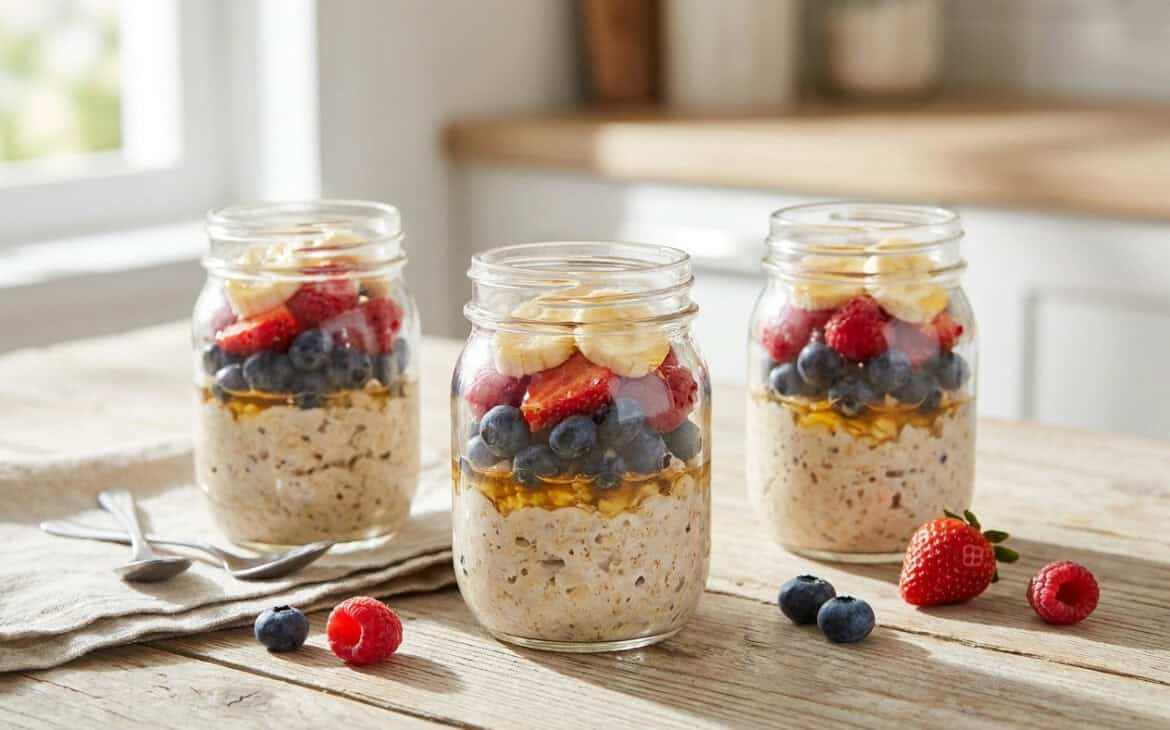
The breakfast that prevents a mid-morning meltdown pairs a protein, a whole-grain carb, and some fruit. Protein and fiber are what actually keep a kid full — a plain waffle or sugary cereal spikes and fades, while an egg muffin with fruit, or a waffle with nut butter and banana, or a yogurt parfait that covers all three in one jar, carries them to lunch. Keep that trio in mind and even a fast breakfast does its real job. (The same logic powers a lunch that gets eaten — see our lunchbox ideas for the packed-lunch version.)
A prep-day system, and a word on safety
Pick one bake day and run the oven once — egg muffins, baked oatmeal, and a batch of muffins can share the heat. Pair a freezer stockpile item you make every few weeks (burritos, waffles) with a fresh fridge item you assemble weekly (overnight oats), and you get variety without daily work. Freeze in single servings using muffin tins, silicone molds, or a tray-then-bag method so you’re not chiseling apart one frozen brick, and label everything with the name and date.
On food safety, the rules are simple: cool and refrigerate cooked food within two hours (within one hour if your kitchen is above 90 degrees), since bacteria multiply fast between 40 and 140 degrees. Keep the fridge at or below 40, don’t stretch egg dishes past three to four days, and reheat everything to a steaming 165. Shallow containers cool faster, which is both a safety win and a way to get breakfast into the freezer sooner.
Frequently Asked Questions
How long do make-ahead breakfasts keep?
It depends on the type. Egg-based dishes like egg muffins and French toast bakes last three to four days in the fridge; hard-boiled eggs keep about a week in the shell; overnight oats three to five days and chia pudding four to five. Most baked goods and egg dishes freeze for two to three months, with waffles closer to one or two. Refrigerate cooked food within two hours.
What can I freeze versus only refrigerate?
Freeze egg muffins, baked oatmeal, breakfast burritos and sandwiches, waffles, pancakes, muffins, breakfast cookies, smoothie packs, French toast bake, and energy bites. Keep overnight oats, yogurt parfaits, chia pudding, and hard-boiled eggs in the fridge only — they don’t freeze and thaw well.
How do I reheat frozen breakfasts so they aren’t soggy or rubbery?
Match the method to the food. Waffles and pancakes go straight from frozen into the toaster. Burritos and sandwiches reheat best wrapped in a damp paper towel in the microwave, about a minute and a half to two and a half, flipped halfway. Egg muffins and casseroles need under two minutes. Heat everything until steaming, ideally 165 degrees.
What’s a genuinely healthy breakfast that’s still fast?
One that pairs protein, a whole-grain carb, and fruit — a yogurt parfait, an egg muffin with fruit, or a whole-grain waffle with nut butter and banana. Protein and fiber keep kids satisfied until lunch, while carb-only breakfasts leave them hungry sooner.
My kid is a picky eater. What works?
Lean on familiar, treat-adjacent formats like breakfast cookies, muffins, smoothies, and parfaits, let them help assemble or pick a mix-in, and offer a dip such as yogurt or nut butter. Keep offering rejected foods without pressure — acceptance usually takes repeated, low-stakes exposure.
Are these safe to leave out while the kids get ready?
Keep total time at room temperature under two hours (one hour if it’s above 90 degrees), since bacteria grow fast in the 40-to-140-degree range. Hand it over reheated or cold and have them eat it promptly; if it’s sat out longer than two hours, throw it out.