Why Cooking Eggs and Tomatoes in Cast Iron Could Ruin Both Your Meal and Your Skillet

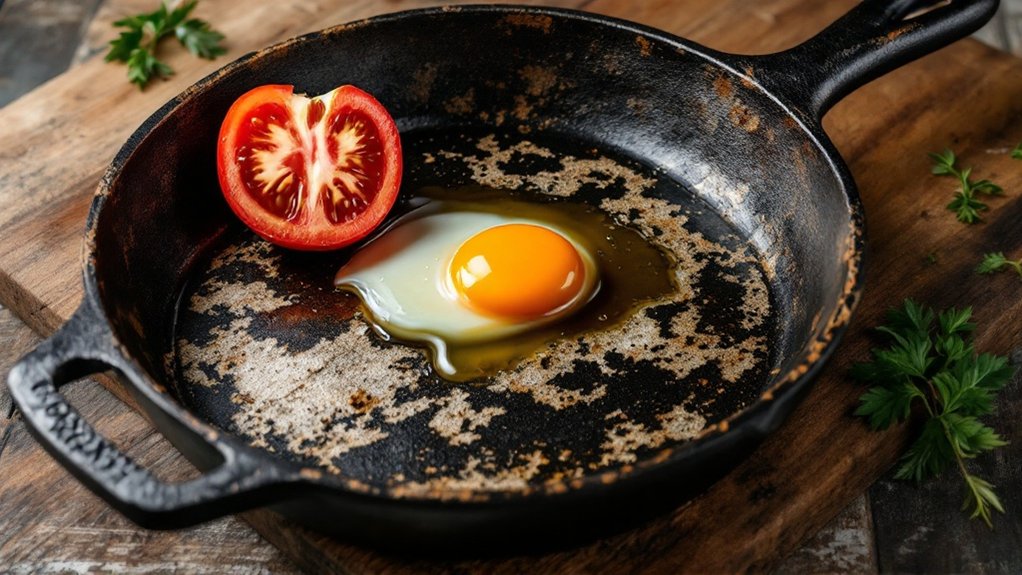
Cooking acidic tomatoes in a cast iron skillet is a recipe for disaster. The high acidity attacks the pan’s protective seasoning, stripping it away and leaving bare metal exposed. This chemical warfare doesn’t just ruin the skillet – it turns your food into a metallic-tasting mess. Even well-seasoned pans aren’t immune to this tomato torture. Enameled cast iron exists for a reason, and there’s more to this kitchen chemistry than meets the eye.

Every home cook faces the great tomato-and-cast-iron dilemma. There you are, staring at your beloved skillet, dreaming of a perfect shakshuka – but those acidic tomatoes are practically laughing at your plans. It’s a classic cooking conflict that’s ruined many a meal and many more precious pans.
The science is brutal and unforgiving. Tomatoes, with their high acidity, wage chemical warfare on cast iron’s seasoning. That protective layer you’ve spent months building up? Gone in a single acidic assault. Even worse, poorly seasoned skillets can leach metallic flavors into your food, turning your breakfast into something that tastes like you’re licking a battery. Not exactly the culinary experience most people are after.
Sure, there are workarounds. Enameled cast iron exists for a reason – it’s like putting armor on your pan. These fancy versions can handle acidic ingredients without breaking a sweat. But let’s be real: most home cooks are working with traditional cast iron, passed down through generations or rescued from thrift stores.
And they’re learning the hard way that their pan’s seasoning isn’t bulletproof. The traditional preparation of dishes like shakshuka involves sautéing vegetables, adding spices like cumin and paprika, and then letting eggs gently cook in a tomato-based sauce. This beloved dish, originating in North Africa, has a rich culinary heritage that spans multiple cultures and regions. The dish’s versatility allows for endless variations using simple vegetarian ingredients while maintaining its core identity.
It’s a beautiful dance of flavors and techniques. But in an unseasoned or poorly seasoned cast iron skillet, it’s more like a mosh pit of metal and acid.
For those stubborn enough to try anyway, the consequences are clear: dulled finishes, stripped seasoning, and meals that taste distinctly off. The cultural significance of dishes like shakshuka deserves better than that.
While cast iron can handle high heat like a champion, its kryptonite remains acidic foods. Sometimes the hard truth is simple: not every pan is right for every dish. Period.
Related Reading
- What Happens When You Quit Sugar and Try the Mediterranean Diet for a Week?
- Healthy Mother’s Day Recipes a Nutritionist Swears By (But Most Still Overlook)
- DASH Diet Recipes: Heart-Healthy Meals That Lower Blood Pressure
- The Shocking Truth About Voortman Bakery Cookies: Why Food Scientists Are Obsessed