Don’t Defrost: Cooking Steaks Frozen Delivers Superior Flavor and No Gray Band

Cooking steaks straight from the freezer actually works. The frozen interior stays cold while the outside develops a killer crust, eliminating that dreaded gray band entirely. Sure, there’s about 3% more moisture loss, but consumer panels rated frozen-cooked steaks as more tender. The Maillard reaction gets a lift too, meaning better browning and flavor development. Science says the freezer might just be a cook’s secret weapon, and there’s more to the story.
Most home cooks have been told the same thing for years: thaw your steaks before cooking them. Turns out, that advice might be completely wrong. Research shows that cooking steaks straight from the freezer actually delivers results that rival or beat fresh beef in several key areas.
Cooking steaks from frozen might actually beat the fresh-first method you’ve always trusted.
The science is pretty straightforward. Frozen-cooked beef shows about 30% cooking loss, while fresh-cooked comes in at 27%. Not a huge gap. But here’s where it gets interesting. Frozen beef consistently gets rated more tender than fresh, never-frozen beef by actual consumers.
Steaks that went through freeze-thaw cycles meet the “Certified Very-Tender” threshold. An extra freeze-thaw cycle even yields a 17% decrease in shear force values. Translation: the meat gets easier to cut through.
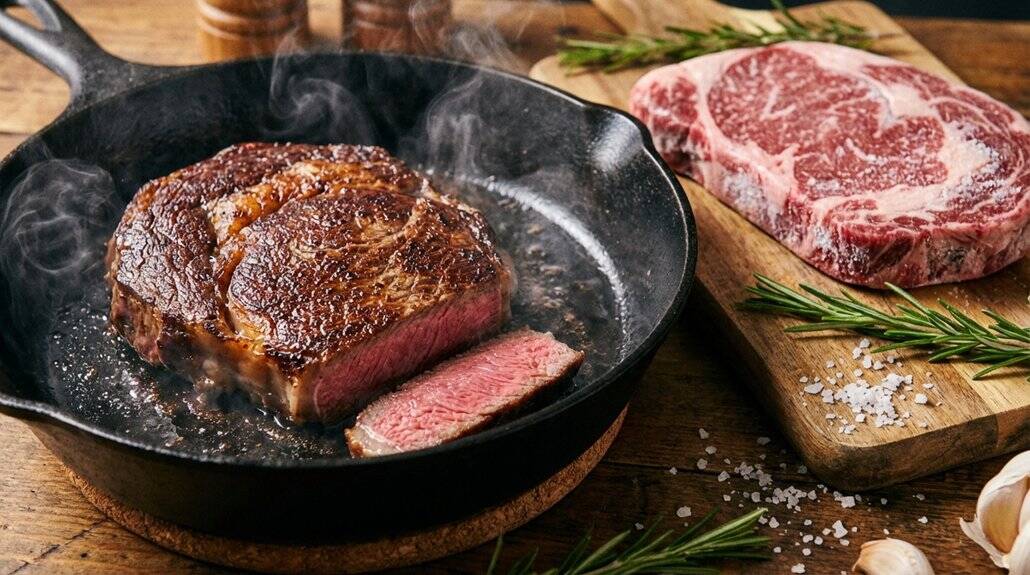
That gray band problem everyone complains about? Cooking from frozen helps eliminate it. The frozen interior stays cold longer while the exterior develops that beautiful crust.
Searing frozen steaks reduces certain sugars and enhances Maillard reaction products. That’s the chemical reaction responsible for browning and flavor development.
Moisture retention tells a more nuanced story. Frozen-cooked beef loses about 3% more moisture than fresh. Thawing before cooking actually helps because free water gets reabsorbed into the muscle fibers. Using a water bath for thawing allows for controlled defrosting when you do choose to thaw your steaks.
Faster freezing rates create smaller ice crystals, which means less damage to the meat’s cellular structure. Consumer panels detect decreased juiciness in frozen steaks, and fresh steaks do exhibit more pronounced beefy flavor.
But here’s the thing. Those same consumer panels found no difference in general liking between frozen and fresh steaks. None. Trained panelists couldn’t detect tenderness differences either, despite the mechanical improvements showing up in lab tests.
Freezing at peak freshness preserves quality, nutritional value, and safety. Steaks stored frozen for 180 days show no significant eating quality impacts. Storage temperature doesn’t affect thaw loss or cooking loss.
The practical benefits stack up quickly: portion control, reduced waste, longer storage without spoilage risk.
The old kitchen wisdom isn’t entirely wrong. It’s just incomplete. For home cooks chasing that perfect sear without the gray band, the freezer might be an unexpected ally.