How Long to Cook Fresh Pasta (and How to Know It’s Done)

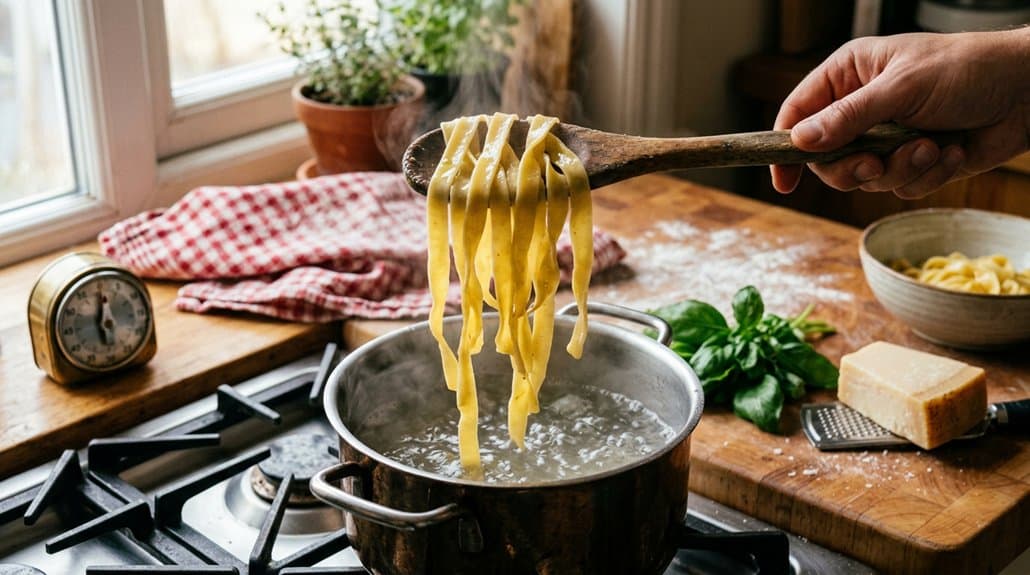
Fresh pasta is fast, much faster than the box you’re used to. Most fresh noodles are done in 2 to 4 minutes, and thin shapes can be ready in as little as 90 seconds. Filled pasta like ravioli takes a touch longer, about 4 to 5 minutes, and store-bought and frozen versions follow slightly different rules. Walk away expecting the 10 minutes dried pasta needs and you’ll come back to mush.
Cook times by type
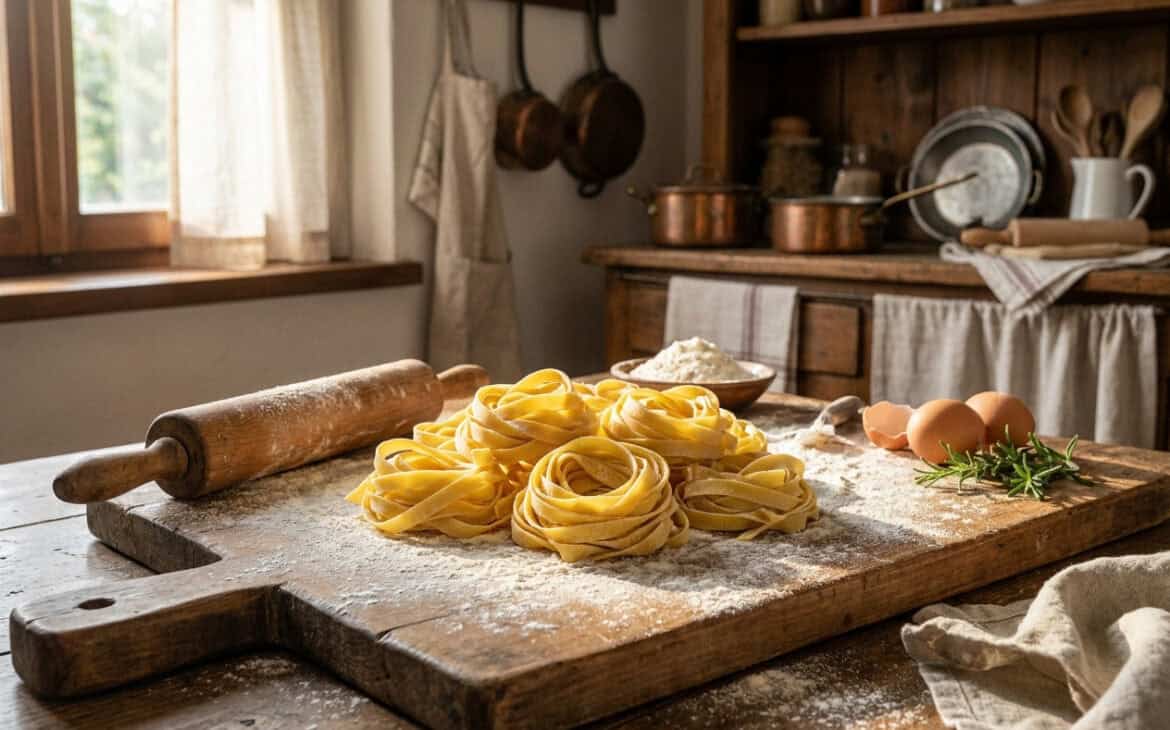
The thinner and the more recently made the pasta, the faster it cooks. Thin strands like angel hair finish almost instantly, standard ribbon cuts take a few minutes, and anything with a filling needs longer because the water has to heat the center through, not just the dough.
| Fresh pasta type | Cook time |
|---|---|
| Angel hair, thin fettuccine | 90 seconds – 2 minutes |
| Tagliatelle, pappardelle, linguine | 2 – 4 minutes |
| Ravioli, tortellini, agnolotti (filled) | 4 – 5 minutes |
| Gnocchi | 2 – 4 minutes (until they float) |
As a rule, fresh pasta almost never needs more than five minutes, and most of it needs far less.
Store-bought and frozen play by slightly different rules
The refrigerated fresh pasta from brands like Buitoni and Giovanni Rana behaves much like homemade: their filled shapes (tortellini, ravioli) cook in roughly 3 to 5 minutes once the water returns to a gentle boil and the pieces float, while their fresh fettuccine and linguine need only about 2 minutes. Always glance at the package, since thickness varies by brand.
Frozen changes the math a little, and the key rule is to cook it straight from frozen, never thaw it first, or it turns gluey. Frozen ravioli run about 4 to 6 minutes (large ones closer to 7), and frozen gnocchi are the quickest of all at 2 to 5 minutes. Both, like all filled and potato pasta, tell you they’re ready by floating to the surface.
The float test, and why you should taste anyway
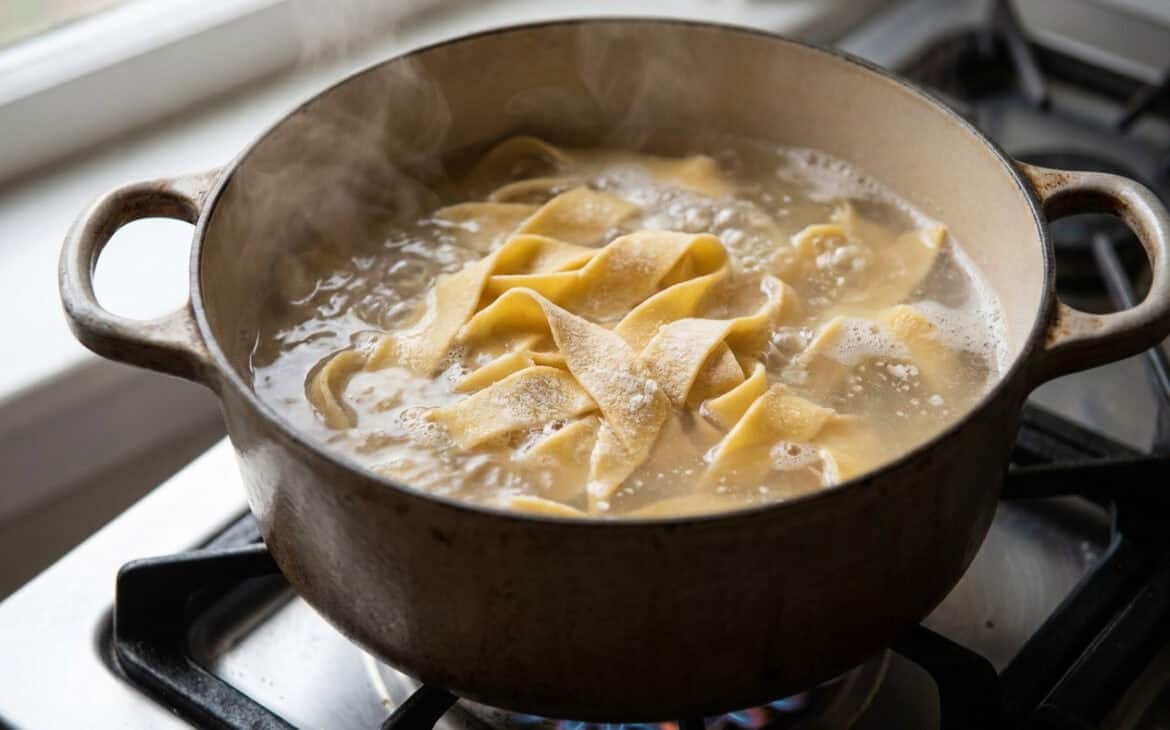
Filled pasta and gnocchi give you an obvious tell: they sink when they go in and bob to the surface when they’re nearly done. Once they’re floating, give them another 30 seconds and start tasting. For everything else, taste is the only test that matters, fresh pasta goes from perfect to overcooked in a matter of seconds, so start checking a full minute before you think it’s ready. You want it tender with the faintest resistance at the center, true al dente.
Salt, water, and the things that actually matter
Get the pot right and the rest follows. Use a big pot with 4 to 5 quarts of water per pound of pasta so the pieces have room to move and don’t stick, and bring it to a rolling boil before anything goes in. Salt it well, about 1 tablespoon of salt per 4 quarts (one gallon) of water, until it tastes like the sea; this is your only chance to season the pasta itself.
Two technique notes save a meal. For filled pasta, drop the rolling boil down to a gentle boil once the pieces go in, with bubbles just breaking around the edges, because a violent boil tears ravioli open and dumps the filling into the pot. And before you drain, scoop out a mugful of the starchy cooking water; a splash of it loosens and glosses your sauce far better than plain water, the released starch helps the sauce cling to the noodles. Stir right after the pasta goes in so it doesn’t clump while it’s soft.
Fresh vs. dried, quickly
If you’re used to dried pasta’s 8-to-12-minute window, fresh simply plays by different rules. Made with egg and soft wheat or 00 flour, it cooks through almost instantly, which is the whole appeal, dinner in minutes, but it leaves no margin for distraction. Have your sauce ready before the pasta goes in, because fresh pasta won’t wait for you the way dried will. Set a timer, stay at the stove, and taste early.
Frequently Asked Questions
How long does store-bought fresh pasta take to cook?
Refrigerated brands like Buitoni and Giovanni Rana cook in about 2 minutes for ribbons like fettuccine, and 3 to 5 minutes for filled shapes like tortellini and ravioli, which float when done. Check the package, since thickness varies.
How long do you cook frozen ravioli?
About 4 to 6 minutes (7 for large ones), cooked straight from frozen, never thawed. They’re ready when they float to the top.
How long does fresh gnocchi take?
Just 2 to 4 minutes for fresh, and 2 to 5 from frozen. Gnocchi have a built-in timer, they float to the surface when they’re done.
How much salt and water do I need?
Use 4 to 5 quarts of water per pound of pasta and about 1 tablespoon of salt per 4 quarts, salty enough to taste like the sea.
Why did my fresh pasta turn out mushy?
It was overcooked, fresh pasta needs only a few minutes and goes from perfect to mushy in seconds. Start tasting early, and for frozen pasta, cook it from frozen rather than thawing it first.
Should I save the pasta water?
Yes. A mugful of the starchy, salted cooking water stirred into your sauce thickens it and helps it cling to the noodles, the single easiest upgrade to any pasta dish.
Related Reading
- Final Four Beer Battered Fish Tacos: The Food Truck Secret to 2-Hour Crispiness
- The 5-Day BBQ Tequila Grilled Chicken Revolution: Transform One Recipe Into a Week of Meals
- DASH Diet Recipes: Heart-Healthy Meals That Lower Blood Pressure
- The Shocking Truth About Voortman Bakery Cookies: Why Food Scientists Are Obsessed