A New Air-Frying Method That Cuts French Fry Oil

A team led by Professor Takhar and researcher Yash Shah found that combining microwave energy with conventional frying slashes oil absorption in French fries by up to 33%. The trick is simple — microwaves create higher internal pressure inside the potato, which blocks oil from seeping in. The results, published in *Current Research in Food Science*, show crispier fries with less grease and faster cook times. Not bad. The method’s practical implications for the food industry go even further.

While most people are busy arguing over ketchup versus mayo, scientists have been quietly solving a problem nobody asked them to — but everyone needed. A team led by Professor Takhar and researcher Yash Shah figured out how to slash oil absorption in French fries by up to 33%. The secret? Microwaves. Not the sad box reheating yesterday’s pizza. Actual microwave energy combined with conventional frying.
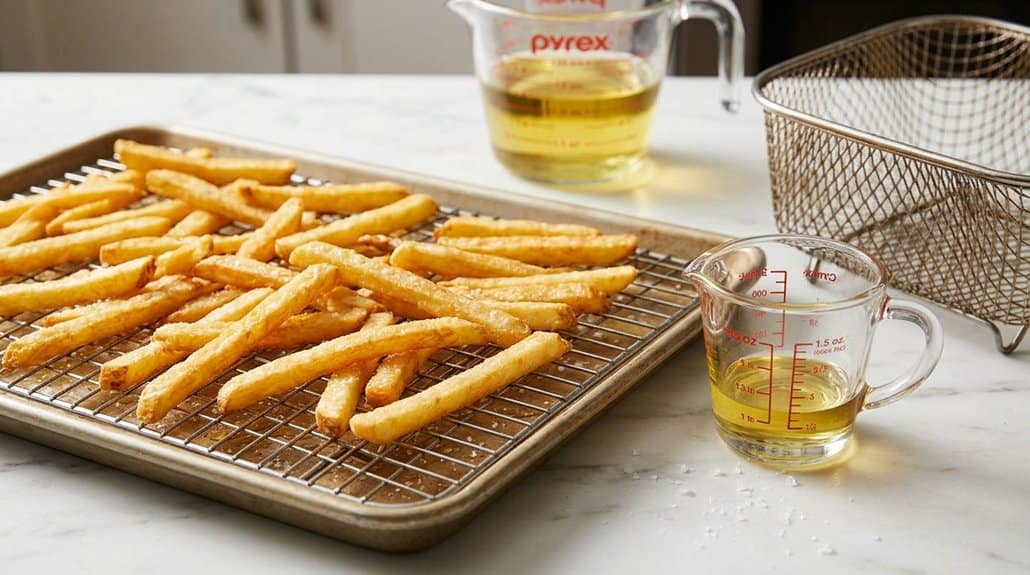
The study, published in *Current Research in Food Science*, involved potato strips that were rinsed, peeled, cut, blanched in hot water, and salted. Then they were fried in soybean oil at 356°F. Researchers measured everything — temperature, pressure, moisture, texture, oil content. The results were clear. Microwave frying produced crispy fries with considerably less oil soaked into them. The microwave heating component lowered oil absorption while the traditional heating kept that satisfying crunch intact. Cooking time dropped too. Basically, better fries, faster, with less grease. Hard to argue with that.
Microwave frying cuts oil absorption and cooking time while keeping fries perfectly crispy — better results with less grease.
The practical implications are real. Existing commercial fryers could be modified with microwave generators, making this scalable for the food industry without reinventing the wheel. That matters when billions of fries get consumed every year. The key mechanism works because microwaves heat water molecules throughout the potato simultaneously, generating higher internal pressure that physically blocks oil from seeping in.
Of course, this isn’t the only trick in the fry game. The cold oil technique, recommended by America’s Test Kitchen, starts potatoes in room temperature oil and heats gradually. Less spatter, less mess, decent crispiness. Works great for single batches at home but requires cooling between rounds. The gradual temperature increase allows moisture to escape slowly, so the starches on the surface gelatinize evenly and form a crisp shell.
Then there’s the classic double-fry method — initially at 300°F to cook through and remove moisture, then at 375°F to crisp the exterior. Fast food restaurants swear by it. More effort, superior texture.
For the oil-averse crowd, baking at 475°F on parchment paper after an ice water soak produces crispy results with zero frying. Air fryers work too. Optional olive oil drizzle if you’re feeling fancy.
Each method maintains that golden, crunchy texture people crave. But the microwave frying breakthrough stands apart because it makes traditional fried food genuinely healthier without sacrificing what makes fries worth eating in the beginning. Science doing the lord’s work, honestly.
Related Reading
- We Asked Pro Chefs For The Worst Kitchen Design Trends—Their Answers Are Absolutely Horrifying
- I Banished Propane For Good This Lent: A Fierce Recipe For Flawless Induction Cooking
- DASH Diet Recipes: Heart-Healthy Meals That Lower Blood Pressure
- The Shocking Truth About Voortman Bakery Cookies: Why Food Scientists Are Obsessed