
Healthy After-School Snacks Kids Won’t Reject

There’s a specific kind of hungry that walks in the door at 3:30 — the kind that’s also cranky, can’t find words, and will eat literally anything that’s within reach, which is exactly why what’s within reach matters. Kids genuinely are starving after a school day, and a planned snack heads off the meltdown-and-graze cycle far better than letting them arrive at dinner over-hungry or filled with whatever was easiest. The goal isn’t perfect; it’s a handful of snacks that are satisfying, reasonably wholesome, and — the part that actually matters — things your kid will eat.
Snacks that actually satisfy
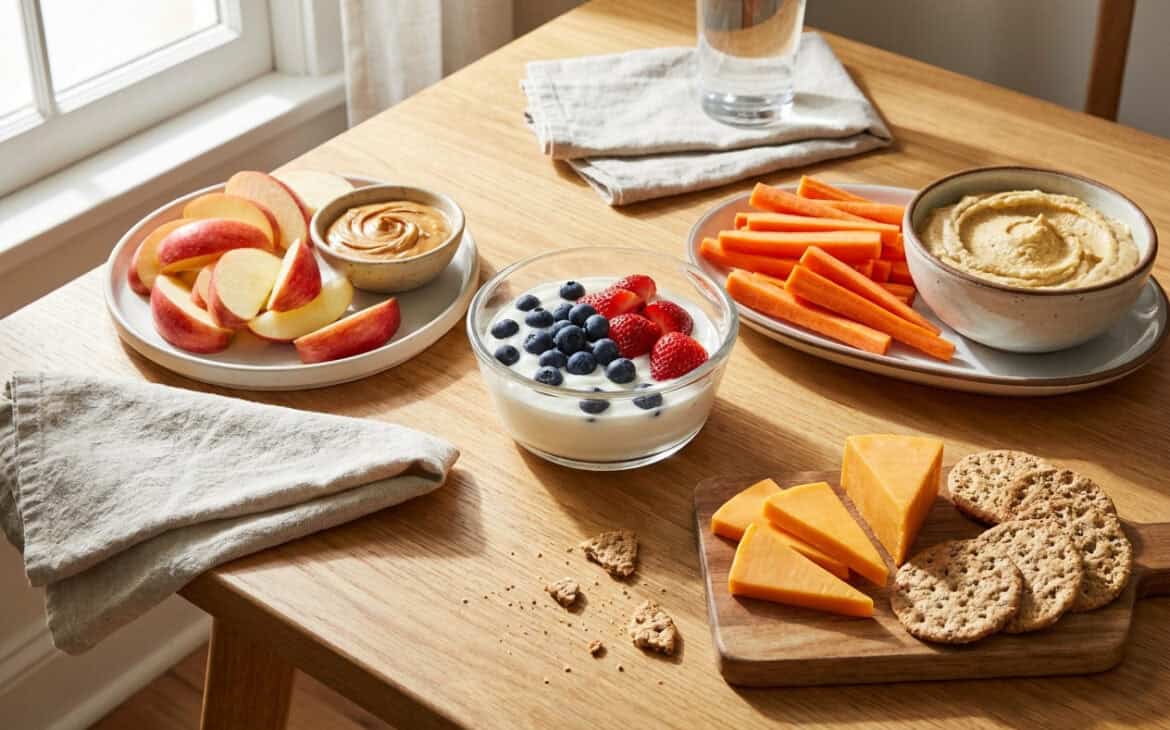
The trick to a snack that holds a kid for more than ten minutes is pairing a protein or healthy fat with something fiber-rich. That combination digests slowly and steadies blood sugar, so they stay full instead of spiking and crashing the way they would on crackers alone. Apple slices with peanut, almond, or sunflower-seed butter is the model: fiber from the fruit, staying power from the butter. A banana with a smear of nut butter, yogurt with berries and a little granola, or clementine segments alongside a string cheese all work the same way.
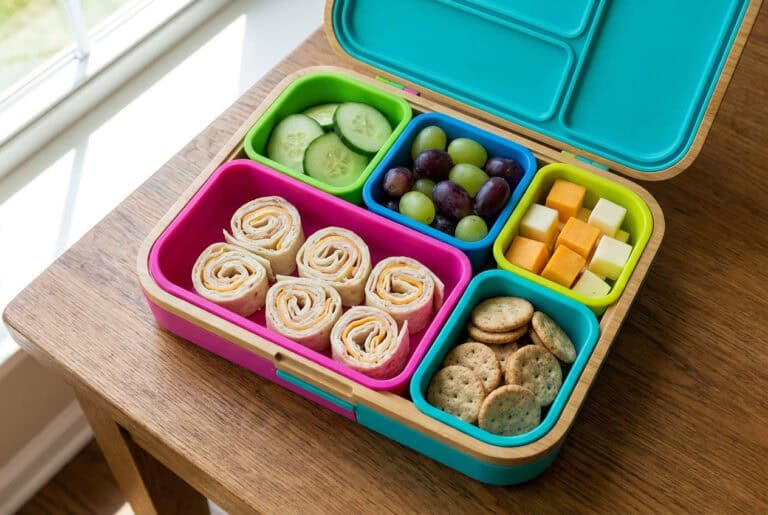
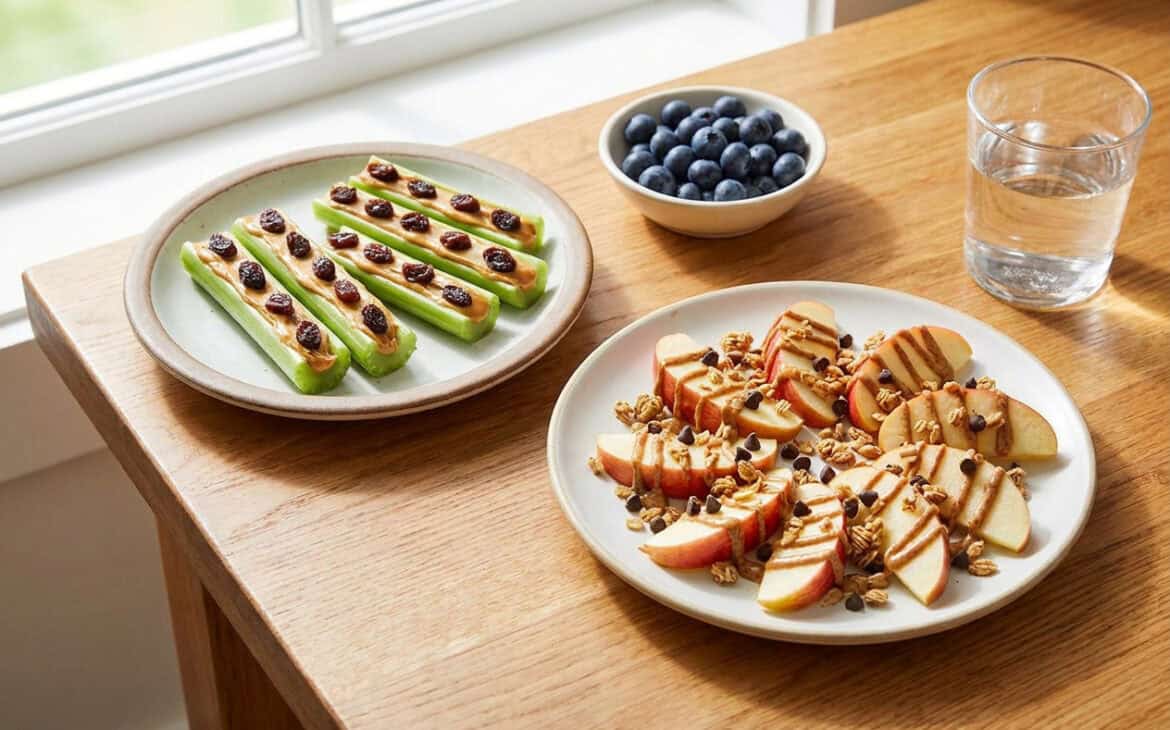
Vegetables get eaten when there’s a dip — carrot sticks, cucumber, or pepper strips with hummus or a Greek-yogurt ranch, snap peas with guacamole. For something more filling, lean on the protein-forward options: whole-grain crackers with cheese, Greek yogurt with honey, a hard-boiled egg, turkey and cheese roll-ups, cottage cheese with fruit, or shelled edamame they can pop open. Whole grains pull their weight too — air-popped popcorn is high-volume and filling, and whole-grain toast with nut butter or mashed avocado is a fast, sturdy standby. And the snacks that feel like a treat while still being real food — ants on a log, apple “nachos” with a drizzle of nut butter and a few chocolate chips, frozen yogurt bark — tend to disappear fastest.
Make-ahead snacks for the week
A little weekend prep means there’s always a “yes” on hand. No-bake energy bites (oats, nut or seed butter, honey, and whatever add-ins) deliver fiber, protein, and fat in one poppable ball and freeze in a batch. Homemade muffins with banana or zucchini sneak in fiber and freeze beautifully; DIY granola or oat bars and homemade trail mix let you control the sugar that store-bought versions pile on. Overnight oats in jars are as much a snack as a breakfast. If you’re already doing a weekend prep session for make-ahead breakfasts, it’s easy to batch a snack or two in the same pass.
Winning the “I’m starving” moment
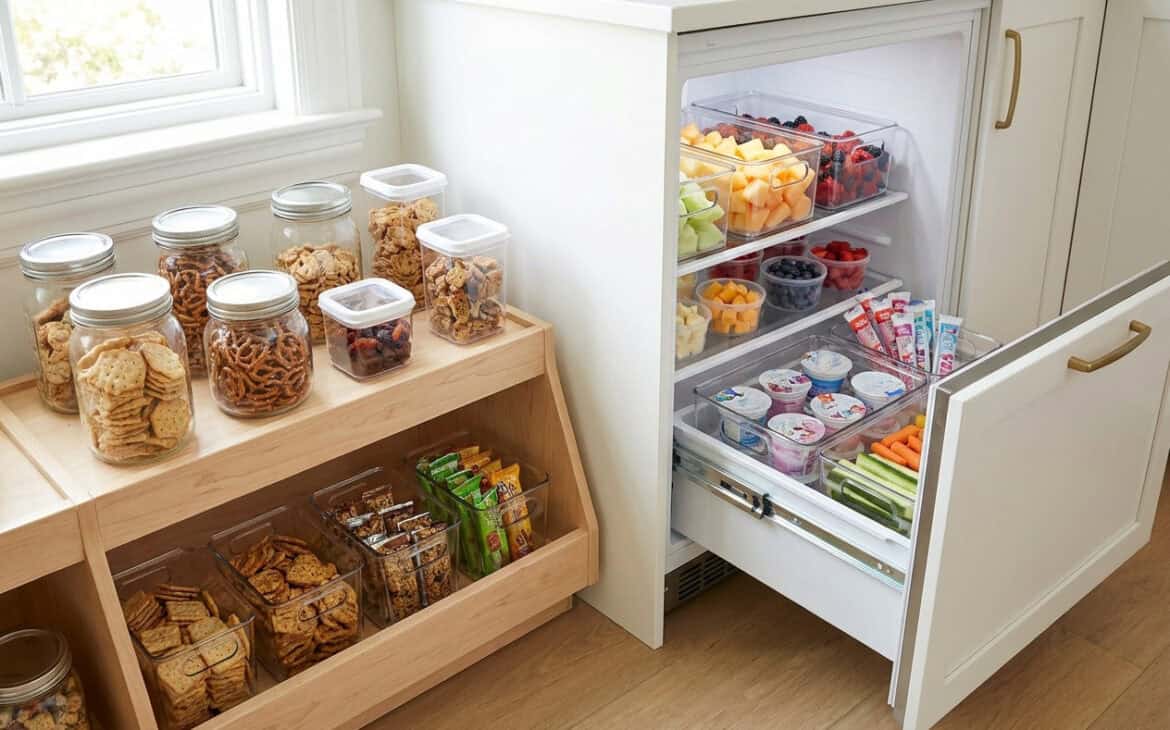
Two small systems do most of the work. The first is a snack station the kids can serve themselves — a low fridge drawer and a low pantry bin stocked with pre-approved options, so a starving kid grabs something from the “yes” zone without negotiating with you or excavating the cabinets. Refill it on the same weekly prep pass. The second is to put the fruit and vegetables out first, before anything else, because peak hunger is your best ally: a kid who’d normally push past the carrots will eat them happily when they’re ravenous and it’s what’s on the counter.
Timing matters too. If dinner’s an hour away, keep the snack light; if it’s a long stretch to a 7:30 dinner, make it more substantial and add protein so it genuinely bridges the gap. Aiming to finish snacking about an hour and a half to two hours before dinner usually means appetite recovers in time — the same forethought that makes a packed lunchbox work applies to the after-school stretch.
How much sugar, and will it ruin dinner?
A right-sized, well-timed snack doesn’t ruin dinner — it protects it, by keeping a kid from arriving at the table too hungry to behave or so full of junk they’ve no appetite for real food. On sugar, the guideline from the American Academy of Pediatrics and the American Heart Association is to keep added sugar under about 25 grams — roughly six teaspoons — a day for kids two and up, and to avoid added sugar entirely under age two. That’s added sugar, though; the natural sugar in whole fruit and plain milk doesn’t count, which is why fruit is the easy answer to a sweet tooth. Store-bought snacks are completely fine in the mix — just glance at the label for lower added sugar and a whole grain, and remember that a “single” bag is often two servings.
A safety note for little ones
A handful of these snacks are choking hazards for younger children, worth flagging if you’ve got a toddler or preschooler in the mix. Per the CDC, the risky ones are whole nuts and seeds, whole grapes and cherry tomatoes, popcorn, hard raw vegetable or fruit chunks, hot dogs, and large chunks of cheese. Cut round foods into quarters lengthwise, grate or steam hard produce soft, spread nut butter thin rather than in a glob, and save whole nuts and popcorn for kids past about age four — and keep little ones seated while they eat.
Frequently Asked Questions
Will an after-school snack ruin my kid’s dinner?
Not if it’s the right size and timed with room before dinner. A balanced snack actually prevents the over-hungry meltdowns and random grazing that wreck dinner. If dinner’s soon, keep it light; if it’s hours away, make it more substantial.
How much sugar is too much for kids?
For kids two and up, aim for under about 25 grams — roughly six teaspoons — of added sugar a day, per the AAP and American Heart Association; under two, avoid added sugar entirely. The natural sugar in whole fruit and plain milk doesn’t count toward that, so fruit is a great way to satisfy a sweet tooth.
Are store-bought snacks okay, or do they have to be homemade?
Store-bought is fine. A realistic approach mixes whole foods with packaged options — just scan labels for lower added sugar and whole-grain ingredients, and keep an eye on serving sizes.
What actually makes a snack filling?
Pair a protein or healthy fat with a fiber-rich carb or produce — apple and nut butter, veggies and hummus, yogurt and berries. Protein and fiber slow digestion and steady blood sugar, so kids stay full far longer than they would on crackers alone.
What snacks are choking hazards for little kids?
For younger children, especially under about four, whole nuts and seeds, whole grapes and cherry tomatoes, popcorn, hard raw vegetable chunks, and globs of nut butter are the risky ones, per the CDC. Cut round foods small, soften or grate hard produce, spread nut butter thin, and keep kids seated while eating.
My kid is starving and cranky the second they walk in — what’s fastest?
Have grab-and-go ready: a cheese stick with fruit, yogurt, hummus with pre-cut veg, or a make-ahead energy bite. A self-serve snack bin lets them grab something you’ve already approved without waiting on you.