Are Meal Kits Worth It for Cooking More at Home?

Meal kits might actually be the resolution that sticks. Pre-portioned ingredients eliminate the dreaded “what’s for dinner” spiral, and 77% of Americans already prefer homemade meals anyway. The real barrier isn’t motivation—it’s planning. These kits cost around $20-25 for two people, saving roughly 40% compared to eating out. They cut food waste too. Not a bad deal for skipping the grocery store chaos. The numbers behind this trend tell an even bigger story.
Every January, millions of people swear they’ll ultimately cook more at home. By February, that promise dies somewhere between a drive-thru window and a stack of takeout containers.
But here’s the thing. The meal kit industry is betting big that people actually mean it this time.
The numbers are kind of wild. The global meal kit market hit USD 32.4 billion in 2025 and is projected to reach USD 99.2 billion by 2034. That’s a 13.24% compound annual growth rate. North America dominates with over 45.9% of the global market share.
Americans, apparently, really do want to cook. They just need someone to do the hard part initially.
A 2018 survey found 77% of Americans preferred homemade meals over dining out. The demand exists. The execution? That’s where things get messy.
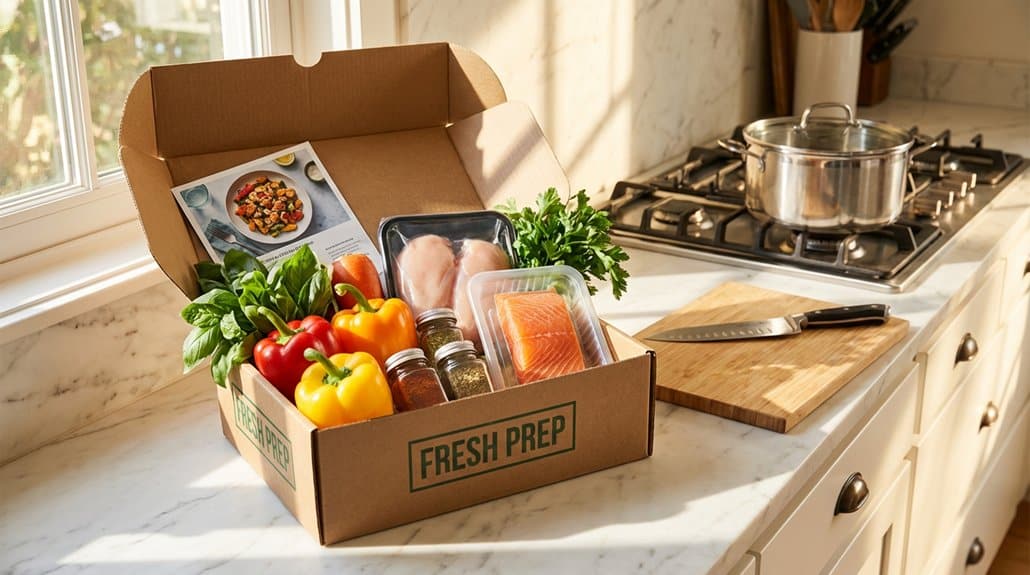
Busy schedules kill good intentions. Pre-portioned ingredients and step-by-step recipes remove the planning nightmare. No more wandering grocery aisles wondering what goes with chicken. Urban working professionals and young families are driving this demand for convenience in meal preparation.
Meal kits eliminate the mental load of cooking—no planning, no grocery store wandering, just pre-portioned ingredients and clear instructions.
The cost argument works too. Meal kits average USD 20-25 for two people, saving roughly 40% compared to restaurant dining.
Less food waste. No impulse grocery buys. The math checks out, even if it feels counterintuitive.
Health-conscious consumers are driving specific trends. Providers now offer low-carb, keto, vegan, and gluten-free options.
Gluten-free kits actually show higher adoption rates than standard options in surveys. The vegetarian segment alone was valued at USD 9.01 billion back in 2019. People want customization. They want fresh ingredients. They want to know where their food comes from.
HelloFresh saw 90% customer base growth in Q1 2020 compared to 2019. Subscription models retain customers better than one-off purchases. The company raised USD 680 million in March 2024 to fuel further expansion.
Smart companies figured out that recipe scaling technology led to 25% sales increases. Packaging improvements enhanced repeat purchase rates by 15%.
The challenges remain real. Perishability issues. Delivery fees. Sometimes the portions feel off.
But the industry keeps adapting.