Art Activities for Preschoolers: Easy Ideas That Build Real Skills

The best art activities for preschoolers look like a gloriously messy afternoon and double as a workout for everything your child needs for kindergarten, the small hand muscles that will one day grip a pencil, the patience to see an idea through, and the confidence that comes from making something that’s entirely their own. The good news is you don’t need a Pinterest-perfect setup or expensive supplies. You need a few basics, a surface you don’t mind getting painty, and a willingness to let the result be whatever your child decides it should be. Here’s why preschool art matters more than it looks, and a dozen genuinely easy ideas to try, each with the skill it quietly builds.
Why Art Genuinely Matters at This Age
It’s tempting to file art under “keeping them busy,” but for a three-to-five-year-old it’s doing serious developmental work. Every time your child pinches a crayon, snips a strip of paper, or squeezes a bottle of glue, they’re strengthening the exact small muscles in the hand and fingers they’ll later use for handwriting, buttoning a coat, and managing a fork. Those movements build fine motor control and hand-eye coordination in a way worksheets never will, because the child is motivated by their own idea rather than a task.
The benefits run well past the physical, too. Choosing colors and deciding what to make exercises problem-solving and focus, while finishing a piece they’re proud of feeds the self-confidence and self-expression that researchers tie directly to kindergarten readiness. Art is also one of the safest places for a young child to take a risk and discover that a “mistake” can become the best part of the picture, a small but genuinely important lesson in resilience.
Aim for Process, Not a Perfect Product
If you take one idea from this whole guide, make it this one, because it changes everything about how art time feels. Early-childhood educators draw a sharp line between process art and product art. Product art is the project where every child’s snowman ends up looking like the adult’s example; it’s really an exercise in following directions, and you can spot it because all the results look nearly identical. Process art flips that: the point is the making, not the outcome, and the child drives the whole thing while you offer the materials and then step back.
Process art is widely considered the more valuable approach for this age, and the reason is simple, when there’s no “right” way to finish, a child is free to experiment, repeat, and explore, which is where the real learning lives. In practice that means resisting the urge to fix their work or steer it toward what you pictured. Set out the supplies, offer a gentle prompt if they’re stuck, and let the painting be purple and lumpy if that’s what they want. Almost every idea below works best as open-ended process art.
A Dozen Easy Art Activities to Try
Primary-Colors Handprint Art
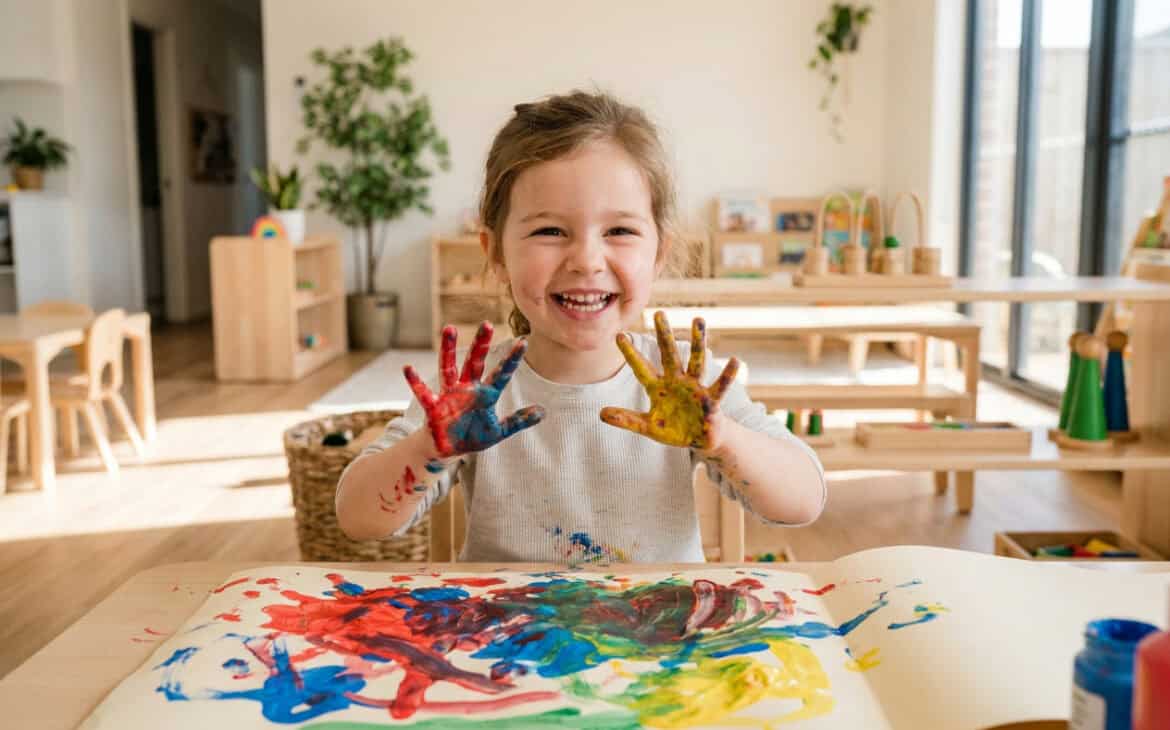
Press your child’s painted palm onto paper and you’ve made a keepsake and a color lesson at once. Set out red, yellow, and blue, let them dip and stamp, and watch what happens where the colors overlap, it’s an early, hands-on introduction to color mixing. The whole-hand action also helps younger preschoolers who aren’t ready for fine brushwork yet.
Crayon-Resist Painting
Have your child draw firmly with white or light crayons, then brush watercolor over the top. The waxy lines repel the paint and the hidden drawing suddenly appears, which never stops feeling like magic to a four-year-old. Pressing hard with the crayon builds grip strength, and the reveal is a tidy lesson in cause and effect.
Cotton-Swab Dot Painting
Hand over a few cotton swabs and some dabs of paint and let them make dotted pictures, patterns, or rainbows. Holding that skinny swab forces the same pincer grasp, thumb and forefinger, that a child needs to eventually hold a pencil, making this one of the most pre-writing-friendly activities on the list while still feeling like pure play.
Straw-Blow Painting
Drop a little watered-down paint on paper and let your child blow through a straw to push it into wild branching shapes. Beyond the cool abstract results, the blowing is genuine oral-motor and breath-control practice, and no two pictures ever come out the same, which is process art at its best.
Torn-Paper Collage
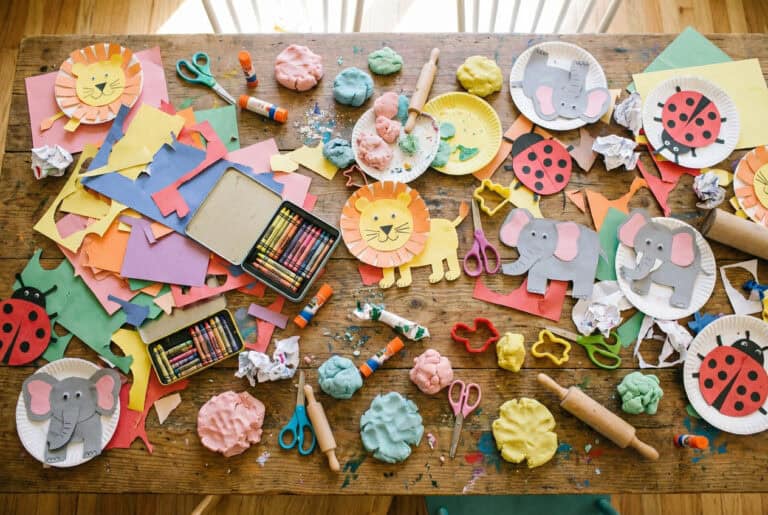
Skip the scissors and just tear colored paper into pieces to glue into shapes or scenes. Tearing is deceptively good for little hands, the pinching-and-pulling motion strengthens finger control in a way that directly prepares them for managing a pencil, and gluing adds a second fine-motor challenge.
Playdough Sculpting
Rolling snakes, poking holes, and squishing playdough flat is a fine-motor powerhouse, and the different colors and textures feed healthy sensory development at the same time. Add a few cookie cutters or buttons for stamping and a single tub of dough can hold a preschooler’s attention far longer than you’d expect.
Nature Collage
Turn a backyard walk into the supply run: gather leaves, petals, twigs, and seed pods, then glue them onto cardstock back home. It connects art to the outdoors, sharpens observation as they choose their pieces, and gives the gluing-and-arranging motor practice a real-world twist.
Bubble-Wrap Printing
Paint a sheet of bubble wrap, press it onto paper, and peel it back to reveal an instant texture of dots. Smoothing the wrap and lifting it teaches a gentle, controlled touch, and it’s a satisfying way to cover a big piece of paper fast, great for the child who loses interest in fiddly work.
Potato and Leaf Stamping
Cut a potato into simple shapes (or use a sturdy leaf), dip it in paint, and stamp away to build patterns. Pressing down evenly takes a surprising amount of control, and repeating a shape across the page introduces the ideas of pattern and repetition that underpin early math as much as art.
Salt-and-Watercolor Painting
Draw with glue, sprinkle salt along the lines, then touch a watercolor-loaded brush to the salt and watch the color crawl and bloom along the crystals. It’s part art, part science experiment, and the careful brush-touch is excellent control practice with a genuinely magical payoff.
DIY Scratch Art
Have your child color a page heavily with bright crayons, paint over the whole thing in black, and once it’s dry, let them scratch a design back through with a craft stick. The heavy coloring builds endurance and grip, and the scratching reveals the hidden colors underneath, another reliably delightful reveal.
Recycled Box Construction
Hand over clean cardboard boxes, tubes, and tape and let them build a robot, a rocket, or a house. This is three-dimensional, open-ended creating at its richest, demanding planning, problem-solving, and plenty of motor work, and it costs nothing but the recycling you were going to toss anyway.
Tips for (Mostly) Stress-Free Art Time
A little setup saves a lot of frustration. Cover the table with a cheap vinyl cloth or newspaper, put your child in an old shirt or smock, and keep a damp cloth within reach before you start rather than scrambling mid-spill. Offer just a few materials at a time so the choices feel manageable instead of overwhelming, and when in doubt, choose washable everything. Then the hardest part: let go. Praise the effort and the ideas (“you used so many colors!”) rather than how recognizable the result is, and let your child lead. The goal isn’t a frame-worthy picture; it’s a happy, capable kid who learned that making things is fun.
Frequently Asked Questions
What art supplies do I really need for a preschooler?
Very little. Washable paint, crayons, glue, child-safe scissors, construction paper, and a few recycled odds and ends (boxes, bubble wrap, cotton swabs) cover almost every activity here. Add playdough and watercolors and you’re set.
How long should art time last?
Most preschoolers stay engaged for about 10 to 30 minutes, which matches their attention span. Follow your child’s lead, stop when they’re losing interest rather than pushing for a finished product.
What’s the difference between process art and product art?
Process art is about the experience of creating, open-ended and child-led, so every result looks different. Product art aims for a specific finished piece that matches a model. For preschoolers, process art is generally more valuable for learning and confidence.
My child just scribbles, isn’t that a waste?
Not at all. Scribbling is a crucial stage that builds the grip and control needed for drawing and writing later. Keep offering materials and the marks will grow more intentional in their own time.
How do I encourage creativity without taking over?
Offer the supplies and an open prompt, then resist fixing or directing the work. Ask open questions about what they’re making, and praise effort and ideas over neatness.
Related Reading
- The Best STEM & Educational Toys for Toddlers
- The Best Outdoor Toys for Toddlers (Active Play That Lasts)
- The Dreft Family Friendly Truth: What 30 Days of Testing Revealed About America’s #1 Baby Detergent
- The Best Star Wars Gifts (That Fans Will Actually Use)