Tommie Copper Sock Review

If you spend your days on your feet—nursing shifts, teaching, standing at a register, or stuck on a long-haul flight—you already know the heavy, aching legs that show up by evening. Tommie Copper built an entire brand on that feeling, promising that a copper-infused compression sock could take the edge off. I wore several pairs over a few weeks to figure out what actually holds up and what is just marketing.
Here is the short version before we get into the details: the compression is the real benefit, the copper is mostly about odor, and the dramatic pain-relief promises that once defined this brand are the part you should read with a healthy dose of skepticism.
What Tommie Copper actually makes
Tommie Copper launched in 2010 selling copper-infused compression apparel—sleeves, braces, shirts, and the socks this review is about. The socks come in a handful of cuts: over-the-calf (the knee-high style most people picture), ankle or quarter length, and no-show, in lines for both men and women. The current range leans on what the company calls Copper Znergy technology, an antimicrobial copper yarn woven into the fabric that, the brand says, fights odor and survives repeated washing rather than rinsing out.
The compression is graduated, meaning it is tightest at the ankle and eases as it climbs the leg. That is the standard design for nudging blood back up toward the heart. One thing worth knowing: Tommie Copper’s everyday socks sit in the light-to-moderate range—generally somewhere around 10 to 20 mmHg—not the firm, medical-grade pressure (20 to 30 mmHg and higher) you would get from a prescription sock. The company is not always crisp about publishing the exact mmHg for each style, which is a small transparency gripe I will come back to.
The claims you should know about before buying
This is the context most glowing reviews quietly skip. In December 2015, the Federal Trade Commission charged Tommie Copper with deceptive advertising over infomercials—fronted by talk-show host Montel Williams—that pitched the products as “pain relief without a pill” and suggested they could ease pain from multiple sclerosis, arthritis, and fibromyalgia, in some cases “comparable to or better than” drugs or surgery. The company settled, paying $1.35 million against an $86.8 million judgment that was largely suspended, and agreed not to repeat those health claims without randomized, double-blind, placebo-controlled human testing to back them up.
That history does not make the socks bad. What it should do is reset your expectations. Buy them for what graduated compression genuinely does—improve circulation, reduce swelling, and cut down on that end-of-day leg fatigue—and treat any lingering “copper heals you” messaging as marketing rather than medicine. Copper’s actual, demonstrable job in a sock is knocking back the bacteria that cause odor. It is not a proven cure for joint pain woven into your laundry.
What they are like to wear
After about three weeks of regular wear, the verdict on comfort is genuinely positive. By the end of a long standing day my legs felt less tired than they do in ordinary socks, and on travel days the mild ankle puffiness I usually get was noticeably reduced. None of that is magic—it is what decent compression is supposed to do—but it is real and it is the reason to own a pair.
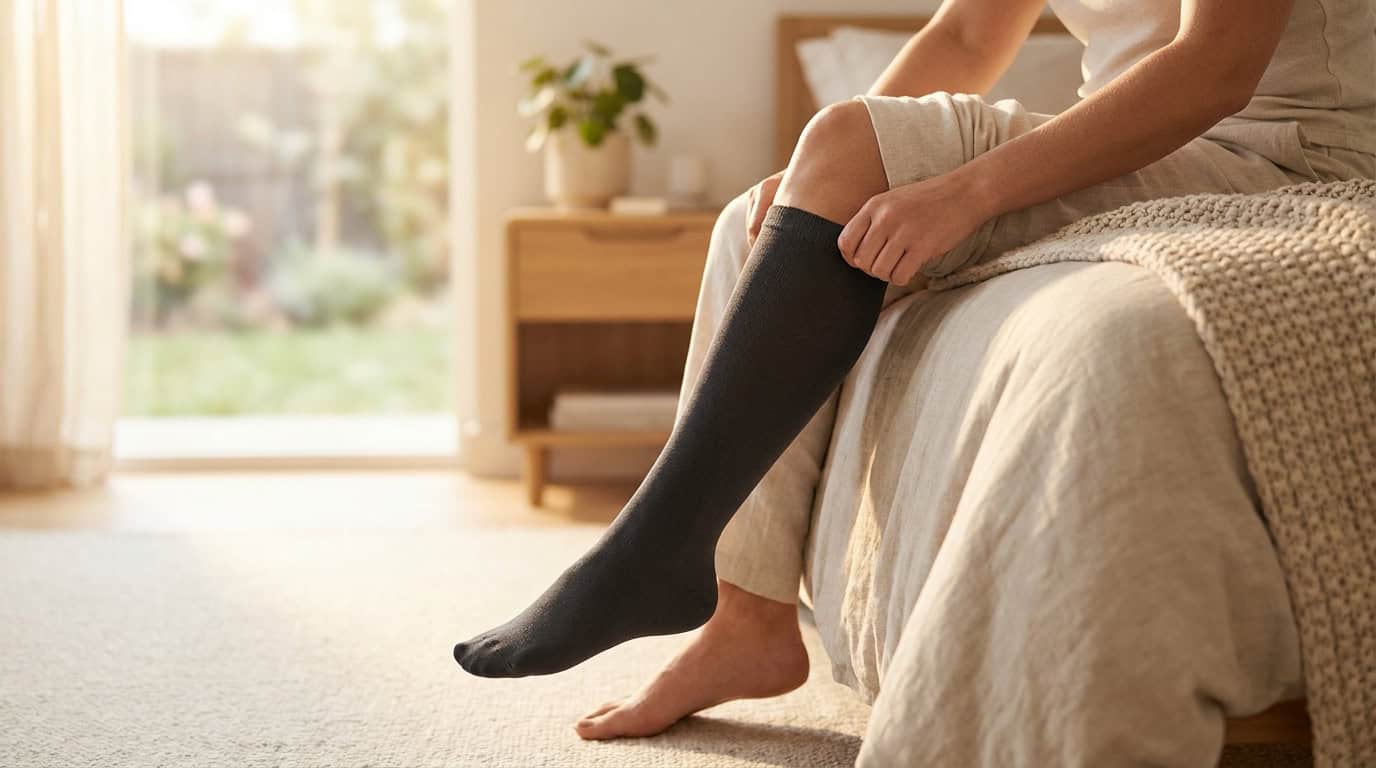
The Easy-On over-the-calf style has an extra-wide top band that does not bite into the calf the way cheaper compression socks tend to. If you have ever peeled off a sock and found a red trench dug into your leg, you will appreciate the difference. They are also easier to pull on than firmer medical socks, which can be a genuine wrestling match. Breathability is fine for everyday use, though on a hot summer afternoon they run warmer than a thin athletic sock. The anti-odor claim mostly held up over my testing window—they stayed fresher than expected between washes.
On durability, the fabric and stitching held shape through repeated machine washing (cold, air dry is the safe move—heat is the enemy of any compression garment’s elastic). Sizing is the one place to slow down: get it wrong and a compression sock is either useless or uncomfortable, so measure against the brand’s size chart by shoe size and calf circumference rather than guessing.
Who they are for, and who should look elsewhere
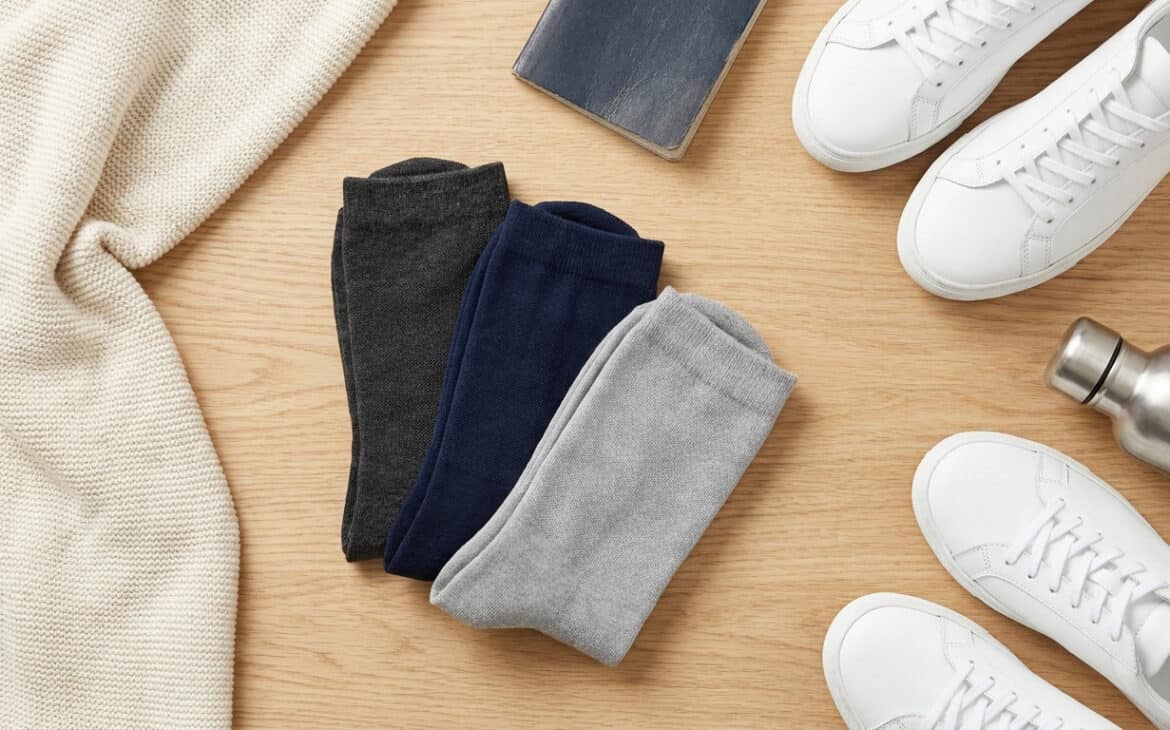
These make sense if you are on your feet all day, fly often, get mild swelling, want a little recovery help after workouts, or simply want a comfortable everyday compression sock without a doctor’s visit. For that broad “my legs are tired and I want them to feel better” crowd, they do the job.
Look elsewhere if you need true medical-grade compression for a diagnosed condition—venous insufficiency, lymphedema, or a clotting risk. That is a conversation with your doctor and almost certainly a firmer, often professionally fitted 20 to 30+ mmHg sock, not an off-the-shelf everyday pair. People with diabetes should also be cautious and choose non-binding styles in consultation with a clinician, since circulation and skin sensitivity change the math.
How to pick the right compression level
Compression is measured in millimeters of mercury (mmHg), and the number matters more than the brand on the label. A quick orientation:
- 8–15 mmHg (light): everyday comfort, mild tiredness, desk-bound days.
- 15–20 mmHg (moderate): travel, long shifts on your feet, mild swelling, workout recovery—where most Tommie Copper everyday socks land.
- 20–30 mmHg (firm): varicose veins, more significant swelling, post-surgical use—usually a doctor’s recommendation.
- 30+ mmHg (medical): diagnosed venous disease and lymphedema, fitted and prescribed.
If you are unsure where you fall, start moderate. It is the sweet spot for the everyday problems most shoppers are actually trying to solve.
How Tommie Copper compares
Tommie Copper’s closest rival is Copper Fit, which markets nearly identical copper-compression products and has weathered its own false-advertising scrutiny—so the same “buy it for the compression, not the copper” advice applies. If you want firmer, transparently rated everyday socks, Sockwell makes excellent merino-blend graduated options and Comrad publishes exact mmHg and leans into a modern, no-nonsense pitch. For athletes chasing performance recovery, CEP and Physix Gear sit at the firmer, sportier end.
Where Tommie Copper wins is comfort, that wide non-digging cuff, and availability—you can grab a pair from their own site, Amazon, Target, or Walmart without hunting. Where it loses is precision: it is not the firmest sock and not the most upfront about exact compression numbers. For a casual buyer that trade is fine; for someone with a specific medical target it is not enough.
A quick word on vetting any product like this
Compression socks are a category swimming in five-star enthusiasm, and social proof is a big part of how they sell. Brands lean hard on reviews and engagement, and some marketers even buy facebook comments to give a new product’s social posts early momentum and a sense of buzz. As a shopper, the smart move is to treat that buzz as one signal among many—pair it with verified-purchase reviews, genuine hands-on testing, and, ultimately, how your own legs feel after a week. No comment count can tell you whether a sock fits your calf.
The verdict
Tommie Copper compression socks are worth it if you want a comfortable, easy-on everyday sock in the light-to-moderate range and you go in clear-eyed about what the copper does and does not do. The compression delivers the tangible benefits—less fatigue, less mild swelling—and the fit is genuinely better than a lot of budget competition. They are not a medical device, not a substitute for prescribed compression, and not the pain cure the old infomercials sold. Priced in the rough $20 to $40 range, judged as a good everyday compression sock rather than a miracle, they earn their spot in the drawer.
Frequently Asked Questions
Do Tommie Copper socks actually relieve pain?
Not in the way the original advertising implied. The FTC found the brand’s pain-relief claims unsubstantiated in 2015. What you reliably get is the benefit of graduated compression—reduced swelling and leg fatigue—which many people experience as their legs simply feeling better at the end of the day. Real joint or nerve pain is a medical issue, not something a copper sock cures.
What compression level are Tommie Copper socks?
Their everyday socks generally fall in the light-to-moderate band, roughly 10 to 20 mmHg, rather than firm medical grade (20 to 30+ mmHg). The brand does not always publish an exact number per style, so if a precise mmHg matters to you, check the specific product page or choose a brand that lists it clearly.
Does the copper really fight odor, and does it wash out?
The copper yarn is antimicrobial, and that is its legitimate function—reducing odor-causing bacteria. Because the copper is woven into the fiber rather than sprayed on, it holds up through normal washing far better than a topical treatment would. Wash cold and air dry to protect the compression elastic.
Are they good for swelling, flying, or diabetes?
For mild swelling and long flights, yes—moderate graduated compression is exactly the use case. For diabetes or any diagnosed circulatory condition, talk to your doctor first and choose non-binding, appropriately rated styles, since the wrong compression can do more harm than good.
Where can you buy them and what do they cost?
Tommie Copper socks are sold on tommiecopper.com, Amazon, Target, and Walmart, typically running about $20 to $40 a pair depending on style and whether you buy a multipack.
Related Reading
- BONKAZONKS Marvel Game -Review/Giveaway-
- The Real Truth About Chi Escape Cordless Curling Iron 2: What 180 Days of Testing Revealed
- Fruit of the Loom Fresh Collection Review: 90-Day Test Results That Shocked Us
- Summer Sandals: How to Choose the Best Pair for Every Occasion