
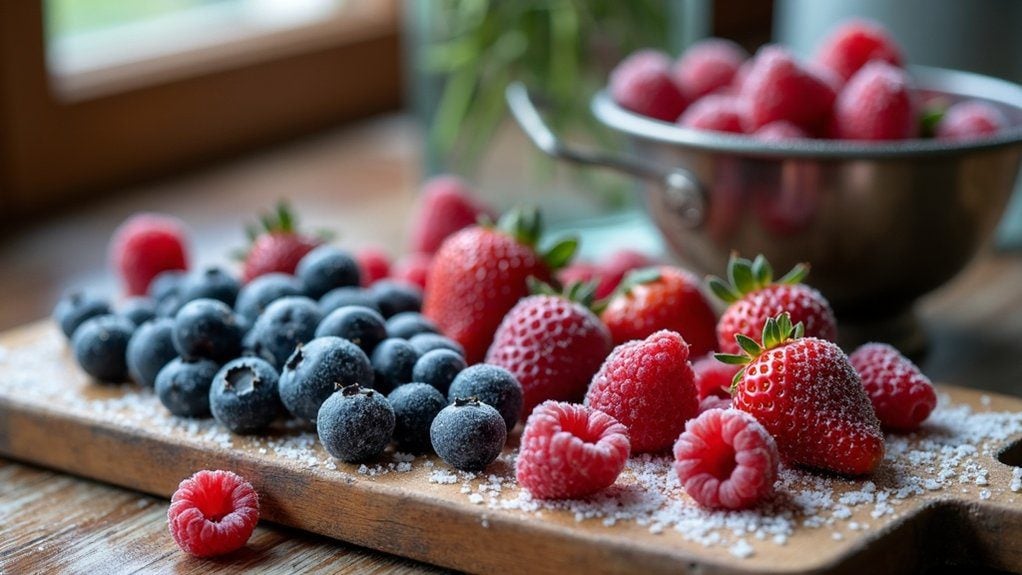
Fruits That Are Just as Healthy Frozen as Fresh

Dietitians are basically telling everyone the freezer aisle beats fresh produce, and honestly, they’re not wrong. Frozen fruits get flash-frozen at peak ripeness, locking in vitamins that fresh fruits lose while sitting around looking pretty. That University of Georgia study? It found frozen options often pack more nutrients than their “fresh” counterparts rotting slowly in the crisper drawer. Plus they’re cheaper, last forever, and won’t guilt-trip anyone from the counter. The science behind this frozen fruit phenomenon might surprise even the biggest farmers market snobs.

While most people instinctively reach for fresh fruit at the grocery store, frozen fruits might actually be the smarter choice. Dietitians are starting to spill the beans on this counterintuitive truth, and honestly, it makes perfect sense once you hear the science.
Here’s the thing nobody tells you at the farmers market. Those gorgeous fresh strawberries? They’ve been losing nutrients since the moment they were picked. Meanwhile, frozen fruits get harvested at peak ripeness and flash-frozen immediately, locking in all those vitamins and antioxidants like some kind of nutritional time capsule. The vitamin C and beta-carotene levels in frozen fruits often match or beat their fresh counterparts that have been sitting around for days. That’s right, beat them.
Flash-frozen at peak ripeness, frozen fruits often beat fresh in vitamin C and beta-carotene levels after days of storage.
Fresh fruit starts degrading the second it leaves the tree. Transportation, storage, that weird drawer in your fridge where produce goes to die – it all chips away at the nutritional value. A University of Georgia study backed by the Frozen Food Foundation found that frozen produce sometimes had greater nutritional value than fresh-stored alternatives. Frozen fruits just sit there in suspended animation, nutrients intact, waiting patiently for months. No drama, no degradation.
The economic reality is even more stark. Fresh berries in December? Prepare to mortgage your house. Frozen berries? Same nutrients, fraction of the cost, zero guilt when you don’t eat them within 72 hours. Plus, you can buy in bulk without watching your investment rot before your eyes. Revolutionary concept, really.
Storage stability matters more than people realize. While fresh fruits lose moisture and nutrients daily, frozen fruits maintain their levels because freezing basically tells enzymatic activity to take a permanent vacation. Those phenolic antioxidants that fight free radicals and support heart health? They’re preserved perfectly in the freezer. The frozen varieties come pre-washed and pre-cut, eliminating prep work while delivering the same nutritional punch.
The health benefits remain identical between fresh and frozen – fiber, antioxidants, crucial vitamins, all present and accounted for. Both reduce chronic disease risks. Both support comprehensive health. The difference is frozen fruits deliver these benefits consistently, without the ticking time bomb of spoilage.
Just check the labels. Skip anything with added sugar or syrup. Plain frozen fruit is what dietitians recommend, and now you know why. A Sports Dietitian would emphasize this same principle when advising athletes on optimal nutrition choices. Sometimes the freezer aisle is where the real nutrition lives.