5 Stunning Places in Texas You Have to See (Beyond the Cities)

Texas has an image problem with people who’ve never really explored it: barbecue, cattle, and a lot of highway. What that picture misses is that the state is so enormous it holds entire landscapes most travelers never associate with Texas at all — some of the darkest night skies in the country, a canyon second only to the Grand Canyon, fall foliage hiding a mile up a desert mountain, and spring-fed rivers as clear as anything in the tropics.
Here are five of the best, what makes each one worth the drive, and when to go so you actually enjoy it.
Big Bend National Park: desert, river, and the darkest skies in the lower 48
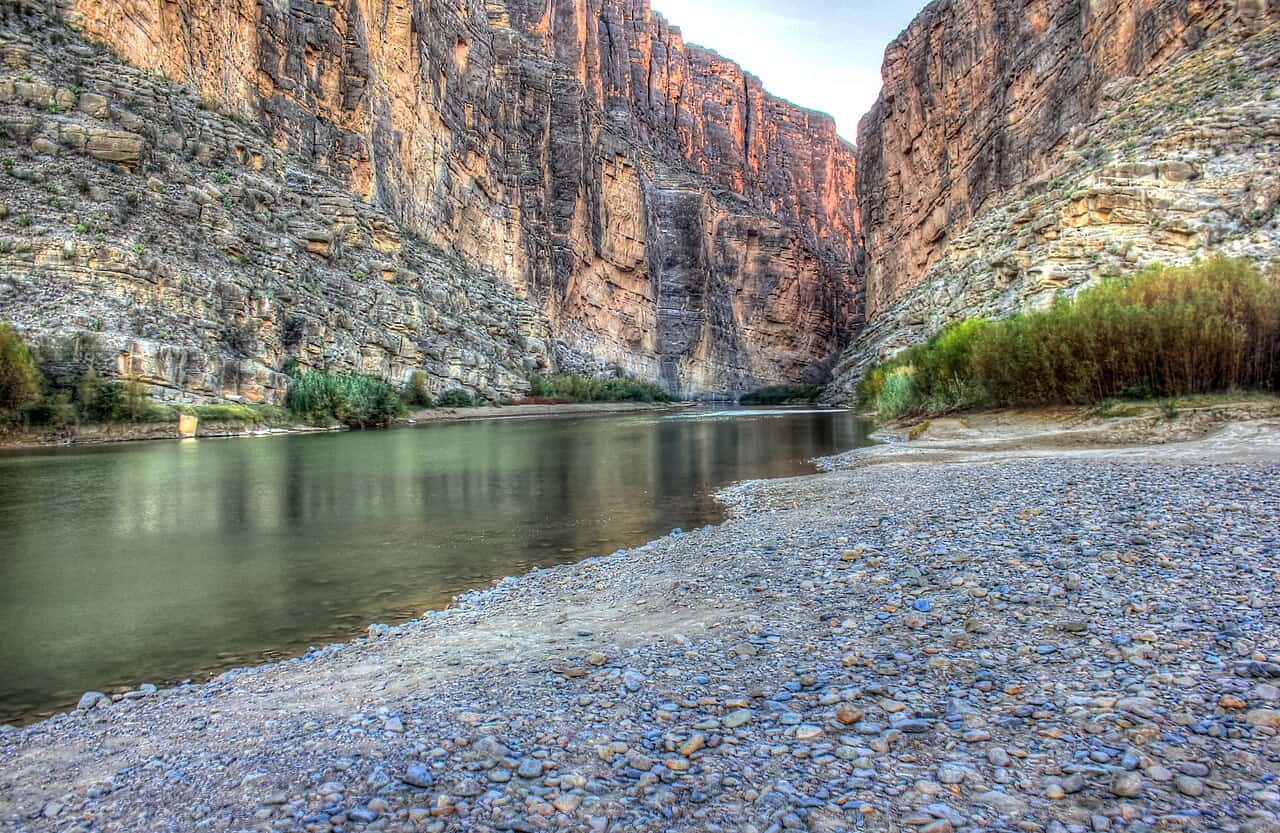
Big Bend is where the Chihuahuan Desert, the Rio Grande, and the Chisos Mountains all meet inside one 801,000-acre park, and that collision is why it’s so biologically rich — more than 1,200 plant species (including some 70 kinds of cactus), over 450 bird species, black bears, and mountain lions, all in a single park.
The real headliner, though, is overhead. Big Bend anchors the Greater Big Bend International Dark Sky Reserve, a 15,000-square-mile zone straddling the Texas–Mexico border that’s among the largest of its kind in the world, and the park itself holds some of the least light-polluted skies in the continental United States. On a clear, moonless night you can pick out the Milky Way’s structure, satellites tracking overhead, and — with patience and dark-adapted eyes — the faint smudge of the Andromeda Galaxy, all without a telescope. The nearby McDonald Observatory, one of the country’s premier dark-sky research sites, is no accident of geography.
Don’t overlook the daytime, either. Hike into Santa Elena Canyon, where the Rio Grande has cut 1,500-foot limestone walls, or climb into the Chisos for a different climate entirely — the desert floor can run 30 to 40 degrees hotter than the mountain peaks on the same afternoon. One bird here, the Colima warbler, breeds almost nowhere else in the U.S.
When to go: October through April. Summer in the desert is genuinely dangerous, with lowland temperatures pushing past 110°F. Plan around a new moon for the stargazing.
Big Thicket National Preserve: East Texas’s “biological crossroads”
If Big Bend is about scale, Big Thicket is about improbable variety. This was the first national preserve in the country, established in 1974 to protect a place where eastern hardwood forest, coastal plain, and the edge of the arid southwest all overlap. Naturalists call it a “biological crossroads,” and on a single day’s hike you can pass through cypress swamp, longleaf-pine forest, and sandy prairie in a few miles.
The detail that surprises everyone is the carnivorous plants. Big Thicket is home to four kinds growing wild — pitcher plants, sundews, bladderworts, and butterworts — which trap and digest insects in the boggy, nutrient-poor soil. The Pitcher Plant Trail and Sundew Trail are built specifically to show them off, and they’re at their most active in the warmer, wetter months.
Because the preserve is split into separate units scattered across roughly 113,000 acres, solitude is easy to find. Paddle Village Creek or walk the Kirby Nature Trail on a weekday and you may have the place largely to yourself — a rare thing at a federally protected site this interesting.
Palo Duro Canyon: the second-largest canyon in the country

Tucked into the Panhandle just south of Amarillo, Palo Duro is often called the second-largest canyon in the United States — roughly 120 miles long and as much as 20 miles wide — yet it draws a fraction of the crowds its Arizona cousin does. Its walls are banded in red, orange, white, and lavender, the visible record of geological layers laid down over hundreds of millions of years.
The signature hike is the Lighthouse Trail, a moderate six-mile round trip out to a 300-foot rock spire that genuinely seems to catch fire in low-angle light. Do it at sunrise: the colors are best, the temperatures are survivable, and you’ll beat the midday glare that flattens every photo. Unlike the Grand Canyon, you can drive to the canyon floor here, camp at the bottom, and — in summer — catch TEXAS, the outdoor musical that has run in a natural amphitheater beneath the canyon walls every summer since 1966.
The canyon has been inhabited for thousands of years; it was a stronghold of the Comanche until the 1874 campaign that ended their presence here. The interpretive exhibits at the park do a good job telling that history.
Guadalupe Mountains National Park: fall color on a desert sky island
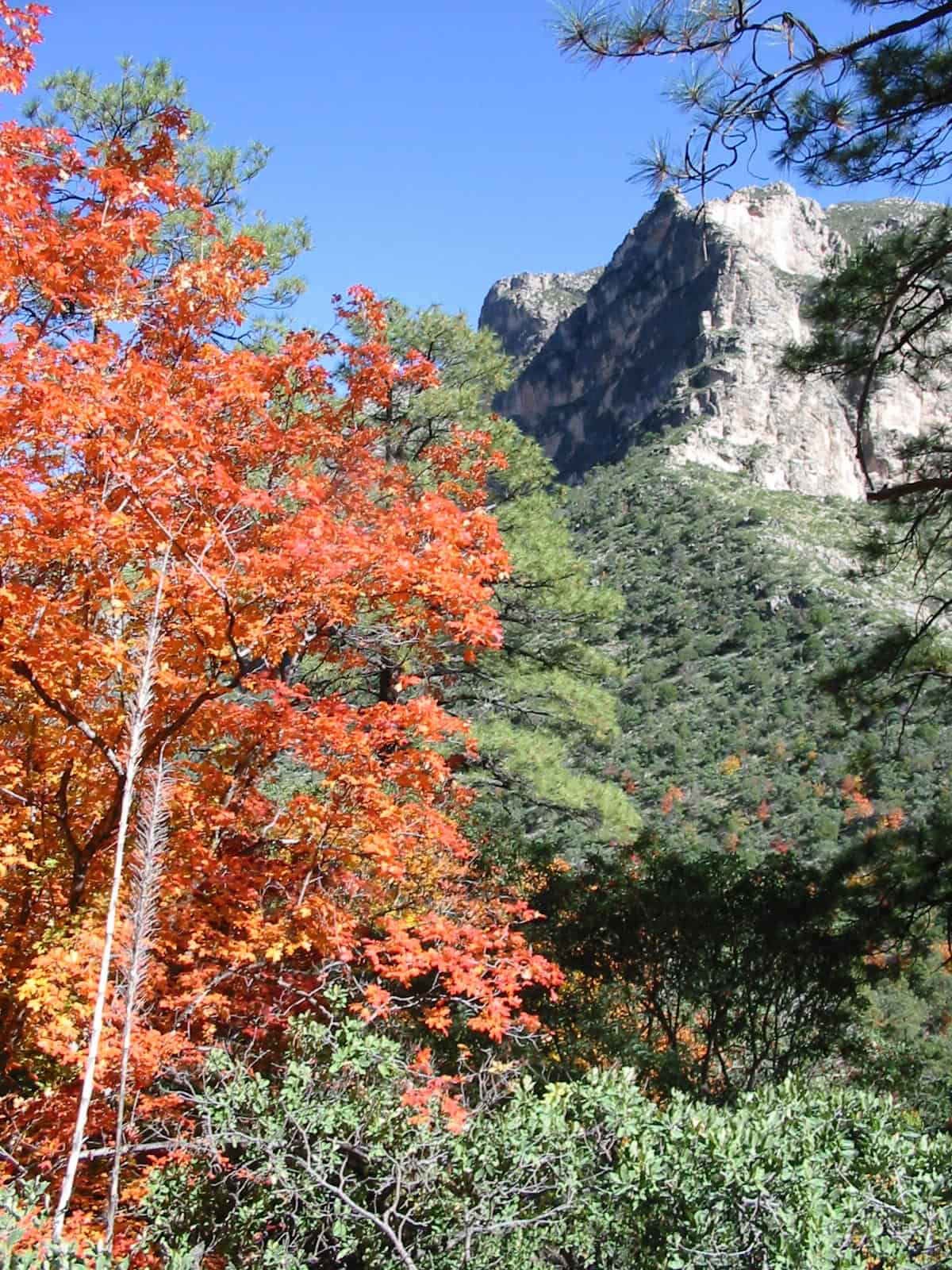
Most people are stunned to learn Texas has real autumn foliage. It does — it’s just hiding 8,000 feet up in the Guadalupe Mountains, near the New Mexico line. This park holds the four highest peaks in the state, topped by Guadalupe Peak at 8,751 feet, the literal summit of Texas.
The whole range is something geologists prize: an ancient marine reef, the Capitan Reef, the same Permian-era formation that created nearby Carlsbad Caverns, pushed thousands of feet into the sky. You can find fossilized sea life near the top of a mountain in the middle of the desert. High enough up, the climate flips entirely, supporting bigtooth maples, Douglas firs, and even aspens.
Time a visit to McKittrick Canyon from mid-October into early November and those bigtooth maples turn brilliant red and gold — a New England display in far West Texas, seen by a tiny fraction of the crowds that descend on Vermont or the Colorado aspens. For a shorter, dramatic walk, Devil’s Hall threads a narrow rock corridor with towering walls. The very ambitious attempt the unofficial “Texas Triple Crown,” bagging Guadalupe Peak, El Capitan, and Bush Mountain in a single brutal day.
Garner State Park: the Hill Country’s clear, cold river
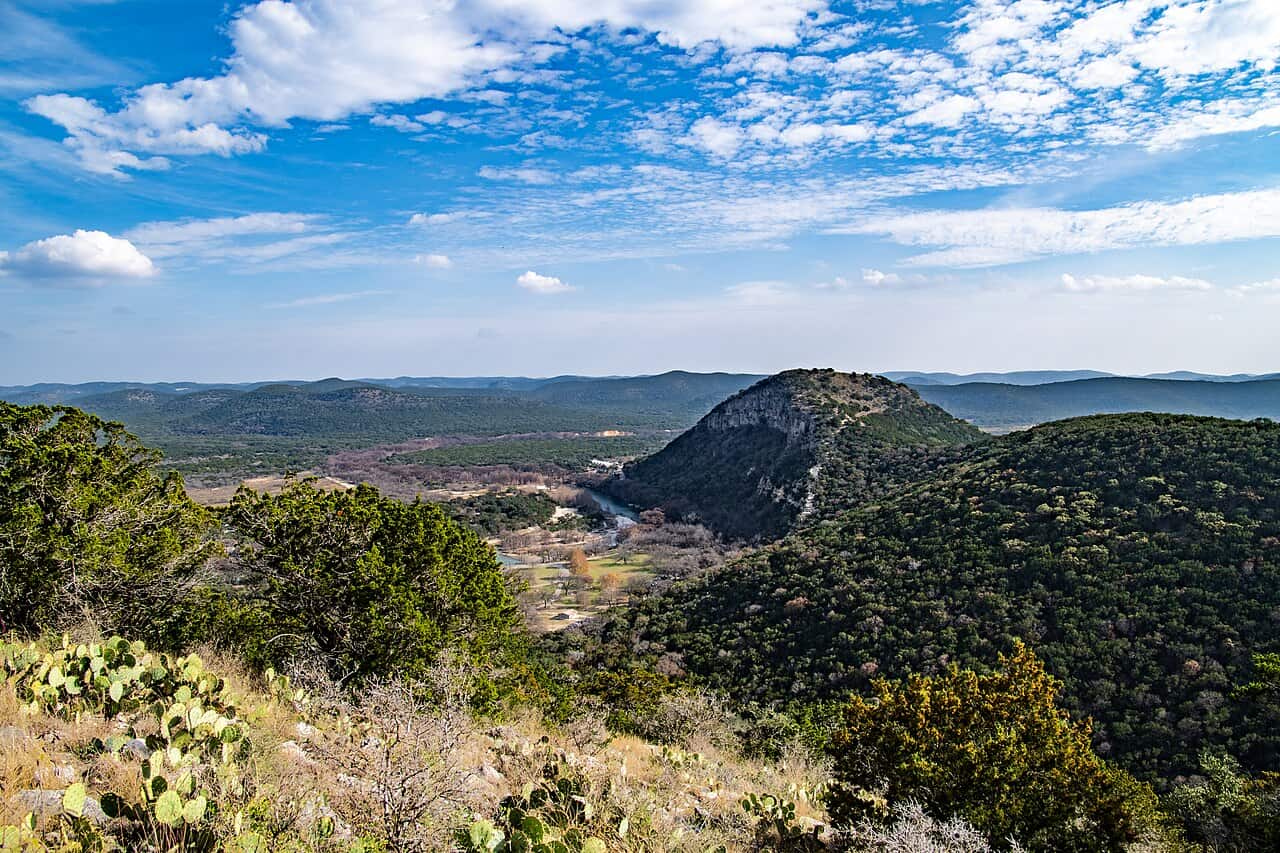
Garner, on the Frio River in the Hill Country, is one of the most beloved state parks in Texas — and one of its most-visited — for one simple reason: the water. Frio means “cold” in Spanish, and even in the heat of July the spring-fed river stays cool and clear enough to count the rocks on the bottom, running through limestone cliffs that are tens of millions of years old.
The park has a tradition to match the scenery. On summer nights since the 1940s, a jukebox dance has been held at the old pavilion, where generations of Texas teenagers have learned to two-step while families tube the river nearby. The stone cabins were built by the Civilian Conservation Corps after the park opened in 1941, and people still rent them today.
The crowds cluster at the main swimming beach, so walk twenty minutes upstream and you’ll often find quiet pools to yourself. And if you can, come in early fall: the water’s still warm enough to swim, the cypress trees along the bank turn rust-orange, campsites are far easier to get, and the pavilion still runs on weekends.
Planning your trip
Five very different landscapes, none of them a city skyline. If you only have time for one and want your expectations rearranged, make it Big Bend on a new moon. An annual Texas State Parks Pass (around $70) pays for itself quickly if you’re visiting several of the state parks, and the national parks — Big Bend and Guadalupe Mountains — use the standard federal entrance fee or the America the Beautiful pass. Book campsites and the CCC cabins well ahead, especially for fall and holiday weekends, and always check the park’s website for current fees, road conditions, and — at Big Bend and the Guadalupes — seasonal heat warnings before you go.
Frequently Asked Questions
What is the most beautiful place in Texas?
It depends what you’re after, but Big Bend National Park is the frequent favorite for sheer drama — desert, the Rio Grande, mountains, and world-class dark skies in one park. Palo Duro Canyon and the fall color of the Guadalupe Mountains are close behind.
Where can you see the best night sky in Texas?
Big Bend National Park, part of the Greater Big Bend International Dark Sky Reserve, has some of the least light-polluted skies in the lower 48. Visit around a new moon for the Milky Way; the nearby McDonald Observatory also runs public star parties.
Does Texas have fall foliage?
Yes — the best display is in McKittrick Canyon in Guadalupe Mountains National Park, where bigtooth maples turn red and gold from mid-October into early November. Lost Maples State Natural Area in the Hill Country is another reliable spot.
What is the second-largest canyon in the US?
Palo Duro Canyon in the Texas Panhandle is commonly cited as the second-largest canyon system in the country, after the Grand Canyon — roughly 120 miles long, with a scenic drive and trails down to the canyon floor.
Related Reading
- Things to Do in Nashville: A Local-Style Guide Beyond Broadway
- SeaWorld San Antonio: Rides, Animals, and Tips for Your Visit
- Texas Ghost Tours: 7 Best Haunted Tours Worth Booking
- Jean-Michel Cousteau Resort, Fiji: A Family Luxury Guide