
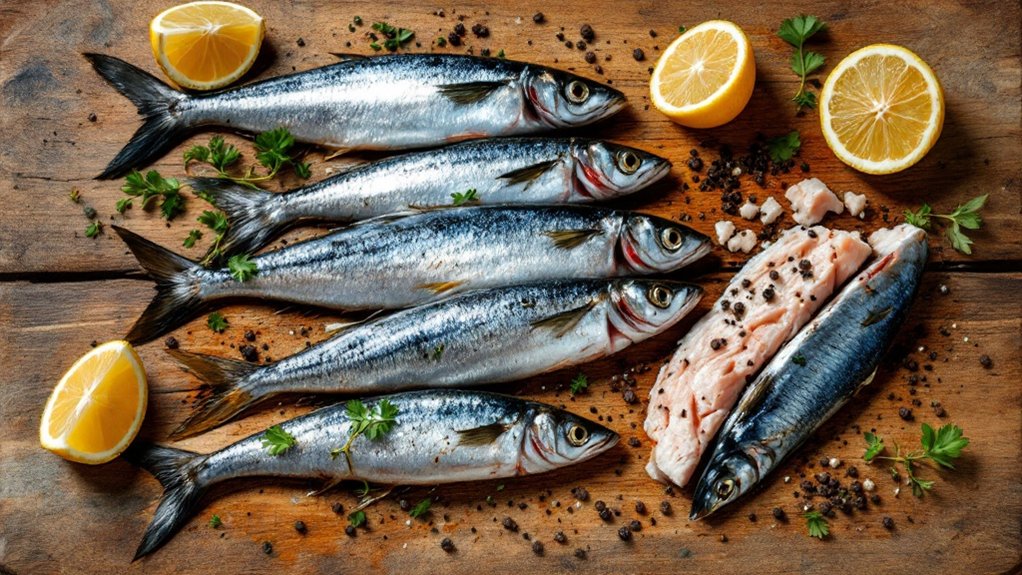
nutritional powerhouse tiny fish

This Tiny Fish Crushes Salmon in Nutrition—And Most People Still Ignore It

Sardines are the unsung heroes of the seafood world. These tiny fish pack a bigger nutritional punch than salmon, with triple the B12 and higher omega-3 levels per serving. They’re loaded with calcium from edible bones and deliver crucial minerals like selenium and iron. The kicker? They’re cheaper and more sustainable than their popular pink cousin. Most people turn up their noses at sardines – but they’re missing out on nature’s perfect little powerhouse.

sardines nutritional powerhouse underrated

In regard to nutritional powerhouses, tiny fish pack a mighty punch. While salmon gets all the glory, sardines quietly dominate the nutrition game with triple the B12 content and higher concentrations of omega-3 fatty acids per serving. Yet most people walk right past them in the grocery store. Their loss.

These little swimmers are protein dynamos, matching salmon’s protein density while delivering more bang for your nutritional buck. They’re complete protein sources, supporting everything from muscle repair to metabolic function. And here’s the kicker – they’re typically way cheaper than salmon. The best part? Whether canned or fresh, they retain their impressive nutrient profile. Compared to salmon’s 20.4g protein per 100g, sardines maintain similar protein levels.

The calcium content in sardines is nothing short of remarkable. Those tiny, edible bones pack 20-30% of your daily calcium needs. No dairy required. While salmon brings vitamin D to the table, sardines hold their own with moderate amounts, essential for those living in sun-deprived northern regions. The combination of calcium and vitamin D makes these fish a bone-health dream team. The American Heart Association recommends eating fish like these twice weekly for optimal cardiovascular benefits.

Sardines deliver a powerful one-two punch of calcium and vitamin D, making them an unsung hero for bone health and strength.

Let’s talk sustainability because it matters. These small fry occupy a lower position on the food chain, which means less mercury accumulation. Their short life cycles allow populations to bounce back quickly, unlike their larger, overfished cousins. They’re basically the environmentally conscious choice you didn’t know you needed.

SEE ALSO  Why Your Perfect Sleep Routine is Ruining Your Night's Sleep (And What Actually Works)

The iron and selenium content in sardines is another knockout punch. They’re loaded with selenium – we’re talking 70-90% of daily values per serving. This mineral duo supports everything from thyroid function to cellular protection. Plus, the iron content surpasses salmon, making these tiny fish a powerful weapon against anemia.

Wild-caught sardines maintain their natural fatty acid profiles without any farming shenanigans. Their small size actually works in their favor, increasing nutrient absorption efficiency.

It’s almost ironic – the fish that most people ignore might just be the nutritional champion we’ve been overlooking all along.

Similar Posts

  • Health Boosts the Simple Way: Why Doing Less Creates More Lasting Results

    Something that you should be sure to take care of is a health check. Something that includes eyes, ears, and more. That will give you an overview of how you are doing and where you can make improvements there. You should learn more about hearing help, eyesight help, and even joints too.
    Think Happy
    If you are making a conscious effort to see the positives in life, you will be dropped down by the negatives. Eventually, over time the more positive thoughts you have, the happier you will be.
    Thinking positively over time will help you to drown out negative thought noise too. And a positive attitude generally makes a lot of difference to your whole day. Something you can just do immediately. You’ll need to make small steps over time. To adjust your thinking. Practice gratitude at every point.
    Small Meals
    Many people stick to three meals a day, but often find themselves hungry in between and snacking – and often not on the most healthy things. Instead, think about having smaller meals, but more of them throughout the day. Swapping from 3 to 5 meals, but keeping them protein-packed will help speed up your metabolism over time. Not only that, but your blood sugar levels will remain more steady, your focus will be improved, and you might even notice a change in your weight.
    Vegetables
    If you think you eat enough vegetables, then the chances are you are doing great, but even so could do with more. 5 portions of vegetables should be the minimum, not the aim. Try to shoot right past that. Eat them raw, juiced, steamed, add the in sauces, and stir-fries too. No amount of stress will truly let you know how good leafy green veggies are for you. So always add as many as you can.

  • Why Your Bad Habits Aren’t the Enemy: The Neuroscience of Compassionate Change

    Whether it’s video games, television or even smoking, there are lots of different habits that we get into which are generally perceived as unproductive and a complete waste of time. However, look past the negativity and you’ll find that each of those habits does have a productive silver lining behind it.
    For instance, video games can be considered a social activity if you enjoy it with friends. Television can also be educational if you watch the right content. Even smoking can be considered something that offers you positive benefits, such as having a way to talk to others in the workplace during breaks or even having a way to calm yourself down after a stressful day. Of course, we obviously can’t ignore the health effects of something like smoking, and even video games to a lesser extent. However, we also can’t ignore that there’s a reason why we developed those bad habits in the first place.
    Finding the root of your good and bad habits
    Once you start to think about your bad habits in a positive light, you’re going to start looking at them differently. For instance, if the positives you get from smoking don’t outweigh the negatives, then it’s a good idea to look for a service such as a women’s addiction treatment center to help you recover from it. Once you start thinking about the possibilities and positives of quitting an addiction, you’ll be more motivated to do it.
    However, you also need to balance this with your existing good habits. For instance, if you consider that your gym-going lifestyle is very healthy for your body, you also need to consider how much time it takes off your day and the opportunities that you miss from doing it. Yes, going to the gym is a far better positive habit than it is a negative one, but if you’re going every single day then you could be ruining your health in the long run by overworking your body. There are also other opportunities that you could use to get exercise and socialize, such as going for a job with a friend or working out at home with your partner instead of the gym.
    In short, it’s important to consider both the positives and negatives of your good and bad habits and balance them accordingly.

  • Be an Eco Driver Without Being a Saint: The Stress-Busting Secret Nobody’s Talking About

    Always keep your tires fully pumped, this greatly reduces fuel consumption, so give them regular checks. Check your oil regularly, make sure there’s enough flowing as this also reduces damage to the internal mechanism. Be sure to stay on top of all maintenance needed in general, as the better your car runs, the less fuel it will use. You will of course also save money in the long run on any unnecessary repairs.
    Chill out!
    The most economical driver is a calm driver, so avoiding flooring it and stamping on the throttle. No unnecessary speeding or last-minute braking, maintain a little more control. Switch off the engine where possible, for example when going downhill, and remain in gear. Take your foot off the accelerator as this sends gas to the engine, for example when you’re not moving or stuck in a traffic jam. Try to stay on a low gear below 1500rpm and when changing gears, try to skip, for example from third to fifth, as this will be less of a strain on your transmission.