The Wild Truth About Small Batch Blackberry Jam—Why Invasive Berries Make It Better

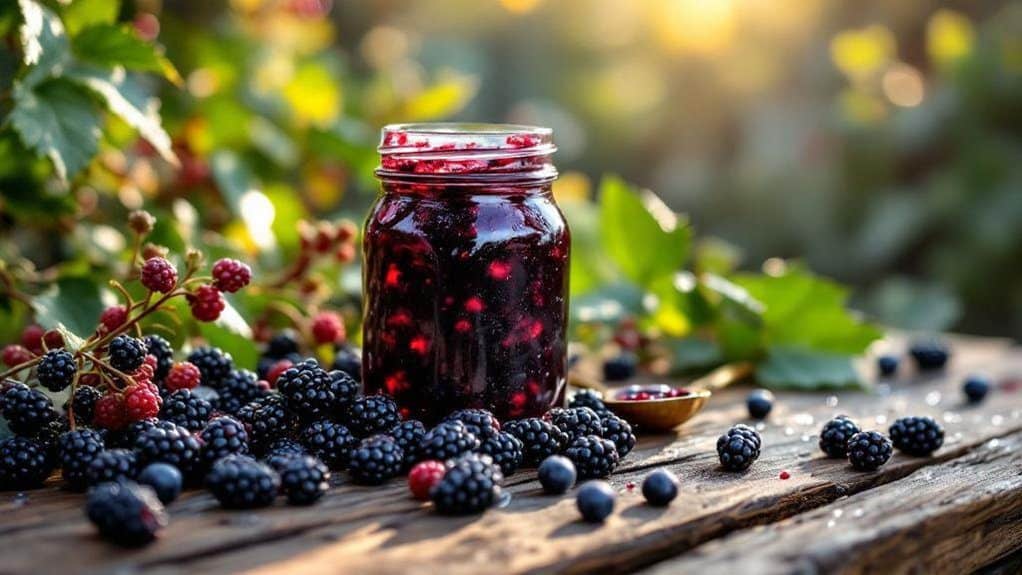
Wild blackberries from abandoned lots make killer jam. Here’s the thing: those aggressive vines everyone hates actually contain more natural pectin than store-bought berries. The invasive brambles produce fruit that sets better, tastes stronger, and doesn’t need commercial pectin. Free ingredients from nature’s hostile takeover yield two jars per pound. Small batch means less fuss, better quality control. Turns out the plant everyone curses makes jam that puts fancy berries to shame. The full process reveals surprising truths about foraging success.

Making small batch blackberry jam isn’t rocket science, but people sure act like it is. The truth about blackberry jam gets especially interesting when those berries come from invasive brambles choking out native plants. Turns out, these aggressive invaders make some of the best jam around. This recipe yields 2 jars from just one pound of berries—perfect for those who don’t want to commit to marathon canning sessions.
Fresh blackberries work better than frozen ones. That’s just how it is. The sugar content matters too—about a 1:1 ratio with the berries—because sugar isn’t just sweetness. It’s a preservative. Without commercial pectin, lemon juice becomes the hero, helping the jam set while adding that sharp note that cuts through all that sweetness. Wild blackberries contain more pectin than their farmed cousins, which explains why foraged jam often sets better.
The process starts with maceration. Fancy word for letting berries and sugar sit together for 15 minutes to an hour. The berries break down, release their juices.
Maceration: letting berries and sugar get cozy while chemistry does the heavy lifting.
Then comes the heat—low to medium, nothing crazy. Stirring constantly because nobody wants burnt jam stuck to their pan. The mixture needs to hit a rolling boil, and after about 15-20 minutes, magic happens. Or chemistry. Whatever.
Sterilization isn’t optional. Jars go into boiling water or a low oven before filling. Hot jam goes into hot jars, leaving headspace because physics exists and things expand. Those lids need to seal tight. A 10-minute boiling water bath finishes the job. No shortcuts here unless botulism sounds appealing.
Testing the set involves old-school methods—the flake test, temperature test, or dropping jam on a cold plate. Once sealed and cooled, these jars last months in a cool, dark place. Open one, though, and into the fridge it goes.
The nutrition facts? Blackberries pack antioxidants and fiber, sure. But let’s be honest—the sugar content makes this more dessert than health food. At least it’s vegan and gluten-free for those keeping track.
Equipment needs are basic. Large saucepan, something to mash berries, canning tools. Nothing requiring a second mortgage.
The invasive blackberries growing wild behind abandoned lots? Free for the taking. Those aggressive brambles nobody wants might just produce the best batch of jam anyone’s ever tasted. Nature’s weird like that.
Related Reading
- Why Restaurant-Style Fries Are Better Than Yours—And How to Cook Them Properly
- Why Cleaning Your Grill Wrong Could Ruin Your Meat and Risk Your Health This Summer
- DASH Diet Recipes: Heart-Healthy Meals That Lower Blood Pressure
- The Shocking Truth About Voortman Bakery Cookies: Why Food Scientists Are Obsessed