Orange Float: How to Make the Classic Creamsicle Soda Float

An orange float is the simplest kind of magic: a tall glass of cold orange soda poured over vanilla ice cream until it foams up into something that tastes exactly like a Creamsicle melting on a summer afternoon. Two ingredients, about two minutes, and zero cooking. If you can scoop and pour, you can make one.
Here’s the classic version the way the old soda fountains did it, plus the handful of small tricks that separate a great float from a sad fizzy puddle — and a few variations worth knowing once you’ve got the basic down.
The classic orange float
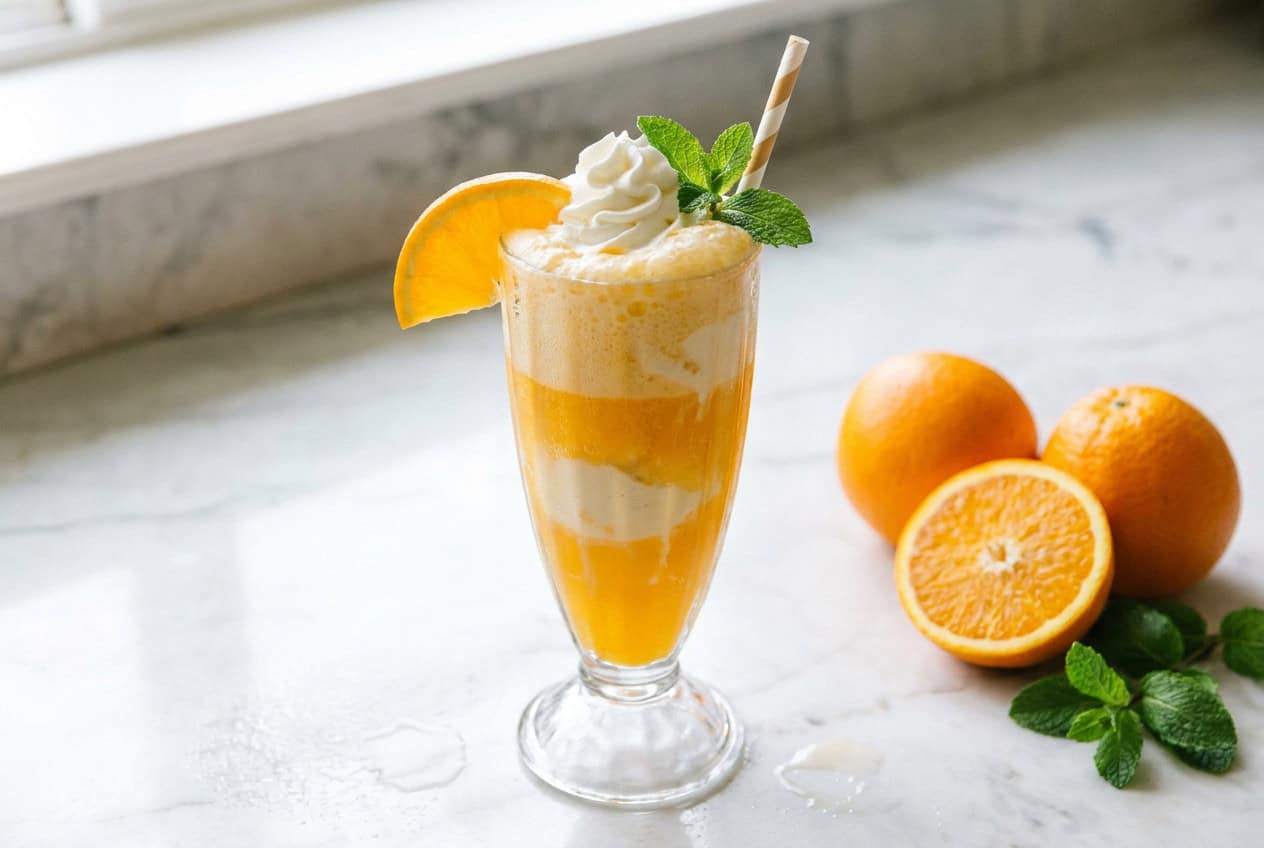
At its heart this is orange soda and vanilla ice cream, full stop. Everything else is optional. What matters is using a good vanilla — the ice cream is doing half the flavor work, so this is not the moment for the bargain tub — and pouring the soda slowly so it doesn’t erupt over the rim.
Makes 1 float · Prep 5 minutes
- 2 scoops good vanilla ice cream (about ½ cup)
- 1 can (12 oz) orange soda — Sunkist, Fanta, or Orange Crush all work — well chilled
- Whipped cream, to top (optional)
- An orange slice or a maraschino cherry, to garnish (optional)
- Chill a tall glass in the freezer for a few minutes if you have time — a cold glass keeps things fizzy and slow to melt.
- Drop one scoop of vanilla ice cream into the bottom of the glass.
- Pour the orange soda in very slowly, tilting the glass, until it’s about three-quarters full. The slow pour is the whole trick: it tames the foam so you get a creamy head instead of a sticky overflow.
- Add the second scoop, top with whipped cream and a garnish if you like, and serve right away with both a straw and a long spoon.
That’s it. The reaction between the cold soda and the ice cream is what creates that frothy, half-melted creaminess people remember from childhood — the same flavor logic behind a Creamsicle, just in a glass.
The small things that make it better
A float lives or dies on a few details. Pour temperature is the big one: both the soda and the glass should be as cold as possible, because warm soda foams violently and melts the ice cream into orange milk before you can drink it. Let the ice cream sit out for only a minute or two — just soft enough to scoop cleanly, not soupy.
Pour against the side of a tilted glass rather than straight down onto the scoop, the way you’d pour a beer, and stop when the foam climbs so it can settle before you add more. If you want pronounced layers for the photo, freeze the glass first and add the soda in two slow stages. And resist stirring — a float is meant to be eaten in shifting layers of fizz, foam, and melting cream, not blended into a uniform shake.
Variations worth trying

Once the basic float is second nature, it bends in a lot of directions.
For a true Creamsicle float, swap the orange soda for an orange cream soda, or stir half a teaspoon of vanilla extract into the glass first — it pushes the whole thing toward that orange-and-vanilla swirl. A sherbet float uses orange sherbet in place of (or alongside) the vanilla for a tarter, brighter version. Kids tend to love a rainbow float built with rainbow sherbet and a clear lemon-lime soda.
If you’d rather skip the soda entirely, make a fresh-juice version: half a glass of cold orange juice topped with plain seltzer and a scoop of vanilla, which tastes cleaner and a little less sweet. For a grown-up float, replace the soda with chilled Prosecco, or add a splash of vodka and triple sec for something closer to a boozy dreamsicle. And for a lighter everyday version, a diet orange soda with frozen yogurt does the job without much fuss — just know it won’t be quite as rich as the original.
One note for anyone who landed here expecting something else: in the Philippines, “orange float” usually means a no-bake icebox dessert — layers of graham crackers, sweetened cream, and mandarin oranges, chilled until firm, in the same family as the popular mango float. It’s delicious, but it’s a completely different recipe from the drink above.
Frequently Asked Questions
What is an orange float made of?
In its classic form, just two things: cold orange soda and vanilla ice cream. The soda foams up against the ice cream to create a creamy, fizzy drink that tastes like a Creamsicle. Whipped cream and an orange slice or cherry are common optional garnishes.
What’s the best soda for an orange float?
Any orange soda works — Sunkist, Fanta, and Orange Crush are the usual picks. For a more vanilla-forward, true Creamsicle flavor, use an orange cream soda. If you prefer less sweetness, swap in fresh orange juice topped with plain seltzer.
How do you keep an orange float from overflowing?
Pour the soda slowly against the side of a tilted glass and stop whenever the foam rises, letting it settle before adding more. Using well-chilled soda and a cold glass keeps the foam under control, since warm soda fizzes over much faster.
Can you make an orange float ahead of time?
Not really — floats are best made to order and drunk within a few minutes, while the carbonation is strong and the layers are distinct. You can prep ahead by chilling the glasses and soda and pre-scooping ice cream into the freezer, then assemble right before serving.
Related Reading
- Big Red Margarita Recipe (A Texas Classic)
- Why Boiling Crabs Alive Might Be Ruining Your Dinner—and What To Do Instead
- DASH Diet Recipes: Heart-Healthy Meals That Lower Blood Pressure
- The Shocking Truth About Voortman Bakery Cookies: Why Food Scientists Are Obsessed