
Make It Monday: The Giant Cupcake Cake Engineering Secret That Changes Everything (Plus Foolproof Homemade Buttercream)

Let me guess. You’ve stared at that giant cupcake pan thinking ‘how hard can it be?’ Then ended up with a lopsided disaster that looked like it melted in the sun. Or maybe you got the cake out intact but your buttercream slid off like it was on a waterslide.
Here’s the thing nobody tells you: giant cupcake cakes aren’t just bigger cupcakes. They’re engineering projects disguised as desserts. The physics are completely different. Heat distribution, structural support, moisture retention—mess any of these up and you’re scraping cake cement out of your pan while ordering a grocery store sheet cake.
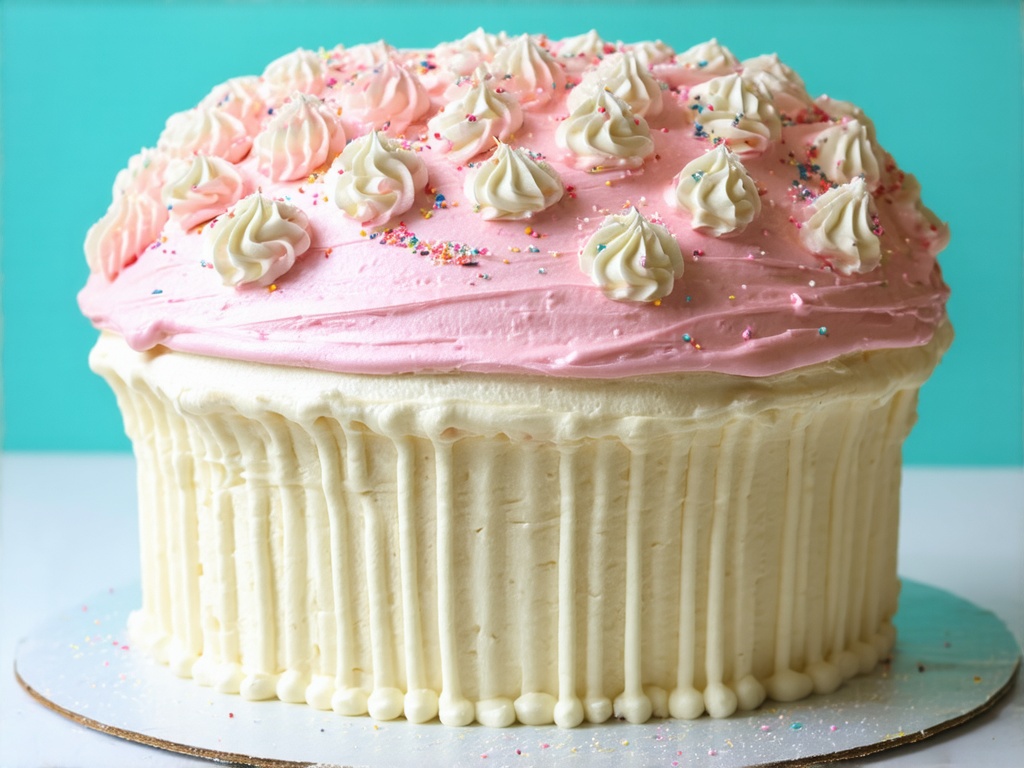
But here’s what I discovered after destroying three pans worth of attempts: there’s a precise 2.5 to 3.5 cup ratio that changes everything. Add in the 325°F sweet spot and one weird damp towel trick, and suddenly you’re making giants that could survive a hurricane.
I’m talking about the kind that make people stop mid-bite and ask ‘wait, you made this?’
Yeah. You did.
The Critical Batter Ratio That Changes Everything: Why 2.5 + 3.5 = Giant Cupcake Perfection
Most giant cupcake cake recipes tell you to ‘fill the pan.’ That’s like saying ‘just add water’ to instant noodles without mentioning how much. Useless.
Here’s what actually matters: 2.5 cups in the top cavity, 3.5 cups in the bottom. Not ‘about half full.’ Not ‘leave some room.’ Exactly 2.5 and 3.5.
I learned this the hard way when my first attempt overflowed like Mount Vesuvius and welded itself to my oven floor. Turns out Wilton, the company that makes most giant cupcake pans, has been screaming these exact measurements at us for years. We just weren’t listening.
Why these specific amounts? Physics. The top half has less volume but more surface area exposed to heat. It needs less batter to rise properly. The bottom is basically a bunker that traps heat and moisture. It needs more batter to cook through without turning into concrete.
When you nail this ratio, something magical happens. You get exactly one inch of rise room. The top doesn’t overflow. The bottom doesn’t sink. And here’s the kicker—you’ll have enough leftover batter for 6-8 regular cupcakes. It’s like the universe rewards you for finally following directions.
I use liquid measuring cups for this. None of that ‘eyeball it’ nonsense. Pour, measure, pour again. Takes 30 extra seconds and saves you from ordering emergency pizza because your dessert became a science experiment.
The old advice about filling pans 2/3 full? Throw it out. That’s for regular cupcakes. Giants play by different rules.
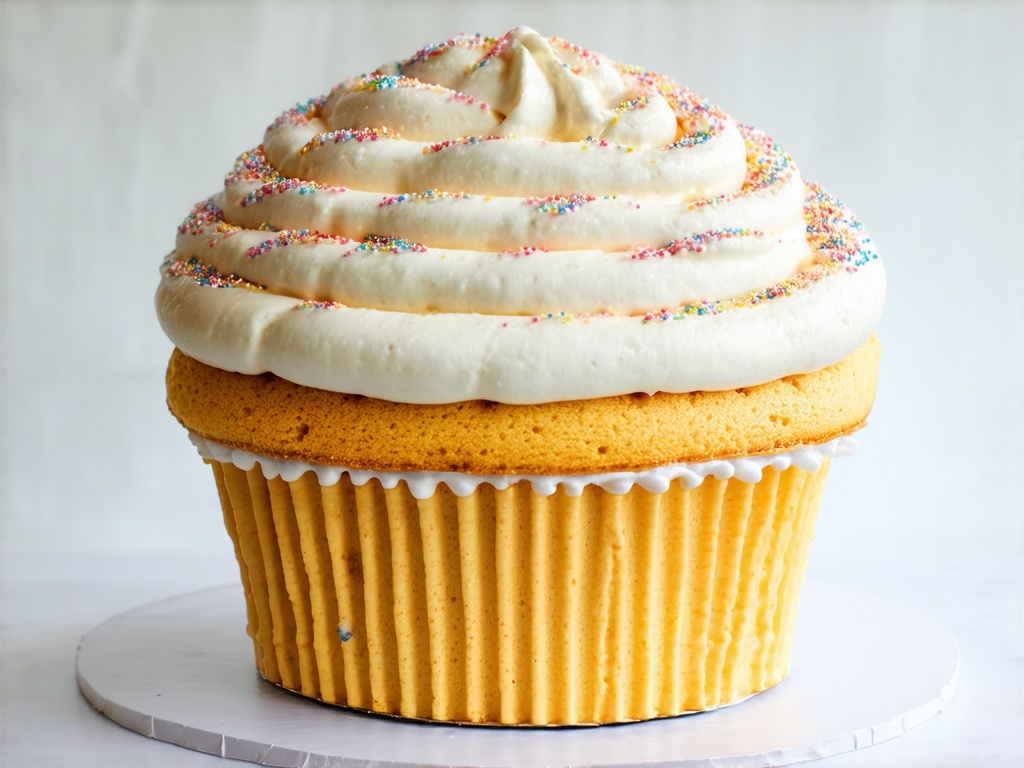
But even perfect measurements won’t save you if your temperature game is off. Which brings us to the weirdest hack I’ve ever tried…
Temperature Secrets: Why 325°F (Not 350°F) and the Damp Towel Hack Transform Results
Every recipe defaults to 350°F like it’s some universal baking truth. It’s not. For giant cupcake cakes, 350°F is your enemy.
Here’s why: the top half of your giant cupcake bakes 20 minutes faster than the bottom. At 350°F, you get a burnt top and raw bottom. Every. Single. Time.
Drop it to 325°F. This isn’t just random—it’s about heat penetration. Lower temperature means gentler, more even cooking. The kind that doesn’t leave you with a crunchy shell hiding cake soup.
But temperature alone isn’t enough. Enter the damp towel hack that sounds insane until you try it.
Preheat your bottom pan for 10 minutes with a damp kitchen towel stuffed in the top cavity. Not soaking wet. Just damp. Like you wrung it out but not completely.
This creates a steam pocket that pre-moisturizes the air in your oven. Pull out the pan, remove the towel, fill with batter, and bake. The residual moisture prevents that awful crusty top that cracks like the Sahara.
I discovered this accidentally when I left a towel in the pan while preheating. Instead of disaster, I got the most even bake of my life. Now I do it every time.
At the 30-minute mark, tent the top with foil. Not tight—just a loose cover. This stops the top from overcooking while the bottom catches up.
Total bake time runs 45-60 minutes. Sometimes 70 for really deep pans. Forget timers. Use a toothpick in the thickest part of the bottom. When it comes out with just a few moist crumbs, you’re done.
One more thing: invest in an oven thermometer. Most ovens lie about their temperature. Mine runs 15 degrees hot. Yours might too. That difference turns giants into disasters.
Temperature control means nothing if your homemade buttercream can’t handle the weight. Which is where most people’s giant cupcake cakes literally fall apart…
Beyond Basic Buttercream: Stability Engineering for 2-Pound Frosting Loads
Standard buttercream icing recipe is basically sweetened butter that melts if you look at it wrong. Fine for regular cupcakes. Death sentence for giants.
A fully frosted giant cupcake carries about 2 pounds of homemade buttercream frosting. That’s like asking tissue paper to support a brick.
Swiss meringue buttercream changes the game. It’s stable at room temperature for 4+ hours because the egg whites create structure. Or go with stabilized American buttercream recipe—add 2 tablespoons of cornstarch per pound of powdered sugar. Sounds weird. Works perfectly.
Here’s the assembly secret nobody mentions: chill your cake for 30 minutes before frosting. I mean really cold. This firms up the crumb structure so it doesn’t tear when you spread buttercream.
While it chills, make a crumb coat. This is a thin layer of buttercream icing that seals in crumbs like primer before paint. Spread it everywhere, especially that 2cm seam where top meets bottom. That seam is your weak point. It’s where giants split apart and dreams die.
After crumb coating, back in the fridge for 15 minutes. Then your final coat. Use a 1:1 butter to sugar ratio for stability. Most vanilla buttercream recipes go heavy on sugar. That makes it sweeter but weaker.
For piping, fill your bags only halfway. Full bags get warm from your hands and the buttercream loosens. Halfway means you refill more but your decorations actually hold their shape.
Room temperature test: leave a test dollop on the counter while you work. If it slides after 20 minutes, add more powdered sugar. If it cracks, add a tablespoon of milk. Giants need buttercream that can take a beating.
Now let’s put it all together into a system that actually works…
The Complete Giant Cupcake System: From Pan to Party
Here’s your Make It Monday giant cupcake game plan that actually works:
First, prep your pan right. Spray with non-stick coating, then dust with flour. Tap out the excess. This double protection prevents the Great Stuck Disaster of 2023 (don’t ask).
Mix your batter using the reverse creaming method—add dry ingredients to butter first, then liquids. This creates a tighter crumb structure that holds up better in giant form. Your chocolate giant cupcake cake or vanilla giant cupcake recipe doesn’t matter—the method stays the same.
Measure those 2.5 and 3.5 cups like your reputation depends on it. Because it does.
Bake at 325°F with the damp towel trick. Check at 45 minutes, but expect 60-70 for most giant cupcake pan instructions to work properly.
Cool in the pan for exactly 15 minutes. Not 10, not 20. Fifteen. This lets the structure set without becoming glued to the pan.
Flip onto a cooling rack using the sandwich method—rack on top, flip the whole thing, remove pan. If it sticks, tap gently around the edges. Don’t pry. Prying tears cake.
For decorating, think architecture. Your giant cupcake birthday cake needs a stable base. Place the bottom half on your serving plate first. Level it if needed—nobody wants a wobbly giant.
Apply a ring of buttercream where the two halves meet. This is your glue. Press the top half on gently. You should feel it settle into place.
Crumb coat the whole thing. Chill. Final coat. The patient decorator gets smooth frosting. The rushed one gets lumps and tears.
Giant Cupcake Cake Troubleshooting Guide
When things go wrong (and they will), here’s your fix-it guide:
Cake won’t come out of pan? You skipped the flour dusting. Next time, flour after spray. For now, run a knife around the edges and pray.
Top burned, bottom raw? Your oven runs hot. Drop to 300°F next time. Also check your oven thermometer—it might be lying more than you think.
Buttercream sliding off? Too warm or too thin. Emergency fix: pop the whole thing in the freezer for 10 minutes. Then add more powdered sugar to remaining buttercream and reapply.
Cake collapsed in the middle? Overmixed batter or opened the oven door too early. Giants need 40 minutes of alone time before you can peek.
Seam splitting apart? Your buttercream glue wasn’t thick enough. Next time, make it extra stiff for that joining ring.
Giant Cupcake Variations That Actually Work
Once you master the basic technique, experiment with flavors:
Red velvet giant cupcake: Add 2 tablespoons cocoa and 2 ounces red food coloring to vanilla batter. The cocoa helps with structure.
Funfetti giant cupcake cake: Fold sprinkles in last, gently. Overmixing makes the colors bleed into gray sadness.
Gluten free giant cupcake: Use a 1:1 baking flour blend and add an extra egg for structure. Gluten free batters need more binding power.
For giant cupcake filling ideas, think stable. Whipped cream wilts. Custard leaks. But cream cheese buttercream icing? That stuff could probably hold up a building.
Final Giant Cupcake Wisdom
Giant cupcake cakes aren’t just scaled-up desserts. They’re structural engineering projects that happen to taste amazing.
Master the 2.5 + 3.5 cup ratio. Drop your temperature to 325°F and try that bizarre damp towel trick. Build buttercream that could probably hold up a small building.
These aren’t random tips—they’re the physics of baking at scale. The difference between ‘oh, you tried’ and ‘wait, you MADE this?’ comes down to understanding that giants play by different rules.
Your next move? Measure your pan cavities with water. Seriously. Right now. Know your exact volumes before you waste another batch of batter.
Once you nail these fundamentals, you can experiment with any flavor, any design, any crazy idea that pops into your head. Because when you understand the engineering, the art becomes easy.
Make it Monday just became Make it Magnificent.