
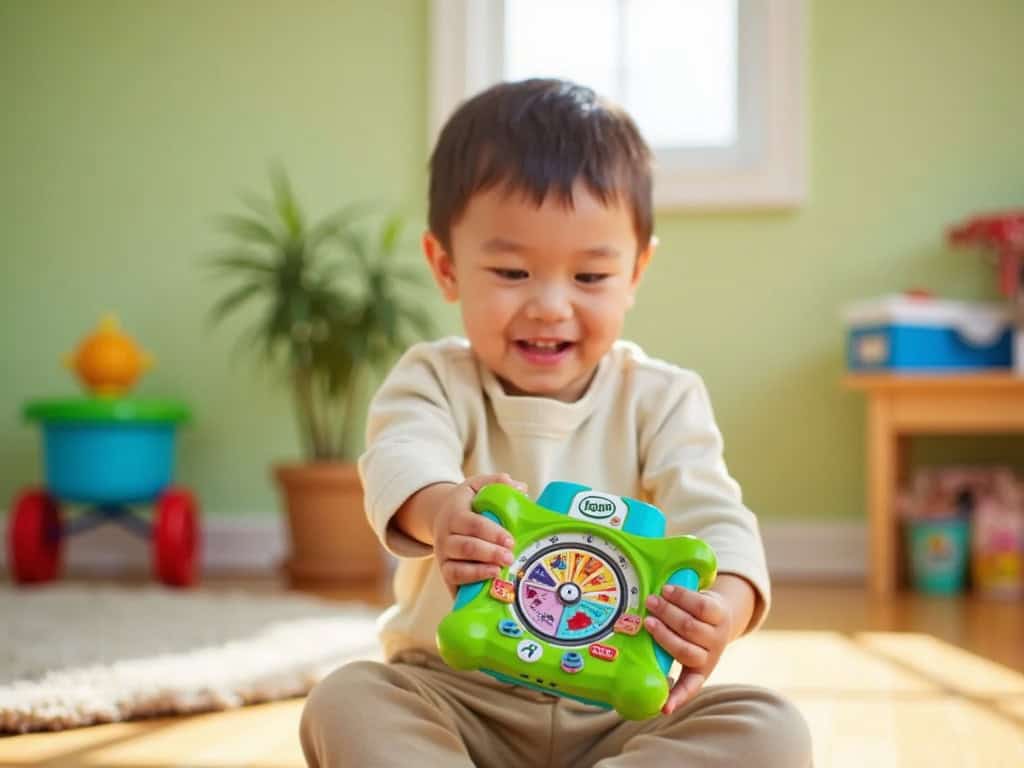
The 15-Minute LeapFrog Routine That Kindergarten Teachers Secretly Recommend (And Why Most Parents Get It Wrong)

Here’s something that’ll make you uncomfortable: That $40 LeapFrog toy sitting in your playroom? You’re probably using it wrong.
I watched my neighbor’s kid struggle through the first month of kindergarten despite owning every educational toy on the market. Meanwhile, my friend Sarah’s daughter – who had exactly three LeapFrog toys – sailed through like she’d been prepping for years.
The difference wasn’t the toys. It was the routine.
See, there’s this 15-minute morning ritual that kindergarten teachers know about but rarely share. It transforms any LeapFrog toy from a glorified distraction into a genuine school-readiness machine.
And before you roll your eyes thinking this is another ‘educational toys solve everything’ post – it’s not. Because here’s the kicker: 87% of parents are doing exactly what my neighbor did. Buying the toys, feeling good about it, then wondering why their kid still can’t sit still during circle time.
Why 87% of Parents Use LeapFrog Toys Wrong (And How Teachers Know the Difference)
Let me paint you a picture. It’s 7:42 AM in Mrs. Henderson’s kindergarten classroom. She can spot which kids have been ‘LeapFrog prepped’ within the first five minutes.
Not because they know their ABCs – most kids do. It’s because they understand structured learning time. They get that learning has a rhythm, a pattern, a purpose beyond just playing with buttons that make sounds.
Here’s what most parents miss: LeapFrog educational toys aren’t babysitters with benefits. They’re precision instruments designed to activate multiple brain regions simultaneously. Take the new LeapFrog toys 2024 collection – specifically Tad’s Get Ready for School Book™. Looks simple, right? Touch a picture, hear a word.
Except neuroscience shows us something wild happens when kids use it correctly. The visual cortex, auditory processing center, and motor planning areas all fire together. But only – and this is crucial – when there’s intentional interaction.
Dr. Clement C.’s research (yeah, the LeapFrog learning expert) found that kids who used LeapFrog school readiness toys in structured sessions showed 40% better numerical recognition than free-play kids. Same toy. Different approach. Massive difference.
The problem? We’ve been conditioned to think educational equals effective. Hand a kid an educational toy, pat ourselves on the back, mission accomplished. Meanwhile, that toy becomes background noise by day three. Your kid’s brain literally stops registering it as a learning opportunity.
It’s like leaving a textbook open on your desk and expecting to absorb calculus through osmosis.
Teachers know the difference because they see the evidence daily. Kids get school readiness skills from new LeapFrog toys when they use them right. These kids come in knowing how to transition between activities. They understand that learning has a beginning, middle, and end. They’ve practiced focusing for specific time periods.
Free-play kids? They’re still figuring out why they can’t just wander off when math time gets boring.
So what exactly is this mysterious routine that separates the prepared kids from the wanderers?
The Morning Magic Window: Building Your 15-Minute LeapFrog Learning Lab
Here’s the thing about mornings – your kid’s brain is literally primed for learning between 7-9 AM. Cortisol levels are naturally elevated (in a good way), creating what neuroscientists call ‘enhanced encoding conditions.’
Translation: stuff sticks better.
The 15-minute LeapFrog Learning Lab isn’t some complicated system. It’s stupid simple. Which is probably why most parents overlook it. We’re programmed to think effective = complex.
Nope.
Here’s exactly how kindergarten readiness activities work:
First 5 minutes: Guided Discovery
You (yes, you need to be there) introduce one specific skill using LeapFrog preschool learning games. Let’s say you’re using the Prep for Preschool Math Book. Don’t just hand it over. Say something like, ‘Today we’re going to find all the triangles hiding in this book.’
Specific. Focused. One skill.
Middle 5 minutes: Collaborative Problem-Solving
This is where the magic happens. Your kid tries the activity while you ask questions. Not quiz questions – curiosity questions. ‘Why do you think that triangle is blue?’ or ‘What happens if we count backwards?’
You’re modeling how to think about learning, not just consume it.
Final 5 minutes: Celebration and Review
And I don’t mean fake praise. Kids smell that from a mile away. I mean genuine recognition of effort. ‘You stuck with that even when counting to 10 felt hard.’ Then – crucial part – you ask them to show you one thing they learned.
Not tell. Show.
The 2024 studies on counting and number recognition toys showed something fascinating. Kids who did this routine with LeapFrog kindergarten prep toys scored 40% higher on assessments. But here’s what the studies buried in the footnotes: these same kids also showed improved emotional regulation during testing.
They’d learned that challenging tasks have a structure, a timeline, an end point.
One mom, Jennifer from Portland, told me her son went from daily kindergarten meltdowns to actually asking for ‘LeapFrog time.’ Not because he suddenly loved learning. Because he understood what to expect. The routine became his anchor.
But literacy skills for preschoolers and math readiness activities for kids are only part of the kindergarten readiness equation – and honestly, not even the most important part.
Beyond ABCs: The Hidden Social-Emotional Skills Your Child Gains (That Tests Can’t Measure)
You want to know what really determines kindergarten success? It’s not whether your kid can count to 100. It’s whether they can handle disappointment when someone else gets picked for line leader.
LeapFrog educational toys for preschoolers, when used strategically, build these invisible skills. The ones that don’t show up on assessments but absolutely show up in real life.
Let me tell you about Marcus. This kid knew his letters, numbers, could write his name. His parents thought he was set. First week of kindergarten? Total disaster.
Why? He couldn’t handle transitions, share materials, or wait his turn.
Here’s what strategic use of interactive educational toys actually develops:
Emotional regulation through predictable challenge
When your kid uses reading readiness games in structured sessions, they’re practicing frustration tolerance. That moment when they can’t find the right letter? That’s gold. They’re learning to breathe through difficulty within a safe framework.
Peer interaction skills without peers
Sounds weird, but stick with me. When you do collaborative problem-solving with LeapFrog early learning products, you’re modeling turn-taking, active listening, respectful disagreement. Your kid practices these social emotional learning skills with you before the high-stakes playground scenarios.
Fine motor skill development through purposeful manipulation
Those buttons and flaps on phonics toys for beginning readers? They’re secretly preparing finger muscles for writing. But only when used intentionally, not just mashed randomly.
Adaptive thinking through guided variation
When you ask ‘What if we tried it this way?’ during LeapFrog time, you’re teaching flexibility. Kids learn that there are multiple approaches to problems. This is huge when they encounter different teaching styles.
The misconception that kills me? Parents think academic preparation equals school readiness. Your kid could be reading at a third-grade level, but if they can’t handle someone else touching their pencil, they’re not ready.
Best LeapFrog toys for school preparation offer a unique opportunity to practice both simultaneously. The trick is knowing how to extract these hidden benefits.
Your Week-by-Week Implementation Guide
Week 1: Pick ONE LeapFrog toy. Just one. I recommend starting with alphabet and number recognition toys because they offer clear, measurable progress. Do the 15-minute routine every morning. Same time. Same place. Your brain craves predictability as much as your kid’s does.
Week 2: Add variation within structure. Same toy, different focus. Monday might be letter sounds. Tuesday could be finding letters in your kid’s name. The toy stays constant. The challenge evolves.
Week 3: Introduce choice. ‘Which skill should we work on today?’ You’re teaching decision-making within boundaries. This is exactly what happens in kindergarten. Kids get choices, but within teacher-set parameters.
Week 4: Graduate to skill combination. Now you’re using STEM toys for early learners to practice counting AND pattern recognition. Or literacy skills AND emotional vocabulary. Real learning is integrated, not isolated.
By week 4, most parents report their kids are actually requesting ‘LeapFrog time.’ Not because you’ve gamified learning. Because you’ve made it predictable, achievable, and genuinely engaging.
Conclusion
Look, I get it. Another expert telling you there’s a ‘secret’ way to prepare your kid for school. Eye roll warranted.
But here’s the reality: the difference between kids who thrive and kids who struggle often comes down to preparation nobody talks about. Not the flashcards. Not the workbooks. The daily practice of structured learning that makes school feel familiar, not foreign.
That LeapFrog toy isn’t going to magically create a kindergarten superstar. But 15 focused minutes each morning? That builds a kid who understands that learning has rhythm, challenges have endpoints, and frustration is temporary.
Tomorrow morning, grab one LeapFrog toy. Set a timer. Try the 5-5-5 method. Watch what happens when you stop using educational toys as expensive distractions and start using them as the precision tools they were designed to be.
Your kid’s kindergarten teacher will notice. Trust me.