
How Houston Comicpalooza 2015 Secretly Launched Million-Dollar Businesses (And Nobody Noticed)

Everyone remembers Comicpalooza 2015 for the celebrity guests and epic cosplay. But here’s what nobody talks about: while fans were lining up for autographs, a quiet revolution was happening in Artist Alley.
That May weekend at the George R. Brown Convention Center didn’t just bring together Houston nerds – it created Houston’s next generation of creative entrepreneurs. I’m talking about real people who walked into that vendor hall with a dream and walked out with the foundation of businesses that now employ dozens.
Forget the panels about Batman versus Superman. The real superpower was watching local artists turn their side hustles into six-figure operations.
And before you roll your eyes thinking this is another ‘follow your passion’ fluff piece, let me hit you with some numbers. The average vendor at Comicpalooza 2015 pulled in $5,000 to $15,000 over four days. That’s rent money. That’s quit-your-day-job money. That’s ‘holy crap, people will actually pay for my weird art’ money.
Mark your calendars for the 2015 Houston Comicpalooza? Too late. But the blueprint these creators discovered? That’s timeless.
The Vendor Hall Gold Rush Nobody Saw Coming
Let’s start with the dirty little secret of comic conventions: the real money isn’t in the $50 celebrity photo ops. It’s in the vendor hall, where Houston’s creative underground comes to play.
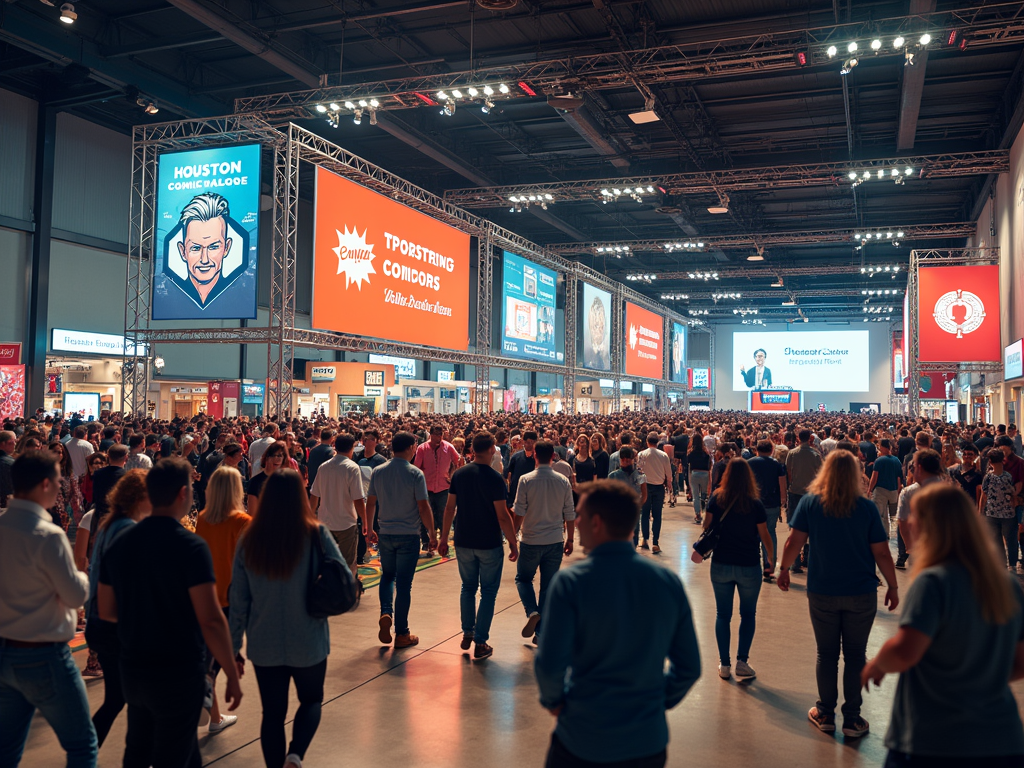
In 2015, Comicpalooza’s vendor spaces weren’t just booths – they were incubators. Walk past the overpriced convention center pizza, and you’d find 200+ vendors who collectively moved millions in merchandise.
Not thousands. Millions.
Here’s what kills me: every blog post about Comicpalooza 2015 focused on which Star Trek actor showed up. Meanwhile, Sarah Chen from Spring was quietly selling $12,000 worth of handmade dice bags. Her booth cost $600. Do the math.
The George R. Brown Convention Center became Houston’s most unlikely business accelerator that weekend. Artists who couldn’t get gallery shows were making more in four days than most galleries pay in a year. Game developers who couldn’t get meetings with publishers were selling directly to 50,000+ potential customers.
And yeah, I said 50,000. That’s not a typo.
While official Houston Comicpalooza 2015 attendance numbers stayed mysteriously vague (classic convention move), vendor reports and ticket scanner data suggested crowds that big. Picture the Astrodome packed for a playoff game. Now imagine every single person there is your target customer, credit card in hand, looking for something unique.
That’s the economic tsunami that hit downtown Houston for four days in May 2015.
The Houston Chronicle buried this story on page 6 of the business section. They led with oil prices instead. Typical.
But here’s the kicker – Comicpalooza wasn’t even trying to be a business incubator. The schedule focused on celebrity panels and costume contests. The real action happened organically, creator to customer, handshake to handshake.
Texas comic conventions 2015 were supposed to be about escapism. Instead, they became about economics.
Artist Alley Legends: Where Dreams Met Dollar Signs
Artist Alley at Comicpalooza 2015 wasn’t just tables and prints. It was a launching pad.
Take Marcus Rodriguez from Montrose. Dude was selling Pokemon fan art from a 6-foot table he shared with his roommate. Fast forward to today: he runs a design studio with eight employees and contracts with actual game companies.
His secret? He didn’t just sell prints. He collected emails.
Every purchase came with a business card and a sign-up sheet for ‘exclusive releases.’ By Sunday night, he had 400 emails from people who loved his specific style. That’s 400 potential customers who already proved they’d pay for his work.
The Comicpalooza 2015 dates – May 22-25 – became his company’s founding anniversary.
Or consider Jenny Park, who drove in from Katy with a trunk full of handmade plushies. She sold out by Saturday afternoon. But here’s the killer move – she took pre-orders for custom work. By the time she got home, she had three months of commissions lined up at $50-150 per piece.
She quit her bank job that September.
Then there’s my favorite story: Two guys met at the retro gaming tournament on Friday night. David from Houston and Andre from Pearland. They bonded over their shared hatred of modern mobile games. Started sketching ideas on napkins between rounds.
By Sunday, they’d decided to start a game studio together. Their first game launched 18 months later. It made $2.3 million in its first year.
They literally met over Street Fighter II at Houston’s gaming convention.
These aren’t anomalies. These are patterns. The Houston nerd community wasn’t just buying stuff – they were investing in each other. And unlike tech bros in Silicon Valley, they were doing it with $20 purchases and genuine enthusiasm.
The Comicpalooza vendor hall became Houston’s answer to Shark Tank. Except instead of millionaires judging you, it was actual customers voting with their wallets.
Houston Nerds Unite: The Hashtag That Built an Empire
The #houstonnerdsunite hashtag started as a joke. Some cosplayer posted it Friday morning of Comicpalooza 2015, probably while stuck in traffic on 59. By Sunday, it had 10,000 uses. By Monday, it was a movement.
See, Houston’s nerd community had a problem other cities didn’t: we were scattered across 600 square miles of urban sprawl. Woodlands nerds didn’t know Sugar Land nerds existed. Clear Lake geeks had never met Memorial villages’ manga fans.
Comicpalooza changed that. Suddenly, everyone was in one building.
The hashtag became a bat signal. Post your booth number with #houstonnerdsunite, and fellow Houstonians would find you. It sounds simple. It was revolutionary.
Local artists saw 30-40% sales bumps just from hometown support.
But here’s where it gets interesting. The hashtag didn’t die after the convention. It became Houston’s underground nerd economy connector. Need a graphic designer who gets anime? Search the hashtag. Looking for DnD players in your area? Hashtag. Want to support local creators? You know what to do.
The Facebook group hit 5,000 members by July. Discord servers sprouted up for different neighborhoods. Houston geek meetups started happening at comic shops across the city.
What started as convention hype became Houston’s decentralized nerd business network.
And it worked because Houston’s different. We’re not LA with its entertainment industry gatekeepers. We’re not NYC with its impossible rent. We’re Houston – where a food truck can become an empire and an artist can afford both rent AND supplies.
The multicultural makeup of the Houston pop culture community made it even better. Vietnamese artists bringing manga influences. Mexican creators mixing lotería with superhero themes. Black cosplayers creating businesses around inclusive costume design.
The diversity wasn’t just feel-good PR. It was a competitive advantage.
By the time Houston Comic Con May 2015 rolled around (yeah, we had two major conventions within weeks of each other), the network was already functioning. Artists were cross-promoting. Collaborations were forming. The Houston cosplay events scene exploded with photographers, costume makers, and prop builders all finding each other.
The Four-Day MBA Nobody Knew They Were Getting
Here’s what business schools won’t teach you: sometimes the best market research happens at a comic book convention in Houston.
Every creator who succeeded at Comicpalooza 2015 learned three things fast:
- First, pricing psychology is wild. That $15 print nobody bought? Bundle three for $40 and watch them fly off the table. The same people who haggled over a $20 purchase dropped $200 on limited editions without blinking.
- Second, Houston comic book fans are loyal as hell. But only if you’re authentic. The vendor selling generic superhero prints struggled. The artist drawing Houston skylines with Batman? Sold out.
- Third, the real money was in the weird stuff. Mainstream Marvel prints? Decent sales. Hand-painted skulls wearing Sailor Moon tiaras? Could not keep them in stock.
The Comicpalooza panels 2015 taught you how to draw manga. The vendor hall taught you how to make a living from it.
Take the food situation. Official convention food was a disaster – $15 for microwaved pizza. Smart vendors brought their own lunches. Smarter vendors made friends with the food truck guys outside. The smartest vendors? They traded art for food and built relationships that lasted years.
Or consider booth placement. Everyone wanted to be near the celebrity guests area. Wrong move. The money spots were near the bathrooms and ATMs. Captive audience with cash in hand.
The Comicpalooza screening room showed movies. The vendor hall showed futures.
George R. Brown Convention Center: Houston’s Unlikely Startup Incubator
The George R. Brown Convention Center looks like a concrete box from the outside. Inside, it became Houston’s most democratic business venue.
No venture capital needed. No business degree required. Just talent, hustle, and $600 for a vendor table.
The layout accidentally created perfect conditions for success. Wide aisles meant crowd flow. High ceilings meant your vertical banners got noticed. Multiple entrances meant fresh waves of customers all day.
But the real magic was the mix. Comicpalooza celebrity guests brought the crowds. The crowds brought their wallets. Their wallets funded dreams.
While fans waited in Comicpalooza autograph sessions lines, they browsed. While they browsed, they bought. While they bought, they connected.
The Houston anime convention crowd mixed with the Houston sci fi convention veterans. Gaming tournament players discovered comic artists. Cosplayers found prop makers. It was networking on steroids.
And unlike stuffy business conferences, everyone was relaxed. Dressed as Deadpool? Cool. Selling while wearing a Pikachu onesie? Even better. The costume was your business card.
The convention center’s parking situation – usually a nightmare – became a blessing. People carpooled. Carpools became connections. Connections became collaborations.
By Sunday night, the concrete box had incubated more small businesses than most accelerators do in a year.
Beyond the Convention: The Businesses That Survived and Thrived
Fast forward to today. Track down those Comicpalooza 2015 vendors, and you’ll find an underground success story.
Sarah Chen? She runs a gaming accessory company with distribution in 30 stores. Started with dice bags at a folding table.
Marcus Rodriguez? His design studio just landed a contract with a major gaming company. Those 400 emails became 4,000 Instagram followers became actual career momentum.
Jenny Park? Turned her plushie business into a full production operation. She employs five seamstresses in Houston. Her customs have six-month waiting lists.
The game developers? Their third title just hit Steam. They’re hiring.
But here’s the real kicker – none of them stopped doing conventions. They still show up, still sell directly to fans, still remember where they started. The difference is now they’re in the front of the vendor hall, with the 20-foot displays and hired help.
They became the success stories that inspired the next wave.
The Houston nerd events calendar exploded after 2015. What was once a twice-yearly thing became monthly meetups, quarterly conventions, and constant collaboration. The Houston gaming community alone spawned three dedicated venues.
The Houston pop culture events scene went from afterthought to economic force. Hotels started courting conventions. Restaurants created themed menus. The city noticed.
All because a bunch of nerds decided to support each other one weekend in May.
The Blueprint Still Works (If You’re Paying Attention)
Look, I get it. Reading about 2015 feels like ancient history. But here’s the thing – the blueprint these Houston creators discovered still works.
Hell, it works better now.
The next major Houston convention is your chance to stop being just a fan and start being a player. The George R. Brown Convention Center hosts events year-round. Comicpalooza tickets might cost more now, but the opportunity remains the same.
Join the Houston Nerds Unite Facebook group tonight. Not tomorrow. Tonight. Start connecting with creators, understanding what sells, finding your tribe.
Because while everyone else is taking selfies with C-list celebrities, you could be building the foundation of your creative empire.
The vendor hall is still there. The customers still show up. The only question is whether you will.
Mark your calendar for the next big convention. But this time, show up with a plan, not just a costume. Bring business cards, not just autograph books. Think like an entrepreneur, not just an enthusiast.
The Houston comic convention scene isn’t just about fandom anymore. It’s about futures. And yours might start at a folding table in Artist Alley.
Just ask the Class of 2015. They’re too busy counting money to argue.