Why That ‘Healthy’ Cooking Oil Might Ruin Your Meal — And What to Use Instead

That pricey extra virgin olive oil everyone swears by? It starts smoking at 375°F, basically self-destructing before the oven’s even warmed up. The smoke means oxidized fats and burnt flavors — not exactly the health enhancement people paid for. Meanwhile, avocado oil handles 485°F like a champ, Zero Acre oil matches that with way less environmental damage, and peanut oil cruises at 450°F. The right oil choice determines whether dinner’s delicious or destroyed.

While most people grab whatever bottle of oil is cheapest at the grocery store, the cooking oil they choose actually matters—a lot. That fancy extra virgin olive oil everyone raves about? Yeah, it turns into a smoking mess when cranked above 375°F. Nothing ruins dinner faster than burnt oil stinking up the kitchen.
The truth is, different oils have wildly different smoke points. And temperature tolerance isn’t just some nerdy food science detail—it’s the difference between crispy fried chicken and a pan full of carcinogens. The oxidized omega-6 fats from overheated vegetable oils have been linked to heart disease, neurological issues, and even cancer.
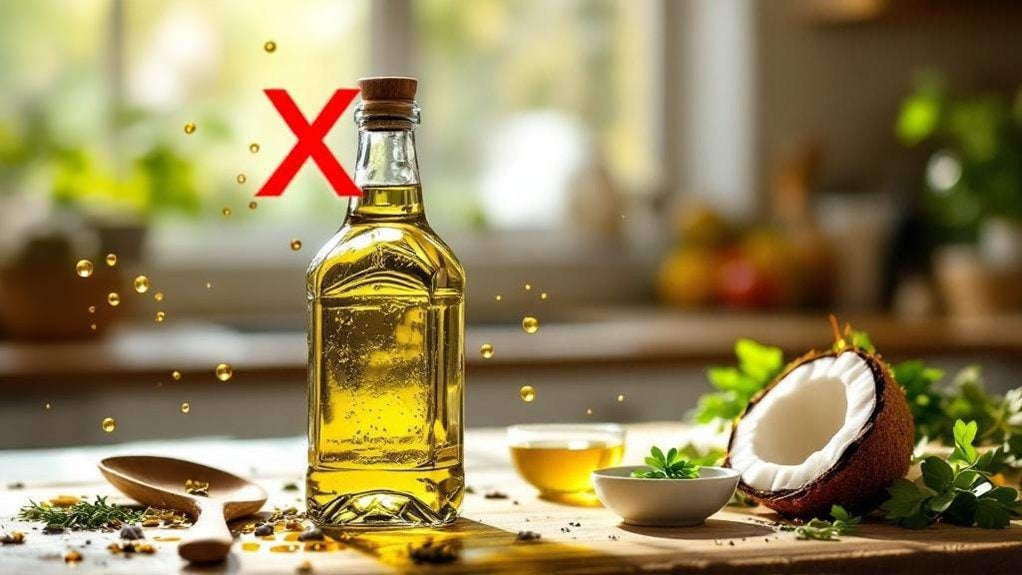
Olive oil, despite its heart-healthy monounsaturated fats and inflammation-fighting antioxidants, basically gives up on life at high heat. Save it for salad dressings and light sautéing.
Olive oil taps out at high heat—keep it for salads and gentle cooking.
Avocado oil laughs at olive oil’s weakness. With a smoke point pushing 485°F, this stuff can handle serious heat. The mild, nutty flavor won’t hijack dishes either. Of course, there’s that pesky environmental baggage—deforestation and water usage that makes the eco-conscious crowd squirm. Plus it clumps in the fridge like some kind of science experiment gone wrong.
Then there’s coconut oil, the darling of wellness influencers everywhere. Sure, those medium-chain triglycerides might offer metabolic benefits, but the saturated fat content is through the roof. At 350°F, its smoke point sits firmly in mediocre territory. Works great for baking though, adding richness that makes cookies taste like they’re trying to kill you—in the best way.
Enter Zero Acre oil, the tech bro of cooking oils. Made through fermentation, this stuff boasts an absurd 485°F smoke point and practically zero linoleic acid. The environmental stats read like Silicon Valley propaganda: 85% less land use, 86% fewer CO2 emissions, 99% less water than traditional oils. Neutral taste too. Almost suspiciously perfect.
Meanwhile, flaxseed oil can’t handle any heat whatsoever. Raw only. Walnut oil? Same story. These omega-3 powerhouses turn rancid faster than milk left on the counter. Store them in dark, cool places to maximize their already brief shelf life.
Peanut oil, however, thrives at 450°F—no wonder every Chinese restaurant stockpiles the stuff.
The bottom line: matching oil to cooking method isn’t optional. It’s the difference between a meal and a mistake.