

After 25 Years of Agonizing Regret, I’m Finally Ditching My Hyphenated Married Last Name

After 25 years of hyphenated hell, some women are ultimately pulling the plug. Online forms butcher the name. Baristas don’t even try. Only 28% of Americans support hyphenation anyway, so there’s no cultural cheerleading squad. About a third of people ditch hyphenated names after divorce, but plenty drop them while still married—just tired of the hassle. It’s not dramatic. It’s practical. The story behind why it takes so long, though, gets more complicated from here.
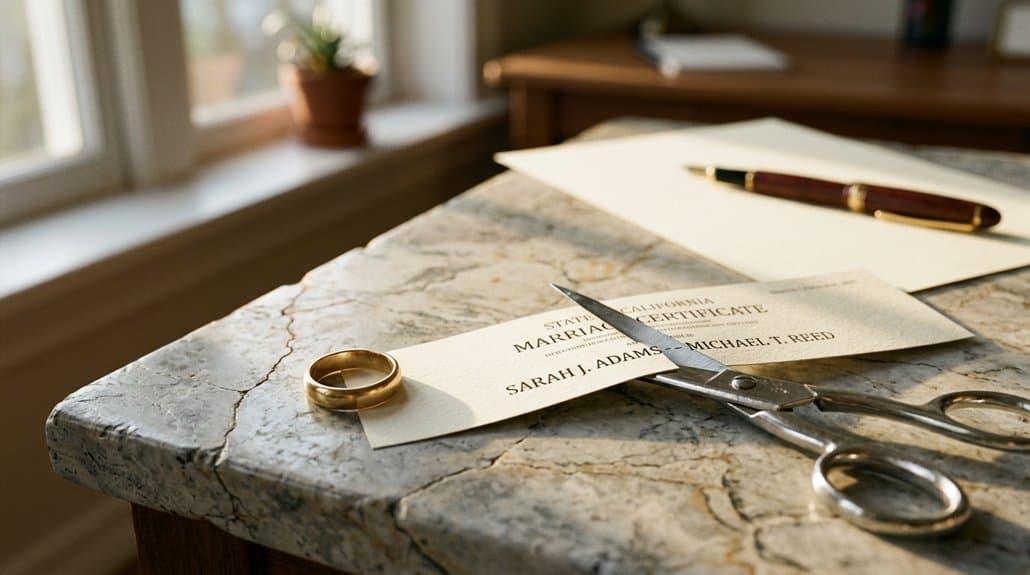
Hyphenated last names split the room right down the middle. Literally. About 28% of Americans think they’re great, and 28% think they’re not. That’s a dead heat of indifference wrapped in strong feelings. Women lean more positive at 33%, while men sit at a cooler 24%. Nobody’s winning this argument at Thanksgiving dinner.
Here’s the thing about hyphenation. It’s perfectly legal. Federal and state agencies accept it. You can go Brown-Davis or Davis-Brown, whatever sounds less like a law firm. Both partners can hyphenate, reverse the order, mix and match. The law doesn’t care. The DMV might, but that’s a different problem.
The real nightmare is practical. Long hyphenated names get butchered on online forms. Character limits chop them in half. Paper forms with little boxes treat hyphens like they don’t exist. Some agencies just drop the hyphen entirely, smash the names together, or throw a space in there. Alphabetizing? Only the initial half counts. Half your identity, filed away.
Then there’s the perception game, and it’s ugly. Studies show undergraduates view hyphenated women as more career-oriented. Fine. But men scoring high on hostile sexism scales? They rate hyphenated women as more likely to commit adultery. That’s a real finding, though Forbes et al. in 2002 pushed back on the connection. Still, the stereotype sticks like gum on a shoe. Traditionalists might even see not taking a spouse’s last name as a lack of commitment to the marriage itself.
The divorce data doesn’t help either. One study found 33 divorcées who hyphenated or kept their names versus 75 who changed. Researchers flagged possible oversampling of hyphenated marriages in divorce pools. Nobody’s proven causation. But the whisper persists. Meanwhile, over half of Americans say returning to an original last name after divorce depends on the situation, so there’s no consensus on what you’re even supposed to do once it falls apart.
Kids complicate everything further. Marriages where wives kept or hyphenated their names showed fewer children statistically. And second-generation hyphenation? A logistical mess. Nobody wants a kid named Thompson-Garcia-Williams-Chen.
About two-thirds of married American women still change their last names. The retention rate bounced around 17% in the 1970s, hit 18% in the 1990s, and climbed to nearly 30% in certain urban circles by 2014. The trend is moving. Slowly. Younger adults under 45 are more open to creative name combinations.
Twenty-five years is a long span to regret a hyphen.


