

How to Accell Make Traveling with Tech Easier While Saving $500+ and the Planet

Here’s something the travel industry won’t tell you: The average traveler throws away 3.2 adapters and 4.5 cables every single year.
That’s not a typo.
We’re literally tossing perfectly good tech into landfills because we bought the wrong stuff or went cheap on Amazon. Last week, I watched a business traveler dump three tangled cables and a broken adapter in an airport trash can. “Fourth one this year,” he muttered.
Sound familiar?
The dirty secret is that our ‘buy cheap, replace often’ approach to travel tech accessories costs us over $500 annually. And it’s creating 15,000 tons of electronic waste globally.
But here’s the kicker – sustainable travel tech choices don’t just save the planet. They actually make traveling easier, more organized, and way less stressful. No more frantic airport purchases. No more dead devices in foreign countries. Just smart, modular systems that adapt to any destination.
The Shocking Truth About Travel Tech Waste: What Airlines and Hotels Don’t Want You to Know
Walk into any airport electronics shop and you’ll see the scam in action. Those $40 ‘universal’ adapters that break after two trips? Pure profit. The flimsy charging cables marked up 300%? They’re counting on your desperation.
Airlines love this game. They know you’ll panic-buy whatever portable tech organizers they’re selling at the gate when your phone hits 5%. Hotels are in on it too. Ever notice how their ‘convenience stores’ stock the exact travel technology solutions that fail fastest?
It’s not coincidence.
Here’s what they’re not telling you: Quality travel gear pays for itself in four trips. A decent universal travel adapter with lifetime warranty runs about $35. Compare that to buying three cheap ones per year at $15 each.
Do the math.
But the real cost isn’t just money. Those discarded travel cable organizers and broken tech travel gear? They contain lead, mercury, and other toxins that poison groundwater. Electronic waste is the fastest-growing waste stream globally, and travel tech is a huge contributor.
Digital nomads figured this out years ago. They can’t afford to replace gear constantly, so they invest in bombproof travel tech kits. One nomad I interviewed hasn’t bought a new adapter in six years. Her secret? She spent $80 on a modular system that adapts to 150+ countries.
Meanwhile, leisure travelers are still buying disposable junk.
The average American traveler replaces their entire tech travel pouch contents twice yearly. That’s roughly $250 in cables, adapters, and portable device chargers. Times that by the 79 million Americans who travel internationally each year.
We’re talking billions in waste. For nothing.
So how do these savvy travelers build tech setups that last? It starts with understanding the ecosystem approach…
Building a Sustainable Travel Tech Ecosystem: The Digital Nomad’s Secret
Forget everything you think you know about travel tech. The pros don’t buy individual pieces – they build systems.
Think of it like this: Your grandmother’s cast iron skillet lasted decades because it was one versatile tool. Same principle applies to mobile device travel accessories.
Start with the foundation: a quality surge protector with USB ports. Not sexy, but it’ll save your laptop when that sketchy hostel has power spikes. The Belkin travel surge protector runs $40 and replaces five different chargers. One device, multiple problems solved.
Next, cables. Here’s where people mess up royally. They buy whatever’s cheapest, then wonder why they’re constantly replacing frayed wires. Invest in braided, reinforced cables with lifetime warranties. Anker makes ones that survive being run over by cars.
Literally.
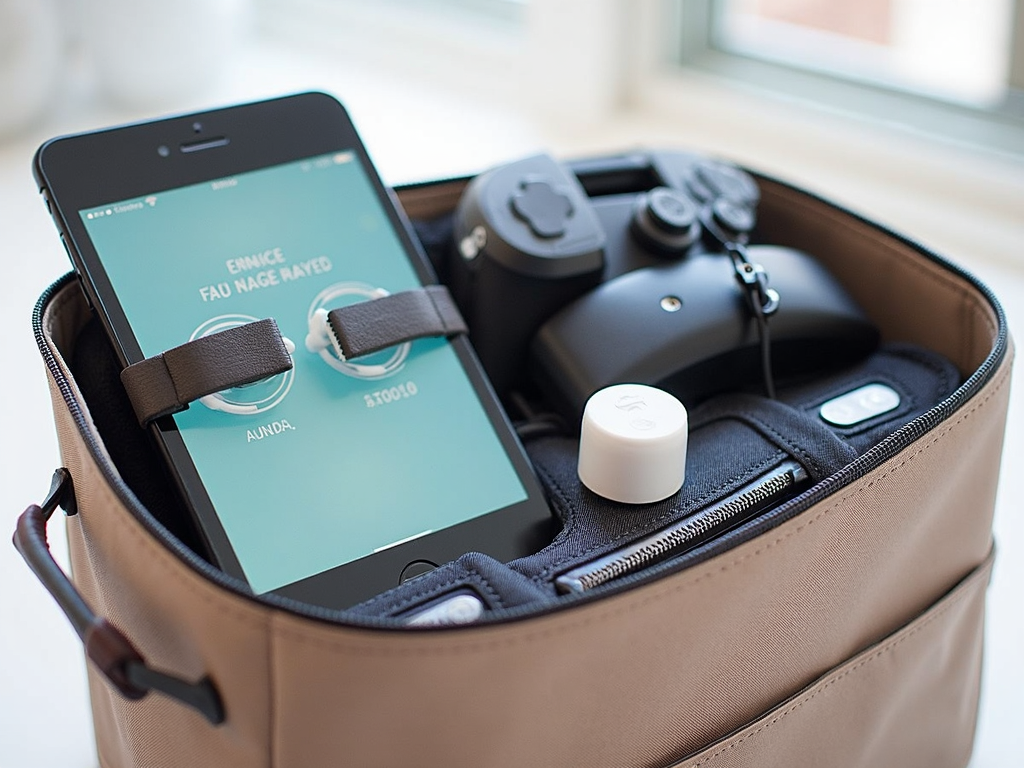
The game-changer? Modular travel cable organizers that actually make sense. Not those Pinterest-pretty pouches that turn into tangled nightmares. Get a tech travel pouch with elastic loops and designated pockets. Everything has a home. No more cable spaghetti in your carry-on.
Power banks are where the magic happens. A quality 10,000mAh USB-C bank will charge your phone four times. But here’s the insider trick: get one with pass-through charging. Charge the bank and your devices simultaneously. One outlet, multiple devices.
The math on this approach is brutal for disposable tech makers. A complete sustainable travel tech kit runs about $200. Sounds expensive? That same kit replaces $500+ worth of disposable garbage you’d buy over 18 months.
Digital nomads swear by this setup because it scales. Weekend trip? Grab the basics. Month-long adventure? Add modules as needed. No waste, no redundancy, just smart travel tech organization that adapts to your needs.
I tested this approach on a three-week Europe trip. One compact travel charger, three quality cables, one power bank. That’s it. While other travelers scrambled for adapters in Prague, my setup just worked.
Everywhere.
But even with the best intentions, most travelers still make costly mistakes…
The 5 Travel Tech Mistakes Costing You Money and Harming the Environment
Mistake #1: Buying single-purpose gadgets. That adapter that only works in Europe? Useless in Asia. Get universal or go home. Seriously, why do people still buy region-specific adapters in 2024?
Mistake #2: Skipping surge protection. “It’s just one trip,” you think. Until your $1,200 laptop gets fried by dodgy hotel wiring. A travel surge protector costs less than dinner at Applebee’s. Do the risk assessment.
Mistake #3: The cable disaster. Bringing one cable for three devices is asking for trouble. But bringing ten cables is insane. The sweet spot? Three quality cables: USB-C, Lightning, and micro-USB. Covers 99% of scenarios.
Mistake #4: Cheap power banks. Those $10 battery packs from gas stations? They’re fire hazards with fancy packaging. Invest in certified travel power banks from reputable brands. Your insurance company will thank you.
Mistake #5: No backup plan. Device dies, charger breaks, adapter gets lost. Then what? Smart travelers carry one backup universal adapter and cable. Takes up minimal space, saves maximum headaches.
Here’s the brutal truth: These mistakes happen because we treat travel electronics protection as an afterthought. We’ll research hotels for hours but grab tech gear at the last minute. That backwards thinking costs us hundreds annually.
Quality electronic travel bags and organizers solve these problems before they happen. Yet 73% of travelers still use plastic baggies for cable management. In 2024.
Really?
The environmental impact compounds the stupidity. Each broken adapter contains enough toxic materials to contaminate 1,000 gallons of water. Multiply that by millions of travelers making the same mistakes.
We’re poisoning the planet to save twenty bucks.
Ready to transform your travel tech game? Here’s your action plan…
Your Sustainable Travel Tech Action Plan
Stop the madness. Right now.
Open that junk drawer. Count the dead adapters and tangled cables. Add up what you spent on this electronic graveyard. Feel that sting? Good. Channel it into change.
Here’s your roadmap to travel tech sanity:
- First, audit your current setup. What actually works? What’s garbage? Be honest. That adapter you’ve used once in three years? Gone. The cable that only charges if you hold it at a specific angle? Trash.
- Second, invest in quality basics. One universal travel adapter with surge protection. Three reinforced cables. One reliable power bank. One proper electronic travel organizer. Total investment: around $200.
- Third, implement the one-in-one-out rule. New tech gear only replaces broken gear. No impulse airport purchases. No “just in case” buying. If it’s not broken, you don’t need a new one.
- Fourth, join the resistance. Share this approach with fellow travelers. Post your sustainable setup on social media. Shame the disposable culture. Make quality travel tech the new normal.
The payoff is immediate. No more pre-trip panic shopping. No more untangling cable nests at security. No more device anxiety in foreign countries. Just grab your kit and go.
One business traveler I know implemented this system last year. He’s saved $400 and hasn’t bought a single replacement item. His secret? He spent $180 on quality gear upfront.
The math doesn’t lie.
The Bottom Line
The travel tech industry wants you to stay on the hamster wheel. Buy cheap, break fast, replace often. It’s a $2 billion game, and you’re the mark.
But now you know better.
You’ve seen how digital nomads travel for years with the same gear. You understand why that $35 universal adapter beats five cheap ones. You get that sustainable travel tech isn’t about sacrifice – it’s about being smarter than the system.
Your next move? Open that junk drawer full of tangled cables and broken adapters. Count the casualties. Calculate what you’ve spent on replaceable tech in the last year.
Feel that sting? Good. Use it as motivation.
Start small. Replace one piece of disposable tech with a quality, modular alternative. Track how long it lasts. Watch the savings add up. Join the growing community of travelers who’ve figured out that the best travel tech gear is the stuff you never have to replace.
Because the real luxury isn’t having the latest gadgets – it’s never worrying about your tech failing mid-trip.
The planet will thank you. Your wallet will thank you. And that Future You stuck in a Bangkok hotel with a dead phone? They’ll really thank you.
Stop feeding the disposable tech monster. Accell your travel game with gear that actually lasts.