

The $4.92 Billion Secret: Why Fashion and Charity Create More Than Just Good Vibes

Here’s something wild.
While you’re reading this, someone just bought a $200 designer t-shirt because 5% goes to charity. And they feel amazing about it.
Not guilty. Not conflicted. Amazing.
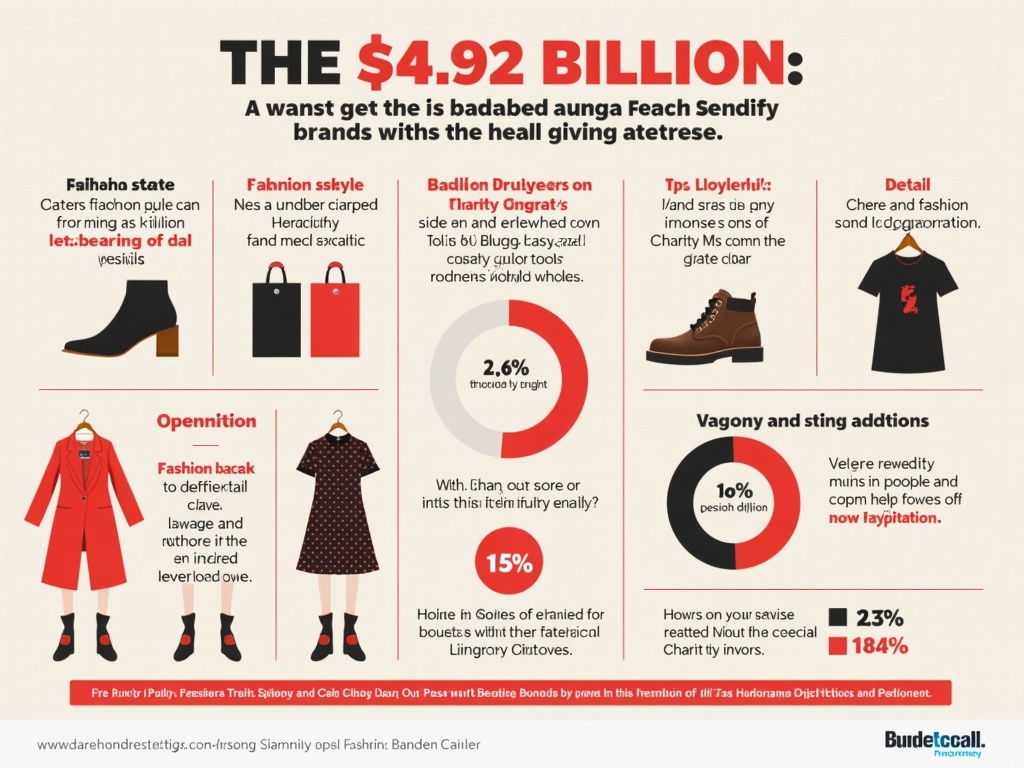
That’s the power of a market exploding from $1.87 billion to $4.92 billion in less than a decade. But here’s the kicker—most people think fashion charity is just brands slapping a cause on a campaign for good PR.
Wrong. Dead wrong.
What’s actually happening is way more fascinating. It’s a psychological bond so deep that consumers will pay more, buy more often, and become walking billboards for brands that get it right. This beautiful bond infographic? The bond between fashion charity goes deeper than anyone realizes.
And the ones that fake it? They’re getting exposed faster than ever.
Let me show you what’s really going on behind those feel-good fashion campaigns.
The Hidden Psychology Behind Fashion’s Charity Connection (And Why Your Brain is Wired for It)
Most people think they donate to charity because they’re good people. Cute theory.
Here’s what’s actually happening in your brain:
Every time you buy that charity-linked sweater, you’re getting a hit of what psychologists call ‘moral licensing.’ It’s basically permission to feel good about yourself. And fashion? Fashion is the perfect delivery system for this charitable fashion initiative.
The 2021 World Giving Index showed something fascinating—40% of the global population engaged in charity that year. But here’s what they didn’t tell you: fashion purchases create the most tangible emotional rewards.
Why? Because you literally wear your values.
Think about it. When you donate $50 to a random charity, you get a tax receipt. Maybe a thank-you email if they’re fancy. But when you buy a $50 shirt where $5 goes to ocean cleanup? You get:
- The shirt itself
- The story to tell
- The Instagram post
- The conversation starter at parties
It’s charity with benefits. Fashion and charity partnership at its finest.
Depop figured this out with their Community Fund. They raised $1.2 million in 2024 by letting sellers feel like activists. Every vintage jean jacket sold meant money for youth mental health programs. Sellers weren’t just clearing closets—they were changing lives.
And buyers? They got unique pieces with built-in karma.
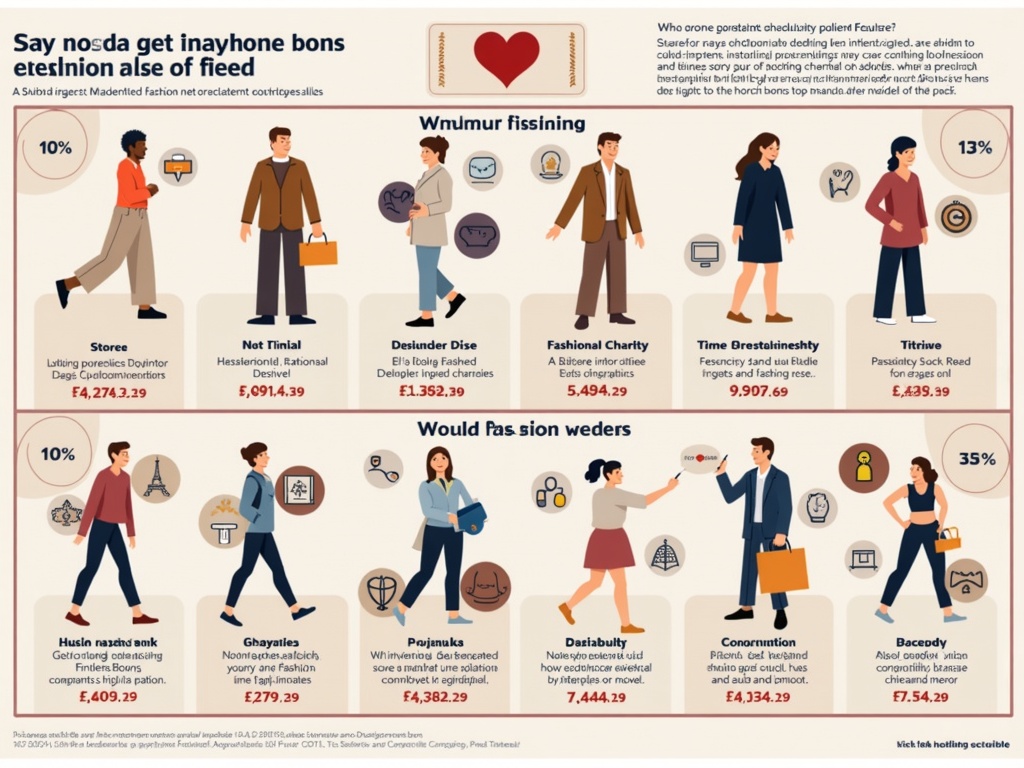
The real genius is in the identity piece. Fashion charity isn’t about helping others as much as it’s about becoming the person who helps others. It’s social signaling on steroids. That Stella McCartney bag supporting wildlife conservation? It says ‘I care’ louder than any bumper sticker ever could.
Brands that miss this psychological component fail spectacularly. They think slapping a pink ribbon on a product is enough.
It’s not.
Consumers can smell inauthentic charity partnerships from a mile away. The successful ones understand they’re not selling products with a cause attached—they’re selling identity transformation with a product attached. That’s what any fashion for charity infographic worth its salt will show you.
But the psychology is just the beginning. The actual mechanics of modern fashion charity have evolved way beyond what most people imagine.
Beyond Donation Boxes: How Fashion Brands Helping Charities Actually Works in 2024
Forget everything you think you know about fashion charity. It’s not about donation bins at H&M anymore.
The game has completely changed.
Take Fashion for Good’s circular charity model. In 2024, they diverted 10,000 kilograms of textile waste while funding 15 repair hubs. But here’s the brilliant part—they didn’t just collect old clothes. They created limited-edition collections from upcycled materials, with proceeds funding more circular projects.
It’s charity eating its own tail in the best possible way. Fashion industry philanthropy redefined.
Then there’s the AI revolution nobody’s talking about.
Some retailers now use algorithms to match your shopping habits with causes you’ll actually care about:
- Buy a lot of athletic wear? Your checkout might suggest a charity supporting youth sports
- Into sustainable fashion? Environmental causes pop up
- Purchase kids’ clothes regularly? Children’s charities appear
It’s personalization meeting philanthropy, and donation rates are skyrocketing. These charity fashion collaborations use data in ways that actually matter.
The micro-donation trend is even more interesting. Instead of those vague ‘portion of proceeds’ claims, brands are getting specific. 1% here. 3% there. Small enough to not hurt margins, transparent enough to build trust.
Gen Z especially loves this—they want to ‘shop for good’ without the guilt of overconsumption.
But the real innovation? Employee engagement.
Smart brands let their workers pick the charities. Suddenly, that retail associate folding shirts feels like they’re part of something bigger. Morale goes up. Turnover goes down. The charity partnership becomes an internal culture driver, not just an external marketing play.
Local impact is where things get really interesting. While everyone obsesses over global campaigns, community-level fashion charity initiatives often create more measurable change:
- Pop-up charity shops in Brooklyn funding local art programs
- Clothing swaps in Detroit supporting neighborhood food banks
- Fashion donation programs that keep money in the community
These smaller plays build genuine neighborhood connections that big campaigns can’t touch.
The mental health angle is particularly fresh. Brands are finally connecting the dots between self-expression through fashion and psychological well-being. Some UK labels now support mental health charities specifically because they recognize clothing as a form of therapy for many people.
It’s not just about looking good—it’s about feeling good in a deeper way. Fashion brand social responsibility meets actual human needs.
Of course, with all this innovation comes a dark side. The charity fashion world is riddled with fakes, exaggerations, and straight-up lies.
Spotting Authentic Fashion Philanthropy: The Truth Behind Fashion Charity Statistics
Let’s get real for a second.
That brand claiming to ‘support women’s empowerment’ with every purchase? They might be donating twelve cents per $100 sale.
Welcome to fashion’s dirty little charity secret.
The virtue signaling in fashion charity has gotten so bad that regulators are stepping in. Some countries now require mandatory impact reporting for charity-linked campaigns.
About time.
Because the gap between marketing claims and actual impact can be massive. Any honest fashion giving back infographic will show you the real numbers.
Here’s your BS detector kit:
First red flag? Vague language. ‘A portion of proceeds’ or ‘supporting’ without specific numbers. Real charity partnerships name amounts.
Second red flag? No third-party verification. Legitimate fashion CSR initiatives have receipts—literal documentation from the charity confirming donations.
Third red flag? Campaign timing. If they only care about breast cancer in October or pride in June, that’s marketing, not mission.
Green lights are equally telling:
- Annual impact reports with real numbers
- Long-term partnerships spanning years, not seasons
- Charity involvement in product design or business decisions
- Transparent donation tracking visible to customers
Charity Excellence’s Help Finder became a game-changer in 2024 by creating a verified directory. Two hundred fashion-charity partnerships facilitated, all with transparency built in. Brands can’t fake their way through their vetting process.
The micro-donation model emerged partly as a response to skepticism. When brands say ‘2% of every sale goes to ocean cleanup,’ it’s harder to fudge than vague promises. Some brands even show running donation tallies on their websites.
Real-time transparency. Fashion charity data visualization at work.
But here’s what most people miss: the best fashion charity partnerships aren’t always the biggest ones.
That indie label donating $5 from every sale to the neighborhood shelter? They’re probably making more real impact than the multinational with the splashy campaign. Small-scale fashion fundraising events often create deeper community connections.
The transparency revolution is forcing everyone to level up. Consumers armed with social media can fact-check claims instantly. One tweet exposing inflated donation claims can tank a campaign.
Brands are learning that authentic charity partnerships, even modest ones, beat grandiose fake ones every time.
So how do you actually engage with this world in a meaningful way? There’s a framework for that.
The Future of Fashion and Charitable Giving: What’s Next for This $4.92B Beautiful Bond
Here’s the thing about the fashion-charity bond—it’s not going anywhere.
That $4.92 billion projection? Probably conservative.
Because once consumers taste the psychological satisfaction of values-based shopping, regular retail feels empty. The brands that get this aren’t just capturing market share; they’re building movements.
And the ones still treating charity as a marketing checkbox? They’re already becoming irrelevant.
The real transformation happening isn’t in how fashion uses charity—it’s in how charity is reshaping fashion itself. From AI-matching to circular models to radical transparency, we’re watching an industry rebuild itself around purpose.
The next wave? Expect to see:
- Blockchain verification of donations (already happening in Europe)
- Customer voting on charity partners through apps
- Real-time impact tracking on your purchase receipt
- Charity partnerships becoming part of brand valuations
Fashion companies that donate to charity visual guide? Soon it’ll be a requirement, not a nice-to-have.
Your move? Stop being a passive consumer.
Research one brand you buy from regularly. Check their charity claims. If they’re legit, amplify them. If they’re not, call them out.
Because in the end, this beautiful bond between fashion and charity is only as strong as we make it.
The relationship between fashion and charitable giving isn’t just about feeling good anymore. It’s about fundamentally changing how an entire industry operates.
And that $4.92 billion? That’s just the beginning.