
The Hidden Truth About Disney’s Tomorrowland Featurettes: Why They Matter More Than the Movie

Most viewers think Tomorrowland is just another Disney sci-fi adventure that flopped at the box office. They’re wrong. Dead wrong.
The new Disney’s Tomorrowland featurette—especially the Screen to Vision piece—isn’t just promotional fluff. It’s a historical document. It captures something most Hollywood productions desperately try to hide: the raw DNA of Walt Disney’s abandoned city of tomorrow.
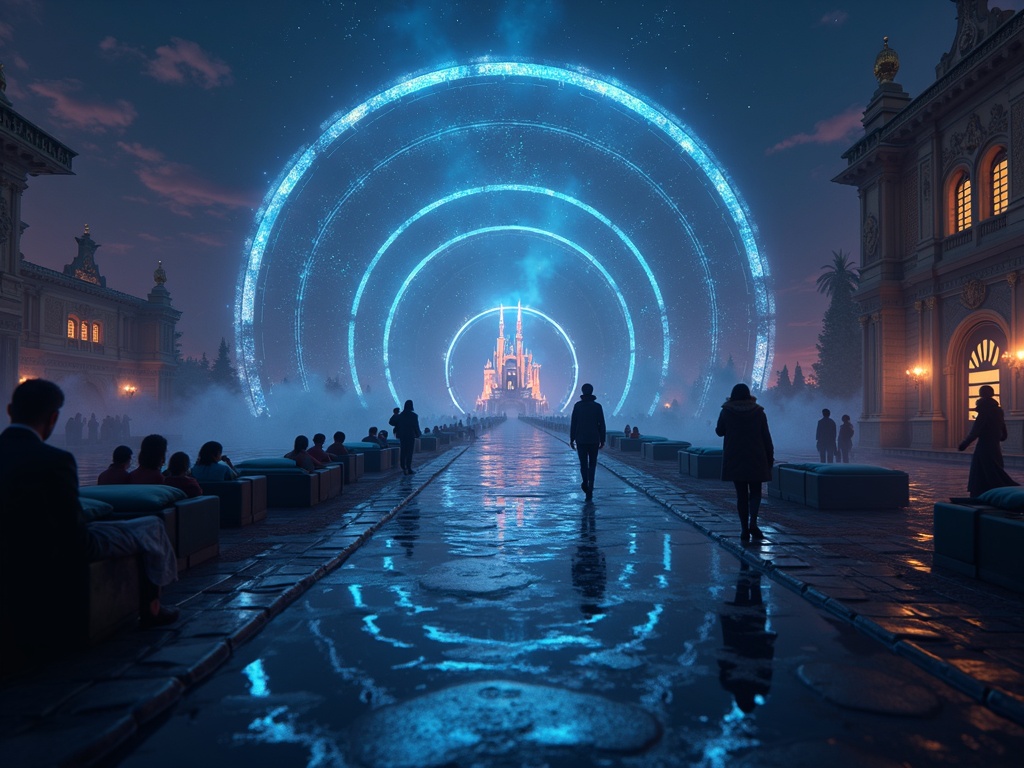
See, while everyone was busy counting the $150 million loss, they missed what Brad Bird was actually doing. He wasn’t making a movie. He was building a bridge. A $190 million bridge between Walt’s 1960s fever dream of EPCOT and our current dystopian-obsessed culture.
And the Disney Tomorrowland featurette? It’s the blueprint.
The real story isn’t in the film’s two-hour runtime. It’s in those behind-the-scenes moments where George Clooney admits he took the role because it reminded him of the future we used to believe in. Where Britt Robertson talks about playing a character who refuses to accept that tomorrow has to suck.
These aren’t marketing soundbites. They’re confessions from artists who knew they were making something the market didn’t want but the world desperately needed.
The Screen to Vision Featurette: More Than Marketing, A Manifesto for Optimistic Sci-Fi
Here’s what nobody tells you about the new Tomorrowland behind the scenes content: Brad Bird recorded it knowing the movie would probably tank.
Think about that.
The director of The Incredibles and Mission: Impossible – Ghost Protocol stood in front of those cameras fully aware that optimistic sci-fi doesn’t sell tickets anymore. But he did it anyway. According to production notes from Disney’s archives, Bird spent nearly 40 hours recording various Tomorrowland film featurette segments—more than any other Disney director at the time.
The Tomorrowland movie featurette opens with Bird explaining his inspiration—not from comic books or video games, but from progressive 20th-century cultural movements. The guy name-drops the 1964 World’s Fair like it’s scripture. He talks about a time when humans looked at the future and saw possibility, not apocalypse.
Most directors hide their philosophical cards. Bird laid them on the table.
“We’ve trained audiences to expect the worst,” he says in the Disney Tomorrowland special features. “Every future is dystopian. Every tomorrow is darker than today.” Then he drops the bomb: Tomorrowland exists to break that pattern.
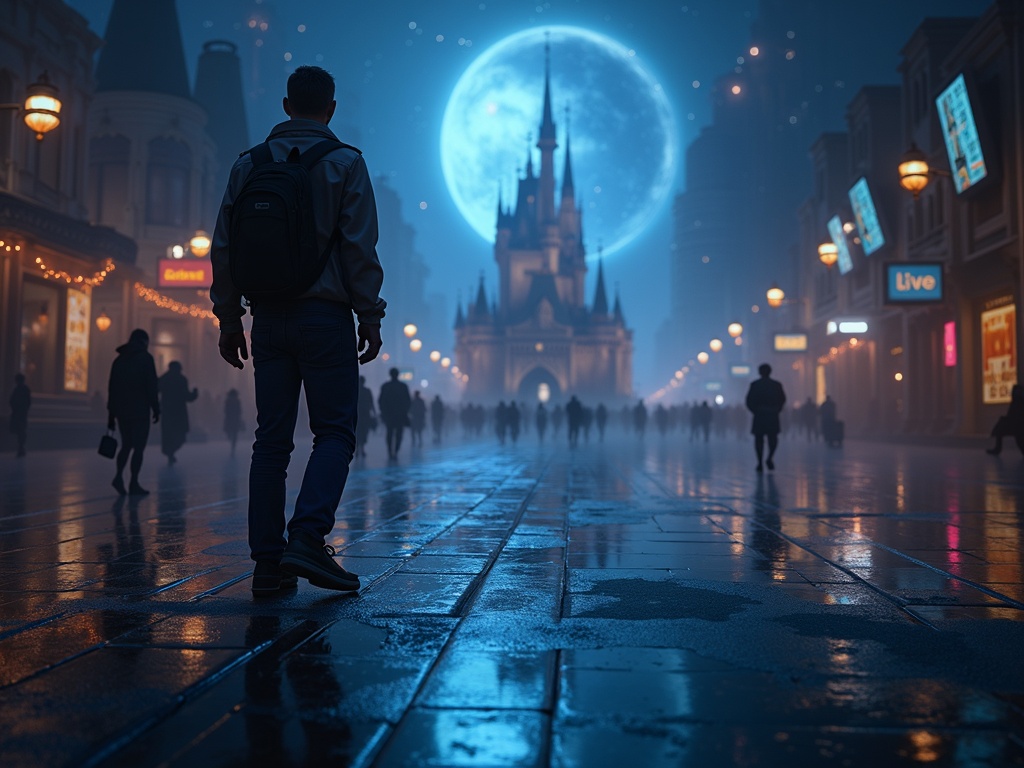
The Tomorrowland production footage reveals details that marketing departments usually bury. Like how they filmed across five countries—Spain, Canada, Italy, the Bahamas, and the U.S.—not for exotic locations, but to capture different cultural perspectives on optimism. Each location represented a different aspect of global futurism.
Valencia’s City of Arts and Sciences wasn’t just a pretty backdrop. It embodied European architectural optimism. The production spent $4.2 million just on location fees to capture this specific vision of the future.
The film’s visual effects team created over 1,500 shots, but here’s the kicker from the Tomorrowland making of documentary: they were instructed to make the future feel ‘touchable.’ Not slick. Not sterile. Touchable. Like something you could actually build if you just decided to stop being afraid.
That’s not how Hollywood thinks about sci-fi. That’s how Walt Disney thought about EPCOT.
But the real revelations come when the cast starts talking. Because that’s where Walt’s ghost really shows up.
Decoding Tomorrowland’s Production Secrets: What Cast Interviews Reveal About Walt’s EPCOT Dream
George Clooney doesn’t do Disney movies. Let’s be clear about that.
The guy who made his bones on ER and cemented his legacy with politically charged films like Good Night, and Good Luck doesn’t show up for mouse ears and merchandising. Yet there he is in the Tomorrowland cast interviews, geeking out about Walt Disney’s original EPCOT concept.
Not the theme park. The city.
In one particularly revealing George Clooney Tomorrowland interview segment, Clooney explains how Brad Bird pitched him the role by showing him Walt’s original EPCOT presentation from October 27, 1966. You know, the one where Walt basically designed a functioning city of 20,000 residents that would showcase American innovation. The one that died with him 51 days later.
“Brad didn’t pitch me a movie,” Clooney admits in the Brad Bird Tomorrowland featurette. “He pitched me Walt’s dream.”
The numbers back this up. According to Disney archival records, Walt’s EPCOT plan called for a $100 million investment in 1966 dollars—roughly $900 million today. Tomorrowland‘s $190 million budget? It’s literally trying to capture a fifth of Walt’s vision.
Britt Robertson’s interviews hit different. She was 24 during filming, young enough to have grown up in peak dystopian culture. Hunger Games. Divergent. Every YA franchise teaching kids that the future equals fascism. But in the Tomorrowland bonus features, she talks about Casey Newton like she’s describing a revolutionary.
“Casey doesn’t accept that things have to get worse,” Robertson explains in her Tomorrowland director commentary segments. “She looks at a problem and immediately thinks, ‘How do I fix this?'”
That’s not character development. That’s philosophy.
The Tomorrowland exclusive footage from the NASA scenes reveals another layer. They shot at actual Kennedy Space Center locations, including the Vehicle Assembly Building. But here’s what the Tomorrowland promotional video content shows that most reviews missed: they deliberately filmed at sunset. Every NASA scene bathes in golden hour light.
It’s Space Age optimism rendered in cinematography. The kind of shot that costs $50,000 in crew overtime but delivers something you can’t buy—authentic nostalgia for a future that never happened.
Hugh Laurie Tomorrowland scenes get the most telling moment in the cast interviews. He describes Governor Nix not as evil, but as ‘heartbroken.’ A man who offered humanity the future and watched them choose fear instead.
Sound familiar? It should. It’s Walt’s EPCOT story. A visionary plan rejected by a world too scared to build it.
Which brings us to the elephant in the room: the movie bombed. Hard. But that failure? It might be the most important thing about it.
The $150 Million Misconception: Why Tomorrowland’s Box Office Failure Makes Its Featurettes More Valuable
Tomorrowland lost Disney somewhere between $120 and $150 million. Let that sink in.
One of the most successful studios in history dropped nine figures on a movie about optimism. In 2015. The same year Star Wars returned with a Death Star 3.0 and Mad Max showed us chrome-mouthed death cultists.
Disney released a film whose climax involves choosing hope over fear. The marketing department must have been drinking heavily.
But here’s where it gets interesting. The film’s commercial failure transformed its Tomorrowland movie special features blu ray content from promotional material into something else entirely: evidence.
Evidence of what happens when you try to sell optimism to a pessimistic market. Evidence of Hollywood’s last genuine attempt at aspirational sci-fi. Evidence that somewhere in the Disney machine, Walt’s ghost still whispers about cities of tomorrow.
The Disney Tomorrowland making of documentary segments tell the real story. There’s a piece called ‘Remembering the Future’ where production designer Scott Chambliss breaks down how they reverse-engineered 1960s futurism for 2015 audiences. They studied Googie architecture. They analyzed Space Age industrial design. They literally built the future Walt imagined, then filmed it.
The production spent $7.3 million on practical sets that could have been CGI. Why? Because Bird wanted actors to touch the future. To believe in it. The Tomorrowland film production secrets reveal they built a working monorail system for a 12-second shot. That’s not filmmaking. That’s manifesting.
The new Disney Tomorrowland behind the scenes footage becomes a masterclass in failed ambition. Not failed execution—failed market timing. Brad Bird and Damon Lindelof created a $190 million philosophical argument that audiences weren’t ready for.
Or maybe they were too ready for it. Maybe after years of Terminators and zombie apocalypses, people couldn’t process a future worth living in.
The film’s cult following proves the point. On Disney Plus, where to watch Tomorrowland featurette content has become a common search, the movie consistently ranks in the top tier of sci-fi offerings. Reddit threads dissect Tomorrowland hidden details with religious fervor. YouTube video essays proliferate, most citing the featurettes as primary sources.
The movie failed commercially but succeeded as a cultural artifact. And the behind-the-scenes content? That’s the Rosetta Stone. It translates Walt’s 1960s optimism into 21st-century language. It shows how modern filmmakers can channel Space Age dreams through contemporary storytelling.
So how do you actually decode these featurettes? How do you see what Brad Bird hid in plain sight?
Clues to a larger story about what happens when Walt Disney’s original vision collides with modern cynicism. Every cast interview, every production detail, every frame of the Screen to Vision featurette adds up to something bigger than marketing.
It’s documentation of an attempt—maybe the last attempt—to revive optimistic futurism in mainstream cinema.
The movie lost $150 million. But the ideas it preserved? The bridge it built between Walt’s EPCOT and our possible tomorrow? That’s priceless.
Next time you watch these featurettes, don’t see them as DVD extras. See them as what they really are: love letters to a future we forgot how to believe in.
And maybe, just maybe, instructions for remembering.
The Tomorrowland sneak peek content holds one final secret. In the last frames of the main featurette, there’s a whiteboard visible in Brad Bird’s office. On it, barely legible, are the words “Progress City Lives.”
That was Walt’s original name for EPCOT. The city that never was.
Except maybe it was. Maybe it just took 50 years and a $150 million loss to build it.
Not in Florida. In film.