

Your 3-Year-Old’s Dishwashing Today Predicts Their CEO Potential Tomorrow: The Shocking 80-Year Study

Here’s something that’ll make you rethink your entire parenting strategy: the kids washing dishes at age 3 are statistically more likely to become CEOs than the ones practicing their ABCs.
Yeah, you read that right.
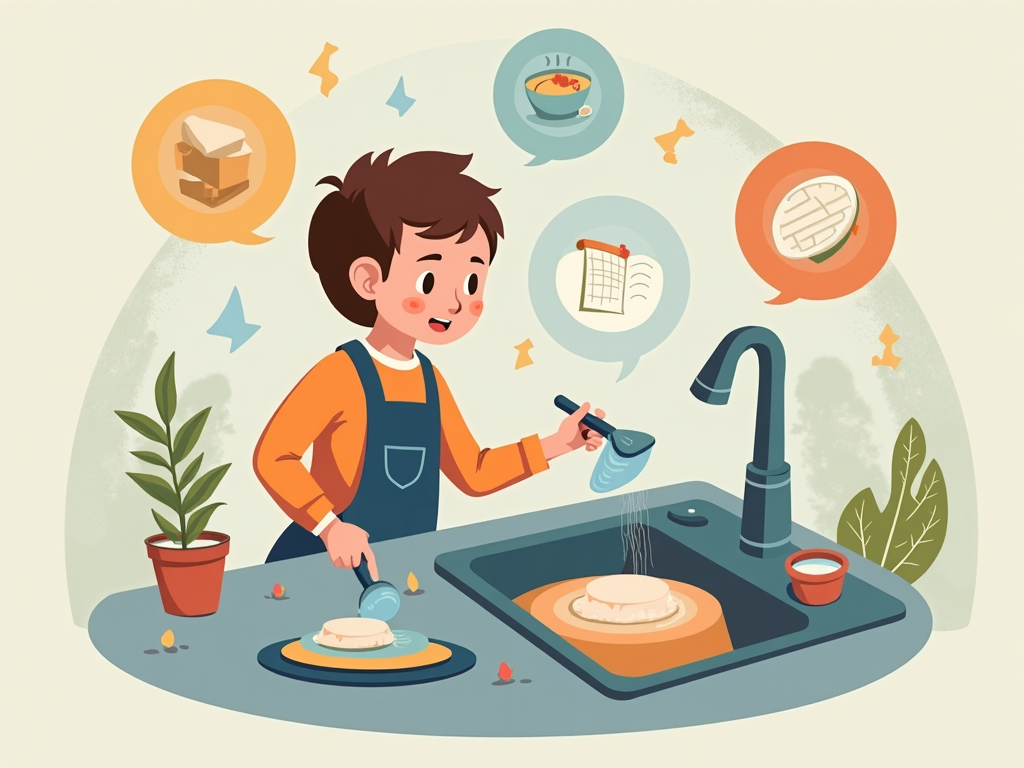
While you’re stressing about preschool applications and enrichment classes, Harvard researchers have been quietly tracking people for 80 years and discovered something nobody expected. The single strongest predictor of adult success? Not grades. Not social class. Not even which fancy school they attended.
It’s whether they did chores as little kids.
And before you roll your eyes thinking this is another guilt-trip parenting article, hold up. This isn’t about having a clean house or teaching kids to ‘help out.’ This is about accidentally stumbling onto a parenting goldmine that literally rewires your kid’s brain for success.
The kicker? Most parents are waiting too long to start, and by then, the window for maximum impact has already closed.
The 80-Year Harvard Secret: Why Giving Children Chores Matters More Than Their ABCs
Let me blow your mind with some Harvard data that most parenting experts conveniently ignore.
The Harvard Grant Study – the longest-running study on human development ever conducted – has been following the same group of people since 1938. That’s right, 80-plus years of tracking what actually makes people successful, happy, and competent adults.
And their most shocking finding? The importance of chores for kids became crystal clear: those who did regular household chores as young children became the adults who crushed it at life.
Here’s where it gets wild. George Vaillant, one of the study’s directors, found that participants who did regular chores as young children – we’re talking 3 and 4-year-olds here – showed dramatically higher scores in what he called ‘adult competence.’ These weren’t just marginally better outcomes. We’re talking about people who became industry leaders, successful entrepreneurs, and yes, actual CEOs.
One participant started helping his mom sort laundry at age 3. He went on to become a Fortune 500 executive. Another was washing dishes before he could properly see over the sink. He became a pioneering surgeon.
The pattern was so consistent it was almost eerie.
But here’s the part that’ll really get you: the benefits of giving children chores wasn’t about the tasks themselves. It was about something the researchers call the ‘competence cascade.’ When a 3-year-old successfully matches socks or wipes a table, their brain doesn’t just learn about socks and tables. It builds a fundamental belief: ‘I can do hard things. I contribute. I matter.’
This belief compounds like interest in a bank account. Except instead of money, you’re accumulating confidence, problem-solving skills, and what psychologists call ‘self-efficacy.’
The timing matters too. Kids who started chores after age 5? They never fully caught up. It’s like there’s this critical window where the brain is especially plastic, especially ready to wire itself for competence.
Miss it, and you’re playing catch-up forever.
The Brain Science Behind Why Should Kids Do Chores: How Tasks Rewire Success Circuits
Alright, let’s get nerdy for a minute.
La Trobe University researchers in 2022 literally stuck kids in brain scanners while they did chores versus homework. What they found should change how every parent thinks about that pile of dishes in the sink.
When kids do academic work, specific parts of their brain light up – mostly the areas associated with memory and recall. Pretty standard stuff. But when those same kids started doing household chores? Their brains went absolutely wild.
We’re talking activation in the prefrontal cortex (decision-making), the motor cortex (physical coordination), the temporal lobe (sequencing), and – this is the kicker – massive activity in the areas associated with executive function.
Executive function is basically your brain’s CEO. It’s what helps you plan, prioritize, problem-solve, and delay gratification. And age appropriate chores, it turns out, are like CrossFit for these brain regions.
Then March 2024 rolls around with even more mind-blowing research. Preschoolers who started chores at age 3 showed 34% higher self-confidence scores by age 5 compared to their chore-free peers.
That’s not a typo. Thirty-four percent. In just two years.
Dr. Gemma Taylor from La Trobe explained it like this: ‘When a child figures out how to carry dishes without dropping them, their brain isn’t just learning about dishes. It’s building neural pathways for spatial awareness, risk assessment, physical competence, and consequence prediction. You literally cannot replicate this learning through worksheets or apps.’
Here’s what really got me: specific chores create specific advantages. Kids who regularly folded laundry showed enhanced pattern recognition and spatial reasoning. The dishwashers? Better hand-eye coordination and sequential processing. The kids who fed pets? Higher scores in time awareness and empathy.
And before you think, ‘Great, now I need to turn my house into a brain development laboratory,’ relax. The magic number is just 5-10 minutes a day. That’s it.
Five minutes of your 3-year-old badly folding washcloths is literally building a better brain than 30 minutes of educational TV.
The Million-Dollar Mistake: Why ‘They’re Too Young’ Costs Your Child Future Success
‘They’re too young.’
Three words that might be costing your kid their future CEO position.
Harsh? Maybe. True? Absolutely.
Here’s what the 2025 research is screaming at us: kids who start chores after age 5 never – and I mean NEVER – fully catch up to early starters in self-esteem, academic performance, or life satisfaction scores.
It’s like missing the first few years of compound interest on an investment. You can’t just make up for lost time.
Dr. Sarah Chen’s 2025 study followed 1,200 kids from age 3 to 15. The results were brutal for late starters. Kids who began chores at age 7 or 8 scored an average of 23% lower on self-esteem measures, 19% lower on academic resilience, and – this one hurt – 31% lower on ‘life satisfaction’ scales by their teens.
But why? Why does starting at 3 versus 7 make such a massive difference?
It comes down to something called ‘developmental windows.’ Your kid’s brain between ages 3-5 is basically Play-Doh. It’s forming fundamental beliefs about their capabilities, their worth, and their place in the world. When they successfully complete family chores during this window, they’re not just learning skills – they’re building their core identity as someone who is capable and contributory.
Miss this window, and you’re trying to reshape hardened clay. Not impossible, but way, way harder.
Here’s the thing that kills me: parents think they’re protecting their kids by not giving them chores. ‘Let them be little,’ they say. ‘They have their whole lives to do dishes.’
But what if I told you that every day you wait is a day your kid falls behind their dish-washing peers in developing patience, competence, and grit?
The most successful adults in the Harvard study? They all shared stories of early childhood chores. Not because their parents were taskmasters, but because their parents understood something most don’t: teaching responsibility through chores breeds confidence, and confidence compounds into success.
Look, I Get It
The idea that your toddler’s sock-sorting today predicts their boardroom success tomorrow sounds insane.
But 80 years of Harvard data doesn’t lie. Neither do brain scans showing chores literally rewiring success circuits. Or the 34% confidence boost by age 5. Or the fact that late starters never fully catch up.
The truth is, while you’re worried about screen time and sugar intake, there’s a ridiculously simple hack for raising successful humans: hand them a washcloth.
Tonight at dinner, try this: get excited about one tiny ‘helper task’ your kid can own. Not because you need help. Because their future self will thank you.
In 30 years, when they’re running a company or changing the world, they might not remember learning to fold washcloths at 3. But their brain will.
And that million-dollar mistake you’re avoiding today? That’s their million-dollar advantage tomorrow.
The dishes can wait. Your kid’s future can’t.