The Best Outdoor Toys for Toddlers (Active Play That Lasts)

This post contains affiliate links.
A toddler with energy to burn and nowhere to put it is a problem every parent knows by four in the afternoon. The backyard is the cure, and the right gear turns it into the place they beg to go, building real strength and skills while you get a few minutes to drink your coffee while it’s hot.
This guide skips the big-ticket swing set, we cover those in our guide to the best toddler playsets, and focuses on everything else: the water tables, ride-ons, climbers, and odds and ends that get daily use from ages one to three. Specific products are named throughout, with a note on who each one suits.
Why outdoor play earns its space in the garage
Outdoor play does more than tire a toddler out, though that alone justifies the clutter. Running, climbing, and pedaling build the gross-motor strength, balance, and coordination that underpin everything physical that comes later, and pediatric guidance is blunt about it: toddlers need several hours of active play a day, much of it unstructured.
Scooping sand and pouring water teach cause and effect and early spatial reasoning without a screen in sight. And the quieter benefits matter too, sunlight supports vitamin D and better sleep, and most kids are simply calmer after time outside. Epic kids toys that pull a child outdoors are doing developmental work disguised as fun.
Water and sand: the highest-value buys
If you want the most play per dollar, start with water and sand. They hold a toddler’s attention longer than almost anything, and the learning, fine motor control, cause and effect, early measuring, is real.
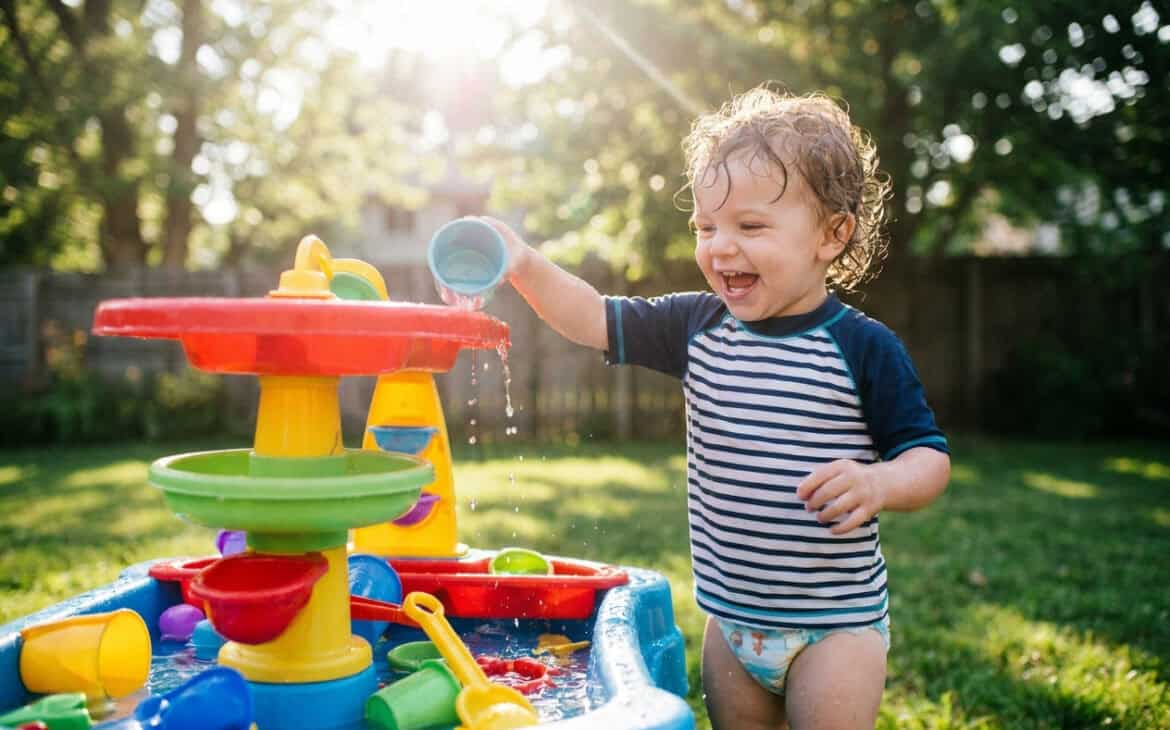
The category favorite is the Step2 Rain Showers Splash Pond Water Table. It suits kids from about 18 months, ships with roughly a dozen accessories, and its standout feature is a bucket that pours water into the top tier and “rains” back down into the pond, which is the kind of repeatable cause-and-effect a two-year-old will run a hundred times. For sand, the Step2 Naturally Playful Sandbox II is the durability champion, with molded seats and a cover, while the smaller, fully-assembled Step2 Crabbie (about three feet square with a tight-fitting shell lid) is the better fit for a small yard or a younger toddler. Whatever you choose, a cover is non-negotiable, it keeps neighborhood cats and rain out, which is the difference between a sandbox that lasts years and one you drag to the curb by August. A cheap set of cups, scoops, and a small shovel is all the “accessory” either really needs.
Things that move: ride-ons, push toys, and balance bikes
Wheels are where the gross-motor magic happens, and the right one depends almost entirely on age, so match the toy to the stage rather than buying ahead.
For brand-new walkers around a year, a push toy builds confidence and leg strength while giving them something to steer. The Little Tikes Gas ‘n Go Mower and the bubble-blowing Lydaz Bubble Lawn Mower are toddler favorites here, both designed for roughly 18 months and up, and the bubbles turn a walk around the yard into an event. The eternal Little Tikes Cozy Coupe, the little red-and-yellow foot-powered car that has sold tens of millions since 1979, is the classic first ride-on and fits kids from about 18 months to three years.
As your child nears two and beyond, you’ve got a real choice to make. A Radio Flyer tricycle teaches pedaling and is the nostalgic pick, but the single best investment for an active toddler is a balance bike, and the Strider 12 Sport is the one most parents and reviewers land on. It’s feather-light, assembles and adjusts without tools, rolls on no-flat foam tires, and sits low enough for a young toddler to walk it along flat-footed. Because it teaches balance, the genuinely hard part of cycling, kids who start on a Strider around age two often skip training wheels entirely and step straight onto a pedal bike later. If you buy one wheeled toy that grows with them, make it the balance bike.

Climbers and slides
Climbing isn’t optional for toddlers; they’ll do it on your bookshelf if you don’t give them something better. The trick is channeling the urge safely and low to the ground.
The Pikler Triangle has earned its cult following for good reason: it’s a simple wooden A-frame that lets a child climb, balance, and explore at their own pace, folds flat for storage, and works indoors or out from around the time they’re pulling to stand. For something more elaborate, the Step2 Naturally Playful Woodland Climber gives toddlers several routes up and down plus a slide and a crawl-through space, all in sturdy molded plastic built to live outside. Keep climbing heights low, platforms wide, and a soft surface, grass, rubber mats, or wood chips, underneath, never concrete. A standalone toddler slide, like the basic Little Tikes models, is a perennial favorite and an easy first climbing-and-sliding toy for the youngest crowd.
Playhouses, swings, and pretend play
Some of the best outdoor toys aren’t about burning energy at all. A playhouse becomes the backdrop for hours of imaginative play, and the Little Tikes Easy Store Large Playhouse, with its working door, windows, and a mail slot, is the standard-bearer, durable enough to leave outside and big enough for a couple of kids.
For swinging, you don’t need a full set. The Little Tikes 2-in-1 Snug ‘n Secure bucket swing has a T-bar harness and adjustable straps for the littlest ones, converts to a big-kid seat later, and runs well under $30, an easy add to a single sturdy tree branch or an existing frame. Full-bucket support is exactly what a wobbly one-year-old torso needs.
The cheap stuff that punches above its price
Never underestimate the basics. A few rubber balls, a bottle of bubbles, and a bucket of sidewalk chalk cost almost nothing and deliver an outsized amount of play, chasing, kicking, scribbling, and stomping all build coordination. For bubbles without the constant refilling and dipping, the Kidzlane Bubble Machine pumps out around 500 bubbles a minute and has a near-hypnotic hold on a two-year-old. A toddler-scale t-ball set or a simple ring-toss rounds out a bin you can keep by the back door for the days you just need everyone outside, fast. Brands like Melissa & Doug, Fisher-Price, and Playskool all make solid, inexpensive versions of these.
What to buy at each age
Matching the toy to the stage saves money and frustration. Around one, think push toys (the Gas ‘n Go or bubble mower), a water table, a small sandbox, balls, and bubbles, anything sturdy, oversized, and free of small parts. At two, add a Cozy Coupe or balance bike, a Pikler Triangle or low climber, and a swing. By three, kids are ready for a Radio Flyer trike, a bigger climber with a slide, a playhouse, and the start of real sports toys. The happiest backyards mix one or two “big” items with a bin of cheap, open-ended basics.
What to look for (and what to skip)
Outdoor toys live a hard life, so durability comes first. Look for UV-stabilized plastic (the reason Step2 and Little Tikes pieces survive years of sun), powder-coated metal, or sealed wood that won’t crack, fade, or splinter. On safety, the rules are the familiar ones: rounded edges, non-toxic materials, no small detachable parts for the under-three crowd, a weight limit that matches your child, and ideally ASTM or CPSC certification. Favor low platforms and wide, grippable features sized for little hands, and skip anything that demands constant adult setup, the best toddler toys invite independent play and then get out of the way.
Storing it so it lasts
A little care doubles the lifespan of this stuff. Drain water tables after each use so they don’t grow algae or breed mosquitoes, keep the sandbox covered, and stash the smaller pieces in a deck box or garage over winter and through long rainy stretches. Even UV-stable plastic fades faster in relentless direct sun, so a shaded corner of the yard is kinder to your investment than the middle of the lawn.
Frequently Asked Questions
What are the best outdoor toys for a 1-year-old?
Push toys like the Little Tikes Gas ‘n Go or Lydaz Bubble Lawn Mower, a water table such as the Step2 Rain Showers Splash Pond, a small sandbox like the Step2 Crabbie, plus balls and bubbles. Choose sturdy, oversized toys with no small parts.
Is a balance bike or a tricycle better for a toddler?
A balance bike like the Strider 12 Sport teaches the hard part of cycling, balance, so many kids move straight to a pedal bike with no training wheels. A Radio Flyer tricycle teaches pedaling and is great too; balance bikes just build the more transferable skill and tend to get ridden longer.
Are water tables worth it?
For most families, yes. They suit toddlers from about 18 months, deliver long stretches of independent sensory play, and cool kids off on hot days. Just drain the table after each use to keep it clean.
What’s the most durable sandbox for toddlers?
The Step2 Naturally Playful Sandbox II is the longevity pick thanks to thick molded plastic, seats, and a cover; the smaller Step2 Crabbie is better for tight spaces. A tight-fitting lid matters most, it keeps out rain and animals.
How do I keep outdoor toys from falling apart?
Buy UV-stabilized plastic, powder-coated metal, or sealed wood, then store toys in shade or a deck box between uses and bring the smaller ones in over winter. Drain anything that holds water.
What outdoor safety features matter most for toddlers?
Low heights, wide platforms, rounded edges, non-toxic materials, no small detachable parts, an appropriate weight limit, and a soft surface under anything they climb. ASTM or CPSC certification is a useful shortcut.
Related Reading
- The 4 Best Outdoor Playsets for Toddlers (Plus a Safety Guide)
- Toddler Clothing Gifts: 8 Unique Ideas Parents Will Actually Use
- The Dreft Family Friendly Truth: What 30 Days of Testing Revealed About America’s #1 Baby Detergent
- The Best Star Wars Gifts (That Fans Will Actually Use)