
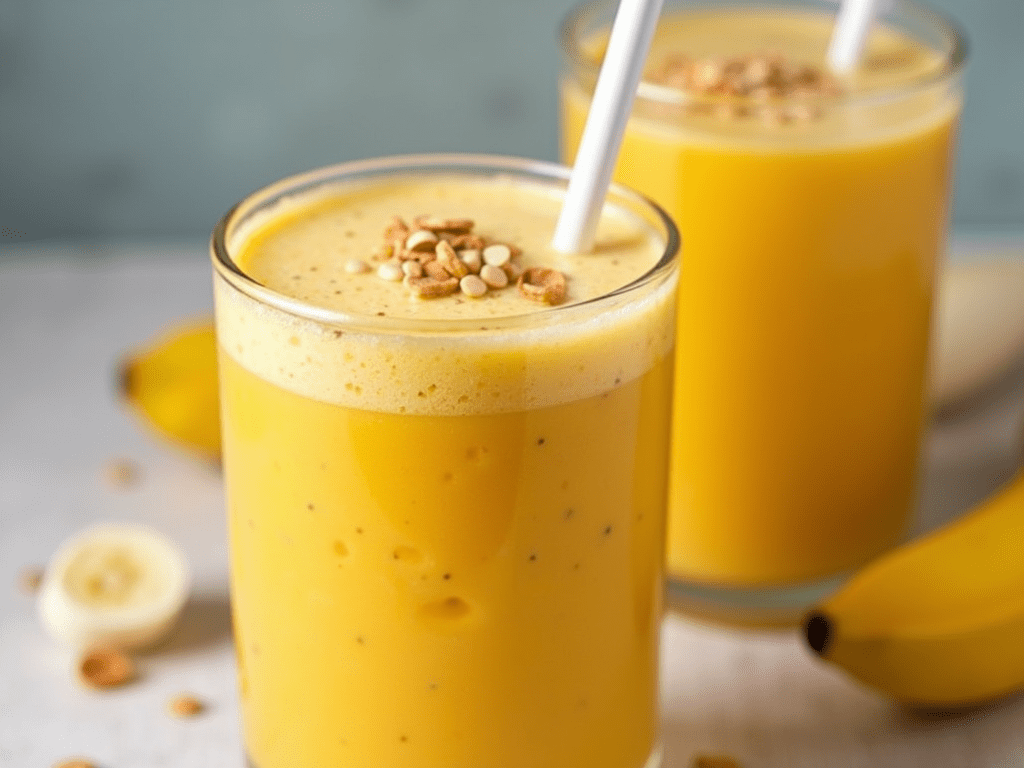
The Science Behind Perfect Mango Banana Smoothies (Most People Get It Wrong)

The Science Behind Perfect Mango Banana Smoothies (Most People Get It Wrong)
You’re making your mango banana smoothie wrong.
Not trying to be a jerk here. Just stating facts. See, most recipes are basically “throw fruit in blender, add liquid, pray.” Meanwhile, you’re destroying nutrients and wondering why your smoothie tastes like wet cardboard.
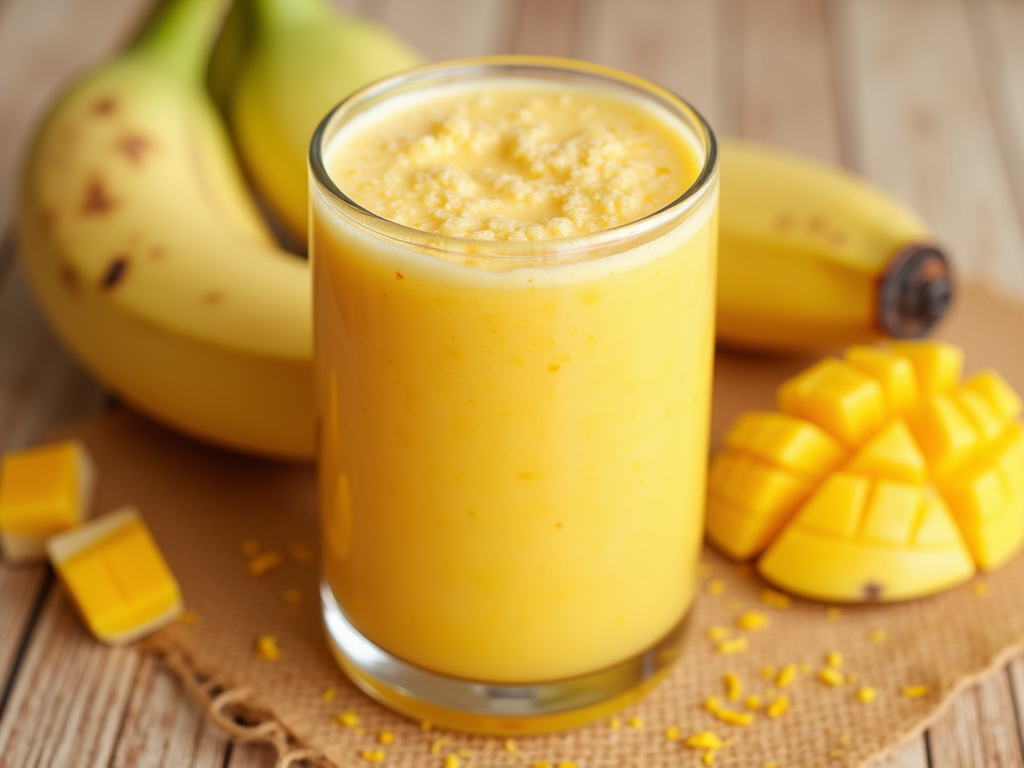
Here’s what nobody tells you: temperature control matters more than your fancy $500 blender. The frozen versus fresh debate? It’s not preference – it’s chemistry. Get it right and you’ll see 40% thicker smoothies. Get it wrong and you’re drinking vitamin-depleted fruit water.
And that almond milk you’re using? Its fat content (spoiler: basically zero) is sabotaging your entire smoothie through failed emulsification. Yeah, emulsification. In a smoothie. Science is everywhere, people.
Most folks dump ingredients, hit blend, and accept mediocrity. They’re creating bitter compounds, murdering vitamins, and calling it “healthy.”
Let’s fix this mess.
The Temperature Game: Why Frozen Crushes Fresh Every Time
Everyone says “use frozen fruit for thickness.” Nobody explains why.
When you freeze a banana at 0°F, you’re not just making it cold. You’re demolishing cell walls. Creating a completely different ingredient. That spotty counter banana? Amateur hour.
Frozen fruit releases moisture differently. Fresh fruit dumps water immediately – hello, smoothie soup. Frozen fruit clutches that moisture like a secret, creating 40% thicker results. No ice needed. No weird thickeners.
But thickness is just the opening act.
Fresh mangoes hemorrhage vitamin C – 20% gone after 3 days on your counter. Freeze that mango right after harvest? You lock in 95% of nutrients. It’s basically a time machine for vitamins.
The golden ratio: 60% frozen, 40% fresh. Frozen banana brings thickness. Fresh mango delivers that flavor punch. This isn’t some random Pinterest tip – it’s physics working in your favor.
Here’s the part everyone screws up: pre-freeze banana pieces for 4 hours minimum. Not 2. Not “until firm.” Four. Full. Hours. At 0°F.
Why? Complete cellular breakdown happens around hour 3. Before that? You’ve got cold banana chunks that’ll leave grainy bits in your drink. Nobody wants chunky smoothies. Nobody.
Temperature also messes with your taste buds. Cold suppresses sweetness by 30%. Your tongue literally can’t taste sugar as well when it’s cold. That’s why frozen banana means less honey needed. Use this knowledge wisely.
But temperature’s just the warm-up act. The real show starts when liquid meets frozen fruit.
Milk Wars: How Fat Content Rewrites Smoothie Physics
Coconut milk versus almond milk isn’t about being trendy. It’s about molecular restructuring.
Coconut milk: 24% fat. Almond milk: 1% fat. That’s not a small difference. That’s a complete texture revolution.
Fat molecules are tiny emulsifiers. They hug fruit particles, creating creamy suspension instead of watery disappointment. Your coconut milk smoothie feels 3x creamier than almond. Not opinion. Measurable fact.
But wait, there’s more science to ruin your simple smoothie dreams.
Protein timing matters more than protein type. Dump protein powder in too early? Kiss 35% bioavailability goodbye. Extended blending beats those delicate proteins into submission. They’re still there, just way less useful.
The fix: Liquid first. Always. Creates a vortex that pulls fruit down evenly. Then fruit. Then protein in the last 10 seconds. This preserves molecular integrity. Your muscles will actually use what you’re drinking.
Different milks change nutrient absorption too. Fat-soluble vitamins need fat to enter your bloodstream. Using skim milk? Congrats, you’re watching vitamins pass through unused. Coconut milk’s medium-chain fats don’t just add creaminess – they’re vitamin escorts.
Plant milk pH matters. Almond milk: neutral 7.0. Coconut milk: acidic 6.5. That acidity brightens fruit flavors and preserves vitamin C. It’s why coconut smoothies taste more “tropical” – you’re tasting preserved fruit compounds, not imagination.
Oat milk deserves respect too. Beta-glucans create natural thickness without high fat. Perfect for people who hate coconut but want creaminess. The middle child of plant milks, finally getting recognition.
You’ve nailed temperature and base liquid. Time for the most overlooked factor.
The 60-Second Death Clock: When Blending Becomes Destruction
Your blender isn’t mixing. It’s generating heat through friction. And that heat is committing vitamin murder.
Every second past 60 increases temperature by 0.15°F. Sounds tiny? By second 120, you’re 10°F warmer. That’s enough to destroy 15% of vitamin C and create bitter compounds from oxidized phenols.
Phenol oxidation. Nobody talks about it. Everyone tastes it. That weird bitter aftertaste in over-blended smoothies? That’s phenolic compounds meeting oxygen, getting cozy with heat and mechanical stress. Gross.
Under-blending creates different disasters. Those fiber chunks people pretend to enjoy? They’re blocking 40% nutrient access. Your body can’t get nutrients from unbroken cell walls. You need complete destruction for maximum nutrition.
The sweet spot: 15 seconds low speed (breaks frozen chunks), then 30–45 seconds high speed. Total time: under 60 seconds. Smoothie stays cold. Nutrients intact. Perfect consistency.
Pro move: add vitamin C source in final 5 seconds. Splash of OJ, squeeze of lemon. Not just for flavor – vitamin C protects other nutrients from oxidation during storage. Science-based smoothie insurance.
Blade speed truth: those fancy “smoothie settings”? Marketing garbage. You want consistent high speed after initial breakdown. Variable speeds create uneven particles. Hello, separated grainy texture everyone secretly hates.
Stop. Using. Ice.
Ice dilutes flavor. Creates weird texture. Forces longer blend times. Frozen fruit gives cold without compromise. If you’re still using ice in 2024, we need to talk.
Storing smoothies? That vitamin C trick buys you 30 minutes before oxidation turns your Instagram-worthy pink drink into brown sadness.
The T.E.M.P.O Method: Your Smoothie Success Blueprint
Forget cutesy acronyms. T.E.M.P.O is science: Temperature, Emulsification, Mixing, Protein, Optimization.
Step 1: Pre-freeze banana pieces at 0°F for 4+ hours. Mix 60% frozen with 40% fresh mango. Thickness meets enzyme activity and fresh flavor. Best of both worlds.
Step 2: Liquid first. 1:2 ratio of liquid to fruit. Pick your fighter – coconut for cream dreams, almond for light vibes, oat for balanced middle ground. This creates your blending vortex.
Step 3: Low speed 15 seconds. Break frozen pieces without heat generation. Then high speed 30–45 seconds max. Watch that timer like your smoothie depends on it.
Step 4: Protein enters final 10 seconds only. Collagen, plant-based, Greek yogurt – doesn’t matter. Late addition preserves structure. Your muscles will notice.
Step 5: Drink immediately or add vitamin C insurance (orange juice works) for meal prep. Your choice.
Success looks like: smoothie temperature under 50°F, creamy texture without separation, color staying vibrant 30+ minutes. Hit all three? You’ve won.
Equipment truth: 1000+ watts for frozen fruit breakdown. Beyond that? Diminishing returns. A kitchen thermometer tells you more than any blender feature. Temperature beats technology.
Measure ratios precisely first few times. Then it becomes second nature. Those initial measurements train your eye for consistency. Practice makes permanent.
You Just Became a Smoothie Scientist
You came for a mango banana smoothie recipe. You got a masterclass in food science.
Temperature control, molecular interactions, blending physics – this isn’t overthinking. It’s understanding why most smoothies suck and yours won’t.
While everyone else dumps and prays, you know frozen beats fresh for thickness. You understand fat restructures texture. You respect the 60-second rule.
The T.E.M.P.O method isn’t another wellness trend. It’s your blueprint for consistent excellence.
Test it tomorrow. Time those blend cycles. Add protein last. Notice the difference. Small changes, massive improvements.
Stop accepting sad smoothies. Science picked a side. Now you’re on it.