
The Real Story Behind Irish Soda Bread: Chemistry, Soft Wheat, and Why Everything You Know Is Wrong

Let me blow your mind right off the bat: Irish soda bread isn’t really Irish.
Native Americans were making soda-leavened breads with pearl ash decades before the Irish even knew what baking soda was. Yeah, sit with that for a minute.
The whole ‘poor Irish peasants invented soda bread during the famine’ story? Total nonsense. The first documented Irish soda bread recipe appeared in the Newry Telegraph in 1836 – nine years before the Great Famine even started. And get this – that recipe was marketed as a health food for the well-to-do, not survival food for the starving.
Everything you’ve been told about traditional Irish soda bread is basically marketing fluff invented by people who’ve never touched a chemistry textbook or read a 19th-century newspaper.
The real story involves a German chemist, Ireland’s crappy wheat, and a cooking pot that looks like a witch’s cauldron. Ready to unlearn everything and discover why authentic Irish soda bread is actually one of the most scientifically fascinating breads on the planet?
The Chemistry Revolution That Changed Irish Baking Forever
Here’s something your Irish grandmother probably didn’t know: the key ingredient in her soda bread was invented in a German laboratory by a guy named Valentin Rose in 1801.
Not in some quaint Irish cottage. In a lab. With beakers and stuff.
Rose was messing around with sodium carbonate when he accidentally created sodium bicarbonate – what we call baking soda. This wasn’t some ancient folk wisdom passed down through generations. This was cutting-edge chemistry.
Before 1801, if you wanted your bread to rise, you needed yeast. Period. Or you could use pearl ash, which Native Americans had been extracting from wood ashes for decades. But baking soda? That was the iPhone of the baking world. Revolutionary. Game-changing.
And it hit Ireland at exactly the right moment.
See, Ireland had a wheat problem. Not a shortage – a quality problem. Irish wheat sucked for making yeast bread. Too soft, too low in gluten. The damp climate made it worse. Traditional bread-making was a nightmare.
Then along comes this magical powder that doesn’t need strong gluten networks to work. It just needs acid. And what did every Irish household have? Sour milk. Buttermilk. The leftovers from making butter.
The 1836 Newry Telegraph didn’t call it ‘poor people’s bread.’ They called it ‘wholesome’ and ‘nutritious.’ They were selling it to health-conscious middle-class readers who wanted something lighter than the dense, heavy breads of the time.
This wasn’t desperation. This was innovation.
The Irish took German chemistry and American techniques and created something uniquely their own. Not because they had to. Because they could.
But why did this German powder work so perfectly with Ireland’s notoriously terrible wheat? That’s where the agricultural science gets really interesting.
Ireland’s Soft Wheat Secret: The Agricultural Science Behind Soda Bread
Irish wheat was garbage for regular bread. There, I said it.
While England was growing nice, strong, high-gluten wheat perfect for fluffy yeast loaves, Ireland was stuck with soft, weak wheat that turned to mush when you tried to knead it.
The climate did it. All that rain, all that dampness – it produced wheat with about as much strength as wet tissue paper.
In 1817, some British guy writing for the Gentleman’s Magazine tried to solve Ireland’s wheat problem by mixing it with potatoes. Nine pounds of flour, potato pulp, soda, and muriatic acid. Cost him 2 shillings 6 pence. The result? Edible, but weird.
This was 19 years before Irish soda bread supposedly got ‘invented.’ People were already experimenting with soda and Ireland’s crappy wheat.
Here’s the science: yeast bread needs gluten networks. You knead the dough, the gluten proteins link up, they trap the carbon dioxide from the yeast. Beautiful. Except soft wheat can’t build those networks. It’s like trying to blow bubbles with water instead of soap – doesn’t work.
But baking soda? It doesn’t need gluten networks. It just needs acid to trigger a chemical reaction. Sodium bicarbonate plus acid equals carbon dioxide plus water plus salt. Instant lift. No kneading required.
Actually, kneading ruins it. The less you handle soda bread dough, the better.
This is why Irish women could make bread in 45 minutes flat. Mix, shape, bake. Done.
And that bastible pot they used? Genius. A heavy iron pot with a lid, coals underneath, more coals on top. Basically a primitive Dutch oven. Even heat distribution, steam trapped inside for a good crust. They were doing artisan bread techniques before artisan was even a word.
The September 1836 Enniskillen Chronicle recipe used sodium carbonate instead of bicarbonate. Coarser rise, denser texture. Some YouTube food historian recreated it – looked like a brick. But it worked.
That’s the thing about Irish soda bread. It always worked. Soft wheat, hard wheat, whole wheat Irish soda bread, white flour – didn’t matter. As long as you had soda and something acidic, you had bread.
Of course, none of this stopped people from making up complete fairy tales about crosses warding off the devil and Irish soda bread with raisins being traditional.
Debunking Irish Soda Bread Myths: From Devil’s Cross to American Raisins
Time to kill some sacred cows.
That cross cut on top of Irish soda bread? Not for letting the devil out. Not for blessing the bread. Not even remotely religious. It’s for heat distribution, you muppets. Dense dough needs help cooking evenly. The cross lets heat penetrate to the center. Pure physics. No supernatural nonsense required.
And raisins? Caraway seeds? Sugar? Get out of here with that American garbage.
Traditional Irish soda bread has four ingredients. Four. Flour, salt, baking soda, buttermilk. That’s it. Anything else is what we call ‘spotted dog’ or ‘railway cake’ – fancy versions for special occasions. Not daily bread.
Americans took Irish soda bread and turned it into cake. Added eggs, butter, sugar, dried fruit. Might as well put frosting on it and call it a cupcake. Real Irish soda bread is austere. Dense. Slightly sour. It’s not supposed to taste like a scone.
Here’s another myth: Irish soda bread was invented during the famine. Nope. First recipes date to 1836. The famine started in 1845. Math doesn’t lie.
What actually happened was sodium bicarbonate became commercially available in the 1830s, and Irish bakers immediately realized it solved their soft wheat problem. The famine just made it more widespread because it was cheap and fast.
Want to know what’s really not traditional? Baking it in a loaf pan. Irish soda bread should be round, baked in a pot or on a griddle. Those triangular farls from Northern Ireland? Cut from a round and cooked on a griddle. No oven needed.
The Society for the Preservation of Irish Soda Bread exists. I’m not making this up. They’re out there fighting the good fight against bastardized recipes. Their motto might as well be ‘Death to Raisins.’ They know what’s up.
After the famine, there were three types: white soda bread (fine flour), brown soda bread (wholemeal), and ‘fly’ soda bread (with raisins for posh people). Working folks ate brown. Middle class ate white. Rich folks ruined it with fruit.
Some things never change.
Now that we’ve cleared up the nonsense, let me show you how to make authentic Irish soda bread the way it was meant to be made.
How to Make Irish Soda Bread: The Science-Based Method
Forget every easy Irish soda bread recipe you’ve seen. We’re doing this right.
First, the flour. You want soft flour, low protein. In America, that’s pastry flour or White Lily. Regular all-purpose works but gives a tougher texture. The Irish used what they had – soft wheat flour that would make terrible yeast bread but perfect soda bread.
The chemistry matters. Your Irish soda bread buttermilk needs to be actually sour. Store-bought cultured buttermilk works. Real buttermilk from butter-making is even better. The acid level determines how much rise you get. Too little acid, flat bread. Too much, metallic taste.
Ratio: 450g flour to 1 teaspoon baking soda to 1 teaspoon salt to about 350ml buttermilk. That’s it. No sugar. No butter. No eggs. This is bread, not cake.
Mix it like you’re angry at it. Quick, rough strokes. The dough should be shaggy, sticky, barely holding together. Looks like hell? Perfect. Overwork it and you’ll get a hockey puck.
Shape it on a floured surface. Pat it into a round about 2 inches thick. Cut that cross deep – halfway down at least. This isn’t decoration. It’s engineering.
Now the cooking. Traditionally, Irish soda bread in cast iron works best. Preheat your Dutch oven to 450°F. Or use a baking stone. Or a heavy sheet pan turned upside down. You want thermal mass.
Bake for 15 minutes at 450°F, then drop to 400°F for another 25-30 minutes. You’re looking for a hollow sound when you tap the bottom. Internal temp should hit 200°F.
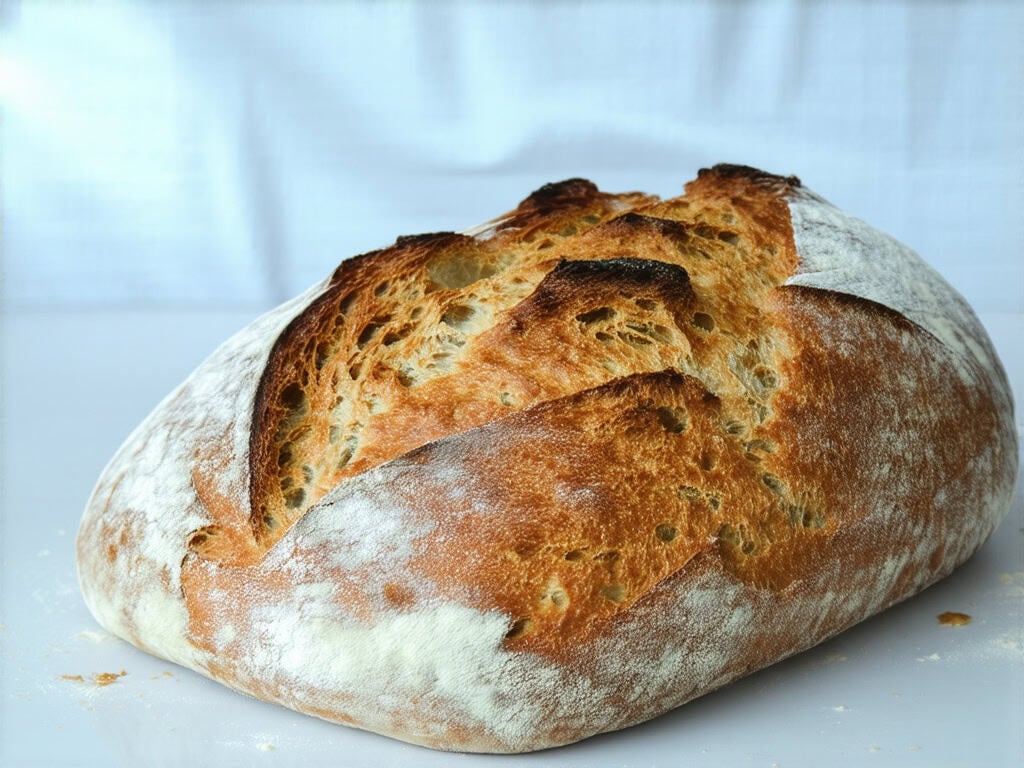
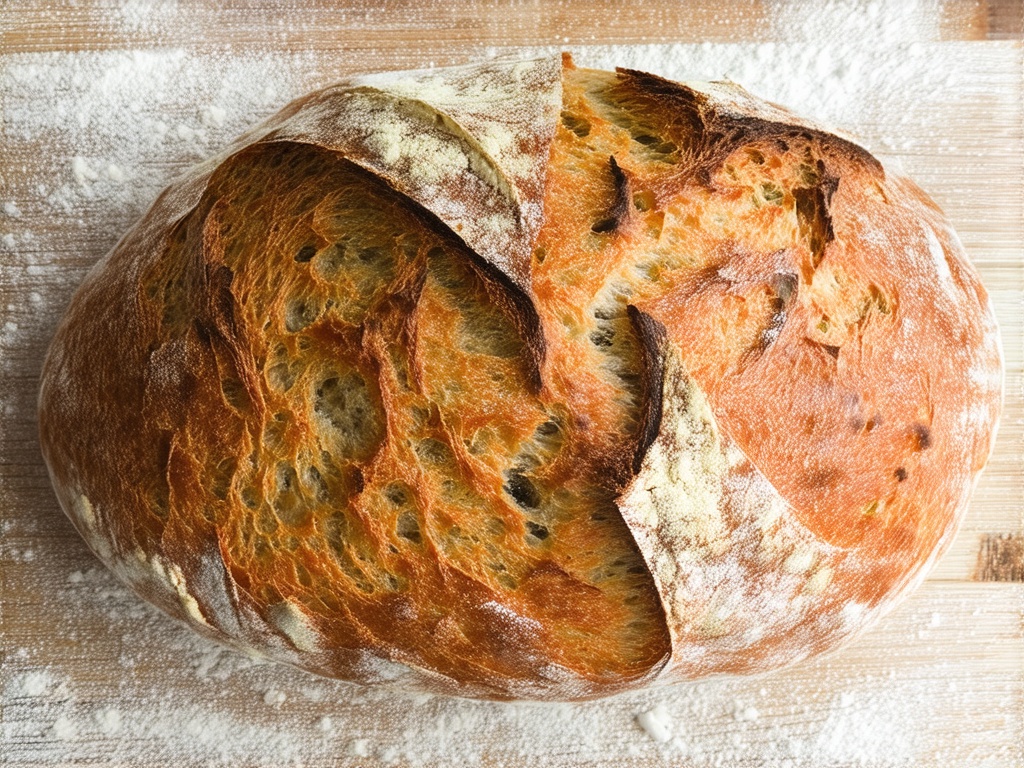
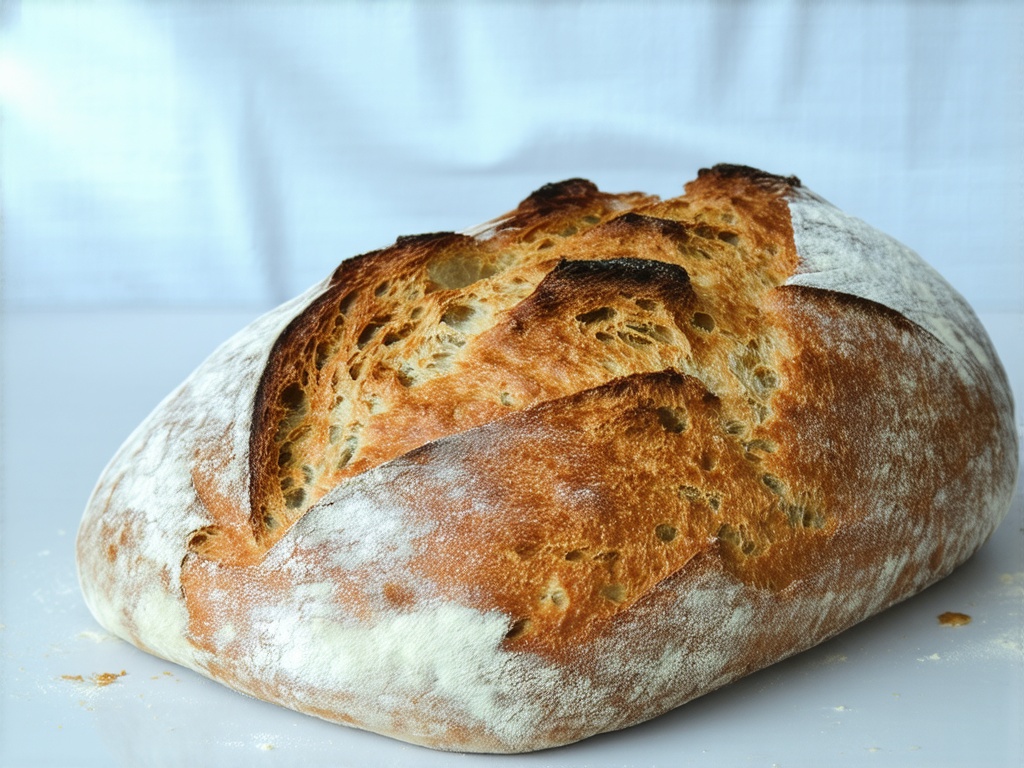
The crust will be thick, almost armor-like. The inside will be dense but tender, slightly sour, with an irregular crumb. It won’t win any beauty contests. It’s not supposed to.
This is working bread. Survival bread. Chemistry bread.
Cool it wrapped in a kitchen towel if you like a softer crust. Leave it naked for maximum crunch. Eat it warm with butter. Or cold with cheese. Or toasted the next day – if it lasts that long.
Conclusion: The Real Beauty of Irish Soda Bread
So there you have it. Irish soda bread isn’t some romantic famine survival food. It’s the product of German chemistry, Native American innovation, and Irish agricultural realities coming together at exactly the right moment in history.
It’s science, not sentiment.
The next time someone tries to tell you about blessing the bread with crosses or how their great-grandmother’s recipe with seventeen ingredients is ‘traditional,’ you can hit them with the facts. 1836. Newry Telegraph. Four ingredients. Soft wheat. Chemistry. Boom.
The real beauty of Irish soda bread isn’t in some made-up story about poverty and perseverance. It’s in the elegant solution to a specific problem. Bad wheat? No problem. No yeast? Who cares. No time? Forty-five minutes from flour to table.
That’s not desperation. That’s genius.
Make it right – with soft flour, real buttermilk, and a hot cast iron pot. Taste history the way it actually was, not the fairy tale version. Experience what happens when chemistry meets necessity and creates something truly remarkable.
And for the love of Valentin Rose, leave out the damn raisins.