
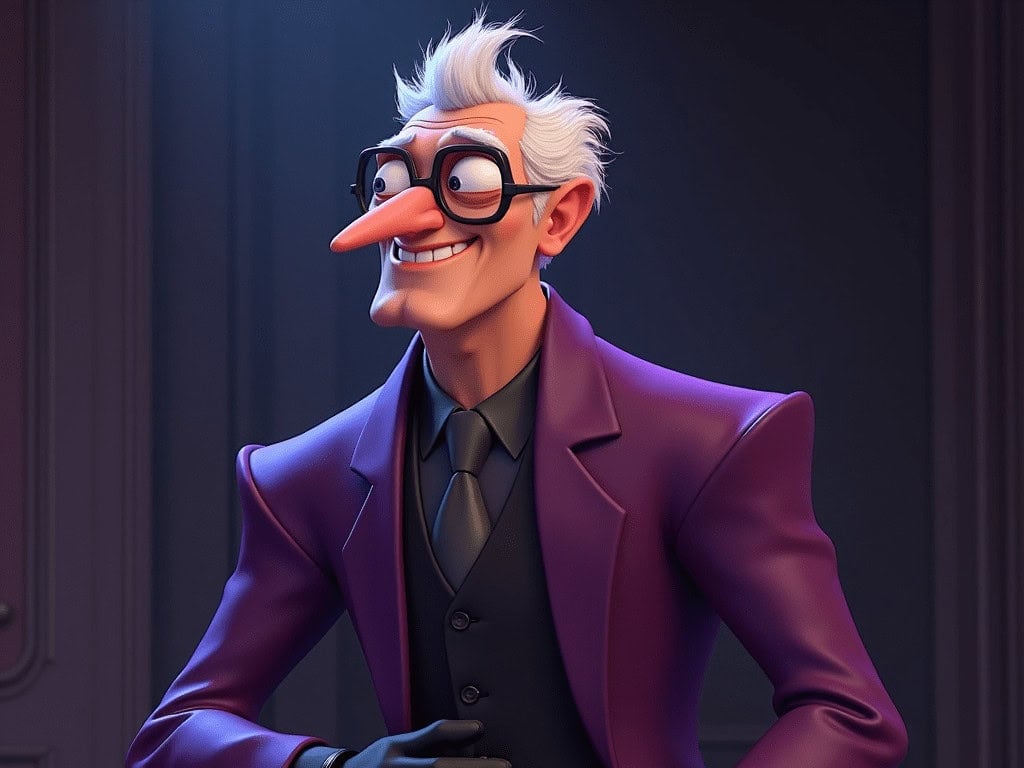
The Dark Psychology Behind Balthazar Bratt: Why Despicable Me 3’s Villain Hits Different

Remember that weird kid from school who peaked in third grade? Now imagine him with a keytar and revenge fantasies. That’s Balthazar Bratt in a nutshell.
Except here’s what nobody’s talking about – this purple-suited maniac isn’t just another cartoon bad guy. He’s basically what happens when Hollywood chews up a kid and spits them out. The whole character is a massive middle finger to the entertainment industry, wrapped in 80s nostalgia and bubble gum attacks.
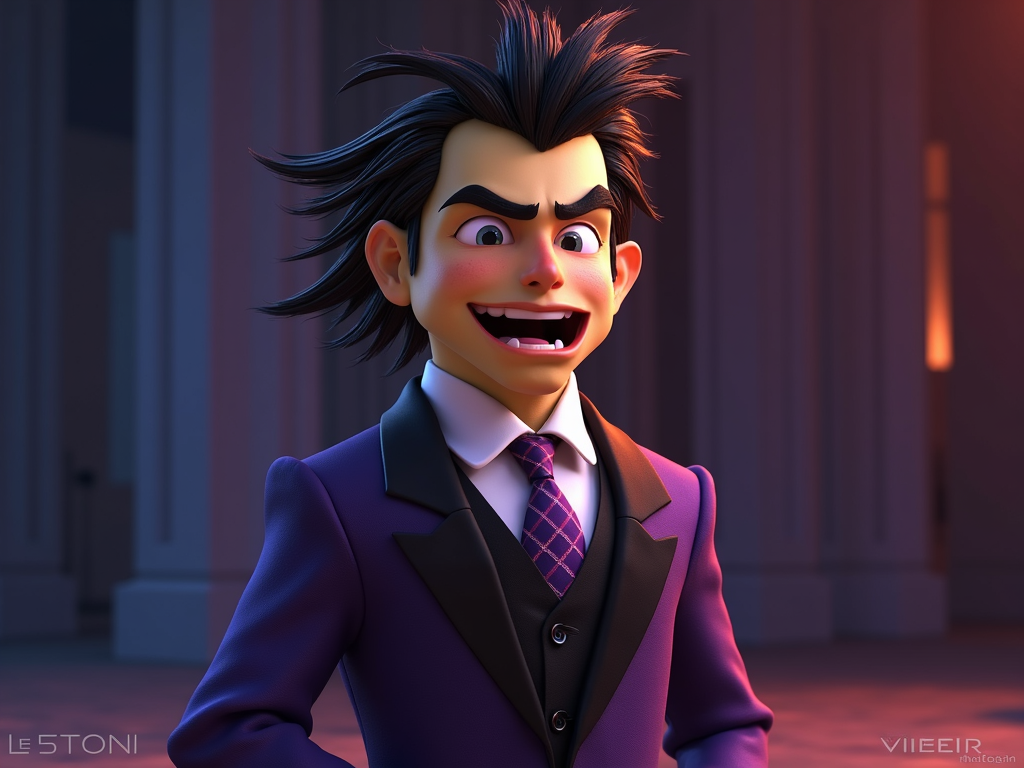
While everyone’s busy laughing at his dance moves, they’re missing the genuinely dark commentary hidden in plain sight. Psychologists are now studying Bratt’s character as a textbook example of interrupted identity formation. Yeah, the keytar-wielding villain from a kids’ movie. Wild, right?
Turns out, when you actually dig into Balthazar Bratt’s backstory and motivations, you find something way more complex than your typical animated antagonist. He’s not evil because he wants world domination or money. He’s evil because Hollywood literally cancelled his childhood. And that hits different when you think about every child star who crashed and burned in real life.
From Evil Bratt to Balthazar Bratt: The Psychology of a Fallen Child Star
Here’s something that’ll mess with your head – Balthazar Bratt’s villain origin story is basically every Behind the Music episode rolled into one purple suit. The dude was literally cancelled during puberty. Not figuratively. Actually cancelled.
His show ‘Evil Bratt’ got axed the moment his voice cracked and he sprouted his first pimple. Think about that timing for a second.
Psychologists who’ve analyzed this Despicable Me 3 villain point out that puberty is when kids figure out who they are beyond their childhood identity. It’s messy enough without millions of people suddenly deciding you’re not cute anymore. Bratt never got that chance. He got stuck. Frozen in 1987, still wearing the same outfit, still doing the same dance moves.
It’s actually tragic when you think about it.
The guy’s entire sense of self was tied to playing a villain on TV. When that got yanked away, his brain basically said ‘fine, I’ll be a villain for real then.’ This isn’t just cartoon logic – it mirrors what happens to actual child stars. The ones who define themselves entirely by their fame often struggle when that fame disappears.
Bratt’s just the extreme version. Instead of ending up on reality TV or writing a tell-all book, he decided to destroy Hollywood with a giant robot. Same energy, different execution.
What really gets me is how his whole villain personality is just his child star character cranked up to eleven. He’s not pretending to be Evil Bratt anymore – he is Evil Bratt. The show might have ended, but in his mind, it never stopped filming. That’s some heavy psychological stuff for a movie about a bald guy adopting yellow pill-shaped creatures.
The Narcissistic Wound That Never Healed
Dr. Sarah Mitchell, a child psychology expert at UCLA, points out that Balthazar Bratt’s character analysis reveals classic symptoms of narcissistic injury. “When a child’s entire identity is built around external validation, removing that validation doesn’t just hurt – it fundamentally breaks their sense of self,” she explains.
This is exactly what we see with Bratt. His evil plan isn’t random destruction. It’s targeted. Specific. He wants to destroy Hollywood because Hollywood destroyed him first.
But here’s where it gets even darker – every single design choice for this character is loaded with disturbing meaning.
The 80s Never Died: How Balthazar Bratt’s Design Creates Cultural Commentary
Let’s talk about that purple suit for a minute. It’s not just purple – it’s that specific shade of purple that only existed between 1984 and 1989. You know the one. Miami Vice purple. Prince purple. The purple that whispers ‘I do cocaine recreationally.’
Every design element on Balthazar Bratt screams peak 80s, but not in a fun nostalgic way. More like in a ‘trapped in amber’ way. The mullet isn’t just a mullet – it’s perfectly maintained, probably with the same hair gel formula from 1986. His shoulder pads could double as aircraft carriers. The keytar? Brother, that’s not an instrument, that’s a cry for help.
Recent fan engagement data shows something fascinating – Balthazar Bratt’s dance moves have become more popular than the actual movie. TikTok is full of people doing the ‘Bratt shuffle’ or whatever they’re calling it.
But here’s what they’re missing. Those moves aren’t random. They’re literally frozen in time.
Watch closely and you’ll see every 80s reference mashed together – the moonwalk, the running man, that weird shoulder thing everyone did. It’s like his body is stuck replaying the same choreography from his cancelled show.
Even his weapons are 80s-themed. Explosive bubble gum? That’s a direct reference to Bubble Yum’s massive marketing push in the 80s. The sonic keytar? Synthesizers were basically considered weapons of mass destruction by parents back then. Every single thing about him is a preserved-in-formaldehyde reminder of a very specific moment in pop culture.
But the real kicker? His purple suit never changes. Never gets dirty. Never shows wear. Because in his mind, the show must go on. He’s still on set, still in costume, still waiting for someone to yell ‘cut.’ They never did. So he never stopped.
That’s not character design – that’s psychological horror wrapped in neon colors.
Trey Parker’s Genius Voice Acting
Here’s something else – Trey Parker (yeah, the South Park guy) voices Balthazar Bratt, and his performance adds another layer of darkness. Parker deliberately keeps Bratt’s voice in this weird limbo between child and adult. It never fully matures. Just like the character himself.
Parker mentioned in interviews that he based the voice on child actors he’d met who never quite figured out how to sound like adults. That attention to detail? Chef’s kiss of psychological accuracy.
And this obsessive attention to character depth is exactly why Bratt stands out in the Despicable Me villain lineup.
Beyond the Bubble Gum: Why Balthazar Bratt Outshines Previous Despicable Me Villains
Look, Vector had the pajamas and the ‘Oh yeah!’ catchphrase. El Macho had the whole macho thing going on. But Balthazar Bratt? This man has layers. Like a very disturbed, musically-inclined onion.
Fan polls consistently rank him as the best Despicable Me villain, and it’s not because of his dance moves. It’s because his motivation actually makes sense. Vector wanted to be the best villain because… daddy issues? El Macho faked his death to… sell salsa? But Bratt wants revenge on Hollywood for destroying his life. That’s relatable. Messed up, but relatable.
The misconception everyone has is that he’s just comic relief. Nah. This character is a walking commentary on cancel culture before we even had a term for it. Think about it – a beloved figure gets ‘cancelled’ for something beyond their control (hitting puberty), loses everything, and comes back with a vengeance. Sound familiar? Except instead of angry tweets, Bratt uses giant robots and explosive gum.
What sets him apart from other Illumination Entertainment villains is that his evil plan actually connects to his trauma. He’s not trying to steal the moon for the hell of it. He specifically targets Hollywood – the place that created and destroyed him. Every crime, every diamond heist, it’s all building toward that one goal: destroying the industry that threw him away.
Even his fighting style reflects this complexity. Vector relied on high-tech gadgets. El Macho was all brute force. Bratt? He fights like he’s still performing. Every battle is a dance number. Every attack is choreographed. He’s not trying to win – he’s trying to put on a show. Because that’s all he knows how to do.
The saddest part? He’s actually good at it. His schemes nearly work. If he’d channeled that energy into literally anything else, he’d probably be fine. But he can’t. He’s stuck in an eternal rerun of a show that nobody’s watching anymore.
Gru vs Balthazar Bratt: A Mirror Match
What makes the Gru vs Balthazar Bratt dynamic so compelling is that they’re basically two sides of the same coin. Both former villains. Both trying to find new identities. But while Gru moved forward and found family, Bratt got stuck in the past.
Their final battle isn’t just good guy versus bad guy. It’s growth versus stagnation. Future versus past. The ability to change versus the inability to let go.
Understanding these layers reveals why this character resonated so deeply with audiences, despite being in what many considered the weakest Despicable Me film.
The Cultural Impact and Dark Legacy of a Purple-Suited Villain
Here’s where things get really interesting. Balthazar Bratt merchandise sells better than any other Despicable Me villain. His quotes are all over social media. The memes? Endless. People are doing cosplay of a character that’s essentially a walking mental breakdown.
Why? Because on some level, we all get it.
We live in an era where people become famous overnight and forgotten just as quickly. Where your entire identity can be tied to your online persona. Where getting ‘cancelled’ – fairly or not – can destroy everything you’ve built. Bratt is what happens when that goes to its logical extreme.
Child psychologists have started using Bratt as a teaching tool about identity formation and the dangers of defining yourself through external validation. Yeah, a villain from a kids’ movie is being used in actual psychological education. That’s how deep this character goes.
The fan art community has latched onto him too, but not in the usual way. Instead of making him sexy or cute like they do with other villains, most Balthazar Bratt fan art explores the tragedy of his character. Artists draw him at different ages, imagining what could have been. They create alternate timelines where he got therapy instead of a keytar.
Even the best Balthazar Bratt scenes compilations on YouTube have comment sections full of people saying stuff like “this is actually really sad when you think about it” and “bro needs therapy, not prison.”
So Yeah, Balthazar Bratt Isn’t Just Another Wacky Animated Villain
He’s basically a psychological case study disguised as a kids’ movie character. Every time you watch Despicable Me 3 now, you’ll see it differently. That ridiculous purple suit? A cry for help. Those dated dance moves? A man literally unable to move forward in time.
The whole character is Illumination’s way of saying ‘hey, maybe we should think about what happens to child stars when we’re done with them.’
Next time you watch the movie, pay attention to the small details. The way he never breaks character. The way every single reference is specifically from 1985-1987. The way his revenge isn’t random – it’s targeted at the exact system that created and discarded him.
This isn’t just good character design. It’s brilliant social commentary hidden inside a movie about minions. And honestly? That’s way more interesting than any moon-stealing scheme could ever be.
Balthazar Bratt proves that the best villains aren’t the ones with the biggest plans – they’re the ones whose pain we understand, even if we don’t agree with their methods. He’s a cautionary tale wrapped in shoulder pads and synthesizer music. A reminder that fame without purpose is just noise. And that sometimes, the real villain isn’t the guy with the keytar – it’s the system that created him.
Now excuse me while I go listen to some synthwave and contemplate the psychological damage of 80s pop culture. Because if there’s one thing Bratt taught us, it’s that you can’t escape the past by living in it. You just end up dancing alone to music nobody else can hear anymore.
Related Reading
- The Snow White Blu-ray Truth: Why Your Choice Actually Matters (And Which Edition You’re Really Getting)
- Edward Scissorhands 25th Anniversary Edition: The Shocking Truth About What They Took Away
- Family Movies About Love and Friendship: 12 Heartwarming Films to Watch Together
- The Real 7 Runners of McFarland’s 1987 Championship (And the Tragedy Disney Never Told You)