
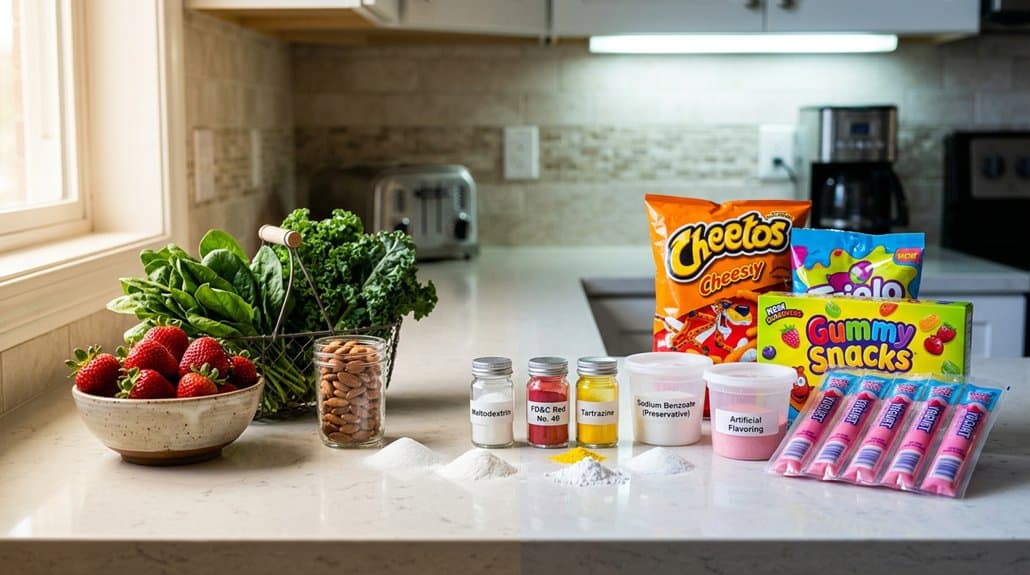
What Makes a Food ‘Ultra-Processed’?

The “ultra” in ultra-processed foods refers to industrial manipulation so extreme that the final product barely resembles actual food. These items undergo processes like extrusion, hydrogenation, and pre-frying, then get loaded with emulsifiers, preservatives, and non-sugar sweeteners. They’re engineered for maximum cravability — not nutrition. Nearly 58% of American calories come from this stuff. It’s not cooking. It’s manufacturing. And the full picture is even more unsettling than most people realize.
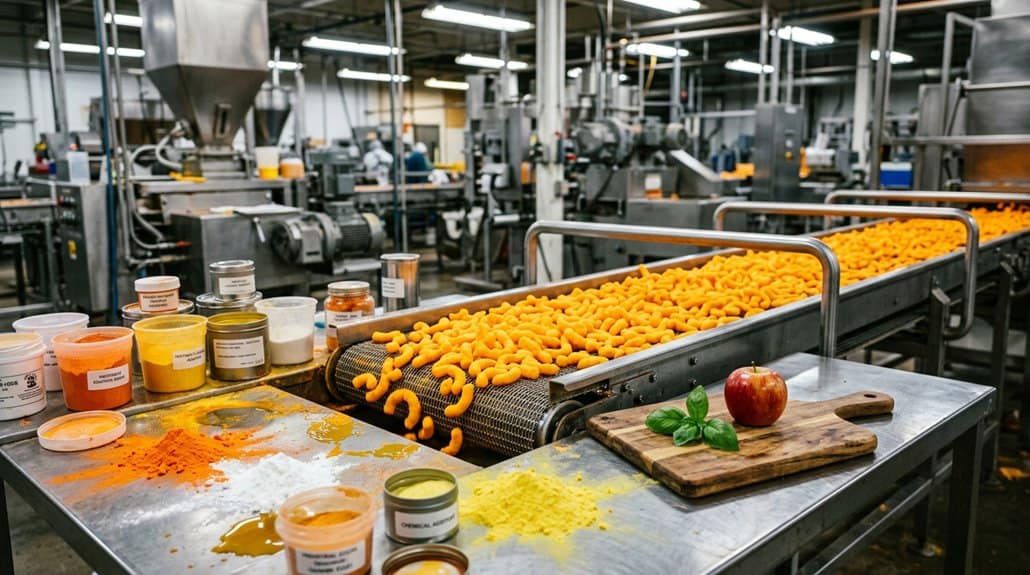
So what makes them “ultra”? It’s the ingredients nobody keeps in their kitchen. Emulsifiers, chemical preservatives, non-sugar sweeteners, bulkers, sensory boosters, stabilizers. These aren’t things a person can buy at a retail outlet. They’re industrial additives designed to do one thing: make the product hyperpalatable. That means engineered to taste so good, people can’t stop eating. High sugar, high fat, high salt. Low fiber, low protein, low nutritional value. Quite the trade-off.
The manufacturing processes are similarly alarming. Extrusion, hydrogenation, moulding, pre-frying. These techniques destroy the original food matrix entirely. What comes out the other end isn’t really food anymore. It’s a product designed for convenience, shelf-stability, and maximum cravability. Often habit-forming, actually. The packaging itself involves synthetic materials. Even the wrapper is processed.
Extrusion, hydrogenation, pre-frying — these aren’t cooking techniques. They’re demolition methods dressed up as food production.
The numbers tell a grim story. Nearly 58% of calories in the American diet come from ultra-processed foods. For children, it’s over 60%. These products make up roughly 70% of the US food supply and account for 90% of added sugars consumed. They became ubiquitous in global food systems starting in the 1980s. Nobody voted on that.
The health consequences are stacking up. Research links ultra-processed food consumption to obesity, cancer, heart disease, type 2 diabetes, mental disorders, and increased mortality. A landmark study of over 100,000 French adults tracked over five years found that increased ultra-processed food intake was associated with higher risks of cardiovascular and coronary heart disease. Their high glycemic index causes blood sugar spikes that stimulate overeating. They displace freshly prepared dishes, dragging down total nutritional quality. They promote rapid satiety loss and appetite dysregulation. In plain English, they make people hungrier faster.
These products weren’t designed to nourish. They were designed to sell. They imitate the appearance and sensory qualities of real food without actually being real food. The Nova food classification system formally distinguishes them from minimally processed and processed foods, making the category scientifically defined rather than just a buzzword. That’s what puts the “ultra” in ultra-processed. It’s not a compliment.
Related Reading
- Ditch Diet Variety: Eating Identical Foods Linked To Superior Weight-Loss Results, Drexel Researchers Say
- Toxic Lies: How to Detox Your Body for Free Without Juices, Teas, or Flushes
- Exercise After Pregnancy: A Safe, Realistic Guide to Starting
- Maty’s Healthy Products Is Gone: Here’s Your Survival Guide for Natural Health Independence
This article is for general informational purposes only and isn’t a substitute for professional medical advice. Every family and body is different, so please check with a qualified healthcare provider before making decisions about your health or your family’s health.