
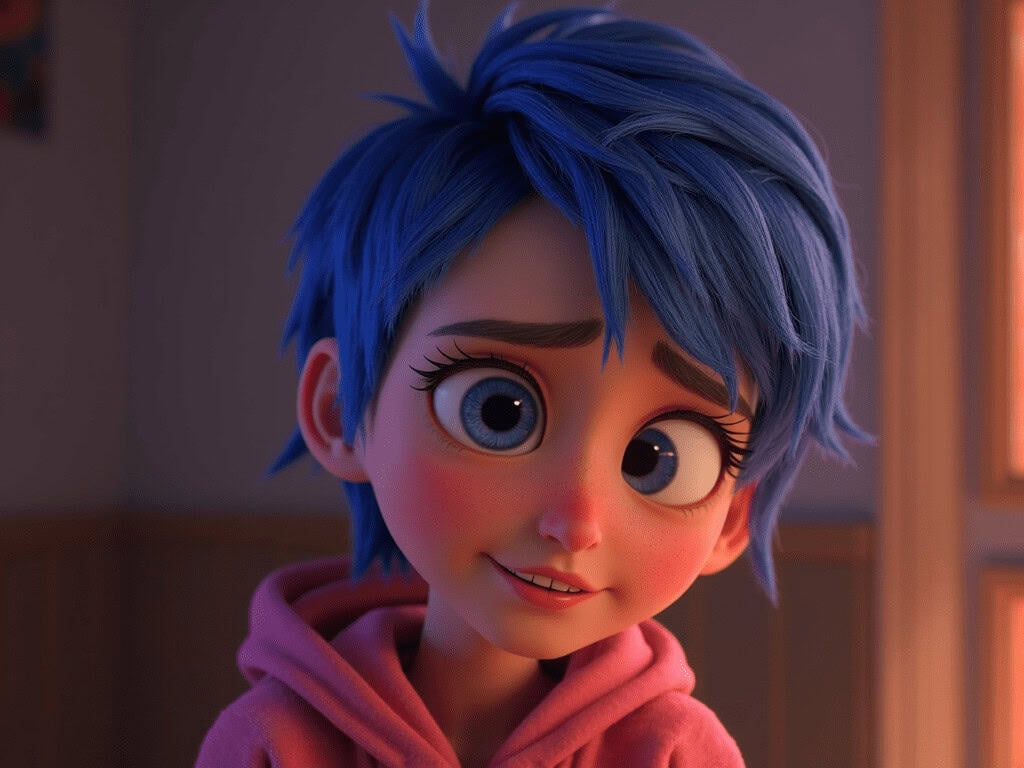
Maya Hawke Just Changed Everything We Know About Anxiety in Disney Pixar’s New Inside Out Featurette

Here’s what nobody’s talking about.
In Disney Pixar’s new Inside Out featurette, Maya Hawke drops a bombshell that flips the entire narrative about her character, Anxiety. She’s not the villain everyone expected. Not even close.

While most coverage obsesses over which new emotions join Riley’s headquarters, they’re missing the revolutionary shift happening right under their noses. Pixar just normalized anxiety for millions of kids—and their parents are about to get schooled.
The latest Inside Out 2 behind-the-scenes footage reveals something director Kelsey Mann kept under wraps: they brought in actual child development experts. Not for show. For accuracy.
And what they discovered changed the entire script.
Anxiety isn’t the chaos-bringing antagonist we see in most films. She’s a protector. A guardian. The misunderstood emotion that’s been trying to keep us safe all along.
The Revolutionary Truth Behind Anxiety’s Character Design in Inside Out 2
Let me blow your mind real quick.
Maya Hawke didn’t just voice Anxiety—she rewrote the rulebook on how we see this emotion. In the exclusive Inside Out 2 featurette that dropped with the digital release, Hawke reveals something wild: Anxiety shows up with a clipboard and a five-year plan.
Not kidding.
While everyone expected a frantic, nail-biting mess of a character, Pixar gave us an overachieving perfectionist who color-codes her panic attacks.
The production team consulted with Dr. Lisa Damour, psychologist and author of ‘The Emotional Lives of Teenagers.’ Her input? Game-changing. “Anxiety isn’t about destruction—it’s about protection gone haywire,” Damour explains in the Inside Out animation featurette.
Think about that. Every time your kid freaks out about a test or social situation, their brain is trying to protect them. It’s just doing it with the subtlety of a fire alarm at 3 AM.
The Inside Out concept art shown in the featurette tells its own story. Early designs showed Anxiety looking menacing, all sharp edges and dark colors. Scrapped. The final design? Orange hair that literally stands on end, wide eyes that see every possible outcome, and—here’s the kicker—a posture that mirrors defensive body language.
She’s not attacking; she’s bracing for impact.
Mann explains in the Inside Out production footage how they animated Anxiety’s movements to feel “simultaneously hypervigilant and exhausted.” Sound familiar, parents? That’s your teenager on any given Tuesday.
The character moves in quick, jerky motions, always scanning for threats. But watch closely in the headquarters demolition scene—when the other emotions panic, Anxiety is the first one making contingency plans.
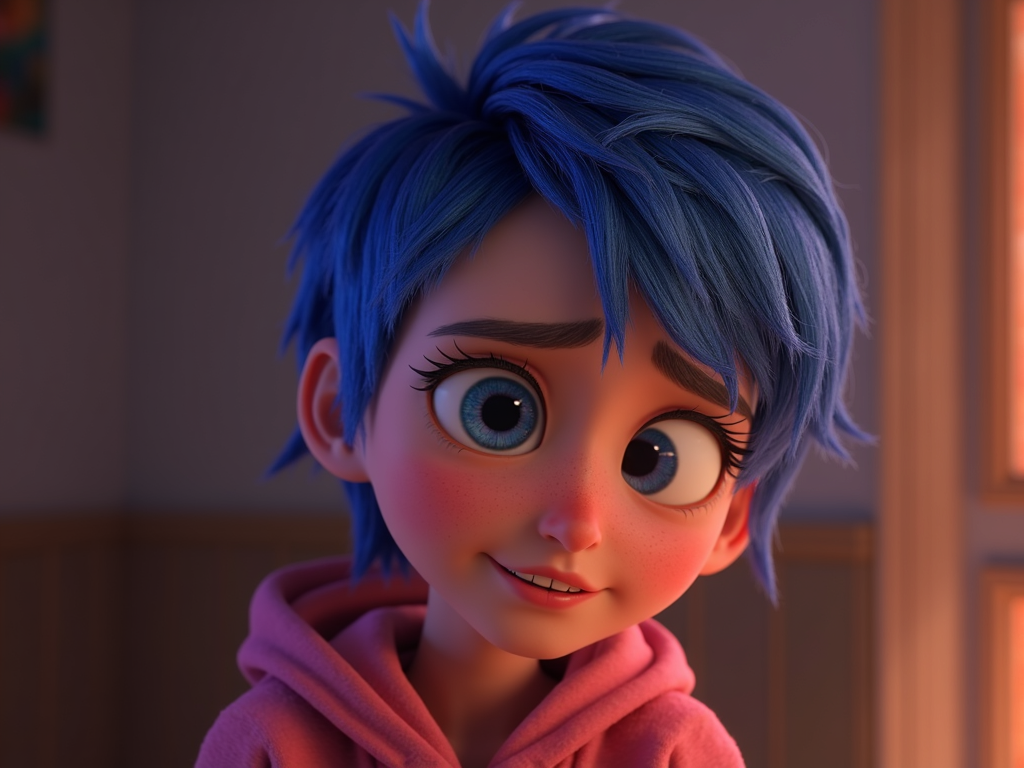
She’s trying to save everyone, just doing it wrong.
But creating this nuanced character was only half the battle. The real magic happened when Pixar’s animation wizards figured out how to visualize the invisible chaos of teenage emotions.
Behind the Scenes: How Pixar’s Animation Team Visualized Teen Emotional Complexity
Holy crap, the headquarters demolition sequence.
If you haven’t seen the Inside Out storyboard to screen comparison in the new featurette, you’re missing animation history in the making. Director Kelsey Mann shows us the original boards—simple sketches of walls crumbling. Boring.
The final version? A complete psychological renovation that uses construction metaphors to explain puberty.
Genius move.
The Inside Out making of footage reveals something nobody’s talking about: they mocapped actual teenagers having emotional meltdowns. Not actors. Real kids dealing with real stress. The Pixar animation techniques team studied how bodies physically manifest anxiety—the shoulder tension, the rapid breathing, the way hands clench and unclench.
Then they translated that into Anxiety’s every movement.
Here’s where it gets technical but stay with me. The old headquarters from the first Inside Out movie? All smooth surfaces and predictable pathways. Teen Riley’s headquarters? Exposed wiring everywhere. Emotions literally trip over new neural pathways being constructed in real-time.
The console that used to have five simple buttons? Now it’s a mixing board with thousands of sliders, and nobody has the manual.
Production designer Jason Deamer drops this truth bomb in the Inside Out voice actors interview segment: “We wanted parents to look at the chaos and think—oh, that’s why my kid can’t explain why they’re crying.”
The visual metaphor is brilliant. During the puberty alarm scene, the headquarters doesn’t just change—it’s literally under construction while still operational. Inside Out emotions characters are trying to do their jobs while wearing hard hats and dodging falling debris.
The attention to detail is insane.
In one frame, you can see Joy’s memories getting accidentally paint-splattered with other emotions’ colors. That’s not random. That’s showing how teenage memories become more emotionally complex.
The scene where Anxiety takes control for the first time? The console grows extra buttons mid-use. She’s literally creating new ways to worry while worrying. The animation team spent six months just on that sequence.
Six months to show three minutes of organized chaos that every parent will recognize as Tuesday morning before school.
And here’s the thing—therapists and educators are losing their minds over this accuracy. In the best possible way.
The Educational Impact: Why Therapists and Educators Are Embracing Inside Out 2
My friend’s a middle school counselor. She texted me after the Inside Out 2 preview screening: “This movie just gave me three years worth of therapy tools.”
Not exaggerating.
The exclusive Inside Out featurette includes testimonials from test screening audiences—specifically mental health professionals. One therapist mentions she’s already planning to use the ‘Anxiety with a clipboard’ visual to help kids understand their overthinking patterns.
Think about the power of that image.
Instead of telling a kid ‘stop worrying so much,’ you can say ‘looks like Anxiety brought her clipboard again.’ Instant recognition. Instant normalization. No shame.
The educational applications from this Pixar Inside Out documentary approach are already rolling out. Disney’s education team (yeah, that’s a thing) is developing discussion guides based on the Inside Out 2 new emotions. But here’s what’s really happening in classrooms: kids are self-identifying with these characters without prompting.
One teacher in the Inside Out promotional video mentions her students started saying things like ‘my Ennui is really loud today’ instead of ‘I’m bored and don’t care.’
That’s emotional vocabulary expansion in real-time.
Early feedback from parent-teen viewing sessions shows something unexpected. Parents are having ‘aha’ moments faster than their kids. One mom in the Inside Out exclusive footage literally gasps when Anxiety explains she’s trying to help Riley be prepared for everything.
You can see the recognition hit—that’s exactly what her own anxiety does.
The film’s consultant, Dr. Damour, appears in the Inside Out cast and crew interviews explaining how they crafted each new emotion to represent normal developmental experiences. Embarrassment isn’t just comic relief—he represents the emerging self-consciousness that helps teens develop social awareness. Ennui isn’t laziness—she’s the protective boredom that keeps kids from burning out on constant stimulation.
But Anxiety? She’s the star of the therapeutic show.
The way she catastrophizes, plans for disasters, and tries to control every outcome? That’s literally what therapists work with teens to recognize and manage. Now they have a visual aid voiced by Maya Hawke.
Game changer.
The Cultural Shift: How Inside Out 2 Is Redefining Mental Health Conversations
So how do we actually use this goldmine of emotional intelligence in real life?
Glad you asked.
The Inside Out sequel featurette shows test audiences—real families watching together. The footage is revealing. Kids are pointing at the screen during Anxiety’s scenes, turning to their parents with this look of “that’s me.”
Parents are nodding back with “me too.”
This isn’t coincidence. Pixar spent three years crafting these moments. The Inside Out animation process included focus groups with families dealing with anxiety disorders. They watched how parents and kids struggled to communicate about worry, fear, and overwhelm.
Then they built a common language.
Anxiety’s clipboard isn’t just a prop. It’s a conversation starter. When kids see her making lists of everything that could go wrong, they recognize their own mental patterns. When parents see her exhausting the other emotions with contingency plans, they see their own protective instincts reflected back.
The Disney Pixar new Inside Out featurette includes a segment where Maya Hawke talks about recording sessions. She mentions breaking down during one take because the dialogue hit too close to home. “I was basically voicing my own inner monologue from high school,” she admits.
That authenticity translates.
The Inside Out 2 release date couldn’t have come at a better time. Post-pandemic kids are dealing with anxiety at unprecedented levels. Traditional ways of discussing mental health aren’t cutting it. But give a kid a character who looks like their feelings?
Suddenly they’re talking.
Conclusion: Why This Matters More Than You Think
Look, Disney Pixar’s new Inside Out featurette isn’t just promotional fluff. It’s a masterclass in how children’s media can revolutionize mental health conversations.
Maya Hawke’s Anxiety isn’t a villain—she’s every kid who ever stayed up planning for disasters that never came. She’s every parent who can’t turn off the worry machine. She’s protection dressed up as panic, and now millions of families have a new way to talk about it.
The headquarters demolition scene isn’t just pretty animation—it’s a visual metaphor that makes the chaos of adolescence make sense. For the first time, kids can point to a screen and say ‘that’s what my brain feels like.’
And parents can nod and say ‘mine too.’
This isn’t just another sequel. It’s a cultural shift wrapped in Pixar magic. Watch the Inside Out featurette online. Study Anxiety’s introduction. Then have the conversation with your kids that this movie makes possible.
Because normalizing anxiety isn’t just good storytelling.
It’s necessary storytelling.