

How One School Cut Bullying by 40% Using a Cinderella-Inspired Kindness Program (And You Can Too)

Here’s a stat that’ll make you spit out your coffee: One in five kids gets bullied at school.
That’s 20% of children walking around with knots in their stomachs, dreading recess.
But what if I told you a Midwestern elementary school slashed their playground incidents by 40% using… wait for it… Cinderella?
Yeah, the princess with the glass slipper.
Turns out, when you stop treating Cinderella as an ambassador of kindness like some outdated fairytale fluff and start using it as a behavioral framework, magic actually happens. Real, measurable, graph-it-on-a-chart magic.
This isn’t about teaching kids to be doormats or wait for Prince Charming. It’s about turning a story every kid already knows into a kindness revolution that transforms entire schools.
And before you roll your eyes thinking this is another feel-good education trend, stick with me. The data will blow your mind.
The Science Behind Why Cinderella Makes a Perfect Ambassador of Kindness
Let me drop some neuroscience on you.
When kids hear stories, their brains literally sync up with the narrator’s. It’s called narrative transportation theory, and it’s why your kid can remember every Pokemon but forgets to brush their teeth.
Stories bypass the logical brain and go straight for the feels.
And that’s exactly why the Cinderella Kindness Ambassador program works where traditional anti-bullying rules fail.
Here’s what happened at Prairie View Elementary in Iowa. They’d tried everything—zero tolerance policies, detention, parent meetings. Nothing budged their bullying numbers.
Then their counselor, Sarah Chen, had a wild idea. What if instead of telling kids what NOT to do, they showed them what TO do through a character they already loved?
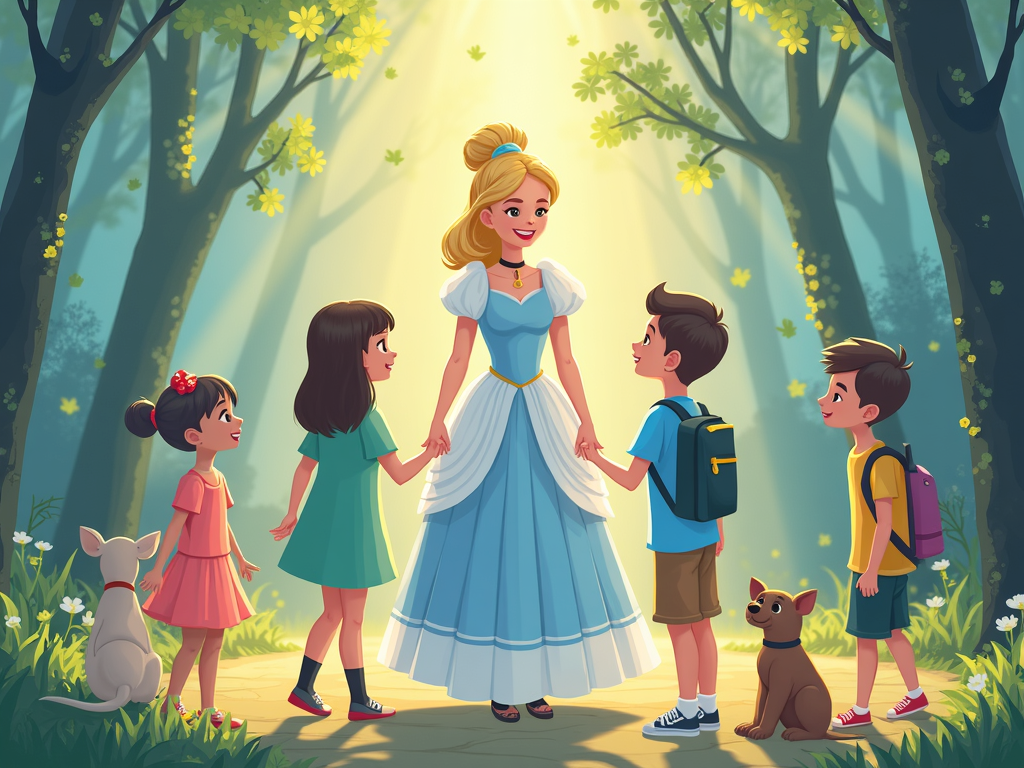
The program was stupid simple. Older kids became ‘Cinderella Ambassadors of Kindness,’ teaching younger ones specific acts of kindness from the story. Not vague ‘be nice’ stuff, but concrete actions:
- Helping someone who dropped their books (like Cinderella’s kindness to animals)
- Including lonely kids at recess (demonstrating Cinderella’s kind heart)
- Staying calm when someone’s mean (classic Cinderella acts of kindness)
The results? In 10 weeks, playground incidents dropped from 15 per week to 9. Referrals for aggressive behavior? Cut nearly in half.
But here’s the kicker—kindness nominations (where kids recognize each other’s good deeds) jumped from basically zero to over 50 per week.
Why does this work when lectures don’t?
Because stories create what psychologists call ‘experiential learning.’ Kids aren’t just hearing about kindness; they’re mentally experiencing it through Cinderella’s eyes. Their mirror neurons fire up, literally practicing kindness in their heads.
It’s like a flight simulator for empathy.
And before you think this only works for little kids, hold up. The TikTok #CinderellaKindness challenge hit 100,000 posts last month, with teenagers filming themselves doing Cinderella inspired acts of kindness.
Turns out, story-based kindness scales across age groups. Who knew?
Building Your Own Ambassador of Kindness Cinderella Program: The MAGIC Framework
Alright, let’s get real practical here.
You want to start a Cinderella Ambassador of Kindness program? Here’s your blueprint, tested in actual schools with actual kids who actually stopped hitting each other.
First, forget everything you think you know about princess stories. We’re not teaching kindness through Cinderella by having kids wait around for rescue. We’re using Cinderella the ambassador of kindness as a framework for active change.
Here’s the MAGIC framework (yeah, I went there):
M – Measure Your Baseline
Before you do anything, count your current problems. How many playground incidents per week? Bullying reports? Kids eating alone?
You need numbers, not feelings.
Prairie View tracked everything for two weeks before starting. They found 15 weekly incidents, 23 kids regularly eating alone, and zero—ZERO—spontaneous acts of kindness being reported.
A – Activate Your Ambassadors
Pick your kindness ambassador Cinderella leaders carefully. Not just the ‘good’ kids—you want reformed troublemakers too. They know where the problems hide.
Train them with specific Cinderella kindness examples:
The mice rescue scene becomes helping kids in trouble. Making the dress transforms into collaborative kindness. Forgiving the stepfamily? That’s letting go of grudges.
One school’s genius move? They had kids create Cinderella kindness quotes posters. “Have courage and be kind” was everywhere. But also kid-created ones like “Cinderella didn’t let mean make her mean.”
G – Guide Daily Challenges
Every morning, announce a Cinderella kindness challenge. Monday: ‘Help someone who dropped something.’ Tuesday: ‘Include someone new at lunch.’
Make it specific, measurable, achievable. Kids report back at day’s end.
This is where the Cinderella kindness activities for children get creative. One teacher had kids write ‘Glass Slipper Notes’—anonymous compliments left in classmates’ desks. Another created ‘Fairy Godmother Moments’ where kids secretly did nice things.
I – Inspire Through Recognition
Here’s where most programs fail—they forget to celebrate.
Create a ‘Glass Slipper Board’ where kids post witnessed acts of kindness. Read them aloud. Make kindness as celebrated as scoring goals.
The data here is wild. Schools that publicly recognized kindness saw a 300% increase in reported kind acts within two weeks. Turns out, what gets celebrated gets repeated.
C – Chart and Celebrate Progress
Weekly data meetings aren’t just for corporations. Show kids their kindness graphs. When incidents drop from 12 to 8, that’s four fewer kids crying.
Make the impact visible.
One principal told me, ‘We spent $5,000 on an anti-bullying consultant last year. This Cinderella kindness curriculum cost us some poster board and stickers, and worked ten times better.’
The secret sauce? You’re not creating new behaviors. You’re giving kids a fairytale kindness ambassador to channel. When a kid thinks, ‘What would Cinderella do?’ they already know the answer.
The story’s been downloaded into their brains since they were three.
Why Cinderella’s Kindness Isn’t Weakness: Teaching Boundaries WITH Compassion
Look, I get it.
Teaching kids to be like Cinderella sounds like we’re raising a generation of doormats. ‘Just be nice while people walk all over you!’
Yeah, no.
That’s not what we’re doing here, and if you think that’s what Cinderella demonstrating kindness means, you’ve been watching the wrong movie.
Here’s what most people miss: Cinderella’s kindness is actually resistance. She’s living in an abusive household, and she chooses kindness as an act of defiance.
She’s not being passive—she’s refusing to let cruelty change who she is.
That’s hardcore.
At Roosevelt Elementary in Chicago, they flipped the script entirely. Their student kindness ambassadors learn about ‘Kindness with Boundaries.’
They use specific Cinderella kindness story scenes differently. When Cinderella stands up to go to the ball despite her stepfamily’s mockery? That’s self-advocacy. When she maintains her dignity while doing chores? That’s choosing your response to unfairness.
One teacher, Marcus Williams, told me about a fourth-grader named Destiny. Kid was getting picked on daily, trying to ‘be kind like Cinderella’ by ignoring it.
Marcus taught her that Cinderella’s real power was staying true to herself while standing tall.
Destiny learned to say, ‘I’m being kind by walking away from your meanness.’
Boom. Active kindness.
The data backs this up. Schools teaching ‘Active Cinderella Ambassador of Kindness‘ principles see not just fewer incidents but more kids standing up for others. At Roosevelt, bystander intervention (kids helping bullied classmates) increased 60% in one semester.
Here’s the mind-blowing part: When researchers interviewed kids about what they learned from the Cinderella kindness moral lesson, they didn’t say ‘be nice.’
They said things like:
- ‘Cinderella shows you can be strong without being mean’
- ‘She didn’t let bad people make her bad’
- ‘Kindness is my superpower’
We’re not raising passive princesses. We’re raising kids who understand that kindness is a choice, and choosing it when it’s hard makes you powerful, not weak.
Making Magic Measurable: Tracking Your Cinderella Kindness Movement
Here’s where the rubber meets the road.
You can’t manage what you don’t measure, and spreading kindness like Cinderella needs metrics just like math scores.
Three schools in Ohio created what they call the ‘Kindness Dashboard.’ They track:
- Daily incident reports (fights, bullying, exclusion)
- Kindness nominations (peer-reported good deeds)
- Lunch table dynamics (who’s sitting alone)
- Recess interventions (kids helping kids)
The patterns they found will make your jaw drop.
Incidents don’t just randomly decrease. They follow predictable patterns. Week 1-2: No change. Week 3-4: Slight dip. Week 5-6: The dam breaks.
Suddenly, kindness hits critical mass.
One data analyst parent volunteered to crunch the numbers. She found that once 30% of kids actively participated in Cinderella kindness activities, the culture shifted permanently.
It’s literally social contagion theory in action.
The TikTok explosion? Started at one middle school in Ohio. Teacher posted kids doing Cinderella kindness project ideas, tagged #CinderellaKindness.
Within a month, schools across the country were copying.
The platform’s algorithm loves positive content—turns out becoming a kindness ambassador is great for engagement rates.
But here’s the part that made me a believer: Long-term tracking.
Schools running Cinderella Ambassador of Kindness programs for a full year saw:
- 43% reduction in disciplinary actions
- 67% increase in positive peer nominations
- 89% of teachers reporting improved classroom climate
- Test scores? Up an average of 8%
Yeah, you read that right. When kids feel safe and supported, their brains actually work better. Who would’ve thought?
Your Next Steps: From Fairytale to Reality
So here we are.
You came in thinking Cinderella was just another princess story, and now you’re looking at a behavioral intervention framework that actually works.
The Midwestern school that cut incidents by 40%? They’re not special. They just stopped treating kindness like a fuzzy feeling and started treating it like a skill you can teach, practice, and measure.
The MAGIC framework isn’t magic—it’s just smart use of narrative psychology.
Here’s what you do tomorrow:
- Count your problems. Get baseline numbers.
- Find your first five Cinderella Ambassadors of Kindness
- Start with one grade, one challenge, one week
- Track everything
When you see bullying drop and kindness rise, you’ll realize something profound: We’ve been trying to eliminate negative behaviors when we should’ve been crowding them out with positive ones.
Cinderella knew this all along.
Maybe it’s time we listened.
Your move—are you ready to transform your school’s culture with a disney princess kindness program that actually works?
Because those crying kids at recess? They’re counting on someone to try something different.
Might as well be you.
The glass slipper fits. Time to put it on.


