
Why You’ve Been Boiling Pasta Wrong—and What Actually Works Best

Most people waste gallons of water and tons of energy boiling pasta in massive pots because that’s what grandma taught them. Turns out, those old habits are scientifically stupid. Presoaking pasta cuts cooking time from 13 minutes to 3, slashing CO₂ emissions nearly in half. Or try the heat-off-lid-on method: boil for 2 minutes, kill the heat, cover it. Same al dente result, way less energy. There’s more science-backed tricks where that came from.
Most people boil pasta wrong. They fill massive pots with water like they’re preparing a bath for a small whale. Ten to twelve liters for a kilogram of pasta? That’s the traditional wisdom. It’s also ridiculous.
Traditional wisdom says use massive pots. Science says that’s ridiculous water waste.
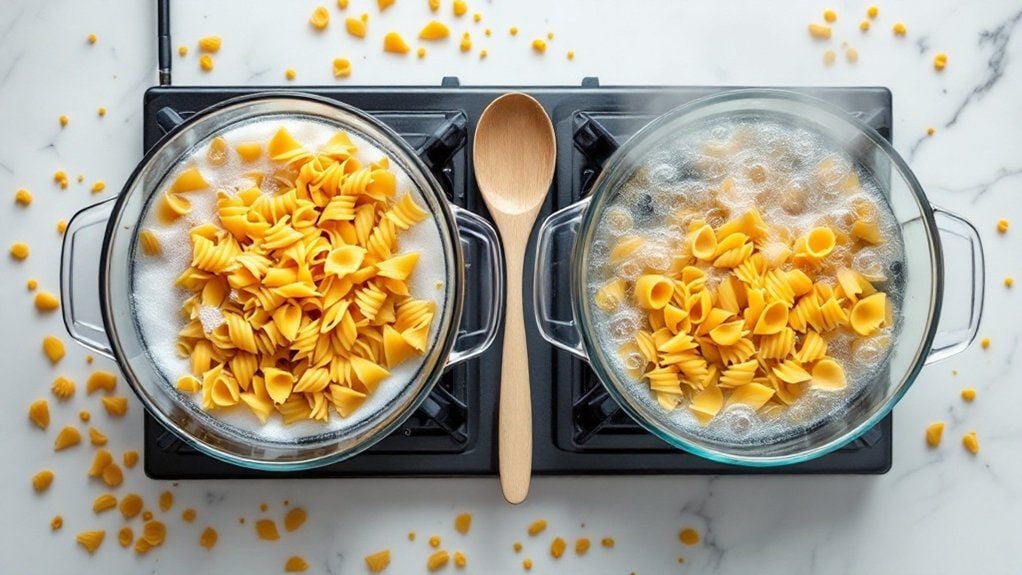
Scientists tested it. Turns out three liters per kilogram works just fine. The pasta doesn’t know the difference. It cooks the same whether it’s swimming in an ocean or a puddle. But people keep wasting water and energy because that’s what grandma taught them.
Speaking of energy waste, here’s something wild. About 60% of the energy used in pasta cooking goes toward keeping water at that aggressive rolling boil. For what? The pasta’s already cooking. It doesn’t need a jacuzzi experience.
Enter the presoaking technique. Sounds fancy, but it’s not. Just dump dry pasta in cold water for an hour and a half. Then boil it for three minutes instead of thirteen. The texture changes slightly, sure. But the energy savings? Real. According to pasta manufacturers, this method can cut CO₂ emissions by nearly half.
The heat-off-lid-on method—or “hofflon” if you’re feeling pretentious—takes things further. Boil pasta for two minutes. Turn off the heat. Slap on a lid. Let steam do the rest. Uses the least energy of any method tested. Works with any regular pot. No special equipment needed. The problem? You get soggy exteriors even when the inside hits al dente.
About that oil-in-water trick everyone swears by? Total myth. Oil doesn’t prevent sticking. Stirring does. That’s it. Stop wasting olive oil.
Lower water volumes mean more stirring, though. The pasta gets clingy when it’s crowded. But that’s a small price for using less water and energy. Plus, smaller pots fit better on the stove anyway.
Boil-overs happen because people crank the heat too high after adding pasta. Or they use pots designed for soup, not spaghetti. Taller pots help. So does turning down the heat once the pasta’s in.
The bottom line? Traditional pasta boiling wastes water, wastes energy, and takes forever. Science has better ways. Whether anyone actually changes their habits is another story. Old habits die hard, especially in the kitchen.