
Why You Should Stop Peeling This Wrinkle-Fighting Fruit Skin

Those fruit peels you’ve been tossing? Big mistake. Science shows fruit skins pack concentrated anti-aging compounds that fight wrinkles at the cellular level. Apple skins battle free radicals, while pomegranate peels preserve collagen. Blueberry skins contain powerful anthocyanins that reduce oxidative stress. Nature’s moisturizer comes built right into the peel, not some overpriced cream. The secret to younger-looking skin might be sitting in your fruit bowl.

While most people toss fruit peels in the trash without a second thought, science suggests they’re throwing away nature’s anti-aging miracle. Research shows that fruit skins pack a serious punch regarding fighting wrinkles and maintaining youthful skin. Who knew those apple peels you’ve been discarding could be your ticket to better skin?
The science behind fruit skin benefits is pretty compelling. These often-discarded peels contain concentrated doses of antioxidants, vitamins, and minerals that can combat skin aging at the cellular level. Studies have shown that regular fruit consumption consistently improves skin texture and reduces visible signs of aging. These powerful peels can even help restore nutrient absorption as we age, similar to the benefits of fermented foods.
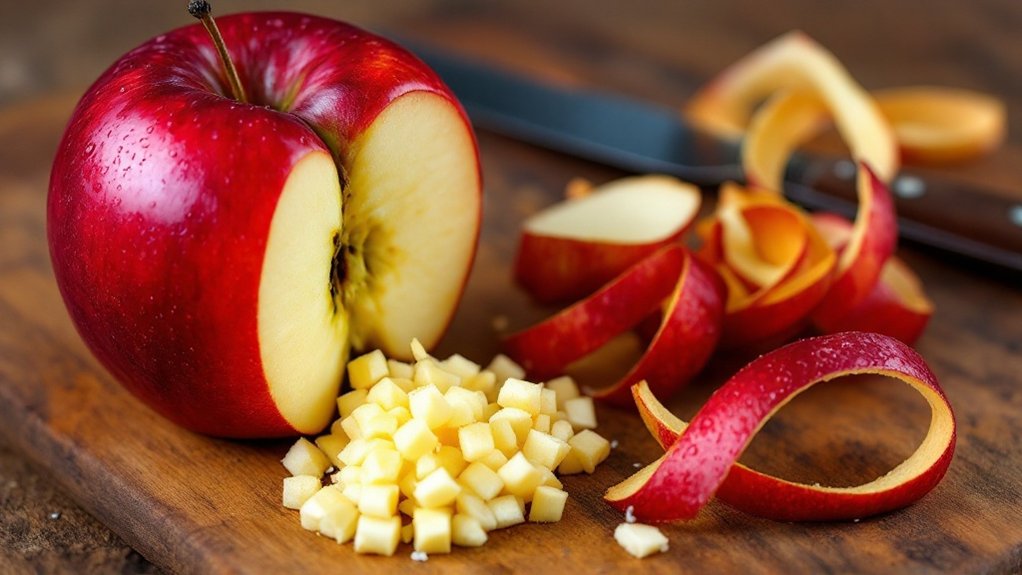
Take apple skins, for instance. They’re loaded with compounds that fight free radicals – those pesky molecules responsible for making you look older than your high school reunion would prefer.
But it’s not just apples getting all the attention. Pomegranate skins contain punicalagins, compounds that help preserve collagen – you know, that stuff that keeps your face from looking like a deflated balloon.
And blueberries? Their anthocyanins don’t just give them that beautiful blue color; they’re working overtime to reduce oxidative stress in your skin cells.
The real kicker is how these fruit skins support comprehensive skin health. They improve hydration and reduce water loss through the skin – basically acting like nature’s moisturizer.
And unlike those fancy creams promising miracles in a jar, fruit skins come with clinical evidence backing their benefits. Sure, they might not taste as good as the fruit’s flesh, but neither does that $200 face cream.
Getting these benefits isn’t complicated. Smoothies are an easy way to incorporate fruit skins into your diet. Just toss whole fruits – peels and all – into your blender.
Though fair warning: some people might be sensitive to certain fruit skins, so start slow. And yes, you’ll need to wash them thoroughly initially. Nobody wants pesticide-flavored smoothies.
The bottom line? Those fruit peels you’ve been tossing might just be the secret weapon in your anti-aging arsenal. Nature’s pretty clever that way.