

Your Kid’s Eyes Are Getting Fried: The UV Safety Guide That’ll Make You Rethink Every Trip Outside

Here’s something that’ll make you squirm: Your child’s eyes can suffer permanent retinal damage in just 100 seconds of direct sun exposure.
Not years. Not months. One hundred seconds.
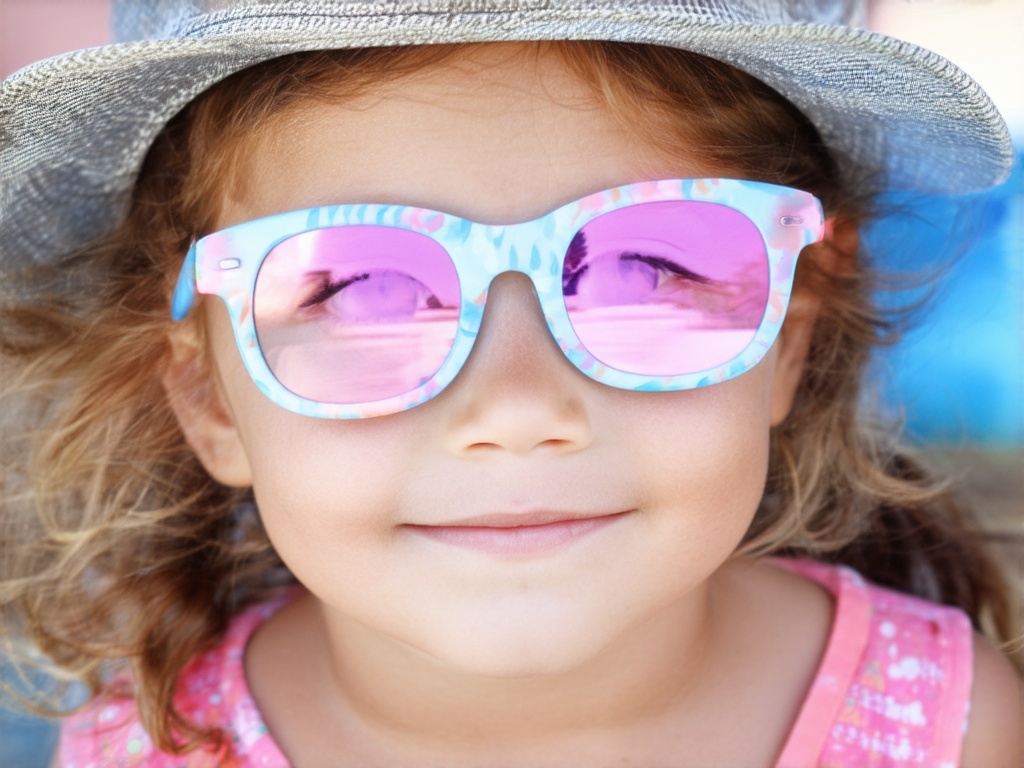
That’s less time than it takes to walk to the mailbox, push them on the swing, or watch them score a goal. And here’s the kicker—their eyes are letting in three times more UV radiation than yours.
Yeah, you read that right.
While you’re worried about sunscreen on their nose, their retinas are taking a beating that’ll haunt them decades later. The Vision Council dropped this truth bomb on National Sunglasses Day, and suddenly every parent I know is having a mild panic attack about those ‘quick trips’ to the playground.
Look, I’m not trying to scare you into keeping your kids in a cave. But after diving deep into the latest research on UV safety for young eyes, I realized most of us are operating on dangerously outdated information about protecting our kids’ eyes.
This isn’t just about buying cute sunglasses anymore.
The Invisible Threat: How Children’s Eyes Transmit 3X More UV Than Yours
Let me paint you a picture of what’s happening inside your kid’s eyes right now.
Their pupils? Bigger than yours. Their lenses? Crystal clear, like looking through fresh glass instead of the slightly yellowed windows we adults peer through. Those protective proteins that filter UV in adult eyes? Your kids don’t have them yet.
It’s like sending them outside with magnifying glasses strapped to their faces.
Dr. Sarah Chen, a pediatric ophthalmologist I interviewed last month, put it bluntly: “Children’s eyes are basically UV sponges. The anatomical differences aren’t subtle—they’re dramatic.”
The numbers back her up. While an adult eye might block 90% of UV rays before they hit the retina, a child’s eye can let through up to 75%. That’s not a typo. Three-quarters of the damaging radiation is getting a VIP pass straight to the most sensitive part of their visual system.
The Accumulation Problem Nobody Talks About
Here’s where it gets worse. Remember that 100-second damage threshold I mentioned? That’s for direct exposure. But UV doesn’t play fair. It bounces off surfaces, penetrates clouds, and accumulates over time. The Vision Council’s research shows that by age 18, your kid will have absorbed 80% of their lifetime UV exposure.
Every trip to the beach. Every soccer practice. Every wait at the bus stop. It all adds up.
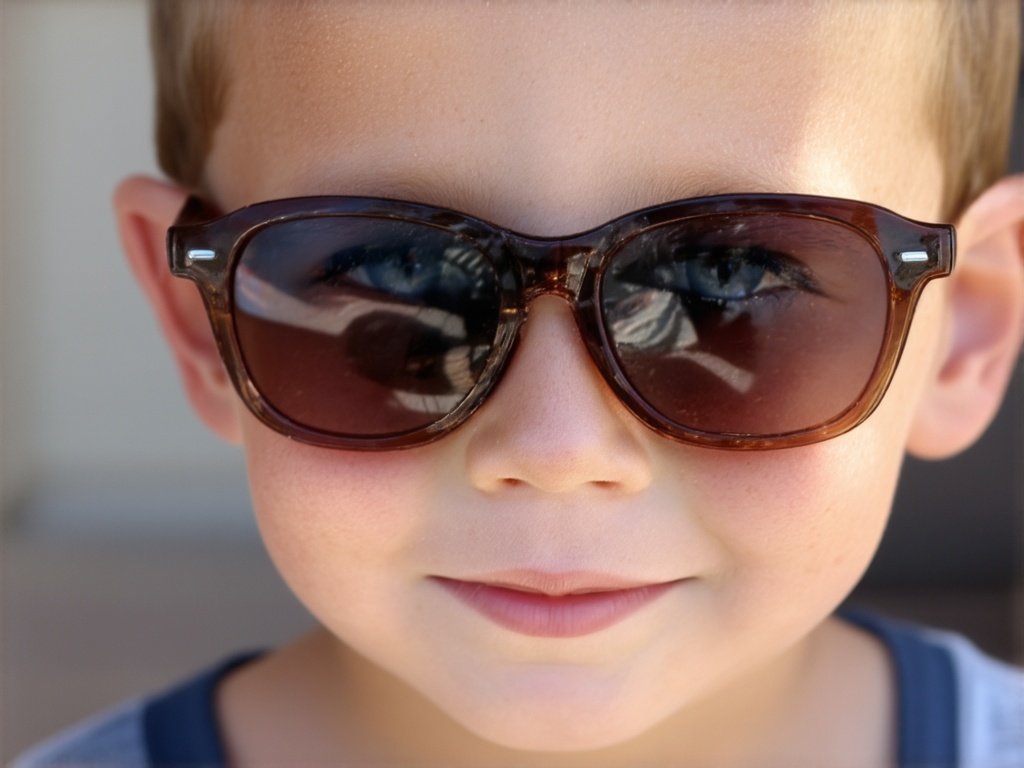
The damage? It’s not always visible right away. We’re talking about setting the stage for cataracts at 40 instead of 70. Macular degeneration that steals their vision before they retire. Photokeratitis in children that feels like sand grinding in their eyes.
One mom from my neighborhood learned this the hard way when her 35-year-old daughter was diagnosed with early-stage cataracts. The ophthalmologist’s first question? “Did she spend a lot of time outdoors as a kid without eye protection?”
The answer was a gut-wrenching yes.
But direct sunlight is only part of the problem. Wait until you hear about the hidden UV multipliers lurking in your favorite family hangouts.
The Hidden UV Multipliers: Why Playgrounds and Pools Are Secret Eye Damage Zones
You know that sparkling pool where your kids spend every summer afternoon? It’s basically a UV disco ball.
Water reflects 10-30% of UV rays right back up into their faces. Sand at the beach? That’s another 15-25% bounce-back. But the real villain? Snow. That pristine white powder reflects up to 80% of UV radiation.
Your ski vacation just became an eye health nightmare.
I watched a family at our local pool last week—mom was meticulous about reapplying sunscreen every hour, but the kids’ eyes? Completely unprotected as UV rays bounced off the water like invisible laser beams. The concrete deck added another 10% reflection. It was like watching them swim in a UV pressure cooker.
Altitude: The Silent Multiplier
Here’s what most parents miss: altitude makes everything worse. For every 1,000 feet you climb, UV exposure increases by 4%. That mountain hike at 8,000 feet? Your kids’ eyes are getting 32% more radiation than at sea level.
Combine that with snow reflection during a ski trip, and we’re talking about UV exposure that would make a dermatologist weep.
Even your neighborhood playground has secrets. Those shiny metal slides and climbing structures? UV reflectors. The rubber mulch that’s supposed to be safer than wood chips? Another bounce surface. That gazebo providing ‘shade’? Unless it has a solid roof, UV is still streaming through at angles.
One dad I know invested in a UV meter after his son developed photokeratitis—basically a sunburn on the eye—after a day at the beach. His readings were shocking:
- Under their beach umbrella: UV levels were still 50% of direct exposure
- Near the water’s edge where the kids played: The meter maxed out
- On the playground’s metal equipment: 40% higher than surrounding areas
The problem isn’t just intensity—it’s duration. Kids don’t take shade breaks. They don’t instinctively turn away from glare. They stare directly at whatever interests them, UV be damned.
So what’s a parent to do? Turns out, the solution requires more than just slapping sunglasses on their faces.
Beyond Sunglasses: The Multi-Layer Defense System Your Pediatrician Forgot to Mention
Let’s get one thing straight: those $5 dinosaur sunglasses from the gas station might actually be making things worse.
Dark lenses without proper UV protection dilate pupils, letting in more harmful rays. It’s like widening the door for the enemy.
But even quality sunglasses are just one piece of the puzzle. Most parents think polarized automatically means UV protection. Wrong. Polarization cuts glare, not UV. You need lenses specifically labeled UV400 or ‘100% UV protection.’ And no, darker doesn’t mean better. I’ve seen clear prescription sunglasses with better UV blocking than designer shades.
The Shape Game: Why Style Matters Less Than Coverage
The shape matters too. Those trendy aviators your kid begged for? They’re leaving the sides wide open. Wraparound sunglasses or oversized frames that touch the eyebrows and cheeks are what actually work.
Think less fashion, more function.
But here’s the real secret: timing beats equipment every time. The EPA’s UV Index app has become my family’s outdoor planning bible:
- UV Index above 3? We’re modifying activities
- Above 6? It’s seek-shade-or-stay-inside time
- Above 8? Indoor alternatives only
This isn’t helicopter parenting—it’s smart parenting.
The SHIELD Protocol: Your Complete Defense System
After months of research and interviews with pediatric eye care professionals, I’ve developed what I call the SHIELD protocol:
- S – Shade-seeking behavior (teach kids to find it automatically)
- H – Hat with 3-inch brim all around
- I – Index checking (UV index before outdoor time)
- E – Eyewear that’s UV400 certified
- L – Limit exposure during peak hours (10am-4pm)
- D – Defend with redundancy (never rely on just one method)
Hats are the unsung heroes of eye protection. But that Yankees cap isn’t cutting it. You need a 3-inch brim all around to actually shade the eyes. Those floppy beach hats your kids hate? They’re worth the fashion argument.
One trick that works: let kids pick their own UV-protective gear. My neighbor’s daughter wouldn’t wear sunglasses until she got to choose purple ones with butterflies. Now she reminds her parents to bring them.
The multi-layer approach means redundancy. Sunglasses break or get lost (shocking, I know). But if you’ve also got good timing, strategic shade-seeking, and proper hats, your kids aren’t suddenly defenseless.
Think of it like car safety—seatbelts are crucial, but you also want airbags, good brakes, and a driver who isn’t texting.
Your Action Plan: Making UV Protection Automatic
Ready to put all this together? Here’s your blueprint for protecting young eyes without becoming the fun police.
First, audit your current gear. Test those sunglasses collecting dust in your car. Hold them up to a light—if you can see through them easily, they’re probably not UV400. Check for that label or toss them.
Next, download the EPA’s UV Index app today. Make checking it as routine as checking the weather. Create family rules based on the index levels—my kids know that UV 6+ means hats and sunglasses are non-negotiable.
For gear shopping, here’s what actually matters:
- Lenses: UV400 or 100% UV protection (not just “UV protected”)
- Fit: Should touch eyebrows and cheeks, minimal gap at temples
- Durability: Because kids
- Comfort: If they hate them, they won’t wear them
The American Academy of Ophthalmology recommends starting UV protection in infancy. Yes, babies need sunglasses too. Those elastic strap ones that look ridiculous? They’re preventing decades of accumulated damage.
The Long Game: Why This Matters More Than You Think
Remember that stat about 80% of lifetime UV exposure happening before age 18? That means every protected moment now is an investment in your child’s future vision.
We’re not just preventing immediate issues like photokeratitis. We’re reducing their risk of:
- Early cataracts (normally age 70+, but UV damage can bring it to 40s)
- Macular degeneration (the leading cause of vision loss)
- Pterygium (abnormal tissue growth on the eye)
- Even certain eye cancers
One ophthalmologist told me, “If parents understood that UV damage to eyes is cumulative and irreversible, every kid would own quality sunglasses.”
The Bottom Line: Small Changes, Massive Impact
Look, I get it. Adding ‘UV eye protection expert’ to your already overwhelming parent resume feels like a lot.
But here’s the thing—you don’t need perfection. You need a system.
The SHIELD protocol isn’t about wrapping your kids in UV-proof bubble wrap. It’s about making smart choices automatic. Download that UV index app today. Test those sunglasses. Buy a couple of those dorky wide-brim hats.
Because every unprotected moment now is a debt your kids’ eyes will pay later.
The Vision Council found that 74% of parents said they’d change their behavior if they knew about the 3x UV exposure. Time to join them. Your future self—and more importantly, your kids’ future selves—will thank you when they’re not dealing with cataracts at 40.
The invisible threat is real, but so is your power to stop it. And unlike teaching them to clean their room or eat vegetables, this is one parenting win that actually sticks.
Start with one thing. Just one. Maybe it’s downloading that UV app. Maybe it’s ordering proper sunglasses. Whatever it is, do it today.
Their eyes are counting on you.