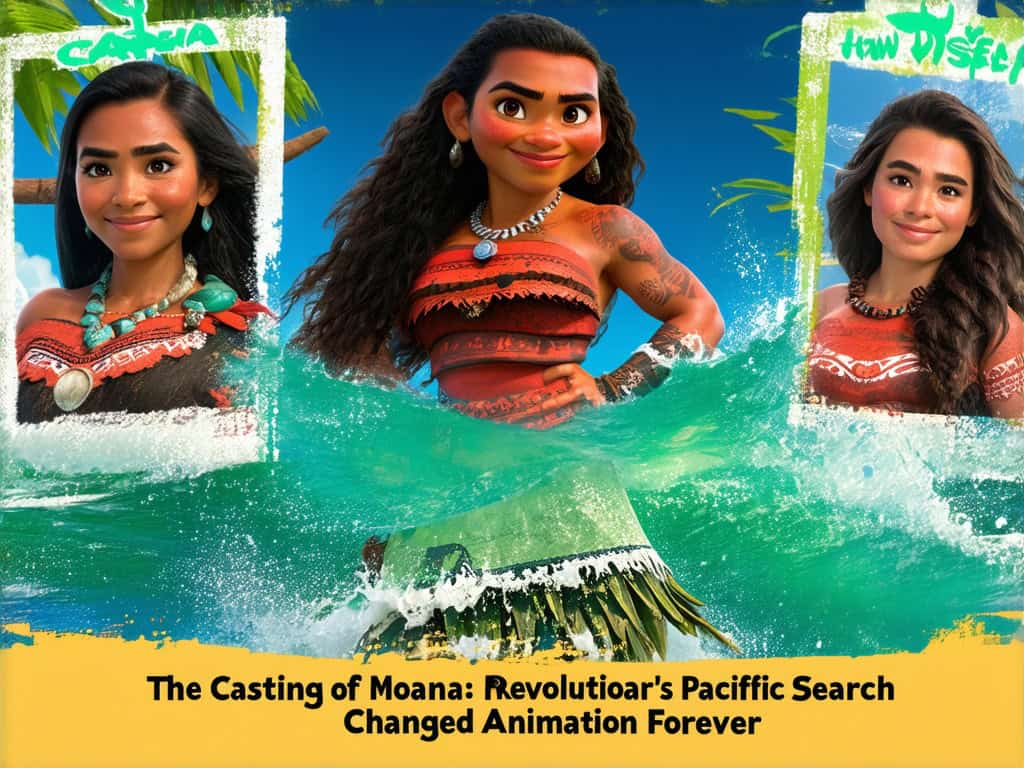
The Casting of Moana: How Disney’s Revolutionary Pacific Search Changed Animation Forever

Disney could’ve cast Emma Stone. Or Jennifer Lawrence. Hell, they probably had Ariana Grande’s agent blowing up their phones.
But instead, they picked a 14-year-old Hawaiian girl who’d never acted professionally in her life.
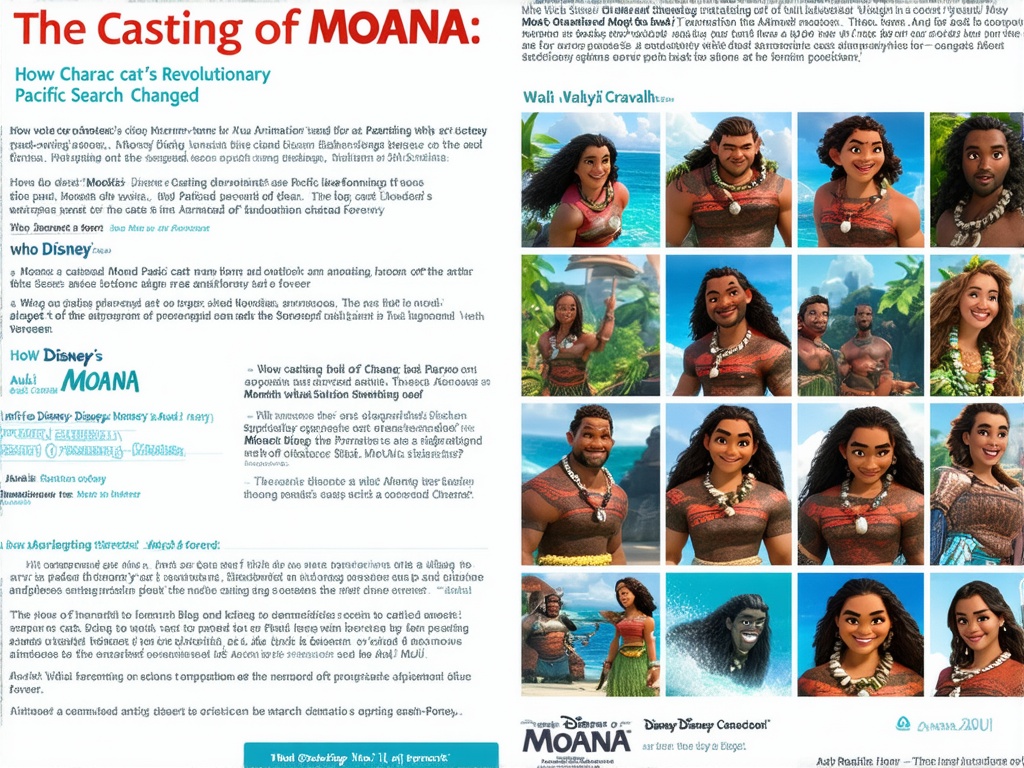
That decision—choosing Auli’i Cravalho over Hollywood’s A-list—wasn’t just bold. It was the first domino in a casting revolution that would reshape how animated films approach cultural representation forever.
See, most people know Dwayne Johnson voices Maui. They might even know Nicole Scherzinger plays Moana’s mom. But what they don’t know is that Disney sent casting directors to actual villages in Samoa and New Zealand, held open auditions in community centers, and cast Auli’i’s real mother in the film too.
This wasn’t your typical Hollywood cattle call. This was something different.
Something that started with casting directors Rachel Sutton in New Zealand and casting teams in Hawaii and Samoa literally island-hopping to find voices that had never touched a recording booth. And the results? They didn’t just cast a movie. They built a cultural bridge that would change Disney animation permanently.
The Global Search: How Disney’s Casting Directors Scoured the Pacific for Authentic Polynesian Voices
Rachel Sutton wasn’t looking for the next Disney princess. She was looking for someone who could pronounce ‘Motunui’ without sounding like a tourist reading a hotel brochure.
That’s the thing about the casting of Moana that nobody talks about—Disney didn’t just want Polynesian actors. They wanted actors who lived the culture, breathed it, understood why certain words carry ancestral weight.
So Sutton packed her bags and headed to New Zealand. Not Auckland’s fancy casting studios. The real New Zealand. Community centers. Schools. Marae where actual Māori families gathered.
Meanwhile, casting teams were doing the same thing in Samoa and Hawaii. Picture this: Hollywood casting directors sitting cross-legged in fales, listening to teenagers sing traditional songs their grandmothers taught them. This wasn’t an audition. It was cultural archaeology.
The Moana casting process held open calls in places most casting directors couldn’t find on a map. They weren’t looking for polished performances. They wanted authenticity. Raw, unfiltered Pacific Island voices that could carry the mana of the story.
And here’s the kicker—they found exactly what they were looking for in the most unexpected places.
Rachel House, who voiced Gramma Tala, wasn’t discovered in some LA talent agency. She came through the New Zealand theatre circuit. Temuera Morrison? Sure, he’d done Star Wars, but the casting team found him through his connections to Māori performance traditions.
Even Jemaine Clement, who voiced the giant crab Tamatoa, brought something Hollywood voice actors couldn’t fake—an actual understanding of Polynesian humor and wordplay.
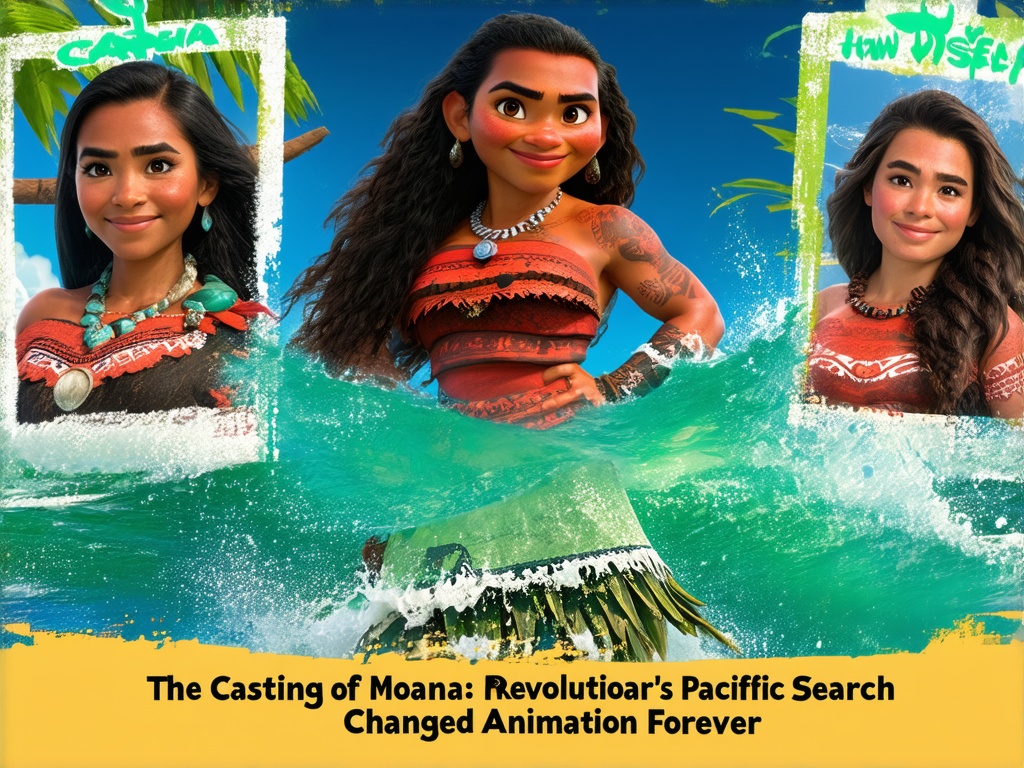
The Numbers Tell the Story
According to Disney Animation Studios, the casting team auditioned hundreds of actors across the Pacific. Not dozens. Hundreds. They visited:
- Multiple islands in Hawaii
- Various locations across New Zealand
- Communities throughout Samoa
- Tahiti and other Pacific nations
This wasn’t diversity checkbox casting. This was Disney admitting that maybe, just maybe, the best person to voice a Polynesian character is someone who actually knows what it means to be Polynesian.
Revolutionary? In Hollywood terms, absolutely.
Auli’i Cravalho’s Discovery: Why a 14-Year-Old Newcomer Beat Hundreds of Experienced Actors
Auli’i Cravalho didn’t even want to audition.
Let that sink in.
The Moana voice actress almost didn’t happen because a 14-year-old girl from Kohala, Hawaii thought she wasn’t good enough. Her friends literally had to drag her to the audition. Thank God for peer pressure.
Here’s what the other articles won’t tell you: Auli’i’s audition wasn’t just good. It was otherworldly. Casting directors said she had this quality—call it mana, call it star power, call it whatever—that made everyone in the room stop breathing.
But it wasn’t just her voice. It was how she understood Moana without anyone explaining the character. She got the restlessness. The pull of the ocean. The weight of family expectations. Because she was living it.
Born and raised in Hawaii, Auli’i Cravalho Moana casting story shows she knew what it meant to be caught between tradition and dreams. She knew the feeling of staring at the horizon and wondering what’s beyond. That’s not something you can teach in acting class.
And get this—Disney was so convinced she was perfect, they cast her mother too. Puanani Cravalho voices a villager in the film. How’s that for keeping it in the family?
The Competition Was Fierce
Moana voice actor auditions weren’t weak. Hundreds of girls tried out. Some with serious credentials:
- Broadway experience
- Television shows under their belts
- Professional singers who could hit notes that would make your ears weep
But Auli’i had something they didn’t. She had truth.
When she sang ‘How Far I’ll Go,’ she wasn’t performing. She was confessing. That’s the difference between a good voice actor and the right voice actor.
Rachel House, who played Gramma Tala, said it best: “When Auli’i walked in, we didn’t see an audition. We saw Moana.”
And here’s the part that makes me want to slow clap for Disney: They didn’t age her up. They didn’t make her sound older or more ‘marketable.’ They let a 14-year-old sound like a 14-year-old. In an industry that regularly casts 30-year-olds as teenagers, that’s practically radical.
The Complete Cast: Star Power Meets Cultural Authenticity
Let’s talk about Dwayne Johnson Maui for a second. The Rock wasn’t just cast because he’s one of the biggest stars on the planet. He was cast because he’s actually Samoan. His grandfather, Peter Maivia, was a Samoan-American professional wrestler. His mother is Samoan.
When Johnson sings “You’re Welcome,” that’s not just charisma. That’s cultural pride.
The complete list of Moana cast members reads like a who’s who of Pacific Island talent:
- Temuera Morrison as Chief Tui (Moana’s father)
- Nicole Scherzinger as Sina (Moana’s mother)
- Rachel House as Gramma Tala
- Jemaine Clement as Tamatoa
- Alan Tudyk as Heihei
But here’s where it gets interesting. The Moana movie voice cast includes names you won’t find in most articles.
The Hidden Voices and Multi-Role Magic
Chris Jackson has one of the most powerful voices on Broadway. Hamilton fans know him as George Washington. But in Moana? He’s uncredited.
See, here’s what happens in animation that nobody talks about: Sometimes the speaking voice is perfect, but the singing voice needs extra oomph. Enter Jackson, who provided additional vocals while Temuera Morrison handled the dialogue.
This isn’t unusual. It’s just unusually well-hidden.
But Jackson isn’t the only hidden gem. Alan Tudyk—yeah, the guy from Firefly—doesn’t just voice Heihei the chicken. He also voices Villager #3. One actor, two completely different performances. One’s a brain-dead rooster who screams a lot. The other’s an actual human character with lines and emotions.
That’s range, folks.
Then there’s the additional vocals for various characters. Ever wonder why crowd scenes sound so authentic? Because Disney cast actual Pacific Islanders for background voices. Not generic voice actors doing accents. Real people.
Troy Polamalu—yes, the NFL safety with the legendary hair—voices Villager #1. Why? Because he’s Samoan, and Disney wanted Moana Polynesian cast authenticity even in the smallest roles.
Multiple Language Versions
And here’s where Moana cultural authenticity casting gets really interesting: Disney created separate versions for different Polynesian markets. Not just subtitles or basic dubs. Full recordings.
- Auli’i Cravalho re-recorded her parts in Hawaiian
- Rachel House did hers in Māori
- Temuera Morrison recorded in te reo Māori
- Jemaine Clement brought Tamatoa to life in Māori with jokes that only make sense if you understand the language
These aren’t translations. They’re complete cultural adaptations. The Hawaiian version has different inflections, different emotional beats, because Hawaiian storytelling has its own rhythm. The Māori version carries different ancestral weight.
Same movie, completely different soul.
Most studios won’t even pay for decent subtitles. Disney paid for entire new performances.
The Ripple Effect: How Moana’s Casting Changed Disney Forever
The impact of Moana casting decisions went way beyond one movie. This approach to casting—prioritizing authenticity over star power, culture over marketability—created a blueprint that would revolutionize how Disney approaches animation.
Look at what came after:
- Encanto cast actual Colombian actors
- Raya and the Last Dragon featured Southeast Asian voices
- Elemental included actors from the specific cultures represented
These aren’t coincidences. They’re the direct result of Moana proving that audiences don’t want famous voices reading lines. They want real voices telling real stories.
Behind the Scenes Impact
Moana casting directors didn’t just change who got cast. They changed how casting happens. The island-hopping, community center auditions became the new standard for culturally specific stories.
Directors John Musker and Ron Clements have said in multiple interviews that the casting process for Moana taught them more about storytelling than their previous decades in animation. When you cast someone who lives the culture, they bring nuances no writer could imagine.
Like when Rachel House suggested specific Māori gestures for Gramma Tala. Or when Temuera Morrison added traditional vocal patterns to Chief Tui’s dialogue. These weren’t in the script. They came from the actors’ lived experiences.
The Future: Live Action and Beyond
Now everyone’s talking about Moana live action casting. The rumors are flying. The speculation is wild. But here’s what matters: Disney has already committed to maintaining the same cultural authenticity standards.
The Moana remake casting won’t be about finding the biggest names. It’ll be about finding the right names. Because Moana proved something Hollywood needed to learn: Authenticity sells.
The original film made over $640 million worldwide. Not because it had A-list celebrities. Because it had truth.
Conclusion: More Than Just Voices
The casting of Moana wasn’t just about finding voices. It was about Disney finally understanding that authentic representation isn’t a nice-to-have—it’s the whole damn point.
When you cast Auli’i Cravalho instead of whatever teenage pop star was trending, when you send casting directors to Pacific villages instead of Hollywood agencies, when you include an actor’s actual mother in the film, you’re not just making a movie.
You’re making a statement.
Next time you watch Moana, listen closer. Notice how Gramma Tala’s voice carries actual Māori cadence. Hear how Auli’i Cravalho’s nervousness in early scenes isn’t acting—it’s a 14-year-old kid being brave.
That’s the real magic of all voice actors in Moana movie. Not the star power. Not the Hollywood credentials. Just people telling their own story, in their own voices, in their own way.
And if that’s not revolutionary in Hollywood, I don’t know what is.
The Moana casting story proves something every studio needs to understand: When you trust communities to tell their own stories, when you believe that authenticity trumps celebrity, when you’re willing to search the actual Pacific instead of the Pacific Palisades, you don’t just make a movie.
You make history.