

The Secret Behind The Jungle Book’s Magic: How Jon Favreau Turned a 12-Year-Old Into Hollywood’s Bravest Actor

Here’s something wild.
When Jon Favreau started filming The Jungle Book in 2016, he wasn’t just directing a movie. He was conducting one of Hollywood’s most insane experiments in child psychology.

Picture this: Neel Sethi, a 12-year-old kid from New York. Standing alone in a warehouse. Green screens everywhere. Talking to animals that don’t exist.
No co-stars. No jungle. Just a boy, his imagination, and a director who somehow made it all work.
Most people think The Jungle Book’s success came from its groundbreaking CGI. They’re dead wrong. The real magic? It happened between Jon Favreau and Neel Sethi – a director-actor collaboration so revolutionary it changed how Hollywood works with child actors forever.
And here’s the kicker: Favreau did it by breaking every single rule.
Breaking the Fourth Wall: Jon Favreau’s Revolutionary Approach to Directing Neel Sethi
Jon Favreau had a problem. A massive one.
He needed a 12-year-old to carry an entire Disney blockbuster while acting opposite… nothing. Empty air. Green walls. Maybe a tennis ball on a stick if he was lucky.
Most directors would’ve panicked. Favreau? He went shopping.
No joke. The Iron Man director literally started ordering Jungle Book merchandise before the movie was even finished. Action figures, posters, t-shirts – everything. In one interview, he admitted, “I didn’t get much swag from Elf or Iron Man, so I’m making up for it now.”
Sounds ridiculous, right? Wrong.
See, Favreau understood something most directors miss. Child actors don’t need perfection. They need connection.
By turning the Jungle Book set into his personal toy store, Favreau wasn’t being unprofessional. He was being brilliant. Every time Neel Sethi saw his director geeking out over a Mowgli action figure, it sent a message: This is fun. This matters. You matter.
The psychological impact? Immediate.
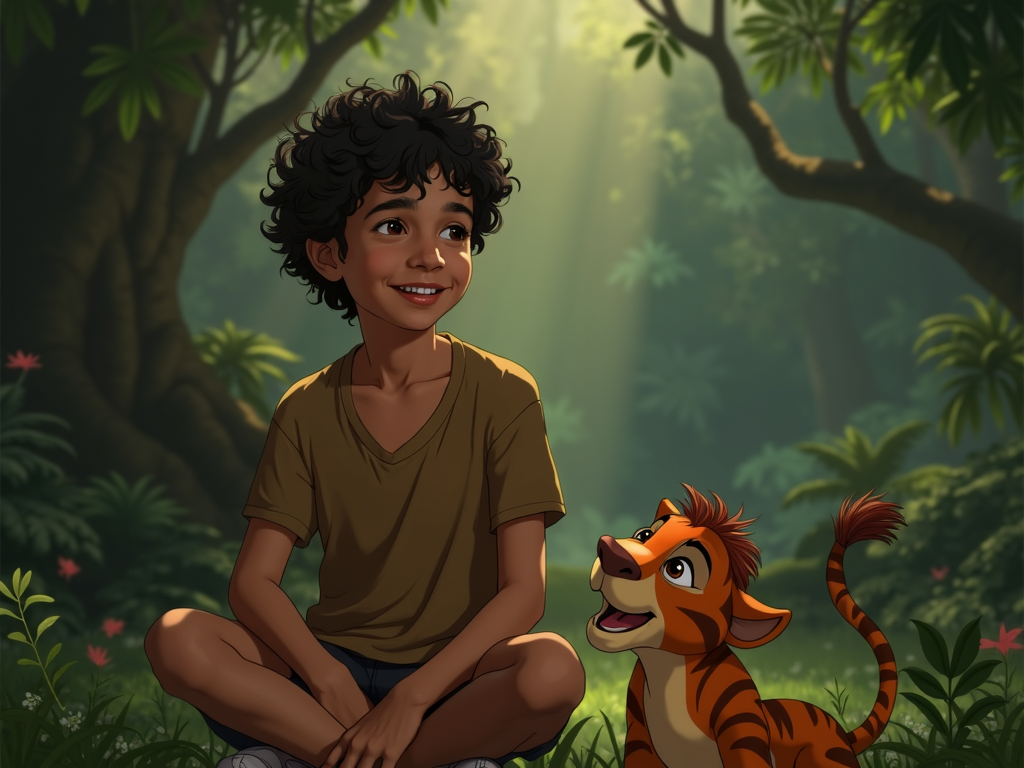
Instead of feeling pressure to perform in some alien environment, Neel felt like he was playing in the world’s most expensive backyard. Favreau would crack jokes between takes. He’d explain scenes using sound effects, wild gestures. Sometimes he’d literally act out what the CGI animals would be doing. Complete with growls and roars.
One crew member described watching Jon Favreau pretend to be Baloo: “Here’s this accomplished director, the guy who made Iron Man, down on all fours, making bear noises for a kid. Hilarious and genius.”
But here’s what nobody talks about.
Favreau’s approach wasn’t just about keeping Neel Sethi comfortable. It was about preserving something precious – the natural, unfiltered reactions of a 12-year-old boy. Because that’s what made Mowgli believable. Not the CGI. Not the script. The fact that when Neel looked at empty space and saw danger, we believed him.
Every. Single. Time.
The 12-Year-Old Who Conquered Hollywood’s Biggest Acting Challenge
Let me paint you a picture of what Neel Sethi actually did.
Every day, for months, this kid showed up to a warehouse in downtown Los Angeles. No jungle. No animals. Just green fabric stretching forever.
His Jungle Book co-stars? Voices in his earpiece. Puppeteers holding foam heads on sticks. Sometimes, literally nothing at all.
Think about that.
When Neel had to show fear as Shere Khan stalked him, there was no tiger. When he laughed with Baloo in those heartwarming scenes, there was no bear. When he swung through trees escaping danger, there were no trees. Just platforms, wires, and imagination.
Most adult actors struggle with green screen work. It’s disorienting. Exhausting. Robert Downey Jr. once called it “acting in a vacuum.” Yet here was this kid from New York, picked from 2,000 Jungle Book auditions, absolutely crushing it.
How?
The answer reveals something profound about how kids process reality.
During one Jungle Book interview, someone asked Neel what it was like seeing himself as an action figure. His response? “Awesome!” That’s it. No crisis about commercialization. No deep thoughts. Just… awesome.
That simplicity? That was his superpower.
While adult actors overthink, Neel Sethi just did it. Jon Favreau noticed immediately. Behind-the-scenes footage shows Neel switching from joking with crew to intense emotional scenes in seconds. No method acting. No complex preparation. Just a kid being told “now you’re scared” and boom – pure fear on his face.
But here’s what breaks my brain.
Neel wasn’t just reacting to nothing. He was creating relationships with characters that didn’t exist yet. The chemistry between Mowgli and Baloo? That warmth you feel? Neel built that connection with thin air.
During Jungle Book filming, Bill Murray (who voiced Baloo) wasn’t even there most days. Neel developed that entire friendship with imagination alone. And we bought every second.
The technical term? Spatial imagination – mentally constructing and interacting with objects that aren’t there. Most actors train years for this skill. Neel Sethi had it naturally at 12.
But talent only goes so far. What made Neel exceptional was complete trust in Jon Favreau’s vision. When the director said “there’s a 30-foot python about to eat you,” Neel believed it. Not pretended. Actually believed it.
That’s not acting. That’s magic.
Debunking the Live-Action Myth: What Really Happened on The Jungle Book Set
This drives me absolutely insane.
Eight years later, people still call The Jungle Book a “live-action” remake. Live-action? Are you serious?
Let me break down what “live-action” meant for this Disney movie:
One human boy. That’s it.
Everything else – EVERYTHING – was computer generated. The jungle? CGI. The animals? CGI. The rocks Mowgli climbed? CGI. The water he swam in? CGI. Even some mud on Neel Sethi’s face was added digitally.
Neel was basically acting in a video game that hadn’t been programmed yet.
The few physical elements they used? Bizarre doesn’t cover it.
That terrifying mudslide scene? They built a gimbal – think mechanical bull – covered it in foam, painted it gray. Had Neel ride it while spraying water at him. The result looks like natural disaster. Reality was a kid on a carnival ride.
Or the scene where Mowgli floats on Baloo’s stomach? You see boy-on-bear river relaxation. What actually happened? Neel laid on a platform in a water tank while grips rocked him gently. No bear. No river. Just a kid in a pool.
People assume they used real jungle locations. Nope. Every leaf, tree, blade of grass – computers. They think maybe some real animals for reference? Wrong. The only real animal on the Jungle Book set was Favreau’s dog wandering into the warehouse.
But here’s what should melt your brain.
Despite all this artificiality, despite nothing being real except Neel Sethi, The Jungle Book feels more authentic than movies shot in actual jungles with actual animals.
How?
Because Jon Favreau understood something crucial. Reality isn’t what’s physically there. It’s what the audience believes. And belief starts with performance.
Every reaction on Neel’s face had to be perfect. Not for the CGI. Because the entire movie’s emotional foundation rested on whether we believed this kid was really there.
So yeah, “live-action” is technically accurate. One live actor performed actions. But that misses everything. This wasn’t live-action filmmaking. This was collective imagination on an unprecedented scale.
The Invisible Co-Star Framework: How This Changed Everything
Here’s where it gets interesting for Hollywood.
What Jon Favreau and Neel Sethi accomplished became a blueprint. Directors studied their Jungle Book collaboration like film school textbook material.
The approach even got a name: The Invisible Co-Star Framework.
Basically, it flips traditional child actor direction upside down. Instead of treating kids like mini-adults who need to “understand their craft,” you treat them like… kids. Wild concept, right?
Marvel directors took notes. When Tom Holland filmed Spider-Man scenes with CGI villains, they used Favreau’s playful approach. Same with the young actors in recent Star Wars projects.
But it goes deeper than just “be fun on set.”
The framework recognizes that children process imagination differently. While adults separate “real” from “pretend,” kids exist in this magical space where both can be true simultaneously. Favreau didn’t fight this. He weaponized it.
Remember those Jungle Book toys Favreau collected? That wasn’t random. By surrounding Neel with physical representations of the world they were creating, he kept the imaginary world tangible. Real enough to touch, even when filming against green screens.
This changed how Hollywood approaches CGI-heavy films with child actors.
Before The Jungle Book, the strategy was explaining everything. Show concept art. Describe creatures in detail. Make kids intellectually understand what they’re supposed to see.
Favreau proved that’s backwards. Don’t explain the tiger. Roar like one. Don’t describe the snake. Slither around the floor. Make it visceral, not intellectual.
The results speak for themselves. The Jungle Book earned nearly a billion dollars. Neel Sethi’s performance anchored the entire film. And Hollywood learned that maybe, just maybe, the secret to working with child actors isn’t making them more professional.
It’s letting them stay kids.
Conclusion
So here’s what really happened on The Jungle Book set.
A 12-year-old kid and a director who collected action figures rewrote filmmaking rules. Not through technology – though the CGI was incredible. Not through script – though the story worked. They did it through trust, imagination, and the radical idea that the best way to get a natural performance from a child is letting them be a child.
Today, when directors work with young actors in CGI productions, they study what Favreau and Sethi created. The toy-collecting, bear-noise-making, imagination-believing approach isn’t just accepted. It’s becoming standard.
Because Jon Favreau proved something important.
The most advanced technology in Hollywood isn’t computers or cameras. It’s the connection between a director who believes and a kid brave enough to imagine.
Next time you watch The Jungle Book, forget the CGI for a second. Watch Neel’s eyes. Watch how he reacts to things that weren’t there. That’s not movie magic.
That’s human magic.
And that’s the real story about Jon Favreau and Neel Sethi that nobody tells.
