
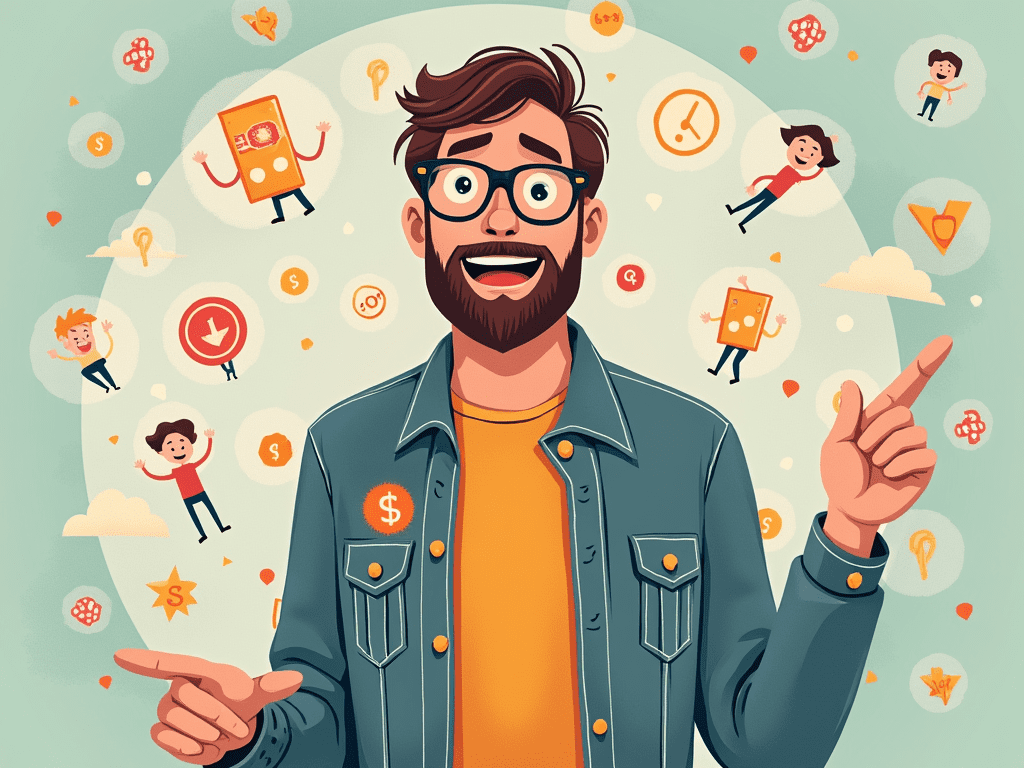
Your Brain on Hobbies: The 45-Minute Secret to Raising Self-Esteem (Backed by 93,000 People)

Here’s something wild: 93,000 people just proved that hobbies can raise self-esteem regardless of whether you’re healthy, sick, young, or old. Doesn’t matter. The hobby works anyway.
But here’s what nobody’s telling you—it’s not about the hobby itself. It’s about what happens in your brain after exactly 45 minutes.

Drexel University researchers stuck people in brain scanners while they painted, crafted, and created. What they found? Your brain literally rewires its self-perception systems. Not metaphorically. Actually rewires.
Most self-help advice treats confidence like it’s all in your head. Technically true, but not the way they mean it. Your hobbies aren’t just making you “feel better.” They’re chemically altering how your brain processes self-worth.
And before you think this is another “just be creative” article—stop. Gaming counts. Coding counts. Building virtual worlds in Minecraft? That counts too.
The research is clear: hobbies raise self-esteem through specific neurological pathways that traditional confidence-building misses entirely. You’re about to learn exactly how this works, which hobbies trigger the strongest response, and why forcing productivity into your fun time might be sabotaging your brain’s natural confidence systems.
The 45-Minute Confidence Switch: What Happens in Your Brain When Hobbies Raise Self-Esteem
Forty-five minutes. That’s it.
Drexel University researchers discovered something that should change how we think about hobbies and self-esteem forever. Give adults 45 minutes with art supplies—no instructions, no pressure, just create—and their self-efficacy scores jump significantly.
But here’s the kicker: brain scans revealed what was actually happening. The reward centers lit up like Christmas trees. Same areas that activate when you eat chocolate or fall in love. Except this time, they were rewiring connections to self-perception regions.
Think about that. Your hobby isn’t just making you happy. It’s literally teaching your brain to see yourself differently.
The science gets wilder. When you engage in hobbies that raise self-esteem, your brain releases a cocktail of neurochemicals—dopamine, serotonin, endorphins. Standard feel-good stuff, right? Wrong. These chemicals don’t just make you feel nice. They create new neural pathways between your reward system and your self-concept centers.
Every brushstroke, every guitar chord, every line of code you write for fun—they’re all building highways in your brain that connect “I did this” to “I am capable.”
Why Traditional Self-Help Falls Short
Traditional self-help tells you to repeat affirmations in the mirror. Your brain doesn’t buy it. But when you complete a crossword puzzle? Knit a scarf? Beat a video game boss? Your brain believes that evidence.
The researchers found something else fascinating. The confidence boost wasn’t tied to skill level. Beginners showed the same brain activation as experts. Your brain doesn’t care if your painting looks like Picasso or a preschooler’s. It only cares that you created it.
This explains why hobbies raise self-esteem in ways that work achievements rarely do. No performance review. No comparison to colleagues. Just you, an activity, and 45 minutes of pure neurological rewiring.
But wait—if it’s that simple, why doesn’t your job give you the same confidence boost? Turns out, your brain knows the difference.
Why Your Brain Treats Hobbies Differently Than Work (The Psychology Behind Hobbies for Raising Self-Esteem)
Your brain is smarter than you think. It knows when you’re being judged.
That massive 93,000-person study? It revealed something crucial: hobby benefits happened regardless of health status, age, or background. But here’s what they didn’t advertise—the benefits only showed up when the activities were truly voluntary.
No pressure. No metrics. No performance reviews.
See, your brain has two distinct processing modes. When you’re at work, even work you enjoy, your amygdala stays partially activated. That’s your threat detection system. It’s scanning for criticism, comparison, failure. Even unconsciously, you’re on guard.
Hobbies? Different story. When nobody’s watching, when there’s no deadline, when failure means nothing—your amygdala chills out. This creates what neuroscientists call “psychological safety.” And that safety is essential for self-esteem development.
The Competence Without Stakes Principle
According to Mass Appeal Magazine, here’s where it gets interesting. Workplace stress researchers found that employees who maintained hobbies showed remarkable resilience. Not because hobbies helped them “decompress.” Because hobbies gave their brains regular proof of competence without stakes.
Think about it. At work, every project could affect your income, reputation, future. Your brain processes these achievements through a filter of survival. Did I do enough? Am I safe? What’s next?
But when you’re building model trains in your garage? Programming a game nobody will play? Learning guitar tabs to your favorite song? Your brain processes these differently. Pure competence. No survival attached.
This is why monetizing hobbies often backfires. The second you attach income to your photography, your brain shifts modes. What was once a confidence-building sanctuary becomes another performance arena.
The research is brutally clear: hobbies raise self-esteem precisely because they exist outside productivity culture. They’re spaces where you can suck, fail, experiment, and grow without consequence.
Your brain needs these spaces. Not wants—needs. Without them, all your competence gets filtered through anxiety. With them, you build genuine self-worth that nobody can take away.
Speaking of spaces your brain needs—let’s talk about why your Minecraft world might be more therapeutic than your therapist realizes.
The Digital Hobby Revolution: How Gaming and Coding Boost Self-Worth
Old wisdom says hobbies need to be “real.” Paint on canvas. Wood shavings on the floor. Dirt under your fingernails.
That wisdom is wrong.
New research on digital natives shows something fascinating: virtual hobbies trigger the same neurological confidence pathways as traditional ones. Sometimes stronger.
Why? Three words: immediate feedback loops.
When you’re gaming, every achievement registers instantly. Level up. New skill unlocked. Boss defeated. Your brain’s reward system goes haywire. Each ping of accomplishment strengthens those self-efficacy neural pathways we talked about.
Why Digital Hobbies Count
Coding as a hobby? Even better. You write something, it either works or it doesn’t. Immediate feedback. Fix it, try again. Success. Your brain logs each small victory, building a mountain of evidence that you can solve problems.
But here’s what really sets digital hobbies apart: global communities. That Minecraft server where you’re known for your redstone contraptions? The Discord where people ask for your Pokemon strategies? These aren’t just fun—they’re validation engines for your self-worth.
Traditional hobbies often happen in isolation. You paint alone. Garden alone. Maybe share with family if they care. Digital hobbies come with built-in audiences who actually get it.
The research shows this matters. Social validation activates different brain regions than solo achievement. When someone comments on your digital art, upvotes your code solution, or asks how you built that base—your brain processes this as real social proof of competence.
Critics worry about screen time. Fair. But they’re missing the distinction between passive consumption and active creation. Watching Netflix doesn’t build self-esteem. Building worlds, solving puzzles, creating content? That’s neurological gold.
Here’s the kicker: accessibility. Traditional hobbies need space, materials, money. Digital hobbies? A laptop and internet. This democratization means more people can access the self-esteem benefits of hobbies than ever before.
Your GitHub contributions count. Your Twitch streaming counts. Your elaborate Sims families with backstories? They absolutely count.
So how do you choose the right hobby for maximum self-esteem impact? There’s actually a science to this.
The SPARK Method: Choosing Hobbies That Raise Self-Esteem Most Effectively
Not all hobbies hit the same. Research shows certain characteristics make some hobbies better at building confidence than others.
Introducing SPARK—your blueprint for picking hobbies that actually move the self-esteem needle:
S – Skill Progression: Your brain needs to see improvement. Chess works because you can track your rating. Knitting works because projects get more complex. Instagram scrolling? Not so much.
P – Personal Autonomy: You control the pace, the process, the outcome. No boss. No client. No algorithm. Just you deciding what happens next.
A – Achievement Markers: Clear milestones your brain can celebrate. Finished painting. Completed level. Learned song. Your brain needs these wins.
R – Regular Practice: Consistency beats intensity. Fifteen minutes daily beats three-hour weekend marathons. Your brain builds stronger pathways through repetition.
K – Kind Community: Optional but powerful. Whether it’s a local knitting circle or online gaming guild, positive social reinforcement multiplies the effect.
Best Hobbies to Boost Self-Confidence by Category
Creative hobbies for self-esteem hit hard because they produce tangible results. Writing, painting, music—your brain sees direct evidence of creation. “I made this” is powerful brain food.
Physical hobbies work differently. Rock climbing, martial arts, dance—they build self-esteem through embodied competence. Your brain trusts what your body can do.
Intellectual hobbies like chess, coding, or language learning? They prove to your brain you can master complex systems. Each solved problem reinforces capability.
Social hobbies—book clubs, board game nights, community theater—they build self-esteem through belonging. Your brain registers “these people want me here” as worth validation.
The worst hobbies for self-esteem? Anything that’s actually consumption disguised as activity. Collecting things you don’t use. Following tutorials without creating anything original. Scrolling Pinterest for “inspiration” that never materializes.
Your brain knows the difference between doing and consuming. Choose accordingly.
Let’s cut through the noise. You now know something most people don’t: hobbies aren’t just fun activities. They’re brain-rewiring, confidence-building, self-esteem raising power tools.
93,000 people proved it works. Drexel’s brain scans showed exactly how. And that digital revolution? It means you have more options than ever.
The SPARK method gives you a framework. Find activities with visible progress, autonomy, rewards, and community. Block 45 minutes. Turn off the performance pressure. Let your brain do what it’s designed to do—build genuine self-worth through voluntary achievement.
Stop treating hobbies like luxury. They’re maintenance. Your brain needs spaces where competence exists without judgment, where creation happens without stakes, where you matter because you showed up, not because you produced.
Whether you’re painting, gaming, coding, crafting, or building virtual worlds—you’re not wasting time. You’re literally rewiring your brain’s self-perception systems.
Forty-five minutes. That’s all it takes to start. Your future confident self is waiting on the other side of that first session.
The research is in. The brain scans don’t lie. Hobbies raise self-esteem through actual neurological change, not feel-good fluff.
What are you waiting for?