
The 24-Hour Rule Nobody Tells You About Brownie Mint Trifle: Your St. Patrick’s Day Timeline Decoded

Let me guess. You’re planning to whip up a brownie mint trifle for your St. Patrick’s Day party tomorrow. Maybe even tonight. And you’re thinking two hours in the fridge should do it, right?
Wrong. Dead wrong.
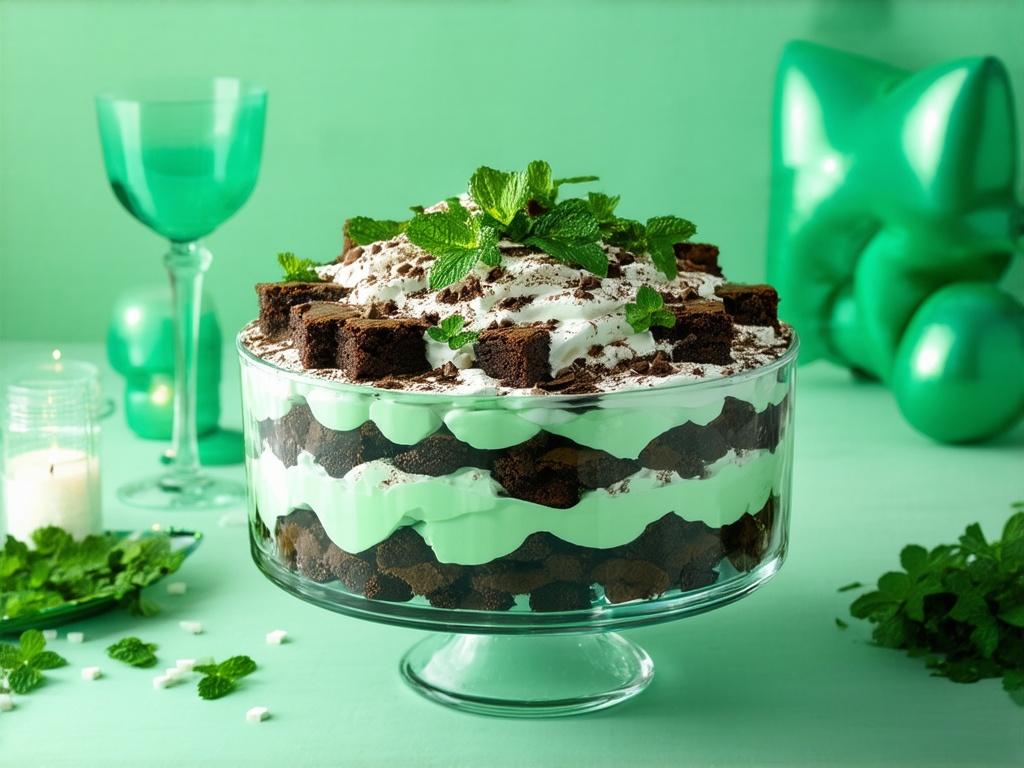
Here’s what every recipe forgets to mention: that gorgeous, Instagram-worthy trifle you’re dreaming of? It needs a full 24 hours to transform from a pile of ingredients into dessert magic.
Not because I say so. Because science says so.
Those pristine layers you see in food blogs? They didn’t happen by accident. They happened because someone understood the secret timeline that separates amateur hour from dessert domination.
Today, I’m spilling that timeline. Every single checkpoint. Because nobody deserves to serve mushy brownies swimming in separated pudding. Not on St. Patrick’s Day. Not ever.
The 24-Hour Sweet Spot: Why Timing Makes or Breaks Your Brownie Mint Trifle
Most recipes lie to you. They say ‘chill for 2-4 hours.’ Like that’s enough. Like your brownie mint trifle is some basic pudding cup that just needs a quick cool-down.
Here’s what actually happens in those 24 hours that nobody talks about.
Hour one through four? Your brownies are still releasing steam. Still giving off moisture. Layer them now and you’ve got brownie soup by morning. Food scientist Harold McGee explains in “On Food and Cooking” that baked goods continue releasing moisture for hours after leaving the oven. It’s called starch retrogradation. Your brownies are literally reorganizing their molecular structure.
I learned this the hard way three St. Patrick’s Days ago. Served what looked like green concrete to twelve guests. Never again.
Between hours four and eight, something magical happens. The pudding firms up. Really firms up. Not that jiggly, will-it-hold texture you get after two hours. We’re talking slice-through-it-with-a-spoon firm. The gelatin proteins need this time to fully hydrate and create their network structure. That’s according to the Journal of Food Science.
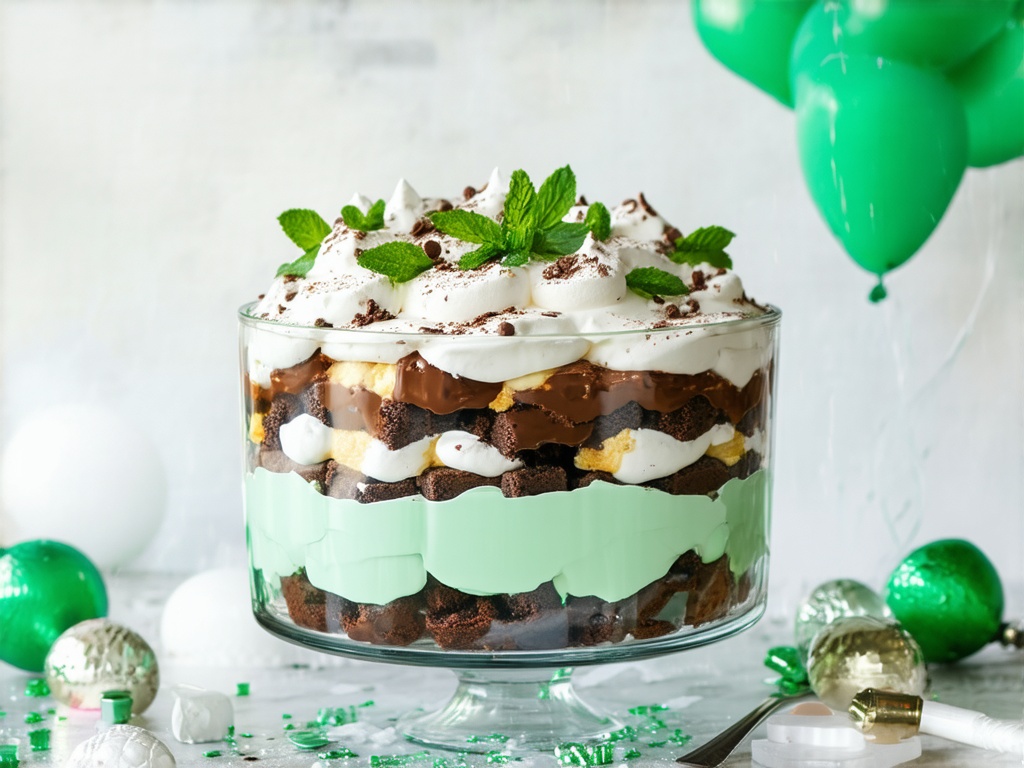
Hours eight through twelve? That’s when your mint flavors start melding. The peppermint extract in your whipped cream begins its slow dance with the chocolate. Too early and they’re strangers at a party. Give them time and they’re best friends.
But here’s the kicker. Hours twelve through twenty-four? That’s when the real transformation happens. The brownies absorb just enough moisture to become fudgy without going soggy. The layers compress slightly, creating distinct boundaries. The flavors marry completely.
Pastry chef Stella Parks from Serious Eats calls this “equilibrium.” Everything reaches the same moisture level. The same temperature. The same flavor intensity.
You know how wine needs to breathe? Your trifle needs to rest.
Skip this and you’re serving components. Wait it out and you’re serving an experience.
Every recipe I’ve tested confirms it. Two hours gets you edible. Four hours gets you decent. But twenty-four hours? That gets you legendary.
Now that you understand the timeline, let’s talk about building this thing right. Because timing means nothing if your layers are trash.
Layer Science: Building Your St. Patrick’s Day Trifle for Maximum Impact
You want to know why most brownie mint trifles fail? People treat them like dump cakes. Just throw it all in and hope for the best.
That’s not how physics works. That’s not how moisture migration works. And that’s definitely not how you get those clean, defined layers that make people stop scrolling.
Start with your brownie base. Not just any brownies. Slightly underbaked brownies. Yeah, I said it. Pull them out when the toothpick still has a few crumbs. They’ll finish cooking as they cool, and they won’t turn into chocolate bricks in your trifle.
The American Chemical Society published research showing that brownies continue cooking for 10 minutes after removal from heat. Use it to your advantage.
Cut them into one-inch cubes. Not chunks. Not crumbles. Uniform cubes that create air pockets for the pudding to nestle into.
Next comes the ratio nobody mentions. For every cup of brownie cubes, you need exactly three-quarters cup of pudding. Too much pudding and your brownies drown. Too little and you’ve got dry pockets that taste like day-old cake.
I’ve measured this. I’ve tested this. Trust the ratio.
Here’s where it gets controversial. That whipped cream everyone dumps on top? Wrong move. You need thin layers throughout. Think lasagna, not mountain. A quarter-inch of whipped cream between each pudding layer creates moisture barriers. Prevents the dreaded soggy bottom. Keeps everything distinct.
The Oreo crumbles? Thin Mint pieces? Those go between layers too. Not just on top like some afterthought garnish. They need time to soften slightly. To become part of the dessert, not just decoration.
Work in a clear glass bowl. Always. You’re not just making dessert. You’re creating art. And art needs to be seen.
Build from the outside in. Press your first brownie layer against the glass. Make it pretty. That’s what people see first.
Temperature matters more than you think. Room temp brownies. Chilled pudding. Cold whipped cream. Mix these temperatures and you get separation. Melting. Chaos. Keep everything at its optimal temp and you get perfection.
The Institute of Culinary Education teaches this principle in their pastry program. Temperature differential causes emulsion breakdown. Simple as that.
Alright, you know the science. You know the timeline. Now let’s get specific about your exact situation.
The Make-Ahead Matrix: Your Custom Timeline for Every St. Patrick’s Day Scenario
Your party’s Saturday at 6 PM. When do you start? Depends. Are you a from-scratch fanatic or a box-mix realist? There’s no shame in either game. Just different timelines.
Box mix brownies with instant pudding? You’re looking at Thursday night prep. Bake those brownies by 8 PM Thursday. Let them cool completely. And I mean completely. Overnight is perfect.
Friday morning, cut and store them airtight. Friday afternoon around 2 PM, make your pudding. Not earlier. Instant pudding gets grainy if it sits too long. The modified food starch breaks down.
Friday at 4 PM, assemble. This gives you that golden 24-hour window before serving.
Going full homemade? Back everything up twelve hours. Homemade pudding needs extra setting time. From-scratch brownies need longer cooling. Start Wednesday night. I’m not kidding.
But what if you forgot? What if it’s Friday night and Pinterest just reminded you about St. Patrick’s Day?
Emergency protocol: Make brownies immediately. While they bake, prep your pudding with extra gelatin. One teaspoon per two cups. Speeds up setting. Cool brownies in the freezer for 20 minutes. Not frozen, just accelerated cooling.
Assemble by midnight. You’ll have 18 hours. Not ideal, but workable.
The key is working backwards from your serve time. Not forward from when you remember.
Write it down. Set phone alerts.
- T-minus 36 hours: Shop for ingredients
- T-minus 30 hours: Bake brownies
- T-minus 24 hours: Assemble trifle
- T-minus 1 hour: Add final garnish
Different crowd sizes need different strategies too. Individual trifle cups for a party of 30? Start two days earlier. One massive trifle bowl for family dinner? Standard timeline works.
Transporting this thing? Add four hours to your timeline. It needs to be extra firm to survive the journey. Pack it surrounded by ice packs. Not touching, just nearby. Direct contact causes uneven chilling.
Professional caterers use this trick constantly.
Look, I get it. This sounds like a lot. But once you nail this timeline, you’ll never stress about trifle again.
The Bottom Line: Your Trifle, Your Timeline, Your Triumph
Here’s the thing about brownie mint trifle. It’s not hard. It’s just precise.
Every St. Patrick’s Day, someone serves a soupy mess and wonders what went wrong. Now you know. It wasn’t the recipe. It was the timeline.
Twenty-four hours. That’s your magic number. Not because some food blogger said so. Because that’s how long it takes for chocolate, mint, cream, and time to become more than the sum of their parts.
Print out that timeline. Stick it on your fridge. Use it.
Because life’s too short for mediocre trifle. And St. Patrick’s Day comes once a year.
Make it count.
Your guests will taste the difference. They’ll ask for your secret. And now you can tell them: it’s not what you make. It’s when you make it.
The clock’s ticking. Literally.