
OLFA Tools Helping Dad Out This Fathers Day ⋆ My Sparkling Life

Discovering the Versatility of OLFA Tools
OLFA tools have become an essential part of my husband’s toolbox. He’s a hands-on kind of guy and loves to tackle DIY projects at home and at work. Among his collection of tools, the ones manufactured by OLFA have gained a special place.
Whether it’s everyday tasks or complex projects, these tools have proven their worth. They’ve even been helpful in unexpected situations, like opening Father’s Day packages we’ve received in the mail recently!
OLFA: Synonymous with Quality and Innovation
Having the right tools is essential for any project, and OLFA certainly understands this. The brand is known for producing high-quality cutting tools and boasts an extensive range of products suitable for construction and DIY projects as well as quilting and crafts. Fun fact: OLFA is the brand that invented the snap-off blade utility knife.
OLFA’s commitment to innovation and quality is evident in their product range. A few weeks ago, we were sent four OLFA products to test, and here’s a little about each one:
OLFA Pistol Grip Ratchet-Lock Utility Knife (L-1)
OLFA’s L-1 utility knife is an incredible tool. It features a ratchet-lock mechanism that allows for unlimited blade positions, providing versatility for every cutting job. The double-honed blade ensures superior sharpness and edge retention. This utility knife is perfect for cutting through heavier materials such as drywall, linoleum, carpet, flooring materials, insulation, roofing materials, and other construction materials.
OLFA Fiberglass-Reinforced Ratchet Lock Utility Knife (XH-1)
The XH-1 utility knife by OLFA has become my husband’s go-to tool. Its pistol-shaped handle is chemically resistant to paint and MRO environments, making it perfect for harsh settings. It’s an exceptional tool for cutting industrial materials such as gaskets, conduit, belt synthetics, rope, leather, laminates, plastics, fiberglass, rubber, and textiles.
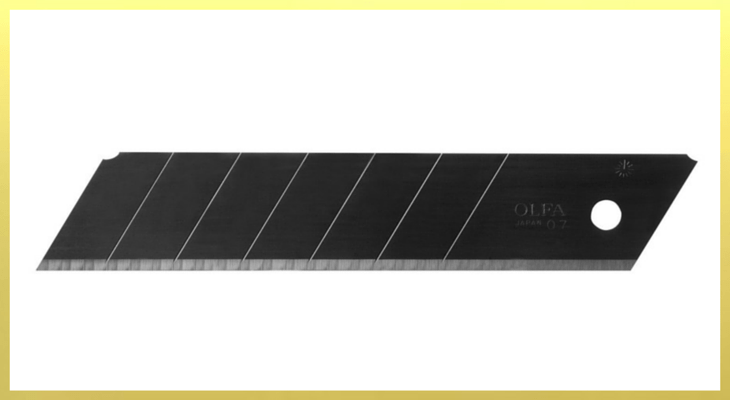
OLFA 25mm Black Ultra-Sharp Snap-Off Blades (HBB-20B)
OLFA’s HBB-20B blades are designed for demanding tasks. These heavy-duty blades can handle industrial materials such as gaskets, conduit, belt synthetics, rope, leather, laminates, plastics, fiberglass, rubber, and textiles.
OLFA Pull-Saw Blade (HSWB-1/1B)
The HSWB-1/1B pull-saw blade from OLFA is crafted from sturdy carbon tool steel, making sawing less of a chore. This high-quality blade ensures that the saw does the work, not you.
The Value of OLFA Tools
With a range like this, any handyman is bound to find a tool that will become a new “Must Have” in his toolbox. In my husband’s case, the OLFA Fiberglass-reinforced ratchet lock utility knife has become his favorite ‘go-to’ tool.
Disclosure of Material Connection: I received one or more of the| Tool Name | Description | Use |
|—|—|—|
| [OLFA Pistol grip ratchet-lock utility knife (L-1)](http://www.olfa.com/pistol-grip-ratchet-lock-utility-knife-%28l-1%29/5003US.html) | This utility knife is not locked into a fixed depth; its ratchet-lock mechanism gives unlimited blade positions. It has a double-honed blade for superior sharpness and edge retention. | For heavier materials including drywall, linoleum, carpet, flooring materials, insulation, roofing materials and other construction materials. |
| [OLFA Fiberglass-reinforced ratchet lock utility knife(XH-1)](http://www.olfa.com/fiberglass-reinforced-ratchet-lock-utility-knife-%28xh-1%29/1071858.html) | This utility knife has a pistol-shaped handle, making it a straight shooter for tough cutting jobs. The handle is chemically resistant to paint and MRO environments. | For cutting industrial materials such as gaskets, conduit, belt synthetics, rope, leather, laminates, plastics, fiberglass, rubber and textiles. |
| [OLFA 25mm black ultra-sharp snap-off blades, 20 pack(HBB-20B)](http://www.olfa.com/25mm-black-ultra-sharp-snap-off-blades%2C-20-pack-%28hbb-20b%29/1082209.html) | These heavy-duty blades are designed for more demanding materials and projects. They are designed to pass heavy-duty tasks with flying colors. | For cutting industrial materials such as gaskets, conduit, belt synthetics, rope, leather, laminates, plastics, fiberglass, rubber and textiles. |
| [OLFA Pull-Saw Blade (HSWB-1/1B)](http://www.olfa.com/pull-saw-blade-%28hswb-1%2F1b%29/1105914.html) | This is a solid saw blade made of sturdy carbon tool steel. It is designed to make the saw do the work, not you. | For sawing hard materials. |
OLFA Tools: A History of Cutting Edge Technology
OLFA, a Japanese company, has been manufacturing cutting tools since 1956 when the founder, Yoshio Okada, invented the world’s first snap-off blade utility knife. This invention revolutionized the industry and set the standard for all cutting tools that followed. OLFA tools are now synonymous with precision, durability, and innovation. Their wide range of products caters not only to professional builders and handymen but also to hobbyists and DIY enthusiasts.
OLFA Cutting Mats: Precision and Protection in One
Another product that has gained popularity among crafters and DIY enthusiasts is OLFA’s self-healing cutting mats. These mats, available in a variety of sizes, provide a protective surface that prevents damage to your table or workbench when cutting. The self-healing feature ensures that the mat surface remains smooth and free of cuts, enhancing the longevity of both the mat and your blades.
OLFA Rotary Cutters: A Quilter’s Best Friend
OLFA’s line of rotary cutters is a favorite among quilters and sewers. With a rolling razor blade, these tools offer a clean, straight cut on multiple layers of fabric. The ergonomic handle design reduces hand fatigue, making it ideal for large projects. OLFA also offers a variety of blade sizes, from 18mm for intricate and detailed cutting to 60mm for cutting multiple layers of fabric.
OLFA Safety Knives: Safety without Compromising Efficiency
OLFA doesn’t only cater to the needs of builders and crafters. They also have a range of safety knives designed for warehouse and retail environments. These safety knives have features like self-retracting blades and depth setting options, providing a safe yet efficient cutting solution.
OLFA Touch-Knife: A Handy Tool for Everyday Use
For everyday tasks, the OLFA Touch-Knife is a handy tool. This pocket-sized cutter is perfect for opening packages, cutting tape, and other light-duty tasks. Despite its small size, it’s packed with OLFA’s signature quality and durability.
OLFA Blades: The Heart of Every OLFA Tool
At the heart of every OLFA tool is the blade. Whether it’s the snap-off blades for utility knives, the circular blades for rotary cutters, or the specialized blades for safety knives, OLFA ensures that each blade is made with precision and quality. OLFA blades are known for their sharpness, durability, and edge retention, making every cut clean and efficient.
OLFA Tools: A Commitment to Sustainability
OLFA’s commitment extends beyond quality and innovation. The company also values sustainability, implementing eco-friendly practices in their manufacturing process. OLFA’s Eco-Tec blades are an example of this, as they are made from high-quality recycled steel.
Frequently Asked Questions about OLFA Tools
Are OLFA blades interchangeable?
Yes, most OLFA blades are interchangeable among the same type of tool. This means you can easily replace a dull blade with a new one, extending the life of your OLFA tool.
Where are OLFA tools made?
OLFA tools are made in Japan, known for its craftsmanship and attention to detail.
Are OLFA tools available worldwide?
Yes, OLFA tools are distributed in over 100 countries worldwide. You can find OLFA products in hardware stores, craft stores, and online retailers.
How do I care for my OLFA tools?
To maintain the quality and longevity of your OLFA tools, always store them in a dry place. For cutting tools, clean the blades regularly to prevent rust and ensure optimal performance.
Conclusion
Whether you’re a professional builder, a DIY enthusiast, a crafter, or someone who simply appreciates high-quality tools, OLFA has something to offer. With their commitment to quality, innovation, and sustainability, OLFA tools are made to last and designed to make every cut count.
Frequently Asked Questions
1. What makes OLFA tools stand out from other brands?
OLFA is known for their high-quality cutting tools and innovation. They invented the snap-off blade utility knife and continue to innovate with a range of products suitable for construction, DIY projects, quilting, and crafts. Their tools are designed for versatility, durability, and superior edge retention.
2. What kind of materials can OLFA utility knives cut through?
OLFA utility knives are perfect for cutting through a variety of heavy-duty materials. This includes drywall, linoleum, carpet, flooring materials, insulation, roofing materials, industrial materials like gaskets, conduit, belt synthetics, rope, leather, laminates, plastics, fiberglass, rubber, and textiles.
3. Are OLFA tools resistant to chemicals?
Yes, some OLFA tools, like the XH-1 utility knife, are chemically resistant to paint and MRO environments, making them perfect for harsh settings.
4. What are the features of OLFA’s L-1 utility knife?
OLFA’s L-1 utility knife features a ratchet-lock mechanism that allows for unlimited blade positions, providing versatility for every cutting job. It also has a double-honed blade for superior sharpness and edge retention.
5. What materials are OLFA blades made of?
OLFA blades, like the HSWB-1/1B pull-saw blade, are crafted from sturdy carbon tool steel for durability and superior performance. The HBB-20B blades are designed for demanding tasks and can handle a variety of industrial materials.
6. What is the value of OLFA tools?
OLFA tools offer excellent value due to their versatility, durability, and innovative design. They are suitable for a variety of tasks, from everyday chores to complex DIY projects. The quality and performance of OLFA tools make them a reliable and valuable addition to any toolbox.