

Inspired by Historic Royal Weddings: 5 Florists Decode the Secret Language of Royal Blooms

Let’s be honest. Most royal wedding bouquet articles are boring as hell. They tell you Kate carried lily-of-the-valley and call it a day.
But here’s what they’re missing: Princess Beatrice’s 2020 dusty pink rebellion wasn’t just about pretty flowers. It was a calculated middle finger to centuries of all-white tradition.
And it worked.
Modern florists are catching on. They’re not just copying royal bouquets anymore – they’re cracking the psychological code behind why certain flowers make us feel things. Why myrtle makes grandmothers cry. Why forget-me-nots from Diana’s garden still matter thirty years later.
This isn’t about recreating some stuffy palace arrangement. It’s about understanding the power game royal brides play with petals and stems. And how you can steal their tricks without the tiara budget.
The Secret Language Behind Diana, Kate, and Meghan’s Royal Wedding Flowers
Royal wedding bouquets are political statements wrapped in ribbon. Always have been.
Queen Victoria started the white wedding dress trend, sure, but she also weaponized myrtle as a symbol of love and marriage. Every royal bride since has carried it. Not because it’s pretty. Because refusing would be revolutionary.
Princess Diana knew this game. Her cascading 1981 bouquet wasn’t just big – it was armor. White gardenias, lily-of-the-valley, orchids, and stephanotis created a floral shield between her and 750 million viewers. The weight alone (nearly five pounds) forced her to hold it with both hands. No nervous fidgeting allowed.
Kate Middleton flipped the script in 2011. Her shield-shaped bouquet was tiny, delicate, almost vulnerable. But look closer. Sweet william for her new husband. Myrtle from Queen Victoria’s 1845 planting. Lily-of-the-valley, the birth flower of Prince William’s zodiac sign. Every stem was a calculated nod to tradition while whispering ‘I belong here.’
Meghan Markle? She brought California rebellion to Westminster Abbey. Forget-me-nots handpicked from Diana’s garden at Kensington Palace. The message wasn’t subtle. ‘I see your traditions and I’ll honor the ones that matter.’ The rest of her bouquet – jasmine, sweet peas, and astilbe – stayed simple, almost minimalist. American restraint meets British pageantry.
Then came Princess Beatrice in 2020. Dusty pink and cream roses mixed with trailing jasmine. Not a single all-white arrangement in sight. Modern florists lost their minds. Here was proof that royal doesn’t mean rigid. That tradition can bend without breaking.
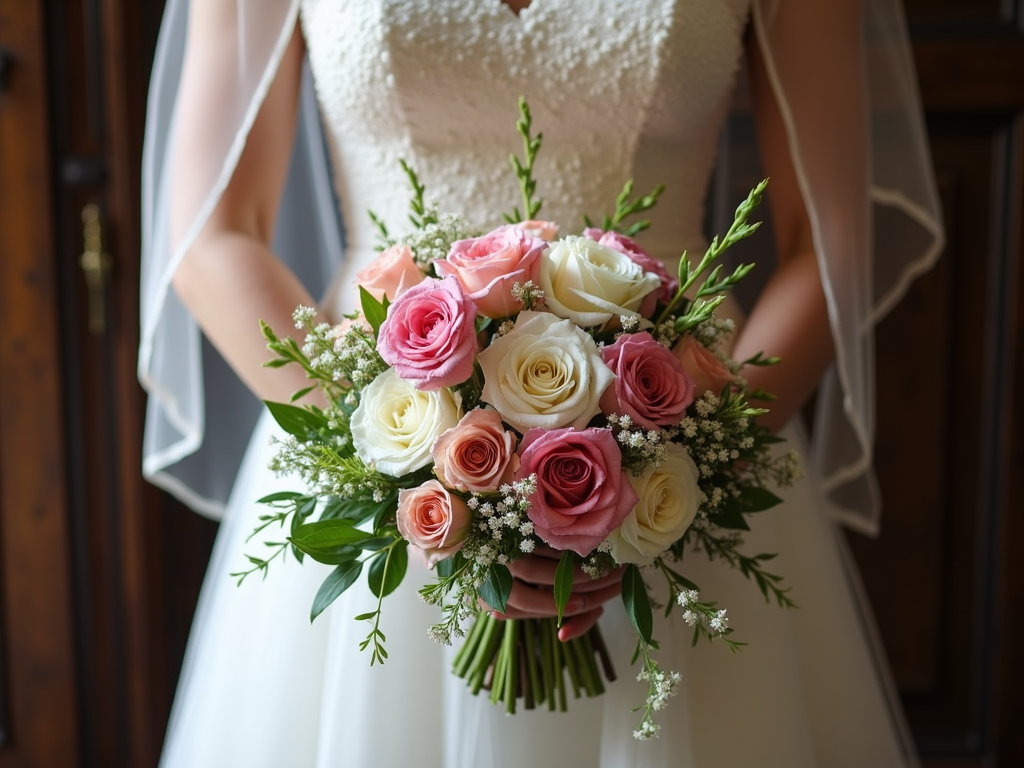
The psychological impact hits different when you understand the code. White flowers signal virginity and new beginnings – boring, but safe. Pink suggests youth and joy – risky for royals. Mixed palettes? That’s confidence. That’s knowing your place is secure enough to play with the rules.
So how are today’s top florists translating these royal power moves for regular humans? Turns out, they’re getting creative as hell.
London florist Philippa Craddock didn’t just arrange flowers for Harry and Meghan’s wedding. She staged a quiet revolution. Local, seasonal, sustainable – words that would’ve made Victorian royals clutch their pearls. Now every wedding florist worth their secateurs is stealing her playbook.
‘Clients come in asking for Kate’s bouquet,’ says Sarah Campbell, who runs a boutique floral studio in Charleston. ‘I show them pictures of her actual flowers – the shield shape, the tiny blooms, the wrapped stems. Then I ask what story they want their flowers to tell. That’s when it gets interesting.’
Campbell recently created a bouquet inspired by Princess Beatrice’s dusty pink palette for a bride whose grandmother grew roses. Instead of importing fancy varieties, they used cuttings from grandma’s garden. Added grocery store eucalyptus because the bride’s Australian. Wrapped it in her mother’s wedding dress lace. Total cost? Under $200. Emotional impact? Priceless.
New York’s Lewis Miller takes a different approach. He deconstructs royal bouquets like a chef reverse-engineering a recipe. Diana’s cascade becomes a modern asymmetrical design. Kate’s shield transforms into a garden-style gathering. The shapes feel familiar but fresh.
‘Royal inspiration isn’t about copying,’ Miller explains. ‘It’s about understanding proportion, balance, and symbolism. Then making it yours.’
Amsterdam-based florist Mark Colle sources everything within 50 miles of each wedding venue. His ‘royal garden’ aesthetic uses wildflowers, herbs, and branches that actual royal gardens might toss in the compost. Rosemary for remembrance. Lavender for luck. Olive branches for peace. Ancient meanings, modern methods.
The most radical reimagining comes from Tokyo’s Azuma Makoto. He preserves royal-inspired arrangements in resin, creating permanent sculptures from temporary beauty. One recent piece froze a Meghan-inspired bouquet mid-fall, capturing that moment between holding on and letting go.
‘Royal weddings show us perfection,’ Makoto says through a translator. ‘But perfection is boring. I’m interested in the moment after – when the bride tosses the bouquet, when petals fall, when real life begins.’
These florists aren’t just arranging flowers. They’re translating centuries of royal tradition into something real people can actually use. Without the palace budget. Without the protocol. With all the meaning.
But here’s where most brides get stuck – believing every royal wedding myth they’ve ever heard.
Royal Wedding Flower Myths That Need to Die Already
Myth one: Royal bouquets must be massive. Diana’s five-pound cascade has convinced two generations of brides that bigger means better. Wrong. Kate’s bouquet weighed less than a smartphone. Meghan’s was basically a handful of flowers. Princess Beatrice carried something you could recreate with grocery store blooms. The trend is clear – modern royal bouquets prioritize meaning over mass.
Myth two: White flowers only. This one’s so embedded we don’t even question it. But Princess Beatrice shattered it with dusty pink roses and nobody died. The palace didn’t crumble. The queen didn’t faint. If literal royalty can use color, so can you.
Myth three: You need exotic, expensive flowers. Queen Elizabeth’s 1947 orchids came from royal greenhouses because post-war Britain had no flower imports. It was make-do elegance, not deliberate luxury. Today’s royals use whatever grows in palace gardens. Meghan’s forget-me-nots? They’re basically weeds.
Myth four: Cascading arrangements are timeless. They’re not. They’re dated. Diana’s bouquet was peak 1980s excess, like shoulder pads and perms. Copying it now is like wearing her actual wedding dress. Inspired by? Sure. Carbon copy? Please don’t.
Myth five: Myrtle is mandatory. Yes, every British royal bride since Victoria has carried it. But you’re not marrying into the Windsor family. Your great-aunt’s rosemary or your father’s homegrown basil carries more meaning than imported myrtle ever could.
The biggest myth? That royal means rigid. Modern royal weddings prove the opposite. They’re about adapting tradition to tell personal stories. Beatrice wore her grandmother’s dress, altered to fit. Eugenie chose a low back to show her scoliosis scar. These women understand something crucial – tradition is a starting point, not a straightjacket.
Real florists know this. They’re not recreating museum pieces. They’re using royal weddings as inspiration for modern meaning. That’s why the best royal-inspired bouquets don’t look royal at all. They look like you.
Ready to build your own royal-inspired design? Here’s the blueprint that actually works.
Creating Your Own Royal Wedding Inspired Flowers (Without the Palace Price Tag)
Here’s what changes when you stop copying royal weddings and start understanding them. You realize Kate’s tiny bouquet wasn’t about being demure – it was about being photographable in the digital age. Meghan’s minimalism wasn’t simplicity – it was California cool infiltrating British tradition. Beatrice’s pink roses weren’t rebellion – they were confidence.
Your bouquet doesn’t need to look royal. It needs to feel intentional. Whether that’s five pounds of cascading orchids or five stems from your garden. Whether it’s all white tradition or rainbow revolution. The power isn’t in the flowers. It’s in knowing why you chose them.
Start here: Pick one royal wedding element that actually resonates. Maybe it’s Diana’s drama or Kate’s restraint. Then ask yourself what matters to your story. Not what looks good on Pinterest. What actually matters.
Sarah Campbell from Charleston puts it this way: ‘I had a bride who wanted Grace Kelly’s elegant simplicity. Turns out what she really wanted was her grandmother’s approval. We used her grandmother’s favorite roses – basic pink tea roses from the supermarket – styled in a tight, classic shape. Cost nothing. Meant everything.’
The technical stuff matters too. Royal bouquets follow strict proportions. One-third flowers, two-thirds greenery. Never more than three flower types. Always odd numbers of focal blooms. These rules create visual balance that photographs well from every angle.
But rules are meant to be broken. The most successful royal-inspired designs cherry-pick what works and ditch what doesn’t.
Florist Lewis Miller suggests this exercise: Print three royal bouquet photos. Circle what you love. Cross out what feels forced. What’s left is your starting point. Build from there with flowers that tell your story.
Remember, royal wedding inspiration isn’t about creating a palace fantasy. It’s about understanding how flowers carry meaning across generations. Then deciding which meanings are worth carrying forward.
Your bouquet is yours. Make it count.