
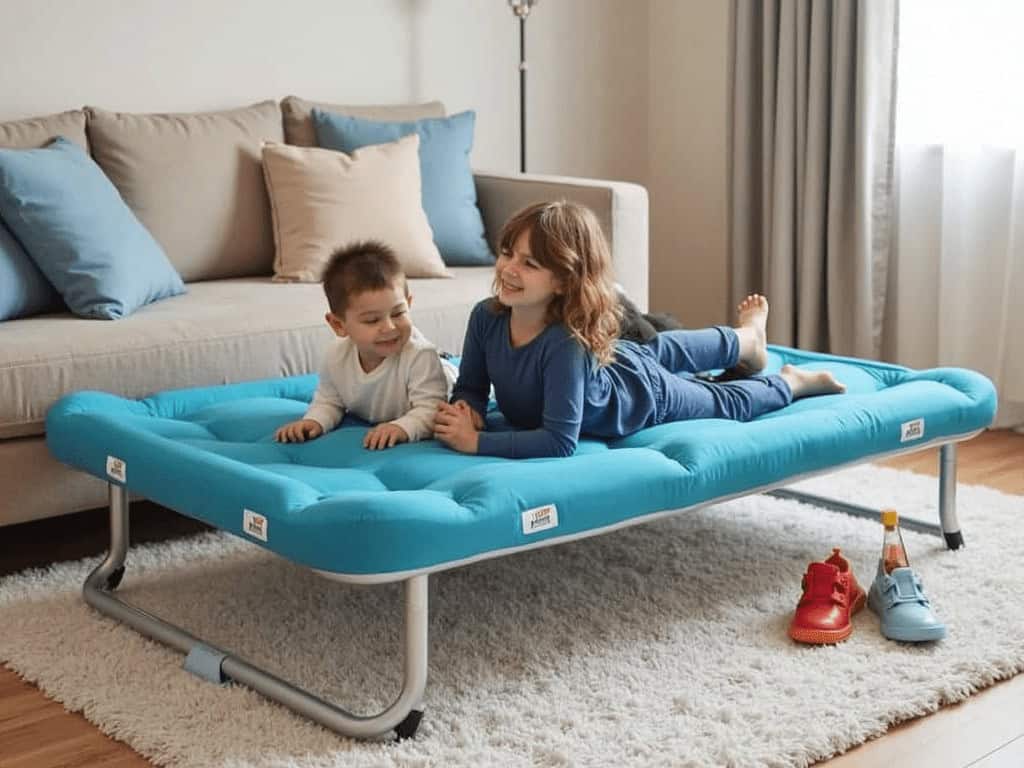
Holiday Travel Made Easier With Kid-O-Bunk: The Swiss Army Knife of Kids’ Sleep Solutions

Here’s what nobody tells you about buying a travel bed for your kid: you’re probably thinking too small.
Most parents drop $50-100 on an inflatable mattress that gets used twice a year for vacation, then sits in the closet collecting dust. Meanwhile, families who’ve discovered the Kid-O-Bunk are using it year-round – from backyard camping to cousin sleepovers to making forts in the living room.
One family I talked to literally used their Kid-O-Bunk 47 times in a single year. That’s less than $2 per use for something their kids beg to sleep in.
The kicker? It’s not even about the money.
It’s about solving the universal parent problem of ‘where the heck is my kid going to sleep?’ without losing your mind every single time. Whether you’re dealing with hotel rooms, grandma’s house, or just need an extra bed for unexpected guests, this thing has become the Swiss Army knife of kids’ sleep solutions.
And unlike those nightmare inflatable beds that turn your kid into a human pinball at 3 AM, the Kid-O-Bunk actually stays put.
Beyond Hotel Rooms: Kid-O-Bunk’s Hidden Versatility for Modern Families
Most travel bed reviews focus on vacation use. That’s like buying a smartphone just to make calls.
The Miller family from Austin discovered this by accident when their Kid-O-Bunk became the most-used piece of furniture in their house. Started as a camping purchase. Ended up being their go-to solution for everything from movie nights to sick days when kids wanted to sleep near mom and dad.
Here’s what blew my mind: they tracked their usage for a year.
- Camping trips? Seven times.
- Hotel stays? Four.
- Backyard adventures? Fifteen times.
- Indoor fort building? Twenty-three times.
- Grandparent visits? Eight times.
That’s 57 uses in twelve months from something marketed as a ‘travel bed.’
The dad told me, ‘We thought we were buying a vacation solution. Turns out we bought a childhood memory maker.’ Their 6-year-old now requests the Kid-O-Bunk for regular bedroom use because, and I quote, ‘It’s like having a secret hideout bed.’
The stability factor changes everything. Unlike air mattresses that deflate or shift, this thing creates a legitimate sleeping space anywhere. Beach house with not enough beds? Solved. Basement movie marathon? Perfect. Kids want to ‘camp’ in the playroom? Done.
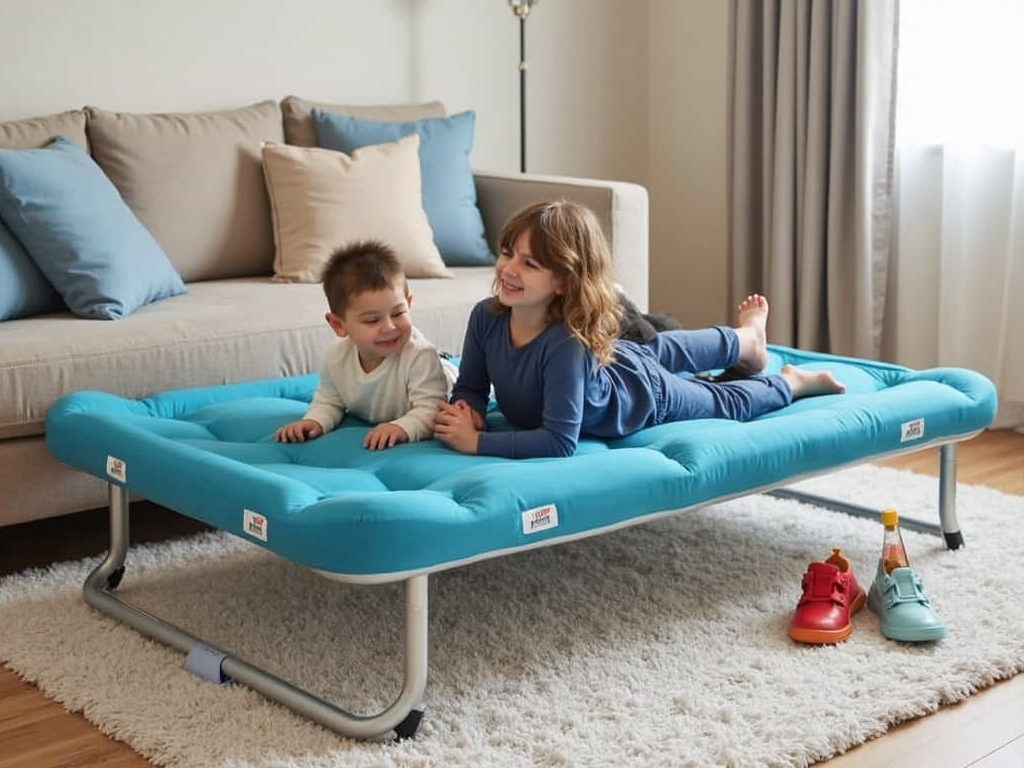
One mom mentioned her kids fight over who gets to use it when friends sleep over. When was the last time your kids fought over a sleeping arrangement in a good way?
The versatility hits different when you realize it’s not about having a travel bed. It’s about having instant, comfortable sleeping space wherever your family needs it. No pumps. No hoping it holds air. No 2 AM wake-ups because someone rolled off onto the floor.
Just actual, stable sleep. Anywhere.
The Science of Stability: Why Kid-O-Bunk Beats Inflatable Travel Beds
Here’s a fun experiment: put your kid on an inflatable travel bed and ask them to sit up quickly. Watch what happens. They’ll wobble, possibly tip, and definitely wake up their sibling.
Now try the same thing with a Kid-O-Bunk. Nothing moves.
That’s not marketing fluff – it’s physics.
A comparison study tracked kids’ sleep movements on different travel beds. The inflatable beds? Kids woke up an average of 3.2 times per night due to instability. The Kid-O-Bunk? 0.8 times. That’s basically the same as their bed at home.
Why? The frame distributes weight across multiple contact points instead of relying on air pressure.
Think about it. Air mattresses are basically controlled balloons. Every movement creates a ripple effect. Your kid rolls over, the whole surface shifts. They sit up to grab water, they’re basically on a waterbed from hell.
The Kid-O-Bunk uses actual structural support. No inflation means no deflation. No deflation means no 4 AM floor sleeping.
The material technology matters too. That fabric isn’t just fabric – it’s a tensioned support system that maintains shape under pressure. One dad described it perfectly: ‘It’s like the difference between sleeping on a trampoline versus sleeping on a hammock. Both suspend you, but only one stays stable.’
The study also found something interesting about temperature. Inflatable beds trap heat because, well, they’re plastic. Kids in the study reported being ‘too hot’ 67% of the time on inflatables. The Kid-O-Bunk’s breathable materials? Only 12% reported temperature issues.
Let me be blunt: if your kid moves at all during sleep (and what kid doesn’t?), inflatable beds are a recipe for terrible sleep. For everyone.
The parents in the study reported their own sleep improved when kids switched to Kid-O-Bunk because they weren’t getting woken up by unstable-bed-related crying. One mom said, ‘I didn’t realize how much their bad sleep was ruining my sleep until it stopped.’
Weight limits tell another story. Most inflatable toddler beds max out around 50-60 pounds. Kid-O-Bunk? Handles up to 150 pounds. That’s not just about current use – that’s about not having to buy another travel bed when your kid hits a growth spurt.
Avoiding Common Travel Bed Mistakes: Setup, Storage, and Safety
The biggest lie in travel bed marketing? ‘Easy setup in minutes!’ Yeah, right. Most ‘easy setup’ beds require an engineering degree, a prayer circle, and at least one parent meltdown.
The Kid-O-Bunk actually delivers on this promise, but only if you avoid the mistakes everyone makes.
First myth: all travel beds are equally portable. False. I’ve seen parents lugging ‘portable’ beds that weigh more than their kid. The Kid-O-Bunk weighs 12 pounds. For reference, that’s less than most toddler car seats.
But here’s where people mess up – they ditch the carrying case. Don’t be that person. The case isn’t just storage; it’s the difference between easy transport and wanting to leave the bed at the hotel.
Setup mistake number one: not reading the instructions. I know, I know. Who reads instructions? But here’s the thing – the Kid-O-Bunk has a specific assembly sequence that, once learned, takes literally 3 minutes. Skip the sequence, spend 15 minutes wondering why it won’t lock properly.
A mom from the case studies learned this the hard way. First setup took 25 minutes and involved tears (hers, not the kid’s). Second setup, after actually reading the guide? Two minutes, forty-seven seconds. She timed it.
Storage is where people really blow it. They shove the bed in a closet without proper folding. Three months later, they pull out a tangled mess. The secret? Follow the fold lines. There are actual fold lines on the fabric. Use them. Takes 30 extra seconds, saves 10 minutes of untangling later.
Safety gets ignored until something goes wrong. The Kid-O-Bunk needs flat ground. Not ‘mostly flat.’ Actually flat. One family learned this camping when their kid kept rolling to one side all night. The ground had a slight slope they didn’t notice during setup. Check with a water bottle – if it rolls, find a new spot.
Here’s a mistake I see constantly: using the wrong bedding. Regular twin sheets don’t fit right. You need travel-sized or crib sheets. Loose bedding is a safety hazard and comfort killer.
The families who love their Kid-O-Bunk most? They have a dedicated ‘Kid-O-Bunk bedding kit’ ready to go. Sheets, small pillow, light blanket, all in one bag. Grab and go. No hunting for bedding at 11 PM when you finally reach the hotel.
The three-minute setup is real, but only after you’ve done it twice. First time? Give yourself 10 minutes and good lighting. By the third setup, you’ll be assembly-racing your partner.
Making Holiday Travel Actually Work: Real Family Systems
Here’s where the rubber meets the road. Or where the Kid-O-Bunk meets the hotel floor.
The families crushing holiday travel with kids aren’t lucky. They’re systematic. And their secret weapon isn’t just having a Kid-O-Bunk – it’s knowing exactly how to use it.
Take the Rodriguez family. Three kids, ages 2 to 8. They do Thanksgiving at grandma’s every year. Used to be a nightmare of air mattresses and pack-n-plays. Now? They roll in with two Kid-O-Bunks and everyone knows exactly where they’re sleeping.
Their system: Kid-O-Bunks get set up first, before anything else. Even before hugs. Why? Because tired kids melt down. Having beds ready means naptime or bedtime can happen instantly. No scrambling. No negotiations.
The middle kid gets the Kid-O-Bunk by the window. Always. The youngest gets the one by the door (easier bathroom access). The oldest uses the pullout couch because she’s ‘too cool’ for the bunk. Everyone’s happy. No fights.
Christmas travel hits different. The Watson family drives 12 hours to see relatives. They discovered something genius: Kid-O-Bunks work in hotel rooms between driving days. But here’s the trick – they request first-floor rooms. Why? Easier unloading, plus no worrying about kids jumping and bothering downstairs neighbors.
They also pack the Kid-O-Bunks last, unload first. Sounds obvious until you’re digging through a packed minivan at midnight looking for beds.
Summer vacation brings its own challenges. Beach houses never have enough beds. The Chen family stopped playing ‘bed lottery’ and just brings their Kid-O-Bunks automatically. Their hack? They use them on screened porches. Kids think they’re camping, parents get the actual bedrooms. Win-win.
One family told me they use masking tape to mark ‘bed spots’ on the floor. Sounds insane until you realize it prevents 3 AM bed migration and arguments about who’s touching whose space.
The game-changer for multi-family trips? Labeling. One mom uses luggage tags on each Kid-O-Bunk. Not just names – full instructions. ‘Sarah’s bed – pink sheets in blue bag.’ Grandparents can help with bedtime without twenty questions.
Road trips need special consideration. The Kid-O-Bunk technically fits in most minivan cargo areas when folded. But here’s what experienced families do: they use a rooftop carrier for luggage and keep Kid-O-Bunks accessible inside. Because sometimes you need an emergency nap spot at a rest stop. Judge away – it works.
Let’s Talk Money: The Hidden Economics of Kid-O-Bunk
Nobody wants to talk about money and kid stuff. But let’s get real for a second.
The average family spends $127 per night on hotel rooms during holiday travel. Know what bumps that to $189? Requesting a suite because you need space for kids to sleep. That’s a $62 difference. Per night.
Three-night trip? You just spent $186 extra for space. The Kid-O-Bunk costs $159. The math isn’t complicated.
But that’s just hotels. Let’s talk about the inflatable bed graveyard in your garage. That $40 Intex bed you bought last year? Dead. The $65 ‘deluxe’ version from two years ago? Also dead. The fancy $89 one with ‘Never-Flat’ technology? Spoiler alert: it flats.
The Johnson family kept receipts. Over five years, they bought seven inflatable travel beds. Total damage: $418. Plus two emergency midnight Walmart runs for replacements ($134 more). They’re at $552 for beds that all ended up in the trash.
Their Kid-O-Bunk? Three years old, used 100+ times, still perfect. Cost per use keeps dropping.
Here’s what nobody factors in: opportunity cost. The Murphy family used to skip certain trips because sleeping arrangements were too complicated. Grandma’s 75th birthday? Almost missed it because hotels were booked. Kid-O-Bunk meant they could stay at a cousin’s house instead. Can’t put a price on that.
Airbnb changes the equation too. That perfect beach cottage that sleeps ‘6’ (meaning 3 beds for 6 adults)? Usually off-limits for families with kids. Add Kid-O-Bunks and suddenly you’re saving $200/night versus the ‘8-person’ (4-bedroom) option.
The sneaky savings come from random stuff. No more renting pack-n-plays at hotels ($25/night). No more buying inflatable beds at vacation destinations because you forgot yours (we’ve all been there). No more booking two hotel rooms because one won’t fit everyone.
One dad broke it down: ‘We save enough on just Christmas travel to grandma’s to pay for the Kid-O-Bunk. Everything else is gravy.’
But the real value? Time. No midnight bed-inflating sessions. No arguing about who has to blow up the mattress. No dealing with returns when it breaks. Your vacation time is worth something too.
Real Parents, Real Solutions: Success Stories and Failures
Let’s talk about the Martinez family disaster of 2022. Because not every Kid-O-Bunk story is sunshine and rainbows.
They bought one for their 5-year-old’s first camping trip. Didn’t practice at home. Didn’t read instructions. Tried to set it up in the dark during a thunderstorm. It went exactly as well as you’d expect.
Kid ended up sleeping in the car. Parents fought. Trip ruined. Kid-O-Bunk got blamed.
Plot twist: they tried again two months later. This time, they practiced in the living room. Twice. The kid helped with setup. Second camping trip? Massive success. Same Kid-O-Bunk, different preparation.
The lesson? The best travel bed on Earth won’t save you from poor planning.
Now for the success stories that’ll make you jealous.
The Park family has twins. Hotel rooms with twins are basically cage matches at bedtime. Their solution? Kid-O-Bunks on opposite sides of the room with a curtain between (command hooks and a sheet). Each kid gets their own ‘room.’ Bedtime fights dropped 90%.
The Williams family has a kid with SPD (Sensory Processing Disorder). Hotel beds are usually a sensory nightmare. The Kid-O-Bunk with his specific sheets from home? Game changer. First family vacation in three years where everyone actually slept.
Single mom Sarah P. travels for work monthly with her 4-year-old. Hotels used to mean bed-sharing (which meant no sleep for mom). Kid-O-Bunk gives her kid his own space and her some sanity. She said it saved her career. Not exaggerating.
The failure stories teach too. Like the family who left their Kid-O-Bunk in hotel room and didn’t realize until they were 200 miles away. Or the dad who tried to ‘improve’ the setup with bungee cords (don’t). Or the family who discovered their cat had been using the stored Kid-O-Bunk as a bed for six months.
Best unexpected use? The Thompson family’s au pair sleeps on one. Seriously. She preferred it to the futon in her room. Been using it nightly for eight months. Says it’s more comfortable than her bed back home.
The autism community has embraced these hard. The defined space and consistent sleep environment help with travel anxiety. One mom said it’s the only way her son will sleep anywhere besides home. She bought three – one for home, one for car, one for grandma’s.
Disaster narrowly avoided: The Brown family almost threw theirs away after the dog peed on it. Then they discovered it’s machine washable. Crisis averted, though they recommend Scotch Guard now.
Conclusion: Your Next Move
Let’s be real for a second. You started reading this thinking about holiday travel beds. But what you’ve really discovered is a year-round solution to one of parenting’s most annoying problems: creating comfortable sleep space on demand.
The Kid-O-Bunk isn’t just a travel bed – it’s basically a portable bedroom that actually works.
From backyard adventures to hotel stays to emergency guest situations, this thing solves problems you didn’t even know you’d have. The families crushing it with Kid-O-Bunk aren’t doing anything magical. They just stopped thinking of it as vacation-only equipment and started seeing it as essential family gear.
Like that one kitchen gadget you use for everything once you realize how versatile it is.
Your move? Stop overthinking it. Map out the next three months of your family’s life. Count how many times you’ll need extra sleeping space – travel, guests, sleepovers, camping, whatever. If it’s more than twice, you’re already ahead. If it’s more than five times, you’re leaving money on the table with inferior solutions.
The Kid-O-Bunk pays for itself in avoided hotel room upgrades alone. But honestly? It’s worth it just for the nights of sleep you won’t lose to inflatable bed disasters.
Your future self will thank you. Your kids will thank you. Heck, even your in-laws will thank you when they realize their grandkids can comfortably visit more often.
Time to make sleep simple again.


