Bridal Shower Ideas: How to Throw One People Actually Enjoy

A bridal shower can go one of two ways. There’s the kind where everyone sits in a stiff circle watching the bride unwrap salad tongs for ninety minutes, and there’s the kind people are still talking about at the wedding. The difference isn’t budget. It’s a handful of decisions, who hosts, what it costs, the vibe, the games, made early and made well. This is the complete guide: the etiquette, the themes, the games worth playing, the food, and the timeline that keeps the whole thing calm.
The etiquette questions everyone asks first
Before the fun stuff, the logistics, because getting these wrong causes the most stress and the most awkwardness.
Who hosts? Traditionally a close friend or a member of the wedding party, not the bride herself, and not historically her mother or sister, though that old rule has relaxed and family co-hosting is common now. The reason the bride doesn’t throw her own shower is simple: it can read as gift-grabby, even when it isn’t. Most often the maid of honor and bridesmaids co-host and split the work.
Who pays? The host or hosts cover it, and when the bridesmaids host together, they typically divide the costs, venue, food, drinks, decor, and any favors, among themselves. Who’s invited? Keep it to the bride’s closest circle and let your space and budget set the size; most showers land between 15 and 30 guests. One firm rule: everyone invited to the shower should also be invited to the wedding. When? Two to three months before the wedding is the sweet spot, late enough to feel close to the big day, early enough to dodge the chaos of final fittings and the bachelorette. Send invitations four to six weeks out so guests can RSVP, shop the registry, and arrange travel. And plan for a two-to-four-hour party, long enough to mingle, eat, play a couple of games, and open gifts without dragging.
Pick the vibe before anything else
Every other choice, food, decor, invitations, games, flows from one question: what does this particular bride want a Saturday afternoon to feel like? Trying to do a little of everything is how you end up with a beige, themeless event.
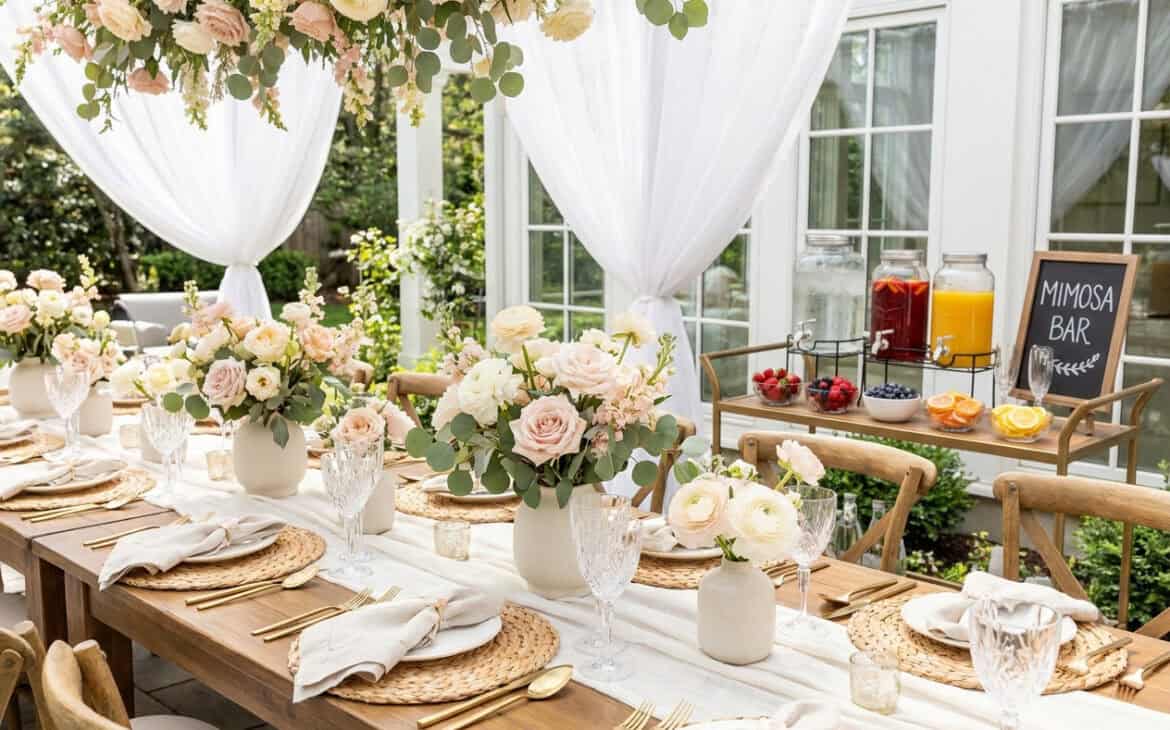
The themes drawing the most interest right now lean elegant and photogenic. Classics like a garden party, a brunch, or a Parisian café never miss. Punnier crowd-pleasers, “Pearls and Prosecco,” “Something Blue Before I Do,” “Love at First Spritz,” and “Let’s Taco ‘Bout Love”, give you an instant color palette and menu. And the more design-forward set is leaning into cottagecore, Mediterranean, Disco Bride, and Palm Springs mid-century looks. You don’t have to be literal. A loose direction like “soft florals and a brunch table” or “citrus, spritzes, and a little disco” is enough to make every later decision easy, because now you know what fits.
Games worth keeping, and the ones to cut
Shower games have a bad reputation because most of them earn it. The fix is to be ruthless: for a two-hour party, four to six activities is plenty, and the mix matters more than the count, one easy icebreaker as people arrive, two or three real games, and one sentimental moment.
The keepers tend to produce something or reveal something. Advice Cards for the Bride, collected into a little keepsake book, beat any guessing game. Wedding Mad Libs reliably gets a laugh, “How Well Do You Know the Bride?” and “He Said / She Said” (where guests guess which partner said a quote) keep a room engaged, and a quick ring hunt works as an arrival icebreaker. What to cut: anything that drags, embarrasses the bride, or makes guests sit silently scribbling. The strongest 2026 move is replacing games entirely with a hands-on activity, a flower-arranging station, a charm-bracelet bar, or mini cake decorating. People relax when their hands are busy, and they leave with something instead of a participation prize.
Food and drink that pulls double duty
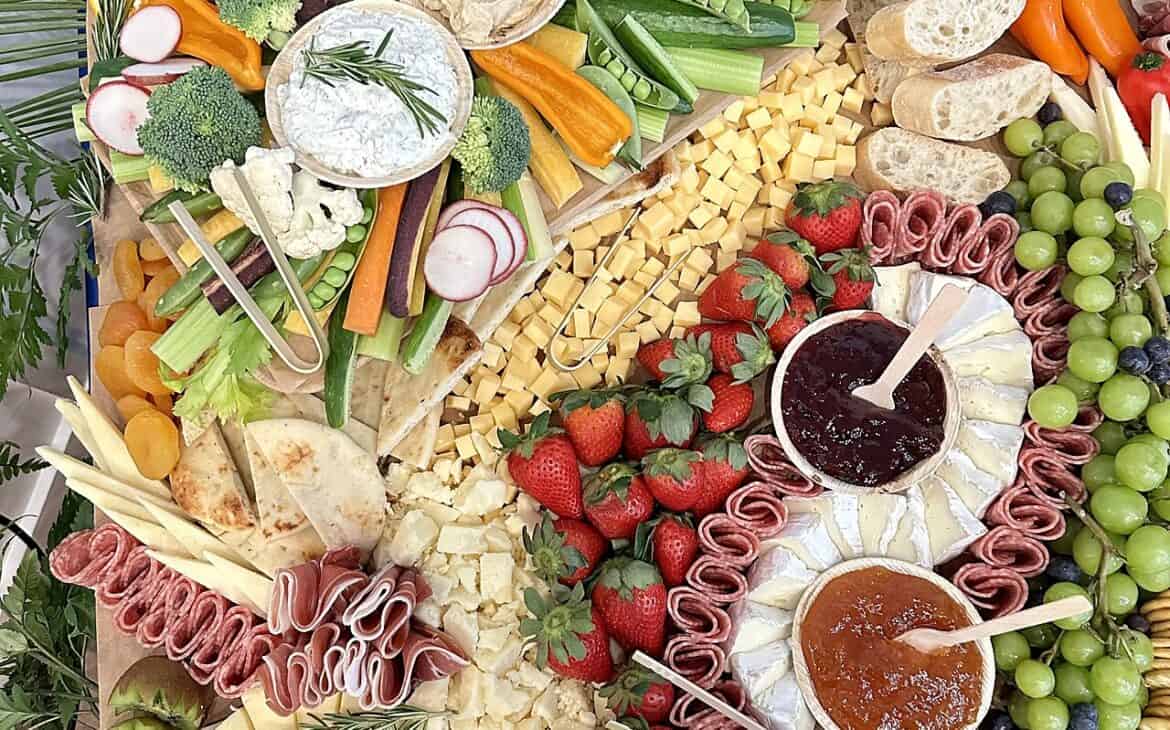
The smartest shower food is also the decor. A grazing table or a generous charcuterie spread looks gorgeous, feeds a crowd, flexes around dietary needs, and photographs beautifully, all at once. Pair it with a self-serve drink station and you’ve solved both catering and entertainment.
The mimosa bar is the classic for a reason: set out chilled prosecco or champagne, a few juices (orange, cranberry, peach), and bowls of berries, orange slices, and mint, and it essentially runs itself, with an easy mocktail version using sparkling cider so no one feels left out. For a non-brunch shower, swap in a spritz bar or a build-your-own-iced-tea station to match the theme. Whatever you serve, plan for the time of day, a mid-morning shower needs lighter fare than a 2 p.m. one.
Decor and the small details guests actually notice
You don’t need to drown the room in decorations; a few intentional pieces do the heavy lifting. A welcome sign at the entrance and a clear photo backdrop (a floral wall, a balloon arch, even a pretty corner with the theme’s colors) are the two touches that make a space feel designed the moment guests walk in, and the backdrop guarantees everyone takes pictures. Small signs for the food, the drink bar, and the gift table tie it together. Favors are entirely optional, plenty of hosts skip them and put the money toward better food or flowers, but if you want them, keep them small and useful: a candle, a little box of sweets, a packet of seeds, or a handwritten thank-you note.
Invitations and a calm planning timeline
Work backward and the stress mostly disappears. Around three months out, lock the date, the guest list, and the vibe. Order invitations next, Minted, Zola, and Etsy are the go-to sources for designs that match a theme, and get them in the mail four to six weeks before the shower. From there it’s the fun part: decor, favors, the activity supplies, with the final week reserved for confirming the headcount, a grocery run, and prepping anything you can the night before.
The gift-opening moment
Traditionally the bride opens gifts at the shower so everyone can share in the moment, and someone should be assigned to jot down who gave what for thank-you notes later. If the bride dreads being the center of attention, two graceful alternatives exist: a display shower, where gifts arrive unwrapped and are arranged for everyone to admire, or simply opening them privately afterward. There’s no wrong choice, just match it to the guest of honor’s comfort.
Frequently Asked Questions
Who is supposed to host the bridal shower?
Traditionally a close friend or member of the wedding party, often the maid of honor and bridesmaids co-hosting. The bride shouldn’t host her own, since it can look gift-grabby, though family co-hosting is widely accepted today.
Who pays for a bridal shower?
The host or hosts. When bridesmaids host together, they usually split the costs of the venue, food, drinks, decor, and favors among themselves.
How many people should you invite?
Most showers have 15 to 30 guests, but there’s no set number, base it on the bride’s closest circle, your space, and your budget. Anyone invited to the shower should also be invited to the wedding.
When should a bridal shower be held?
Two to three months before the wedding, with invitations sent four to six weeks ahead. Plan for a party lasting two to four hours.
Are bridal shower favors required?
No, they’re optional. Many hosts skip them in favor of better food or decor. If you include favors, keep them small and thoughtful, candles, sweets, seed packets, or handwritten notes.
Does the bride have to open gifts in front of everyone?
No. The traditional gift opening is lovely, but a display shower (gifts shown unwrapped) or opening privately afterward are both perfectly acceptable if the bride prefers.
Related Reading
- Health Benefits of a Nomadic Lifestyle (and the Honest Trade-offs)
- The Benefits of a Morning Routine
- Tommie Copper Sock Review
- BONKAZONKS Marvel Game -Review/Giveaway-